Teresa Rodríguez ha escrito un tuit aparentemente razonable, pero profundamente tramposo:
“Estoy de acuerdo con las reivindicaciones de los médicos, hay que mejorar sus condiciones de trabajo, de ello depende nuestra salud… Pero todo eso y, a la vez, que dejen de trabajar en la pública, la privada, la concertada, la universidad y la clínica de shurmano todo a la vez”.

El problema de ese “pero” es que lo cambia todo.
Porque, en realidad, lo que está diciendo es: estoy de acuerdo con vuestros derechos laborales, siempre que antes aceptéis las condiciones morales que yo decida imponer sobre vuestra forma de trabajar.
Y eso es muy peligroso.
Los derechos laborales son derechos. No son premios al buen comportamiento. No son concesiones que se otorgan solo a los trabajadores que encajan en el modelo ideológico de quien opina. No dependen de si a Teresa Rodríguez, a una ministra, a un consejero autonómico o a cualquier tertuliano le parece bien o mal que un médico tenga otro trabajo fuera de su jornada en la sanidad pública.
Un médico que trabaja en la sanidad pública tiene derecho a unas condiciones laborales dignas. Punto.
Después podremos hablar de incompatibilidades, de conflictos de interés, de dedicaciones exclusivas, de cómo se regula todo eso y de qué modelo queremos. Pero no se puede utilizar ese debate para devaluar unas reivindicaciones laborales justas. Y eso es exactamente lo que hace ese tuit.
Porque Teresa Rodríguez no se atreve a decirlo de forma explícita, pero lo insinúa: que las quejas de los médicos valen menos porque algunos médicos trabajan también en la privada, en la concertada, en la universidad o en una clínica familiar.
Es una forma elegante de sembrar sospecha.
Una manera de decir: “sí, tenéis razón, pero no tanta; sí, os maltratan, pero algo de culpa tendréis; sí, hay que mejorar vuestras condiciones, pero primero dejad de hacer cosas que a mí no me gustan”.
Y no.
No funciona así.
Cuando hablamos de otros sectores, sé que Teresa lo entiende perfectamente. En redes es muy habitual encontrar empresarios de hostelería quejándose de que no encuentran camareros, cocineros o personal para sus negocios. Y también es muy habitual ver a mucha gente responderles algo muy sensato: si ofreces malos sueldos, malos horarios, jornadas abusivas y condiciones incompatibles con una vida digna, es normal que la gente no quiera trabajar para ti.
Ese razonamiento parece muy claro cuando hablamos de hostelería.
Parece muy claro cuando hablamos de comercio.
Parece muy claro cuando hablamos de fábricas, repartidores, temporeros o cualquier otro trabajador.
Pero cuando hablamos de médicos, de repente, a algunos les cuesta entenderlo.
Pues bien: en la sanidad pública está ocurriendo exactamente eso.
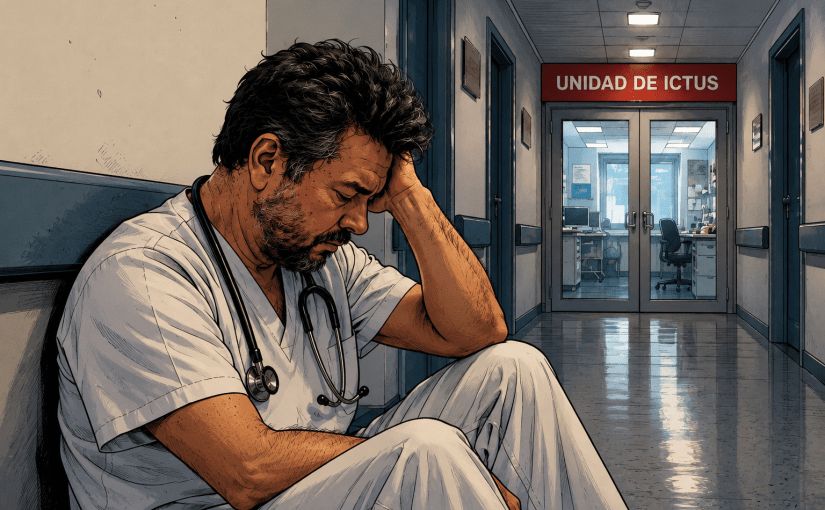
Las nuevas generaciones de médicos no quieren trabajar en una sanidad pública que los ningunea, les ofrece malos contratos, les paga mal, les exige jornadas que no aceptaría casi ningún otro trabajador y les obliga a asumir turnos peligrosos para su salud y para la seguridad de los pacientes.
No quieren vivir encadenados a guardias de 24 horas.
No quieren organizar su vida familiar alrededor del agotamiento.
No quieren aceptar que su vocación sea utilizada como chantaje.
No quieren que se les diga que, como son médicos, tienen que aguantar más, dormir menos, cobrar peor por determinadas horas y callarse más que el resto.
Y hacen bien.
Porque cuidar a los demás no puede significar destruirse a uno mismo.
Lo curioso es que Teresa Rodríguez entiende perfectamente ese argumento cuando el trabajador no es médico. Entiende que un camarero no quiera aceptar jornadas interminables por un sueldo indigno. Entiende que un trabajador no quiera sacrificar su vida por una empresa que lo explota. Entiende que la precariedad expulsa talento, genera rechazo y termina dejando sectores enteros sin profesionales.
Pero cuando el trabajador es médico, entonces aparece la sospecha.
Entonces aparece el reproche.
Entonces aparece la falsa dicotomía.
“Reivindicad, sí, pero antes dejad la privada”.
“Pedid mejores condiciones, sí, pero antes demostrad que sois puros”.
“Defended vuestros derechos, sí, pero solo si no tenéis otro trabajo que a mí me moleste”.
Esa trampa solo sirve para tapar lo importante: que todos los gobiernos, de distintos colores y durante demasiados años, han ido lesionando los derechos laborales de los médicos hasta llevarnos a la situación actual.
Y la situación actual es muy sencilla: cada vez hay más médicos que no quieren trabajar en la sanidad pública en las condiciones que se les ofrecen.
No porque odien lo público.
No porque sean elitistas.
No porque quieran enriquecerse.
No porque tengan una clínica de un hermano esperando en cada esquina.
Sino porque se han cansado.
Se han cansado de contratos indignos. De jornadas imposibles. De guardias agotadoras. De desprecio institucional. De discursos políticos que hablan de defender la sanidad pública mientras maltratan a quienes la sostienen.
Teresa Rodríguez parece añorar, quizá sin darse cuenta, los tiempos en los que había un alto nivel de paro médico y muchos profesionales aceptaban cualquier cosa. Cualquier contrato. Cualquier guardia. Cualquier abuso. Cualquier destino. Cualquier falta de respeto.
Pero esos tiempos se están acabando.
Y conviene que algunos lo entiendan cuanto antes.
Los médicos jóvenes ya no están dispuestos a aceptar puestos de trabajo indignos en la administración pública. Ya no creen que tener una plaza, un contrato o una bata blanca compense cualquier sacrificio. Ya no aceptan que su vida personal sea el precio obligatorio de sostener un sistema que no se ha querido reformar.
Y cuando un médico puede elegir, elige.
Elige irse a otro país.
Elige irse a la privada.
Elige hacer otra cosa.
Elige trabajar donde se respeten mejor sus horarios, su salud, su familia y su dignidad.
Ese es el problema que algunos siguen sin querer ver.
No estamos ante una pataleta corporativa. No estamos ante un grupo de privilegiados que quiere más privilegios. Estamos ante un cambio profundo en la relación entre los médicos y el sistema sanitario público.
Durante décadas, la sanidad pública ha sobrevivido en parte gracias a la entrega, el exceso de responsabilidad y la resignación de muchos profesionales. Pero las nuevas generaciones ya no van a sostener ese pacto injusto.
Y si la respuesta política consiste en señalarles, sospechar de ellos o condicionar sus derechos a que antes cumplan determinados mandamientos ideológicos, el resultado será evidente: se irán.
Y entonces no habrá tuit ingenioso que cubra una consulta.
No habrá eslogan que atienda un ictus.
No habrá reproche moral que sustituya a un médico que ha decidido marcharse.
La sanidad pública no se defiende atacando a sus profesionales. No se defiende insinuando que sus reivindicaciones valen menos porque algunos trabajen también fuera. No se defiende poniendo condiciones tramposas al reconocimiento de derechos laborales básicos.
La sanidad pública se defiende haciendo que merezca la pena trabajar en ella.
Con contratos dignos.
Con jornadas razonables.
Con guardias humanas.
Con respeto.
Con planificación.
Con voluntad política.
Todo lo demás es ruido.
Y el ruido, por muy ideológico que sea, no cura a nadie.