The Ghost of Jupiter s Halo

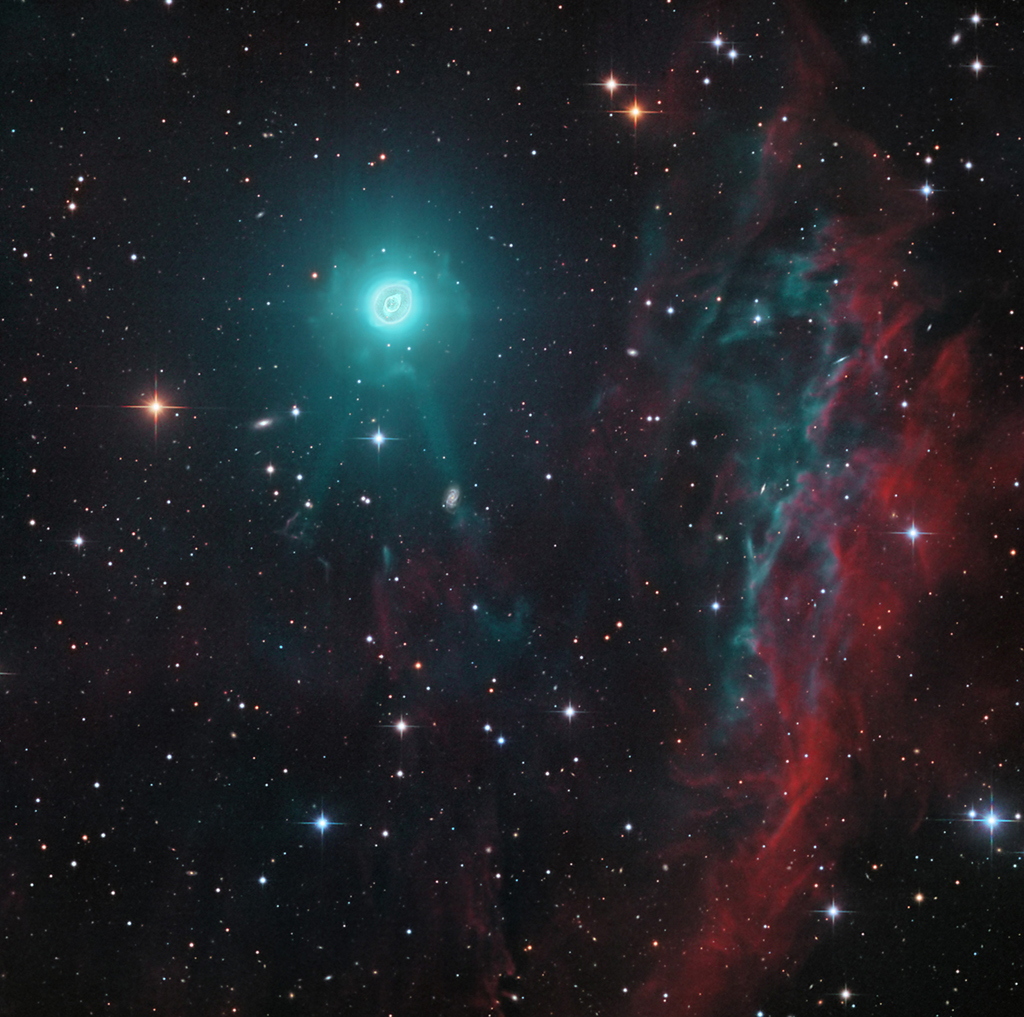
Close-up images of NGC 3242 show the cast off shroud of a dying, sun-like star fancifully known as The Ghost of Jupiter nebula. But this deep and wide telescopic view also finds the seldom seen outer halo of the beautiful planetary nebula at the upper left, toward Milky Way stars and background galaxies in the serpentine constellation Hydra. Intense and otherwise invisible ultraviolet radiation from the nebula’s central white dwarf star powers its illusive glow in visible light. In fact, planets of NGC 3242’s evolved white dwarf star may have contributed to the nebula’s symmetric features and shape. Activity beginning in the star’s red giant phase, long before it produced a planetary nebula, is likely the cause of the fainter more extensive halo. About a light-year across NGC 3242 is some 4,500 light-years away. The tenuous clouds of glowing material at the right could well be interstellar gas, by chance close enough to the NGC 3242’s white dwarf to be energized by its ultraviolet radiation. [via NASA] https://ift.tt/2S8mEqP
4000 Exoplanets

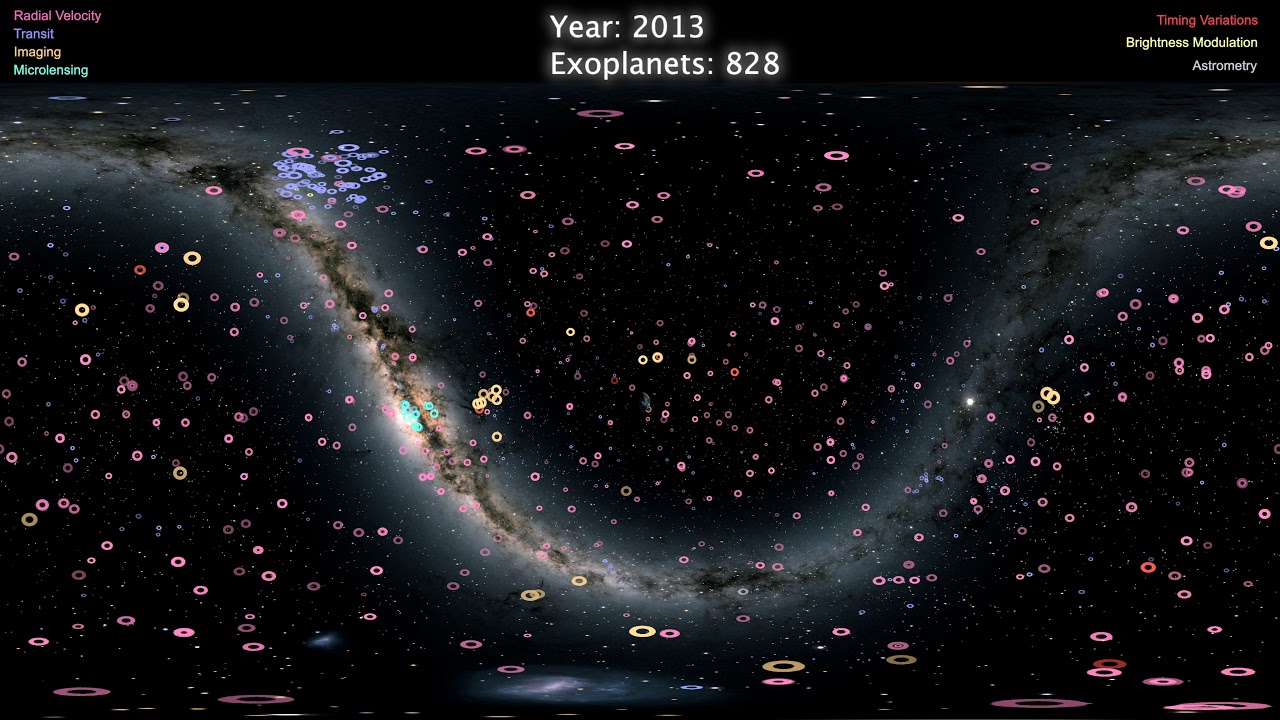
Over 4000 planets are now known to exist outside our Solar System. Known as exoplanets, this milestone was passed last month, as recorded by NASA’s Exoplanet Archive. The featured video highlights these exoplanets in sound and light, starting chronologically from the first confirmed detection in 1992. The entire night sky is first shown compressed with the central band of our Milky Way Galaxy making a giant U. Exoplanets detected by slight jiggles in their parents-star’s colors (radial velocity) appear in pink, while those detected by slight dips in their parent star’s brightness (transit) are shown in purple. Further, those exoplanets imaged directly appear in orange, while those detected by gravitationally magnifying the light of a background star (microlensing) are shown in green. The faster a planet orbits its parent star, the higher the accompanying tone played. The retired Kepler satellite has discovered about half of these first 4000 exoplanets in just one region of the sky, while the new TESS mission is on track to find even more, all over the sky, orbiting the brightest nearby stars. Finding exoplanets not only helps humanity to better understand the potential prevalence of life elsewhere in the universe, but also how our Earth and Solar System were formed. [via NASA] https://ift.tt/2YSAiRv

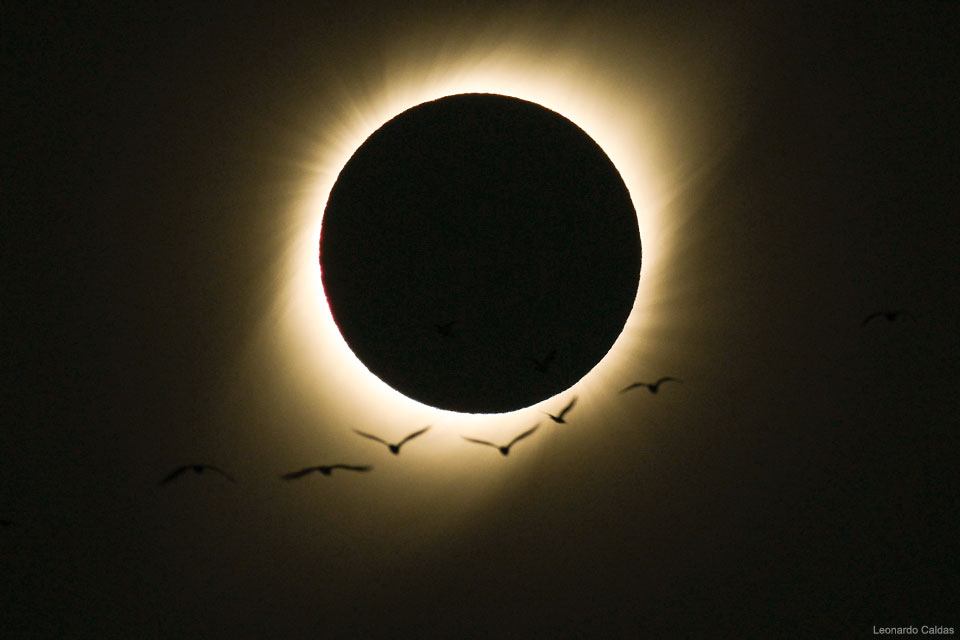
Birds During a Total Solar Eclipse

What do birds do during a total solar eclipse? Darkness descends more quickly in a total eclipse than during sunset, but returns just as quickly — and perhaps unexpectedly to the avians — just a few minutes later. Stories about the unusual behavior of birds during eclipses have been told for centuries, but bird reactions were recorded and studied systematically by citizen scientists participating in an eBird project during the total solar eclipse that crossed the USA in 2017 August. Although some unusual behaviors were observed, many observers noted birds acting like it was dusk and either landing or flying low to the ground. Radar confirmed a significant decrease in high-flying birds and insects during and just after totality. Conversely, several sightings of normally nocturnal birds were reported. Pictured, a flock of birds in La Serena, Chile flew through the air together during the total solar eclipse that crossed South America last week. The photographer captured the scene in frames from an eclipse video. The next total solar eclipse in 2020 December will also cross South America, while in 2024 April a total solar eclipse will cross North America from Mexico through New England, USA. [via NASA] https://ift.tt/2XBq1aP

The Galactic Center in Radio from MeerKAT

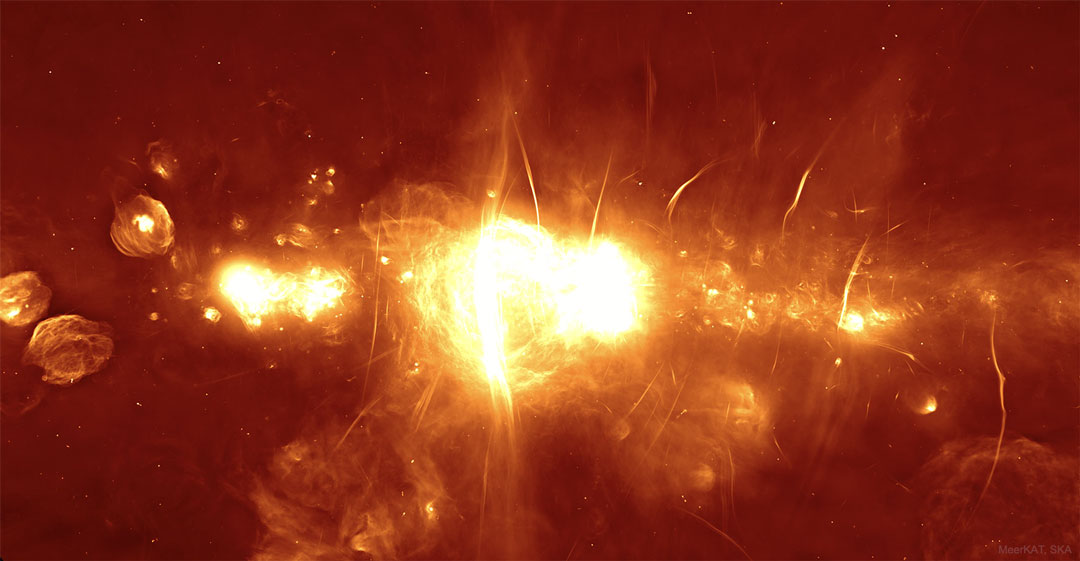
What’s happening at the center of our galaxy? It’s hard to tell with optical telescopes since visible light is blocked by intervening interstellar dust. In other bands of light, though, such as radio, the galactic center can be imaged and shows itself to be quite an interesting and active place. The featured picture shows the inaugural image of the MeerKAT array of 64 radio dishes just completed in South Africa. Spanning four times the angular size of the Moon (2 degrees), the image is impressively vast, deep, and detailed. Many known sources are shown in clear detail, including many with a prefix of Sgr, since the Galactic Center is in the direction of the constellation Sagittarius. In our Galaxy’s Center lies Sgr A, found here just to the right of the image center, which houses the Milky Way’s central supermassive black hole. Other sources in the image are not as well understood, including the Arc, just to the left of Sgr A, and numerous filamentary threads. Goals for MeerKAT include searching for radio emission from neutral hydrogen emitted in a much younger universe and brief but distant radio flashes. [via NASA] https://ift.tt/2G1vK3w

Crescent Saturn

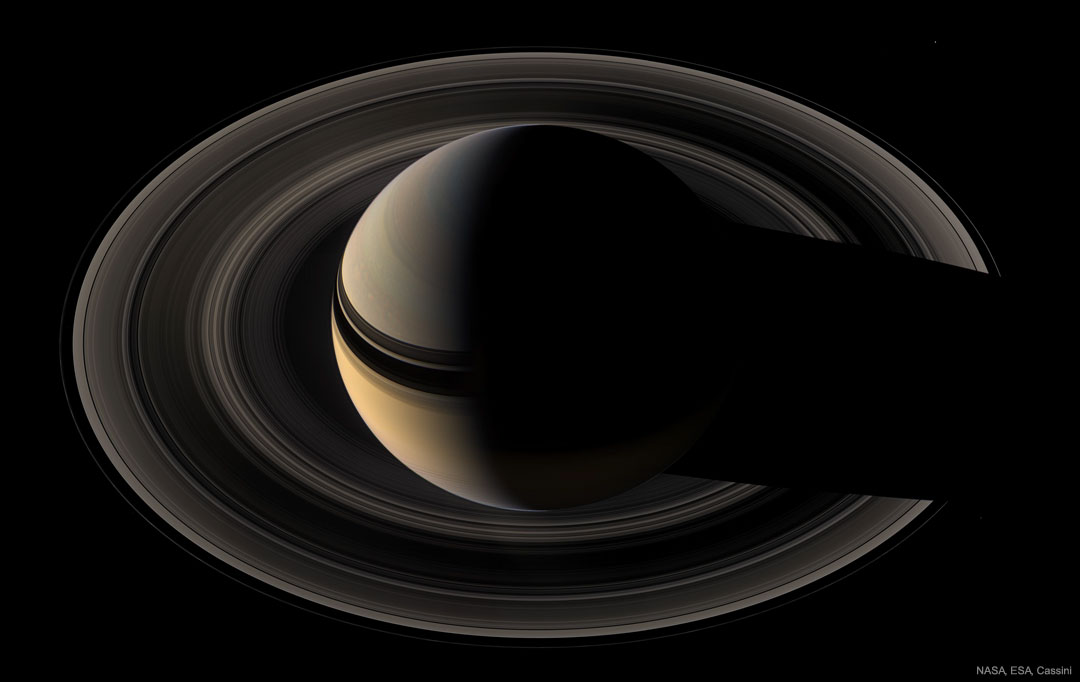
Saturn never shows a crescent phase — from Earth. But when viewed from beyond, the majestic giant planet can show an unfamiliar diminutive sliver. This image of crescent Saturn in natural color was taken by the robotic Cassini spacecraft in 2007. The featured image captures Saturn’s majestic rings from the side of the ring plane opposite the Sun — the unilluminated side — another vista not visible from Earth. Pictured are many of Saturn’s photogenic wonders, including the subtle colors of cloud bands, the complex shadows of the rings on the planet, and the shadow of the planet on the rings. A careful eye will find the moons Mimas (2 o’clock) and Janus (4 o’clock), but the real challenge is to find Pandora (8 o’clock). Saturn is now nearly opposite from the Sun in the Earth’s sky and so can be seen in the evening starting just after sunset for the rest of the night. [via NASA] https://ift.tt/2NEYFRk

8 Minute and 30 Second Eclipse

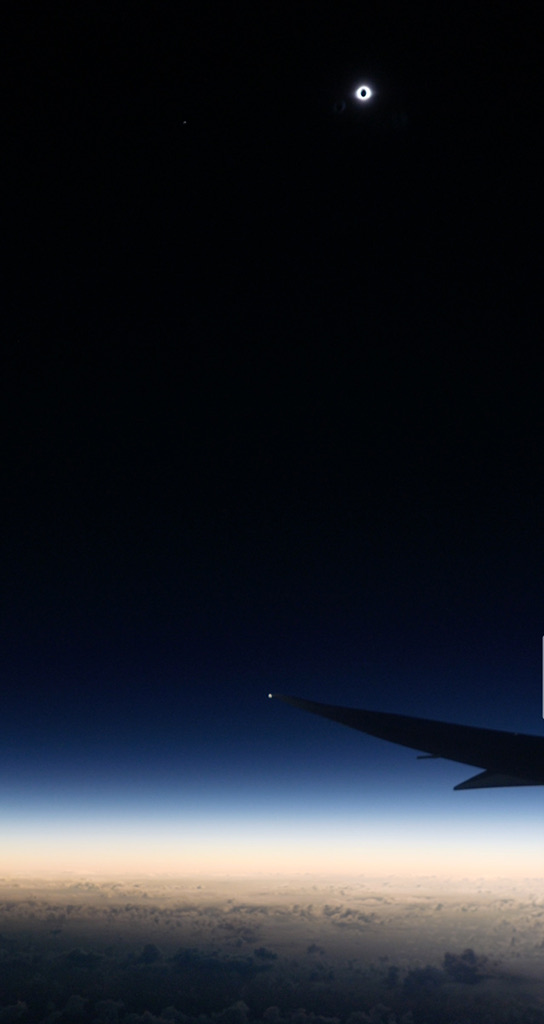
The total phase of the July 2nd solar eclipse lasted about 4 minutes and 30 seconds at the point of maximum eclipse. On the surface of planet Earth, that was about 600 nautical miles north of Easter Island in the Southern Pacific Ocean. But from 37,000 feet above, on a charter flight intercepting the Moon’s shadow, the Moon could be seen to completely block the Sun for about 8 minutes and 30 seconds. With a tailwind at the mid-eclipse intercept point, the plane was traveling around 488 nautical miles per hour chasing along the Moon’s shadow track. From above the clouds this wide-field image of the totally eclipsed Sun and shimmering solar corona over the wing records the spectacular view from a window seat on the sunward side of the aircraft. [via NASA] https://ift.tt/2xvXhFF

La Silla Eclipse Sequence

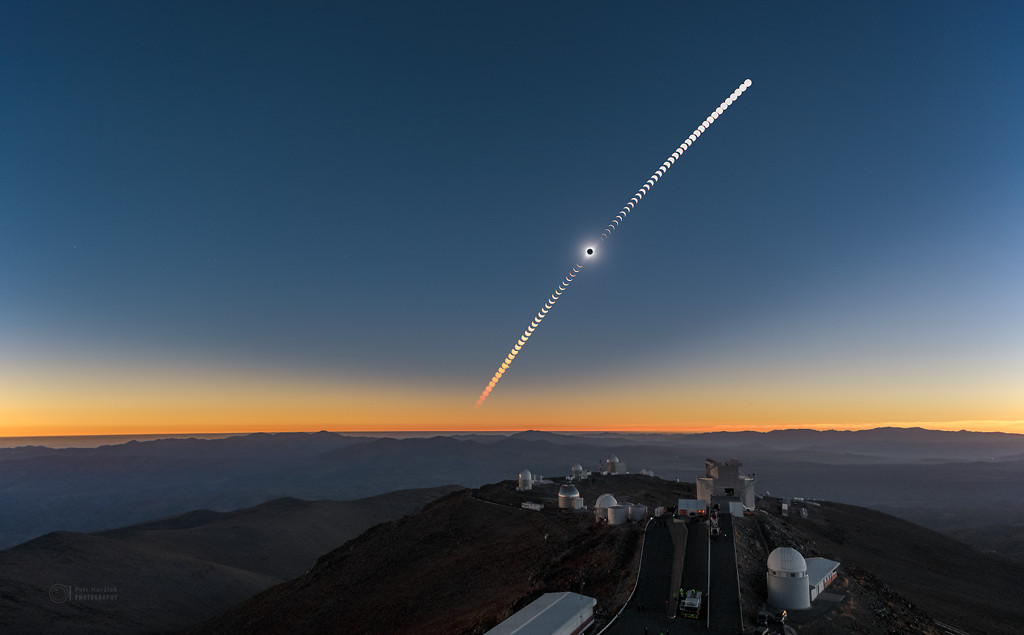
The road to the high mountaintop La Silla Observatory in the Chilean Atacama Desert also led in to the path of July 2nd’s total solar eclipse. Recorded at regular intervals before and after the total eclipse phase, the frames in this composite sequence include the moment the Moon’s dark shadow fell across some of planet Earth’s advanced large telescopes. The dreamlike view looks west toward the setting Sun and the approaching Moon shadow. In fact La Silla was a little north of the shadow track’s center line, so the region’s stunning, clear skies are slightly brighter to the north (right) in the scene. [via NASA] https://ift.tt/2JdtRTC

In the Shadow of the Moon

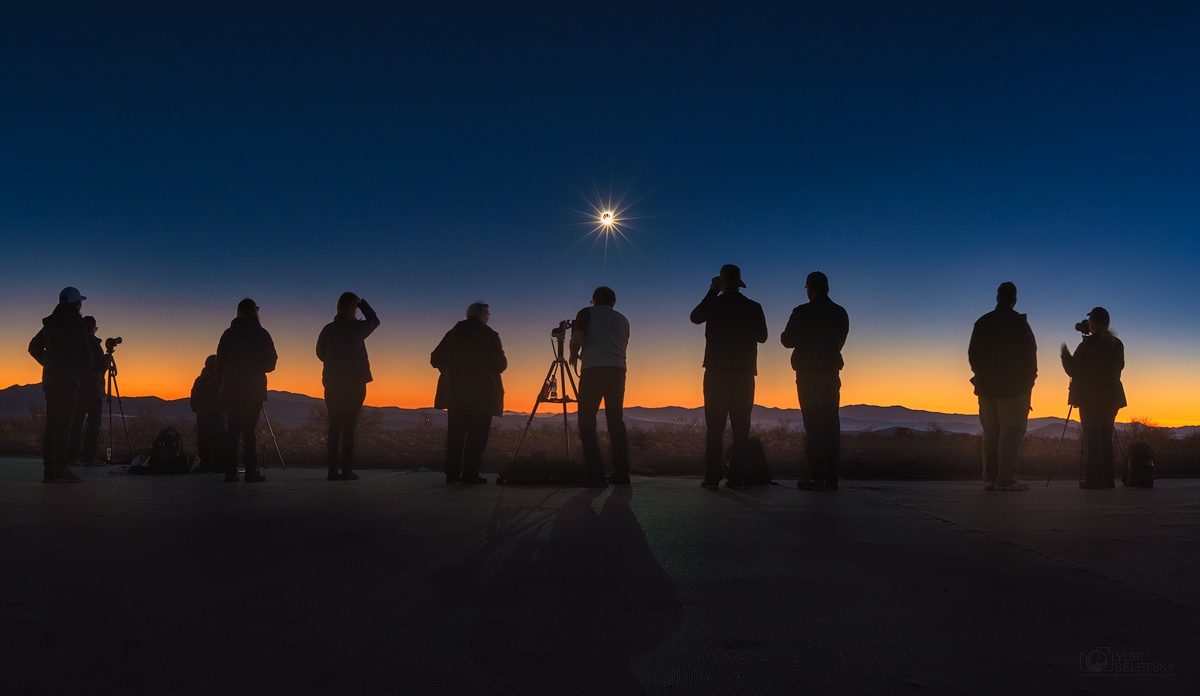
On July 2 denizens of planet Earth could stand in the Moon’s dark umbral shadow during South America’s 2019 total solar eclipse. It first touched down in the Southern Pacific Ocean, east of New Zealand. Racing toward the east along a narrow track, the shadow of the Moon made landfall along the Chilean coast with the Sun low on the western horizon. Captured in the foreground here are long shadows still cast by direct sunlight though, in the final moments before totality began. While diffraction spikes are from the camera lens aperture, the almost totally eclipsed Sun briefly shone like a beautiful diamond ring in the clear, darkened sky. [via NASA] https://ift.tt/2FQcOVu

Robotic Dragonfly Selected to Fly Across Titan

If you could fly across Titan, what would you see? To find out and to better explore this exotic moon of Saturn, NASA recently green-lighted Dragonfly, a mission to Titan with plans to deploy a helicopter-like drone. Saturn’s moon Titan is one of the largest moons in the Solar System and the only moon known to have a thick atmosphere and changing hydrocarbon lakes. After development, building, testing, and launch, Dragonfly is currently scheduled to reach Titan in 2034. The featured animated video envisions Dragonfly arriving at Titan, beginning its airborne exploration, landing to establishing a radio link back to Earth, and then continuing on to another trans-Titanian flight. It is hoped that Dragonfly will not only help humanity better understanding Titan’s weather, chemistry, and changing landscape, but also bolster humanity’s understanding of how life first developed on our young Earth. [via NASA] https://ift.tt/2Yt4pP5

The Big Corona

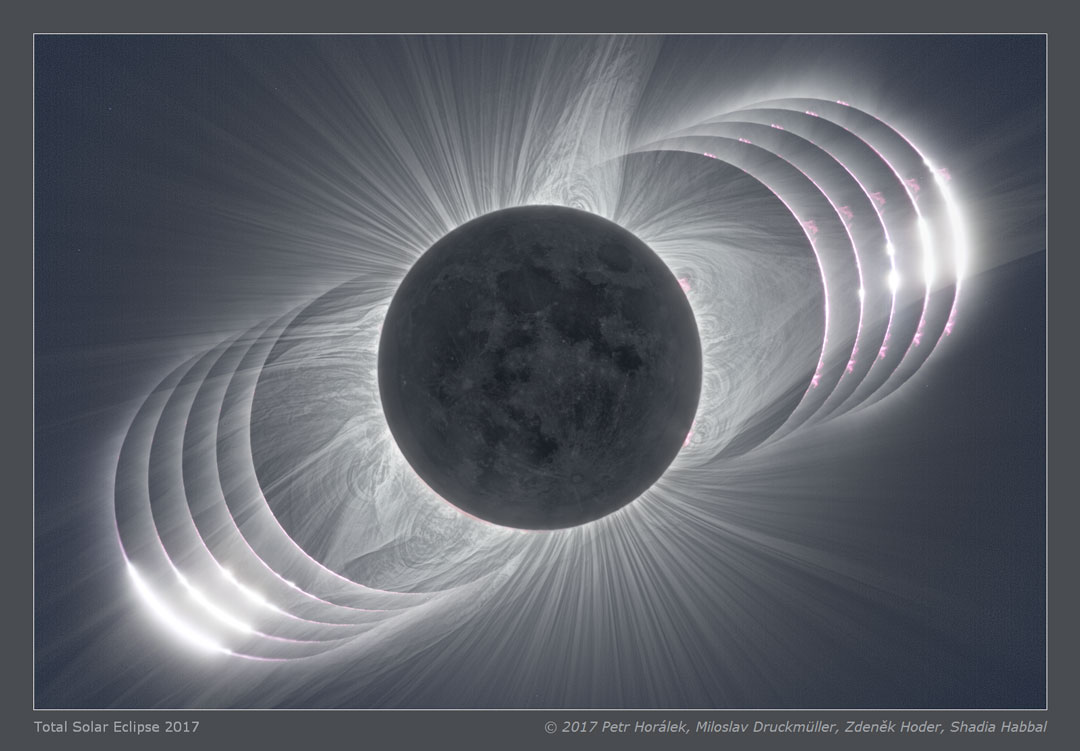
Most photographs don’t adequately portray the magnificence of the Sun’s corona. Seeing the corona first-hand during a total solar eclipse is unparalleled. The human eye can adapt to see coronal features and extent that average cameras usually cannot. Welcome, however, to the digital age. The featured central image digitally combined short and long exposures that were processed to highlight faint and extended features in the corona of the total solar eclipse that occurred in August of 2017. Clearly visible are intricate layers and glowing caustics of an ever changing mixture of hot gas and magnetic fields in the Sun’s corona. Looping prominences appear bright pink just past the Sun’s limb. Faint details on the night side of the New Moon can even be made out, illuminated by sunlight reflected from the dayside of the Full Earth. Images taken seconds before and after the total eclipse show glimpses of the background Sun known as Baily’s Beads and Diamond Ring. Tomorrow, a new total solar eclipse will be visible from parts of South America. [via NASA] https://ift.tt/2NoGUW8