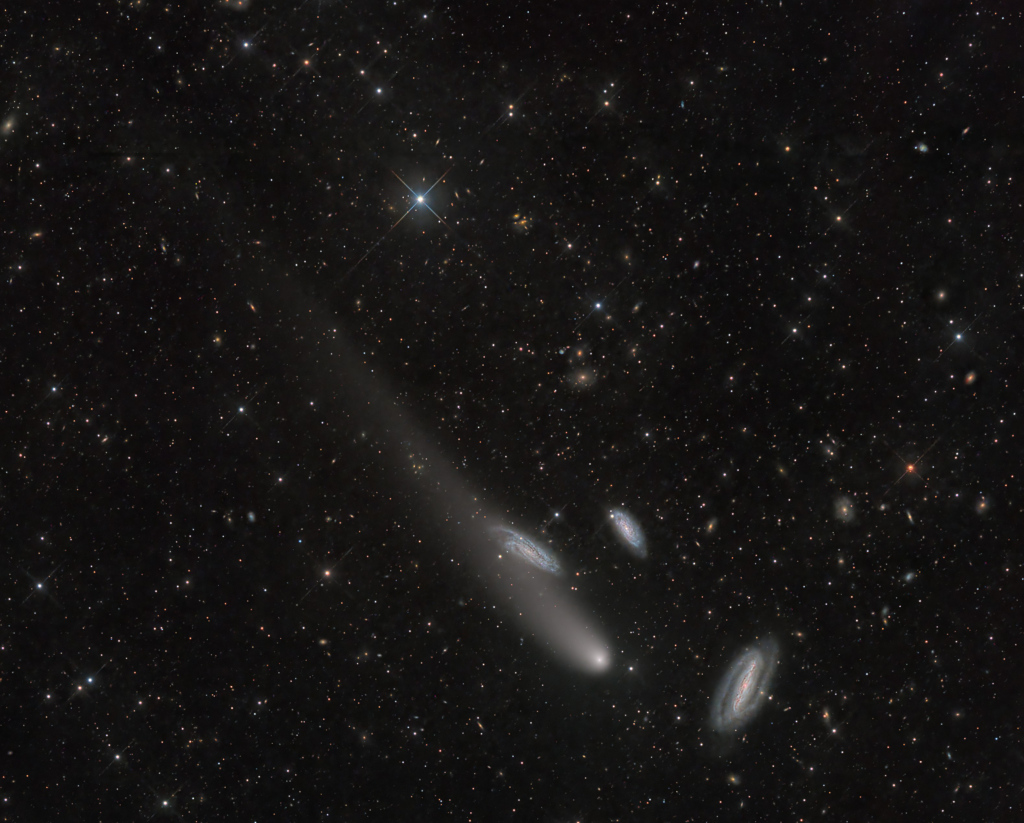
Three Galaxies and a Comet

Distant galaxies abound in this one degree wide field of view toward the southern constellation Grus (The Crane). But the three spiral galaxies at the lower right are quite striking. In fact, all three galaxies are grouped about 70 million light years away and sometimes known as the Grus Triplet. They share the pretty telescopic frame, recorded on December 13, with the comet designated C/2020 V2 ZTF. Now outbound from the inner Solar System and swinging below the ecliptic plane in a hyperbolic orbit, the comet was about 29 light-minutes from our fair planet in this image. And though comet ZTF was brighter when it was closest to the Sun last May and closest to Earth in September of 2023, it still shines in telescopes pointed toward southern night skies, remaining almost as bright as the Grus Triplet galaxies. [via NASA] https://ift.tt/3BWU5jK
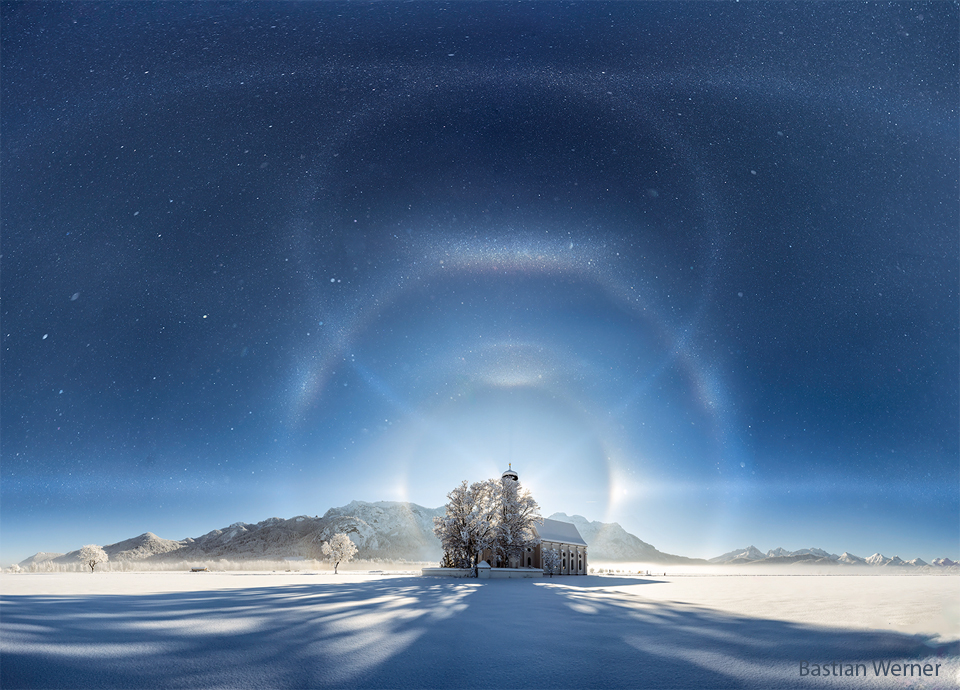
What’s causing those unusual sky arcs? Ice crystals. While crossing a field of fresh snow near Füssen, Bavaria, Germany, earlier this month, the photographer noticed that he had entered an ice fog. For suspended water to freeze into an ice fog requires quite cold temperatures, and indeed the air temperature on this day was measured at well below zero. The ice fog reflected light from the Sun setting behind St. Coleman Church. The result was one of the greatest spectacles the photographer has ever seen. First, the spots in the featured picture are not background stars but suspended ice and snow. Next, two prominent ice halos are visible: the 22-degree halo and the 46-degree halo. Multiple arcs are also visible, including, from top to bottom, antisolar (subsun), circumzenithal, Parry, tangent, and parhelic (horizontal). Finally, the balloon shaped curve connecting the top arc to the Sun is the rarest of all: it is the heliac arc, created by reflection from the sides of hexagonally shaped ice crystals suspended in a horizontal orientation. [via NASA] https://ift.tt/IS3yvrs

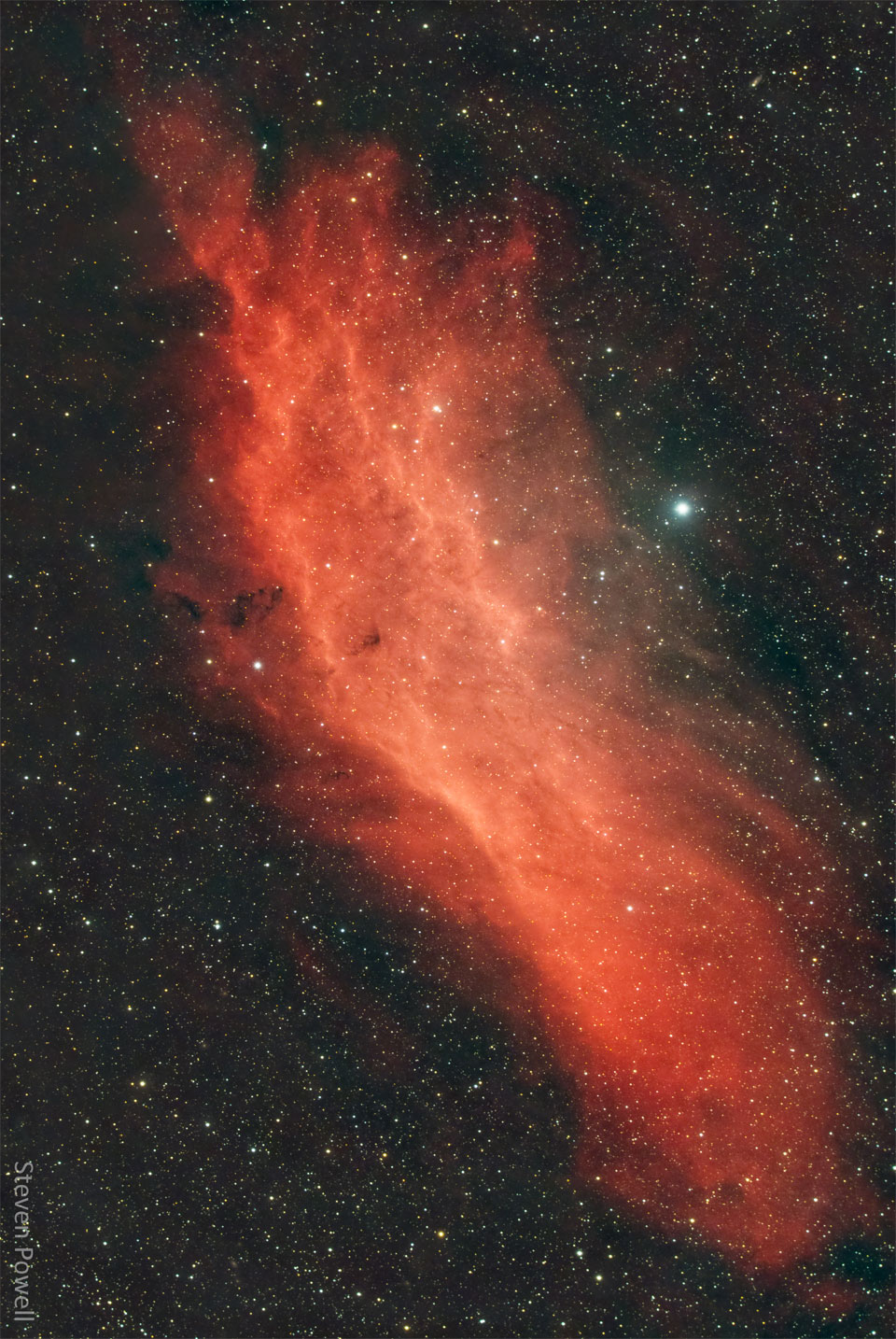
Could Queen Calafia’s mythical island exist in space? Perhaps not, but by chance the outline of this molecular space cloud echoes the outline of the state of California, USA. Our Sun has its home within the Milky Way’s Orion Arm, only about 1,000 light-years from the California Nebula. Also known as NGC 1499, the classic emission nebula is around 100 light-years long. On the featured image, the most prominent glow of the California Nebula is the red light characteristic of hydrogen atoms recombining with long lost electrons, stripped away (ionized) by energetic starlight. The star most likely providing the energetic starlight that ionizes much of the nebular gas is the bright, hot, bluish Xi Persei just to the right of the nebula. A regular target for astrophotographers, the California Nebula can be spotted with a wide-field telescope under a dark sky toward the constellation of Perseus, not far from the Pleiades. [via NASA] https://ift.tt/jiTh8Ib

Are squares A and B the same color? They are! To verify this, either run your cursor over the image or click here to see them connected. The featured illusion, an example of the same color illusion, illustrates that purely human perceptions in science may be ambiguous or inaccurate, even such a seemingly direct perception as relative color. Similar illusions exist on the sky, such as the size of the Moon near the horizon, or the apparent shapes of astronomical objects. The advent of automated, reproducible measuring devices such as CCDs have made science in general and astronomy in particular less prone to, but not free of, human-biased illusions. [via NASA] https://ift.tt/qS8DTsN

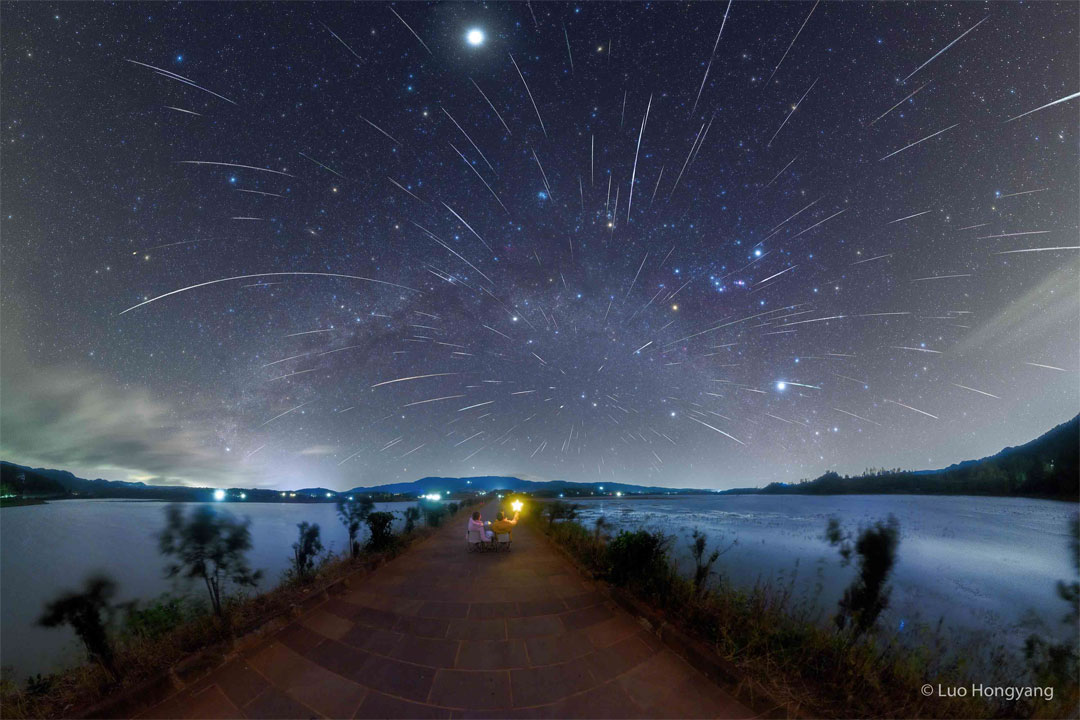
Where are all of these meteors coming from? In terms of direction on the sky, the pointed answer is the constellation of Gemini. That is why the major meteor shower in December is known as the Geminids — because shower meteors all appear to come from a radiant toward Gemini. Three dimensionally, however, sand-sized debris expelled from the unusual asteroid 3200 Phaethon follows a well-defined orbit about our Sun, and the part of the orbit that approaches Earth is superposed in front of the constellation of Gemini. Therefore, when Earth crosses this orbit, the radiant point of falling debris appears in Gemini. Featured here is a composite of many images taken a few days ago through dark skies from Nianhu Lake in China. Over 100 bright meteor streaks from the Geminids meteor shower are visible. [via NASA] https://ift.tt/o71cQqs

Crescent Enceladus

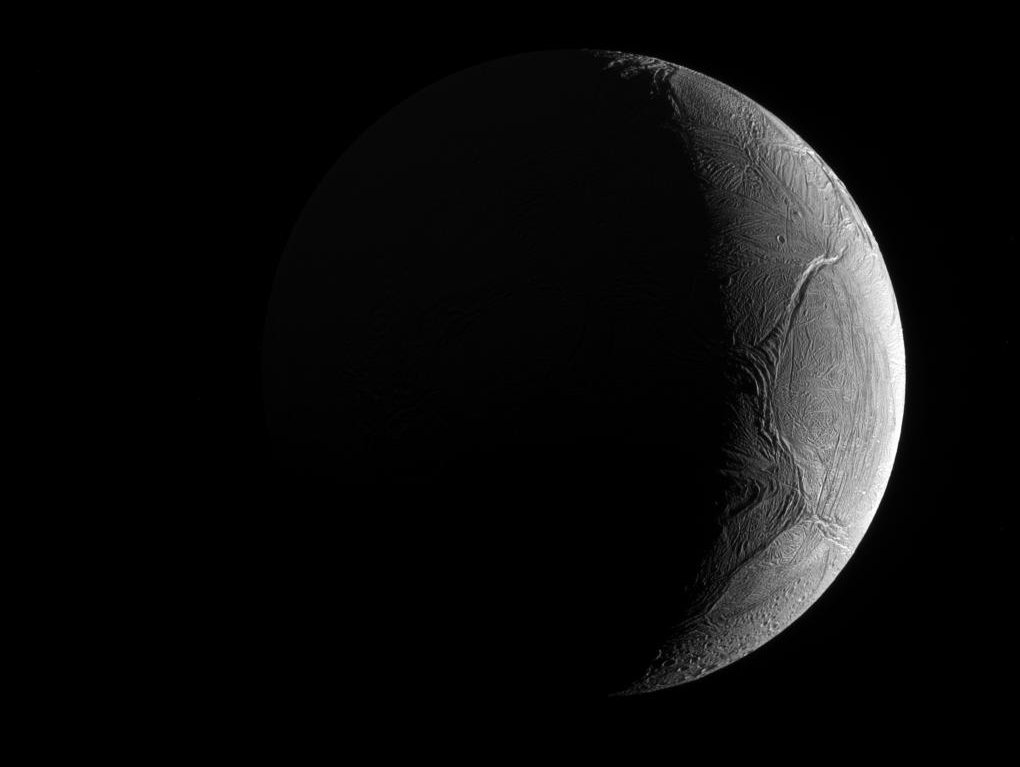
Peering from the shadows, the Saturn-facing hemisphere of tantalizing inner moon Enceladus poses in this Cassini spacecraft image. North is up in the dramatic scene captured during November 2016 as Cassini’s camera was pointed in a nearly sunward direction about 130,000 kilometers from the moon’s bright crescent. In fact, the distant world reflects over 90 percent of the sunlight it receives, giving its surface about the same reflectivity as fresh snow. A mere 500 kilometers in diameter, Enceladus is a surprisingly active moon. Data and images collected during Cassini’s flybys have revealed water vapor and ice grains spewing from south polar geysers and evidence of an ocean of liquid water hidden beneath the moon’s icy crust. [via NASA] https://ift.tt/h6kbxj0

Betelgeuse Eclipsed

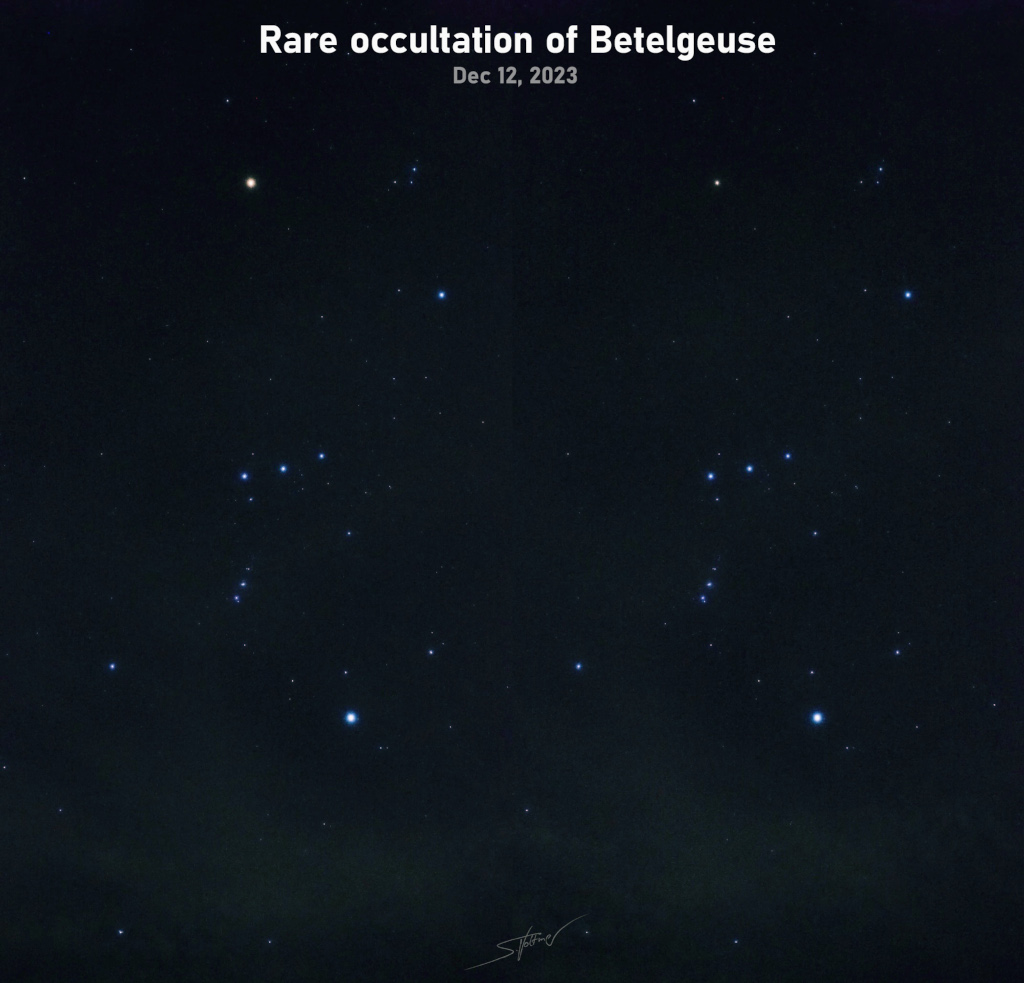
Asteroid 319 Leona cast a shadow across planet Earth on December 12, as it passed in front of bright star Betelgeuse. But to see everyone’s favorite red giant star fade this time, you had to stand near the center of the narrow shadow path starting in central Mexico and extending eastward across southern Florida, the Atlantic Ocean, southern Europe, and Eurasia. The geocentric celestial event is captured in these two panels taken at Almodovar del Rio, Spain from before (left) and during the asteroid-star occultation. In both panels Betelgeuse is seen above and left, at the shoulder of the familiar constellation Orion. Its brightness diminishes noticeably during the exceedingly rare occultation when, for several seconds, the giant star was briefly eclipsed by a roughly 60 kilometer diameter main-belt asteroid. [via NASA] https://ift.tt/vh0TdBH

Supernova Remnant Cassiopeia A

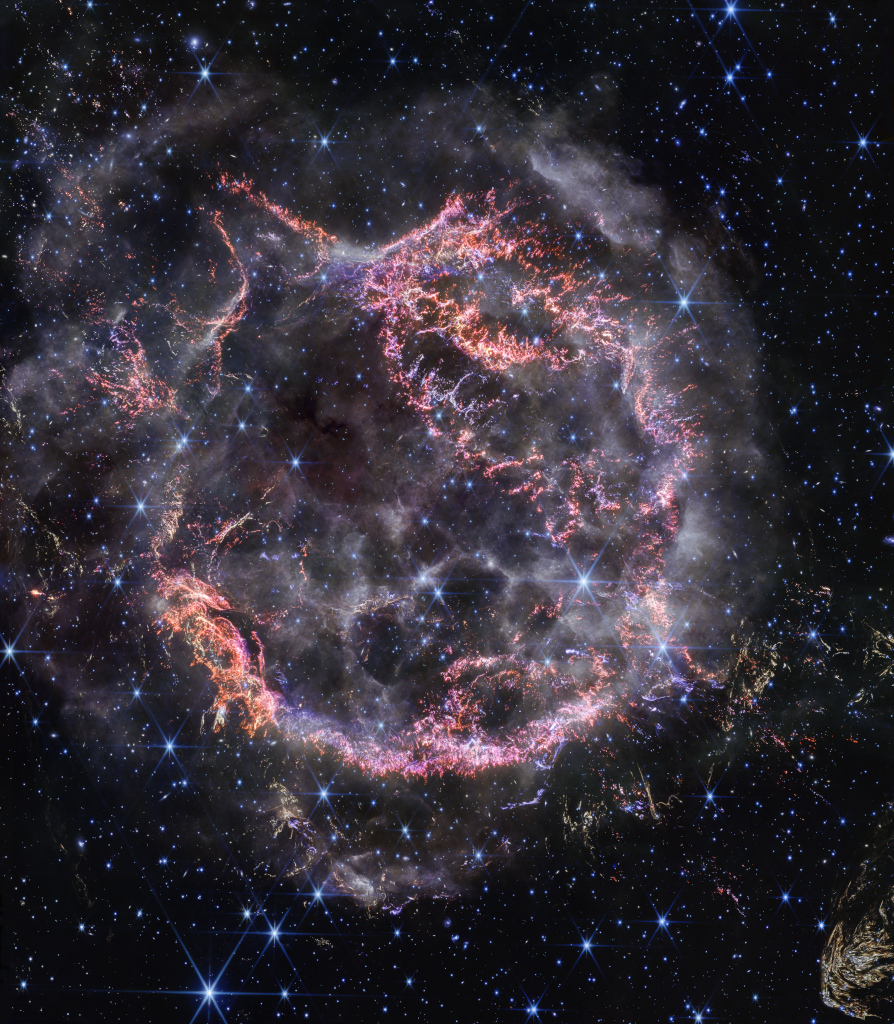
Massive stars in our Milky Way Galaxy live spectacular lives. Collapsing from vast cosmic clouds, their nuclear furnaces ignite and create heavy elements in their cores. After only a few million years for the most massive stars, the enriched material is blasted back into interstellar space where star formation can begin anew. The expanding debris cloud known as Cassiopeia A is an example of this final phase of the stellar life cycle. Light from the supernova explosion that created this remnant would have been first seen in planet Earth’s sky about 350 years ago, although it took that light 11,000 years to reach us. This sharp NIRCam image from the James Webb Space Telescope shows the still hot filaments and knots in the supernova remnant. The whitish, smoke-like outer shell of the expanding blast wave is about 20 light-years across, while the bright speck near center is a neutron star, the incredibly dense, collapsed remains of the massive stellar core. Light echoes from the massive star’s cataclysmic explosion are also identified in Webb’s detailed image of supernova remnant Cassiopeia A. [via NASA] https://ift.tt/VgsMvnw

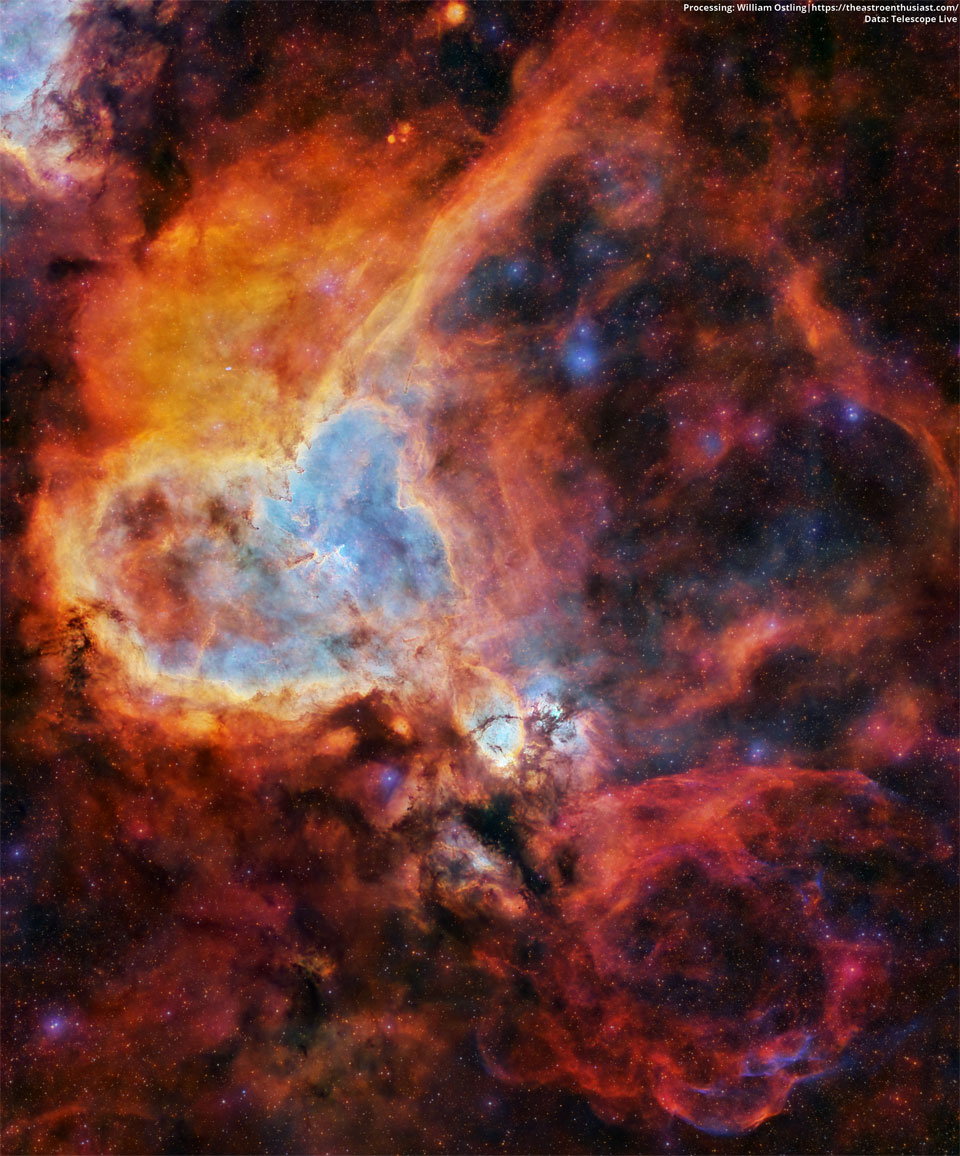
What excites the Heart Nebula? First, the large emission nebula on the left, catalogued as IC 1805, looks somewhat like a human heart. The nebula glows brightly in red light emitted by its most prominent element, hydrogen, but this long-exposure image was also blended with light emitted by silicon (yellow) and oxygen (blue). In the center of the Heart Nebula are young stars from the open star cluster Melotte 15 that are eroding away several picturesque dust pillars with their atom-exciting energetic light and winds. The Heart Nebula is located about 7,500 light years away toward the constellation of Cassiopeia. At the bottom right of the Heart Nebula is the companion Fishhead Nebula. This wide and deep image clearly shows, though, that glowing gas surrounds the Heart Nebula in all directions. [via NASA] https://ift.tt/BF96Jws

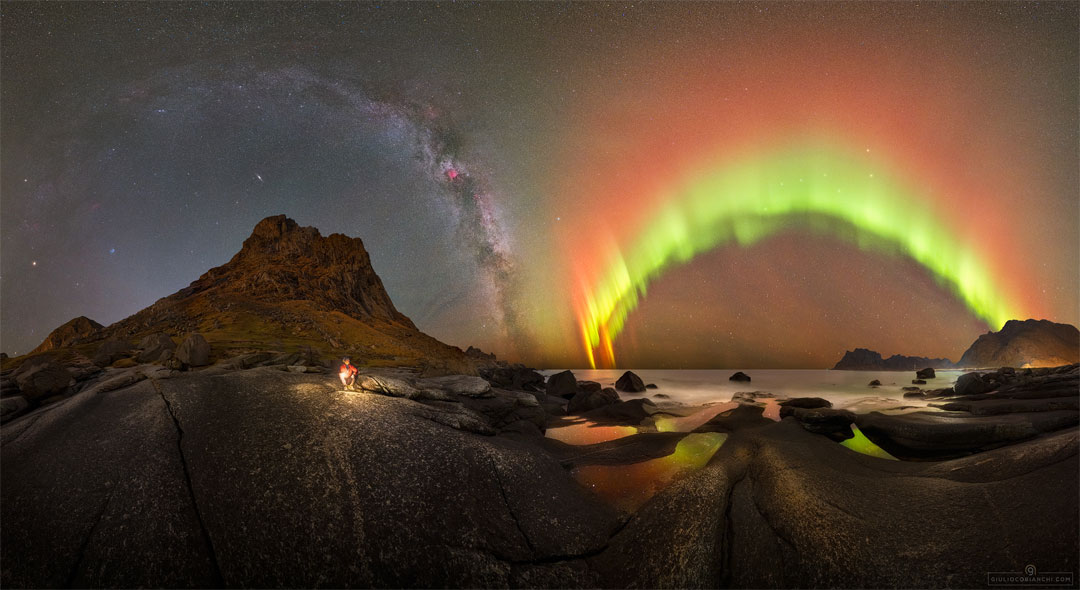
What are these two giant arches across the sky? Perhaps the more familiar one, on the left, is the central band of our Milky Way Galaxy. This grand disk of stars and nebulas here appears to encircle much of the southern sky. Visible below the stellar arch is the rusty-orange planet Mars and the extended Andromeda galaxy. But this night had more! For a few minutes during this cold arctic night, a second giant arch appeared encircling part of the northern sky: an aurora. Auroras are much closer than stars as they are composed of glowing air high in Earth’s atmosphere. Visible outside the green auroral arch is the group of stars popularly known as the Big Dipper. The featured digital composite of 20 images was captured in mid-November 2022 over the Lofoten Islands in Norway. [via NASA] https://ift.tt/749TR5K