Julius Caesar and Leap Days

In 46 BC Julius Caesar reformed the calendar system. Based on advice by astronomer Sosigenes of Alexandria, the Julian calendar included one leap day every four years to account for the fact that an Earth year is slightly more than 365 days long. In modern terms, the time it takes for the planet to orbit the Sun once is 365.24219 mean solar days. So if calendar years contained exactly 365 days they would drift from the Earth’s year by about 1 day every 4 years and eventually July (named for Julius Caesar himself) would occur during the northern hemisphere winter. By adopting a leap year with an extra day every four years, the Julian calendar year would drift much less. In 1582 Pope Gregory XIII provided the further fine-tuning that leap days should not occur in years ending in 00, unless divisible by 400. This Gregorian Calendar system is the one in wide use today. Of course, tidal friction in the Earth-Moon system slows Earth’s rotation and gradually lengthens the day by about 1.4 milliseconds per century. That means that leap days like today will not be necessary, about 4 million years from now. This Roman silver coin, a denarius, depicts Julius Caesar (left) and Venus, Roman goddess of love. [via NASA] https://ift.tt/HgaclIi
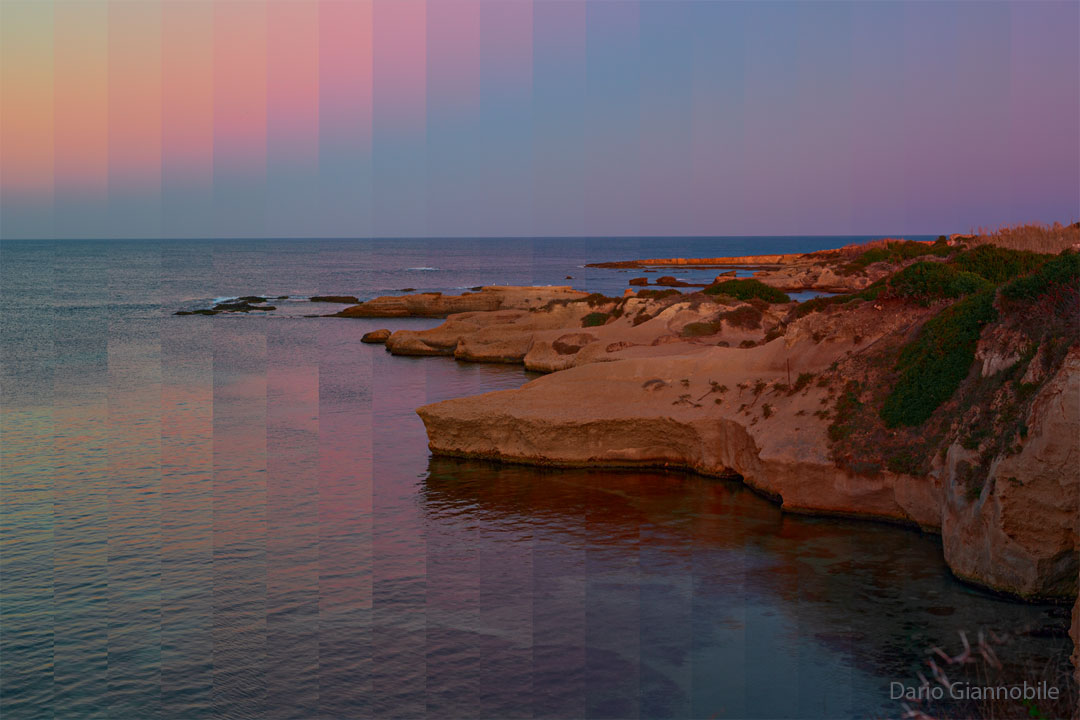
How does the sky turn dark at night? In stages, and with different characteristic colors rising from the horizon. The featured image shows, left to right, increasingly late twilight times after sunset in 20 different vertical bands. The picture was taken last month in Syracuse, Sicily, Italy, in the direction opposite the Sun. On the far left is the pre-sunset upper sky. Toward the right, prominent bands include the Belt of Venus, the Blue Band, the Horizon Band, and the Red Band. As the dark shadow of the Earth rises, the colors in these bands are caused by direct sunlight reflecting from air and aerosols in the Earth’s atmosphere, multiple reflections sometimes involving a reddened sunset, and refraction. In practice, these bands can be diffuse and hard to discern, and their colors can depend on colors near the setting Sun. Finally, the Sun completely sets and the sky becomes dark. Don’t despair — the whole thing will happen in reverse when the Sun rises again in the morning. [via NASA] https://ift.tt/y3NMIEV

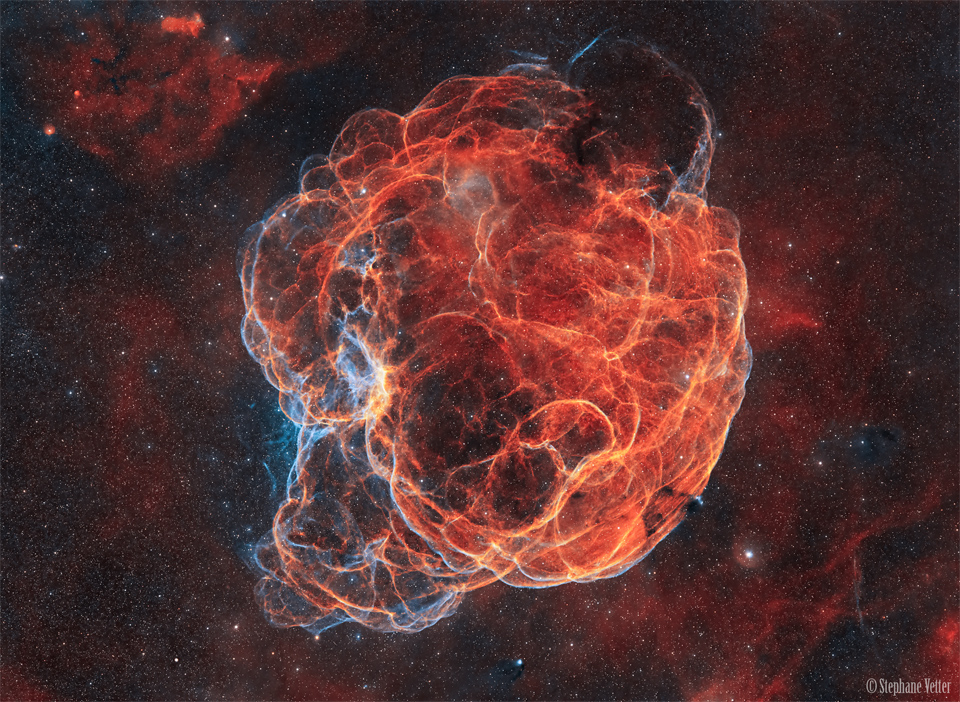
It’s easy to get lost following the intricate, looping, and twisting filaments of supernova remnant Simeis 147. Also cataloged as Sharpless 2-240, the filamentary nebula goes by the popular nickname the Spaghetti Nebula. Seen toward the boundary of the constellations of the Bull (Taurus) and the Charioteer (Auriga), the impressive gas structure covers nearly 3 degrees on the sky, equivalent to 6 full moons. That’s about 150 light-years at the stellar debris cloud’s estimated distance of 3,000 light-years. This composite image includes data taken through narrow-band filters isolating emission from hydrogen (red) and oxygen (blue) glowing gas. The supernova remnant has an estimated age of about 40,000 years, meaning light from this massive stellar explosion first reached the Earth when woolly mammoths roamed free. Besides the expanding remnant, this cosmic catastrophe left behind a pulsar: a spinning neutron star that is the remnant of the original star’s core. [via NASA] https://ift.tt/9ZgCMaN

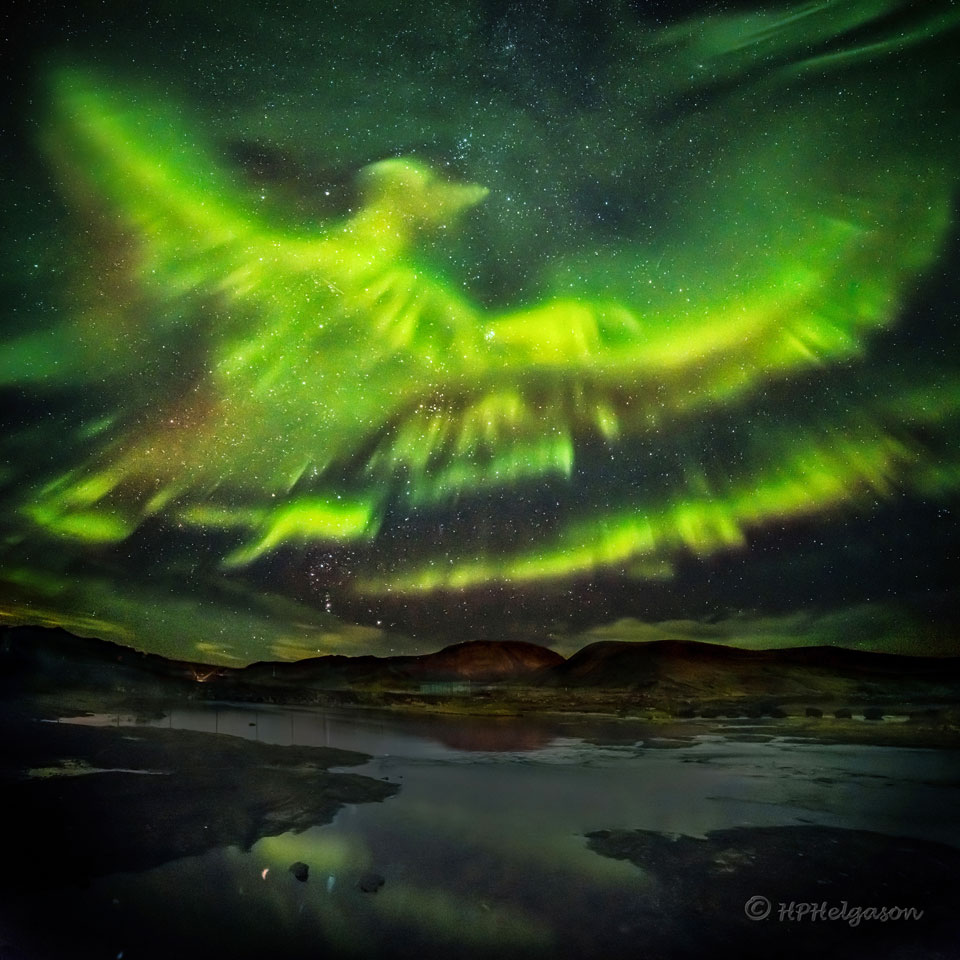
All of the other aurora watchers had gone home. By 3:30 am in Iceland, on a quiet September night, much of that night’s auroras had died down. Suddenly, unexpectedly, a new burst of particles streamed down from space, lighting up the Earth’s atmosphere once again. This time, surprisingly, pareidoliacally, the night lit up with an amazing shape reminiscent of a giant phoenix. With camera equipment at the ready, two quick sky images were taken, followed immediately by a third of the land. The mountain in the background is Helgafell, while the small foreground river is called Kaldá, both located about 30 kilometers north of Iceland’s capital Reykjavík. Seasoned skywatchers will note that just above the mountain, toward the left, is the constellation of Orion, while the Pleiades star cluster is also visible just above the frame center. The 2016 aurora, which lasted only a minute and was soon gone forever — would possibly be dismissed as a fanciful fable — were it not captured in the featured, digitally-composed, image mosaic. [via NASA] https://ift.tt/xeM0VWN

To the Moon

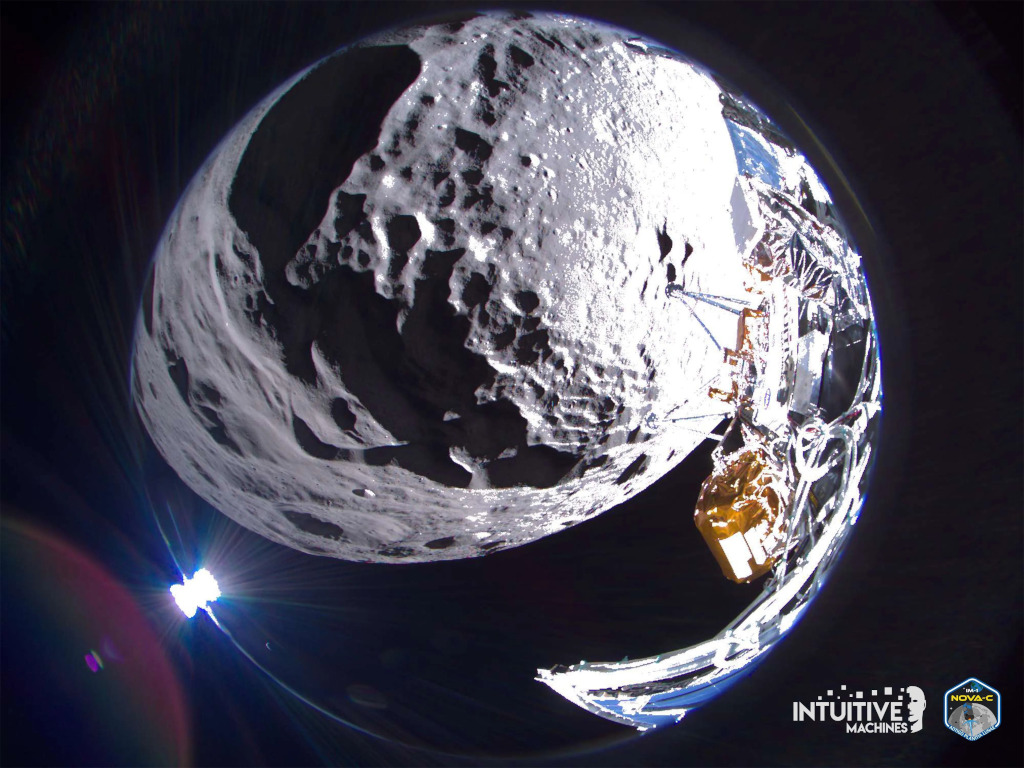
Intuitive Machines’ robotic lander Odysseus has accomplished the first U.S. landing on the Moon since the Apollo 17 mission in 1972. Launched on a SpaceX rocket on February 15, the phone booth sized lander reached lunar orbit on the 21st and touched down on the lunar surface at 6:23 pm ET on February 22nd. Its landing region is about 300 kilometers north of the Moon’s south pole, near a crater designated Malapert A. The lander is presently collecting solar power and transmitting data back to the Intuitive Machines’ mission control center in Houston. The mission marks the first commercial uncrewed landing on the Moon. Prior to landing, Odysseus’ camera captured this extreme wide angle image (landing legs visible at right) as it flew over Schomberger crater some 200 kilometers from its landing site. Odysseus was still about 10 kilometers above the lunar surface. [via NASA] https://ift.tt/PItVF5w

The Pencil Nebula Supernova Shock Wave

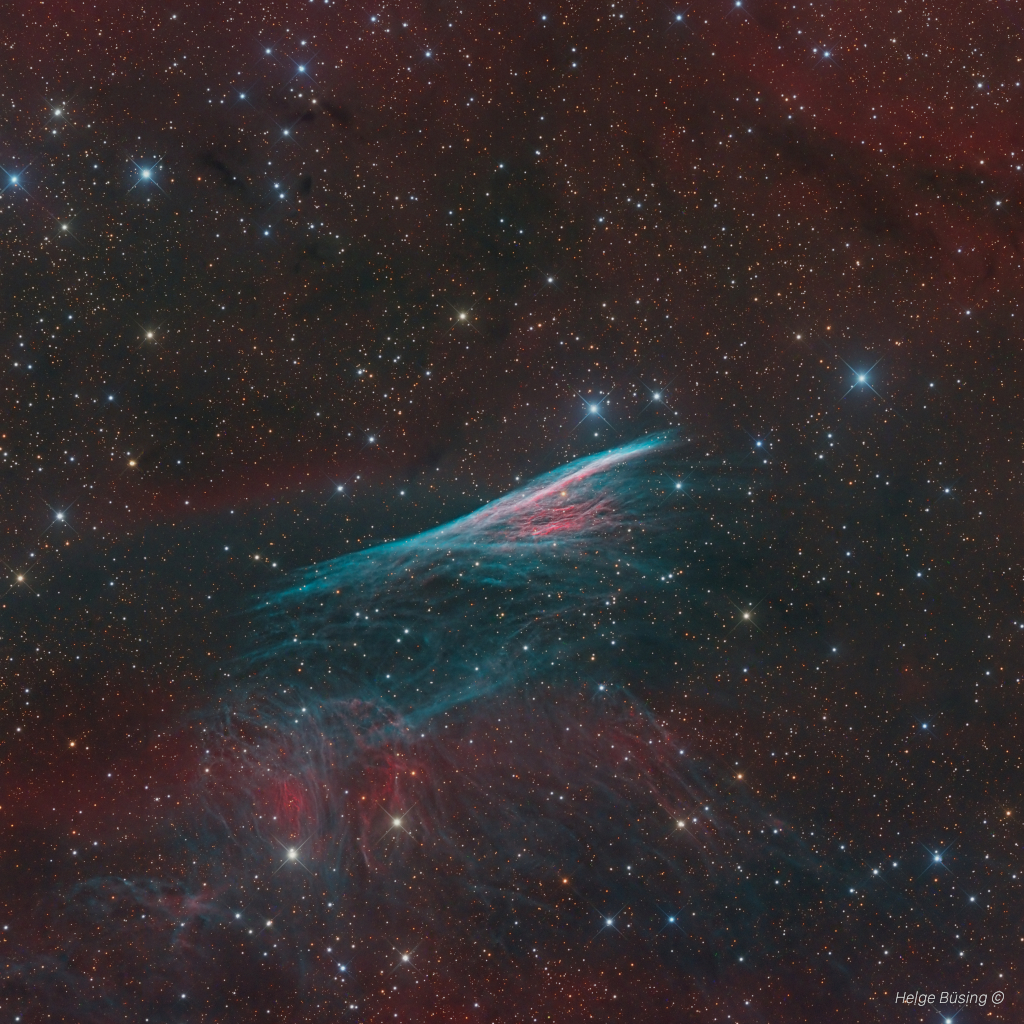
This supernova shock wave plows through interstellar space at over 500,000 kilometers per hour. Centered and moving upward in the sharply detailed color composite its thin, bright, braided filaments are actually long ripples in a cosmic sheet of glowing gas seen almost edge-on. Discovered in the 1840s by Sir John Herschel, the narrow-looking nebula is sometimes known as Herschel’s Ray. Cataloged as NGC 2736, its pointed appearance suggests its modern popular name, the Pencil Nebula. The Pencil Nebula is about 800 light-years away. Nearly 5 light-years long it represents only a small part of the Vela supernova remnant though. The enormous Vela remnant itself is around 100 light-years in diameter, the expanding debris cloud of a star that was seen to explode about 11,000 years ago. Initially, the section of the shock wave seen as the Pencil nebula was moving at millions of kilometers per hour but has slowed considerably, sweeping up surrounding interstellar material. [via NASA] https://ift.tt/fyIZOpK

A View Toward M106

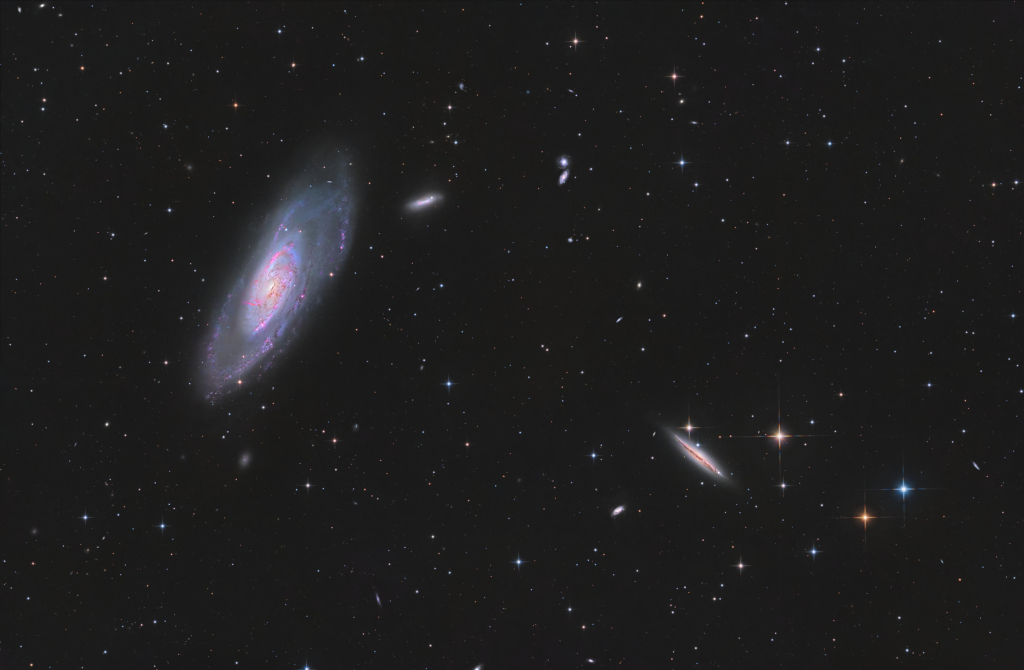
Big, bright, beautiful spiral, Messier 106 dominates this cosmic vista. The nearly two degree wide telescopic field of view looks toward the well-trained constellation Canes Venatici, near the handle of the Big Dipper. Also known as NGC 4258, M106 is about 80,000 light-years across and 23.5 million light-years away, the largest member of the Canes II galaxy group. For a far far away galaxy, the distance to M106 is well-known in part because it can be directly measured by tracking this galaxy’s remarkable maser, or microwave laser emission. Very rare but naturally occurring, the maser emission is produced by water molecules in molecular clouds orbiting its active galactic nucleus. Another prominent spiral galaxy on the scene, viewed nearly edge-on, is NGC 4217 below and right of M106. The distance to NGC 4217 is much less well-known, estimated to be about 60 million light-years, but the bright spiky stars are in the foreground, well inside our own Milky Way galaxy. [via NASA] https://ift.tt/vacdY30

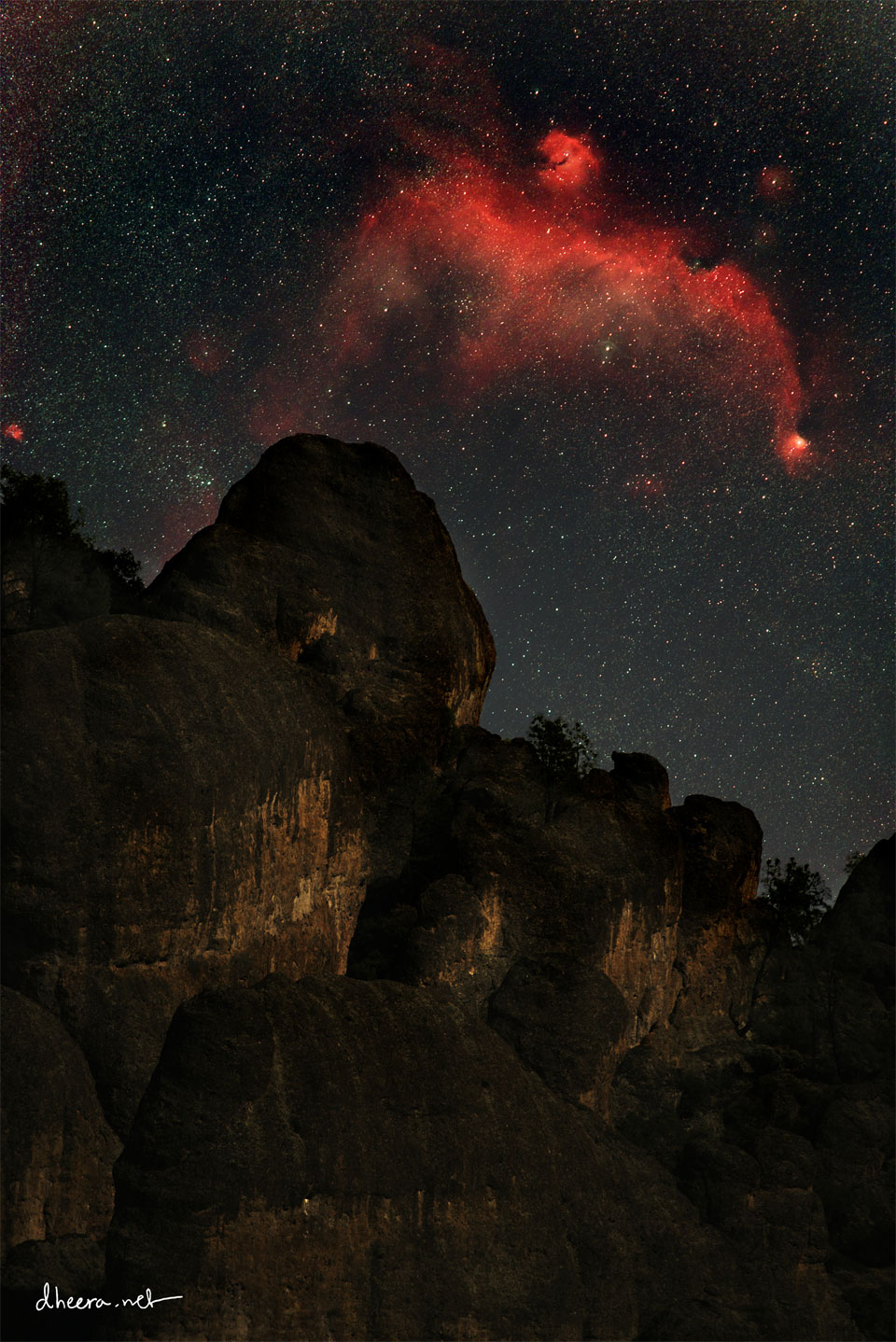
The bird is bigger than the peak. Nicknamed for its avian shape, the Seagull Nebula is an emission nebula on the night sky that is vast, spanning an angle over five times the diameter of the full moon and over 200 light years. The head of the nebula is catalogued as IC 2177, and the star cluster under its right wing is catalogued as NGC 2343. Consisting of mostly red-glowing hydrogen gas, the Seagull Nebula incorporates some dust lanes and is forming stars. The peak over which this Seagull seems to soar occurs at Pinnacles National Park in California, USA. The featured image is a composite of long exposure images of the background sky and short exposure images of the foreground, all taken consecutively with the same camera and from the same location. [via NASA] https://ift.tt/UdFyY51

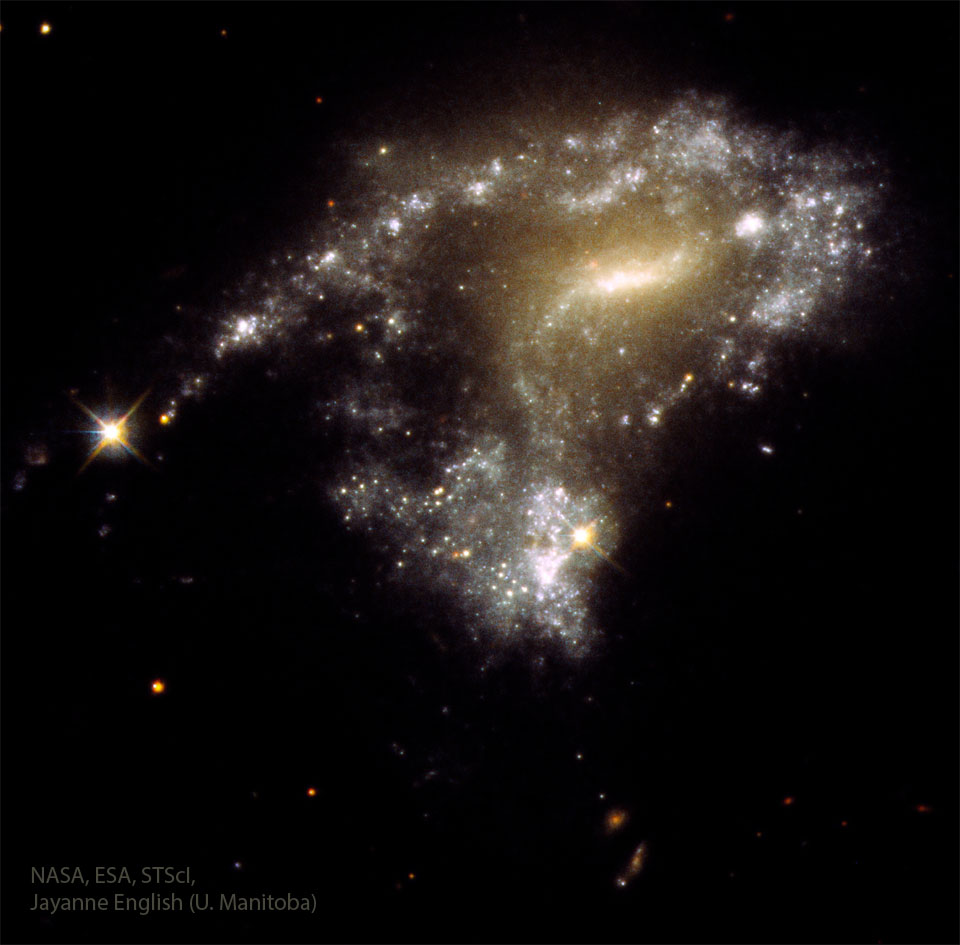
When galaxies collide, how many stars are born? For AM1054-325, featured here in a recently released image by the Hubble Space Telescope, the answer is millions. Instead of stars being destroyed as galaxy AM1054-325 and a nearby galaxy circle each other, their gravity and motion has ignited stellar creation. Star formation occurs rapidly in the gaseous debris stretching from AM1054-325’s yellowish body due to the other galaxy’s gravitational pull. Hydrogen gas surrounding newborn stars glows pink. Bright infant stars shine blue and cluster together in compact nurseries of thousands to millions of stars. AM1054-325 possesses over 100 of these intense-blue, dot-like star clusters, some appearing like a string of pearls. Analyzing ultraviolet light helped determine that most of these stars are less than 10 million years old: stellar babies. Many of these nurseries may grow up to be globular star clusters, while the bundle of young stars at the bottom tip may even detach and form a small galaxy. [via NASA] https://ift.tt/9pC8Oga

What’s happening near the Sun? To help find out, NASA launched the robotic Parker Solar Probe (PSP) to investigate regions closer to the Sun than ever before. The PSP’s looping orbit brings it nearer to the Sun each time around — every few months. The featured time-lapse video shows the view looking sideways from behind PSP’s Sun shield during its 16th approach to the Sun last year — from well within the orbit of Mercury. The PSP’s Wide Field Imager for Solar Probe (WISPR) cameras took the images over eleven days, but they are digitally compressed here into about one minute video. The waving of the solar corona is visible, as is a coronal mass ejection, with stars, planets, and even the central band of our Milky Way Galaxy streaming by in the background as the PSP orbits the Sun. PSP has found the solar neighborhood to be surprisingly complex and to include switchbacks — times when the Sun’s magnetic field briefly reverses itself. [via NASA] https://ift.tt/4lSja3J