Sandy and the Moon Halo

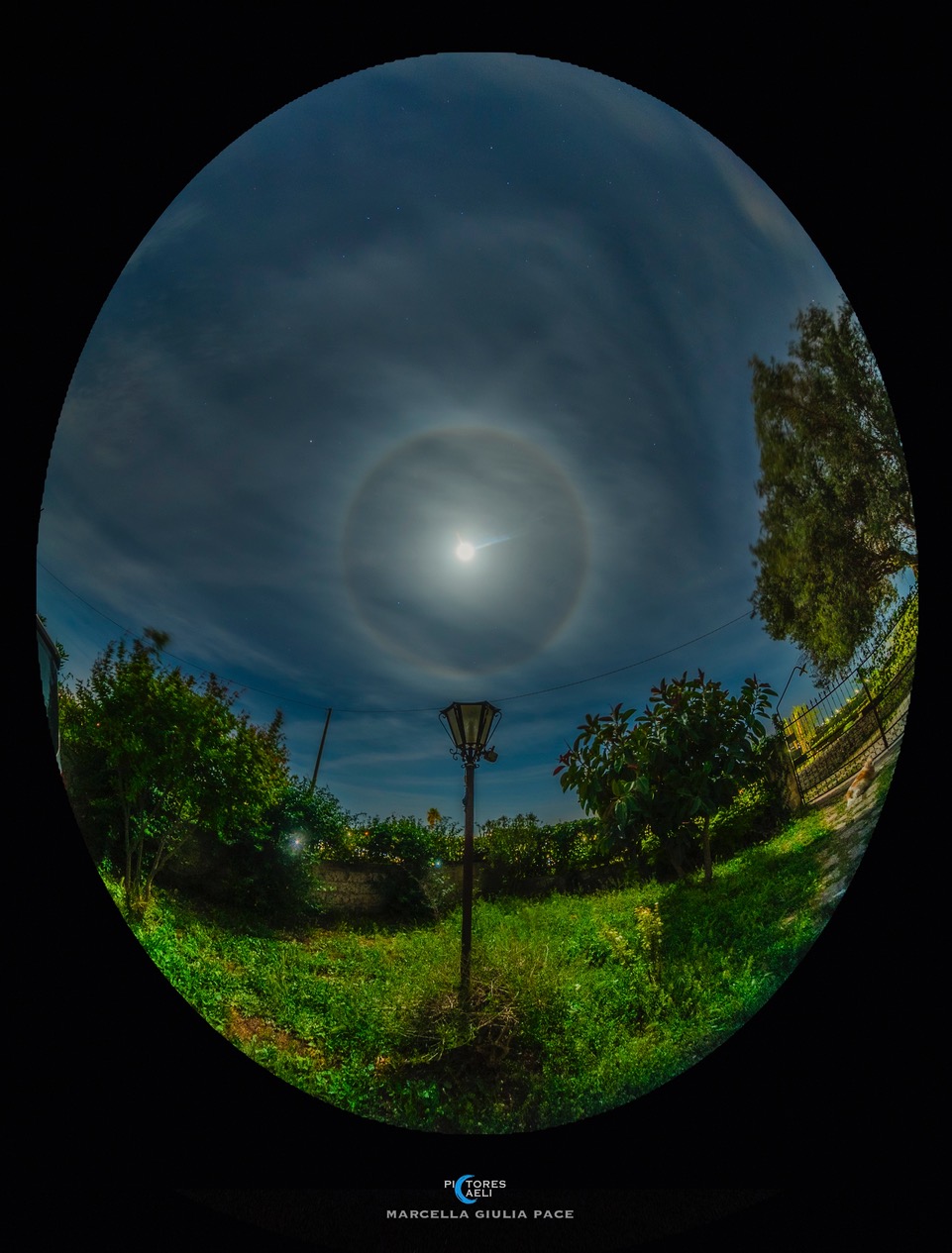
Last April’s Full Moon shines through high clouds near the horizon, casting shadows in this garden-at-night skyscape. Along with canine sentinel Sandy watching the garden gate, the wide-angle snapshot also captured the bright Moon’s 22 degree ice halo. But June’s bright Full Moon will cast shadows too. This month, the Moon’s exact full phase occurs at 01:08 UTC June 22. That’s a mere 28 hours or so after today’s June solstice (at 20:51 UTC June 20), the moment when the Sun reaches its maximum northern declination. Known to some as a Strawberry Moon, June’s Full Moon is at its southernmost declination, and of course will create its own 22 degree halos in hazy night skies. [via NASA] https://ift.tt/DpLGlbT
Do dragons fight on the altar of the sky? Although it might appear that way, these dragons are illusions made of thin gas and dust. The emission nebula NGC 6188, home to the glowing clouds, is found about 4,000 light years away near the edge of a large molecular cloud, unseen at visible wavelengths, in the southern constellation Ara (the Altar). Massive, young stars of the embedded Ara OB1 association were formed in that region only a few million years ago, sculpting the dark shapes and powering the nebular glow with stellar winds and intense ultraviolet radiation. The recent star formation itself was likely triggered by winds and supernova explosions from previous generations of massive stars, that swept up and compressed the molecular gas. This impressively detailed image spans over 2 degrees (four full Moons), corresponding to over 150 light years at the estimated distance of NGC 6188. [via NASA] https://ift.tt/UwqvdQS

Yes, but can your thunderstorm do this? Pictured here are gigantic jets shooting up from a thunderstorm last week toward the Himalayan Mountains in China and Bhutan. The composite image captured four long jets that occurred only minutes apart. Gigantic jets, documented only in this century, are a type of lightning discharge that occurs between some thunderstorms and the Earth’s ionosphere high above them. They are an unusual type of lightning that is much different from regular cloud-to-cloud and cloud-to-ground lightning. The bottoms of gigantic jets appear similar to a cloud-to-above strike called blue jets, while the tops appear similar to upper-atmosphere red sprites. Although the mechanism and trigger that cause gigantic jets remains a topic of research, it is clear that the jets reduce charge imbalance between different parts of Earth’s atmosphere. A good way to look for gigantic jets is to watch a powerful but distant thunderstorm from a clear location. [via NASA] https://ift.tt/aYrjqxR

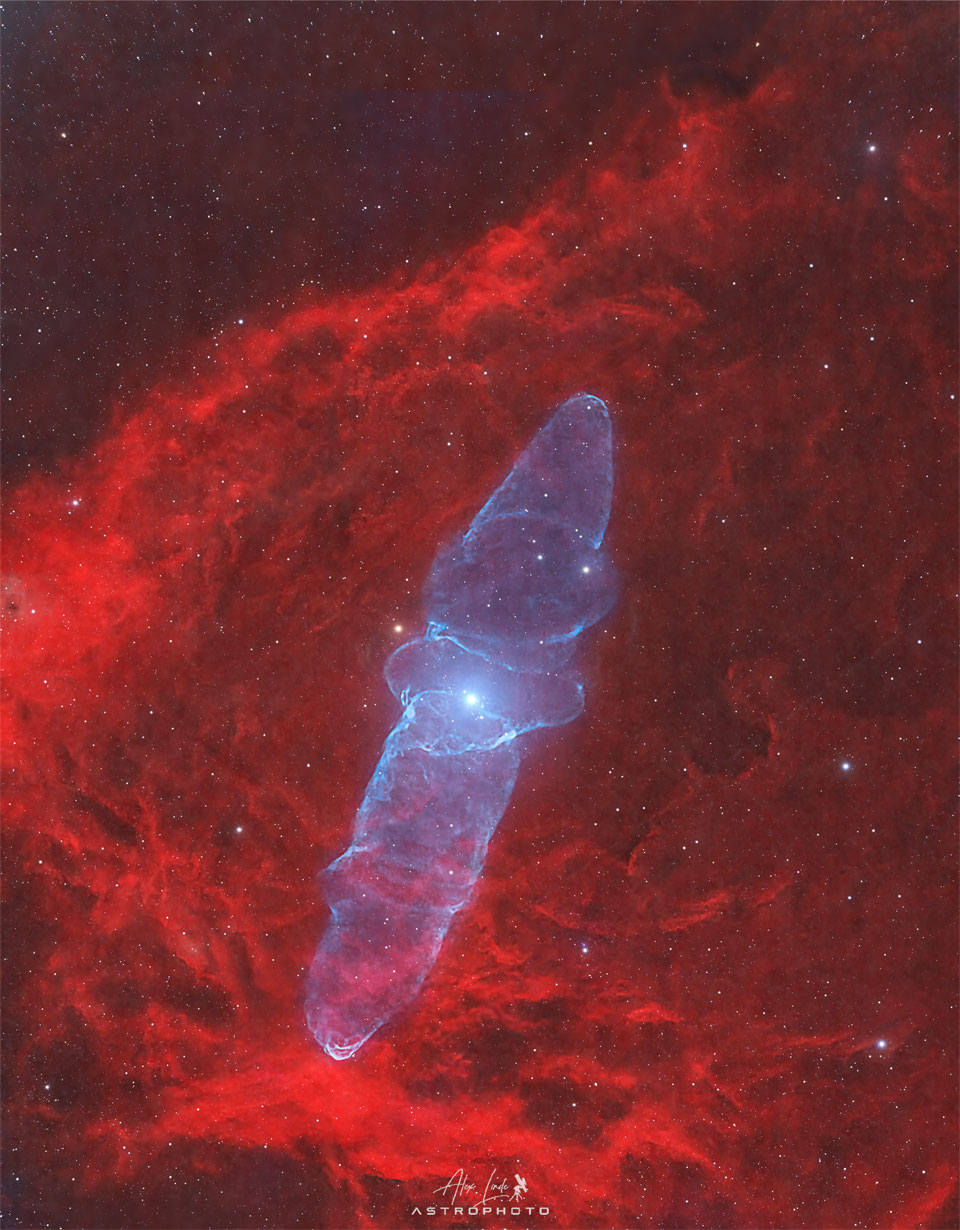
Squids on Earth aren’t this big. This mysterious squid-like cosmic cloud spans nearly three full moons on planet Earth’s sky. Discovered in 2011 by French astro-imager Nicolas Outters, the Squid Nebula’s bipolar shape is distinguished here by the telltale blue emission from doubly ionized oxygen atoms. Though apparently surrounded by the reddish hydrogen emission region Sh2-129, the true distance and nature of the Squid Nebula have been difficult to determine. Still, one investigation suggests Ou4 really does lie within Sh2-129 some 2,300 light-years away. Consistent with that scenario, the cosmic squid would represent a spectacular outflow of material driven by a triple system of hot, massive stars, cataloged as HR8119, seen near the center of the nebula. If so, this truly giant squid nebula would physically be over 50 light-years across. [via NASA] https://ift.tt/QZHMmeJ

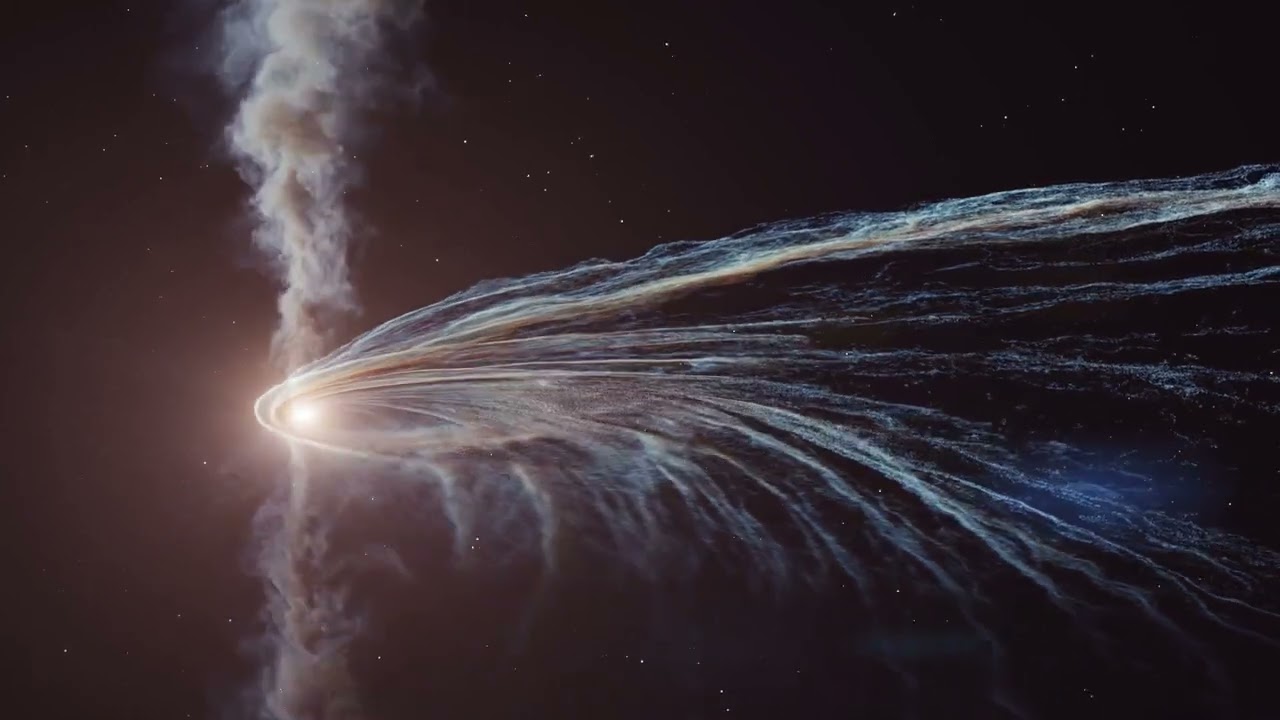
What happens if a star gets too close to a black hole? The black hole can rip it apart — but how? It’s not the high gravitational attraction itself that’s the problem — it’s the difference in gravitational pull across the star that creates the destruction. In the featured animated video illustrating this disintegration, you first see a star approaching the black hole. Increasing in orbital speed, the star’s outer atmosphere is ripped away during closest approach. Much of the star’s atmosphere disperses into deep space, but some continues to orbit the black hole and forms an accretion disk. The animation then takes you into the accretion disk while looking toward the black hole. Including the strange visual effects of gravitational lensing, you can even see the far side of the disk. Finally, you look along one of the jets being expelled along the spin axis. Theoretical models indicate that these jets not only expel energetic gas, but also create energetic neutrinos — one of which may have been seen recently on Earth. [via NASA] https://ift.tt/7LS5F0c

Prominences and Filaments on the Active Sun

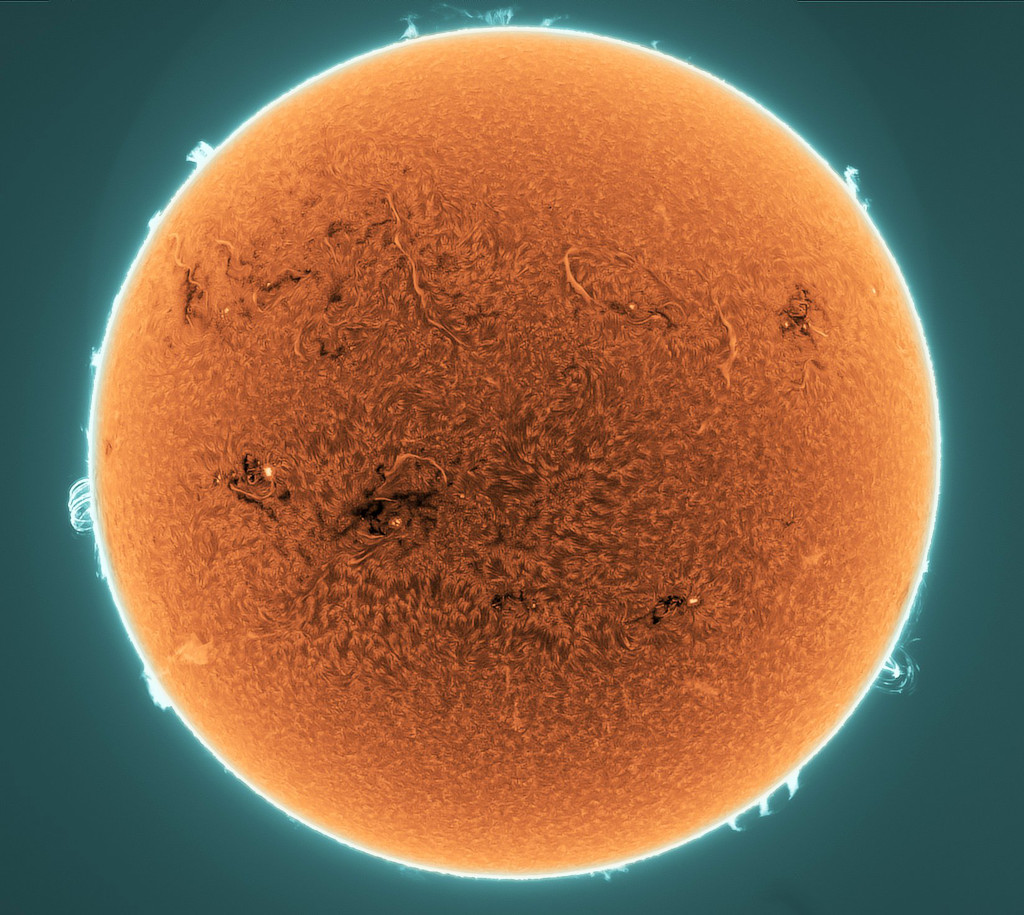
This colorized and sharpened image of the Sun is composed of frames recording emission from hydrogen atoms in the solar chromosphere on May 15. Approaching the maximum of solar cycle 25, a multitude of active regions and twisting, snake-like solar filaments are seen to sprawl across the surface of the active Sun. Suspend in the active regions’ strong magnetic fields, the filaments of plasma lofted above the Sun’s edge appear as bright solar prominences. The large prominences seen near 4 o’clock, and just before 9 o’clock around the solar limb are post flare loops from two powerful X-class solar flares that both occurred on that day. In fact, the 4 o’clock prominence is associated with the monster active region AR 3664 just rotating off the Sun’s edge. [via NASA] https://ift.tt/8nJHxyQ

RCW 85

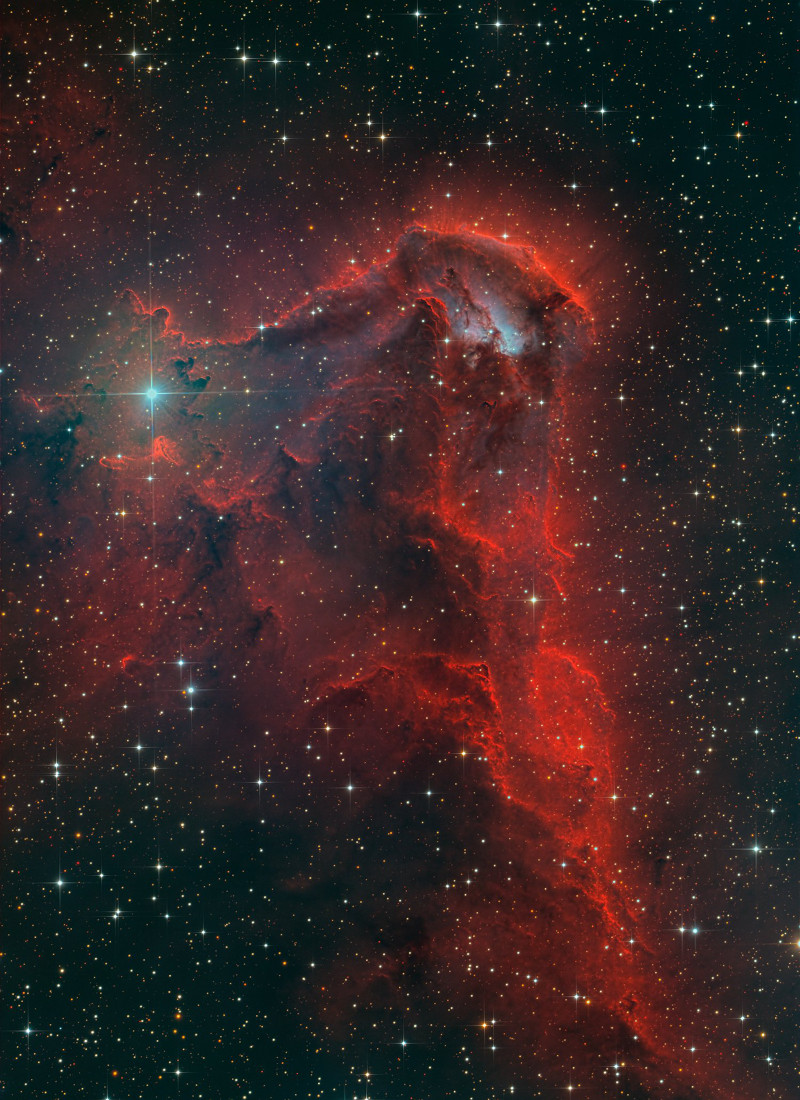
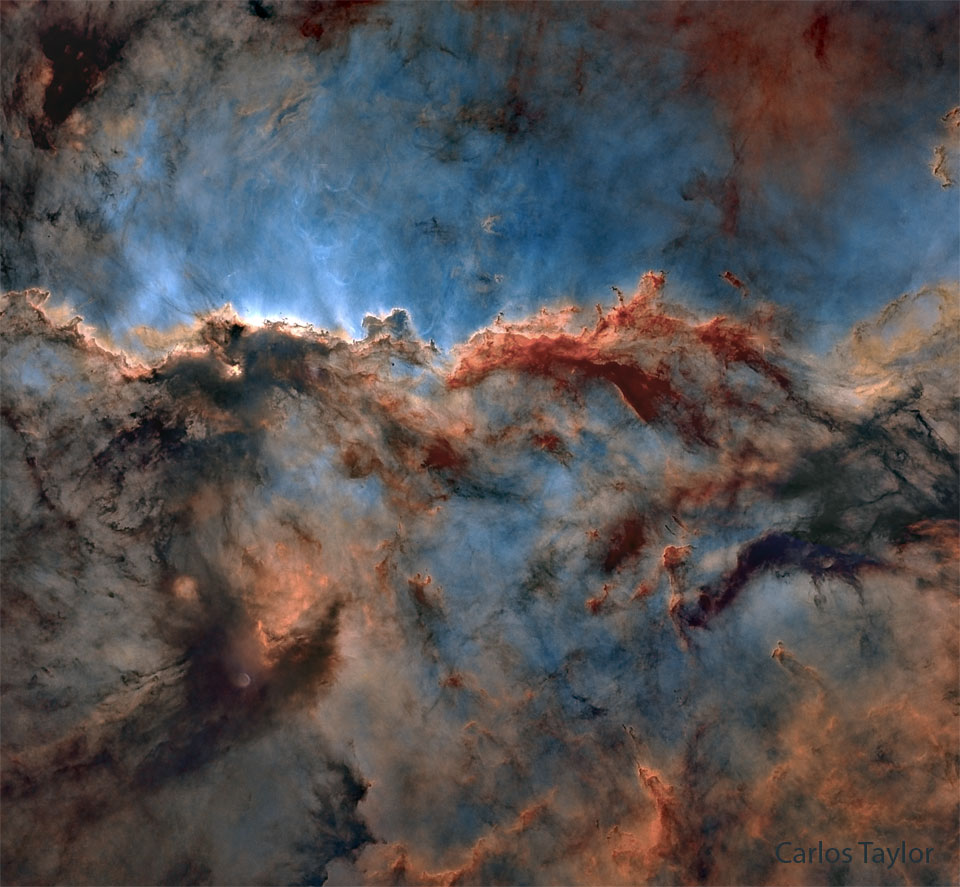
From the 1960 astronomical catalog of Rodgers, Campbell and Whiteoak, emission region RCW 85 shines in southern night skies between bright stars Alpha and Beta Centauri. About 5,000 light years distant, the hazy interstellar cloud of glowing hydrogen gas and dust is faint. But detailed structures along well-defined rims within RCW 85 are traced in this cosmic skyscape composed of 28 hours of narrow and broadband exposures. Suggestive of dramatic shapes in other stellar nurseries where natal clouds of gas and dust are sculpted by energetic winds and radiation from newborn stars, the tantalizing nebula has been called the Devil’s Tower. This telescopic frame would span around 100 light-years at the estimated distance of RCW 85. [via NASA] https://ift.tt/QscOEoS

Messier 66 Close Up

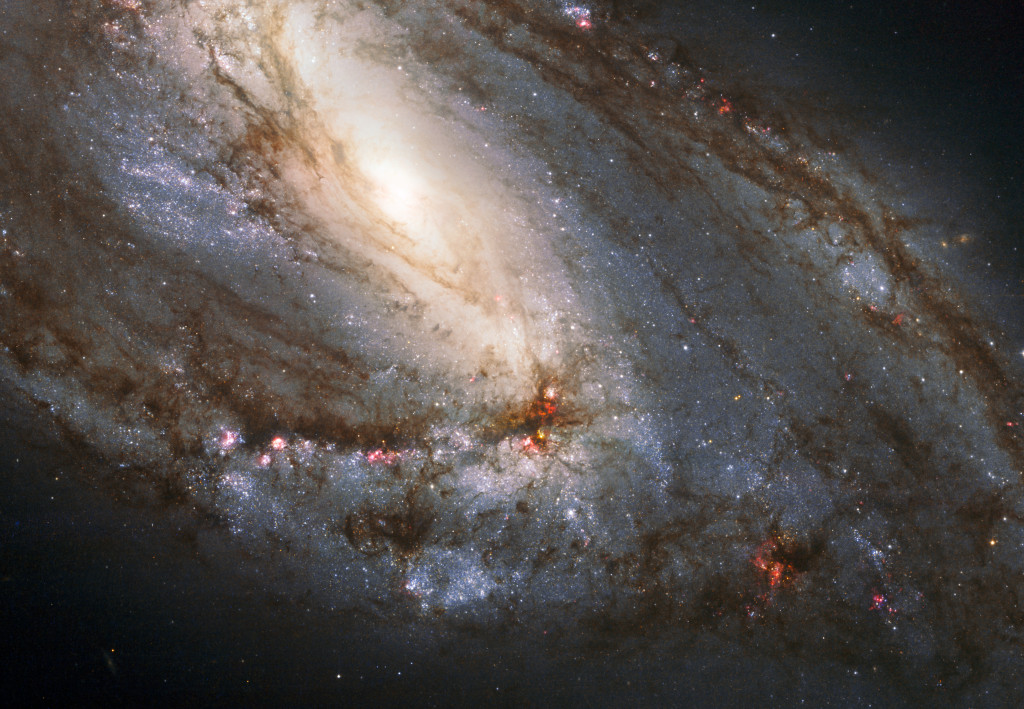
Big, beautiful spiral galaxy Messier 66 lies a mere 35 million light-years away. The gorgeous island universe is about 100 thousand light-years across, similar in size to the Milky Way. This Hubble Space Telescope close-up view spans a region about 30,000 light-years wide around the galactic core. It shows the galaxy’s disk dramatically inclined to our line-of-sight. Surrounding its bright core, the likely home of a supermassive black hole, obscuring dust lanes and young, blue star clusters sweep along spiral arms dotted with the tell-tale glow of pinkish star forming regions. Messier 66, also known as NGC 3627, is the brightest of the three galaxies in the gravitationally interacting Leo Triplet. [via NASA] https://ift.tt/vMwkQlI

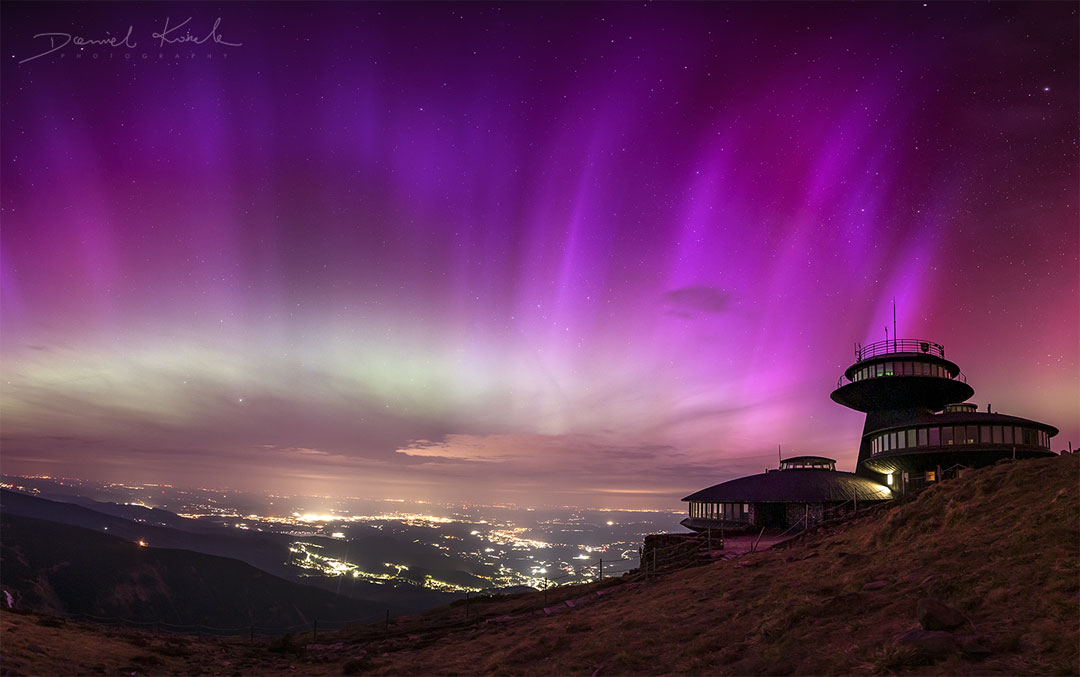
It was the first time ever. At least, the first time this photographer had ever seen aurora from his home mountains. And what a spectacular aurora it was. The Karkonosze Mountains in Poland are usually too far south to see any auroras. But on the amazing night of May 10 – 11, purple and green colors lit up much of the night sky, a surprising spectacle that also appeared over many mid-latitude locations around the Earth. The featured image is a composite of six vertical exposures taken during the auroral peak. The futuristic buildings on the right are part of a meteorological observatory located on the highest peak of the Karkonosze Mountains. The purple color is primarily due to Sun-triggered, high-energy electrons impacting nitrogen molecules in Earth’s atmosphere. Our Sun is reaching its maximum surface activity over the next two years, and although many more auroras are predicted, most will occur over regions closer to the Earth’s poles. [via NASA] https://ift.tt/PWy2648

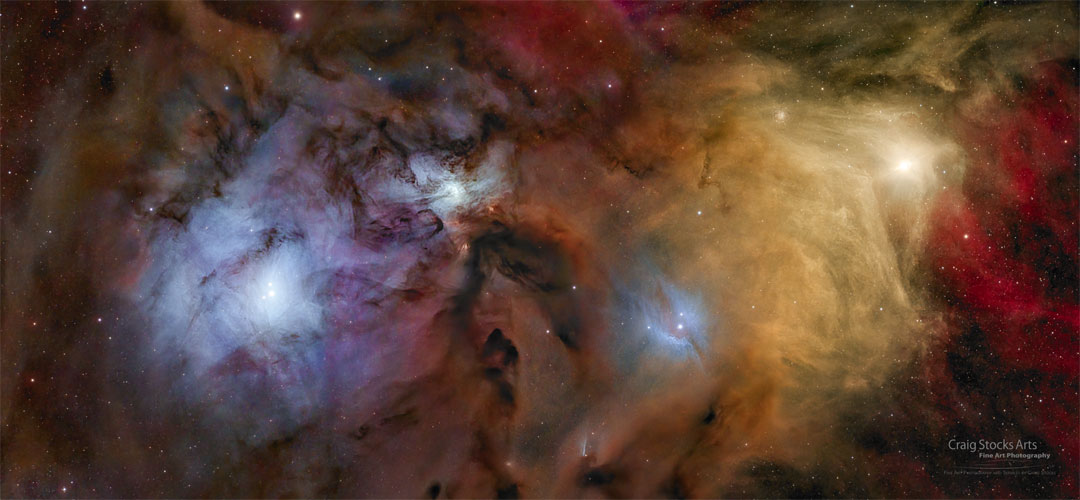
Why is the sky near Antares and Rho Ophiuchi so colorful, yet dusty? The colors result from a mixture of objects and processes. Fine dust — illuminated by starlight — produces blue reflection nebulae. Gaseous clouds whose atoms are excited by ultraviolet starlight produce reddish emission nebulae. Backlit dust clouds block starlight and so appear dark. Antares, a red supergiant and one of the brighter stars in the night sky, lights up the yellow-red clouds on the upper right of the featured image. The Rho Ophiuchi star system lies at the center of the blue reflection nebula on the left, while a different reflection nebula, IC 4605, lies just below and right of the image center. These star clouds are even more colorful than humans can see, emitting light across the electromagnetic spectrum. [via NASA] https://ift.tt/iu1UnE3