IFN and the NGC 7771 Group

Galaxies of the NGC 7771 Group are featured in this intriguing skyscape. Some 200 million light-years distant toward the constellation Pegasus, NGC 7771 is the large, edge-on spiral near center, about 75,000 light-years across, with two smaller galaxies below it. Large spiral NGC 7769 is seen face-on to the right. Galaxies of the NGC 7771 group are interacting, making repeated close passages that will ultimately result in galaxy-galaxy mergers on a cosmic timescale. The interactions can be traced by distortions in the shape of the galaxies themselves and faint streams of stars created by their mutual gravitational tides. But a clear view of this galaxy group is difficult to come by as the deep image also reveals extensive clouds of foreground dust sweeping across the field of view. The dim, dusty galactic cirrus clouds are known as Integrated Flux Nebulae. The faint IFN reflect starlight from our own Milky Way Galaxy and lie only a few hundred light-years above the galactic plane. [via NASA] https://ift.tt/6aIfs4m
Southern Moonscape

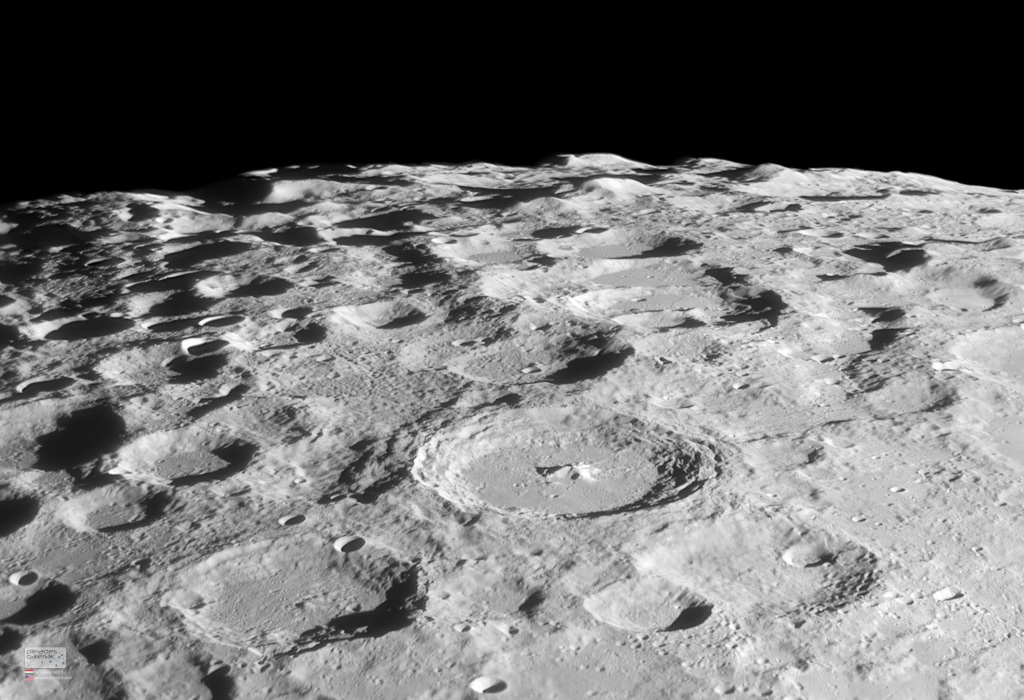
The Moon’s south pole is toward the top left of this detailed telescopic moonscape. Captured on August 23, it looks across the rugged southern lunar highlands. The view’s foreshortened perspective heightens the impression of a dense field of craters and makes the craters themselves appear more oval shaped close to the lunar limb. Prominent near center is 114 kilometer diameter crater Moretus. Moretus is young for a large lunar crater and features terraced inner walls and a 2.1 kilometer high, central peak, similar in appearance to the more northerly young crater Tycho. Mountains visible along the lunar limb at the top can rise about 6 kilometers or so above the surrounding terrain. Close to the lunar south pole, permanently shadowed crater floors with expected reservoirs of water-ice have made the rugged south polar region of the Moon a popular target for exploration. [via NASA] https://ift.tt/HgDKT6f

Star Factory Messier 17

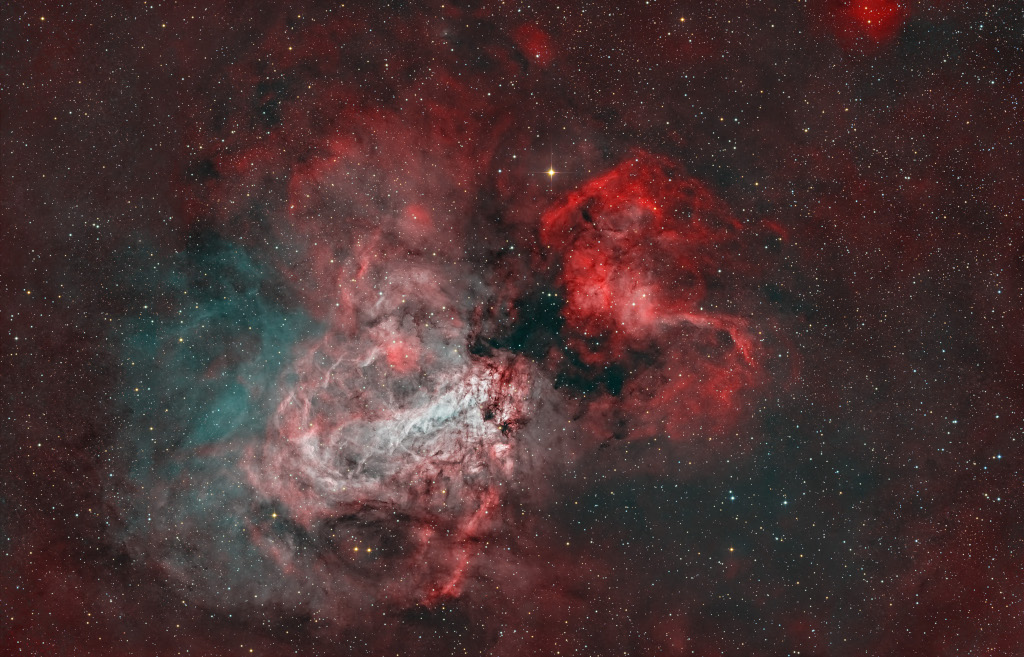
A nearby star factory known as Messier 17 lies some 5,500 light-years away in the nebula-rich constellation Sagittarius. At that distance, this 1.5 degree wide field-of-view would span about 150 light-years. In the sharp color composite image faint details of the region’s gas and dust clouds are highlighted with narrowband image data against a backdrop of central Milky Way stars. The stellar winds and energetic radiation from hot, massive stars already formed from M17’s stock of cosmic gas and dust have slowly carved away at the remaining interstellar material, producing the nebula’s cavernous appearance and the undulating shapes within. A popular stop on telescopic tours of the cosmos, M17 is also known as the Omega or the Swan Nebula. [via NASA] https://ift.tt/HMKraB6

When can you see a black hole, a tulip, and a swan all at once? At night — if the timing is right, and if your telescope is pointed in the right direction. The complex and beautiful Tulip Nebula blossoms about 8,000 light-years away toward the constellation of Cygnus the Swan. Ultraviolet radiation from young energetic stars at the edge of the Cygnus OB3 association, including O star HDE 227018, ionizes the atoms and powers the emission from the Tulip Nebula. Stewart Sharpless cataloged this nearly 70 light-years across reddish glowing cloud of interstellar gas and dust in 1959, as Sh2-101. Also in the featured field of view is the black hole Cygnus X-1, which to be a microquasar because it is one of strongest X-ray sources in planet Earth’s sky. Blasted by powerful jets from a lurking black hole, its fainter bluish curved shock front is only faintly visible beyond the cosmic Tulip’s petals, near the right side of the frame. [via NASA] https://ift.tt/lRoAzpv

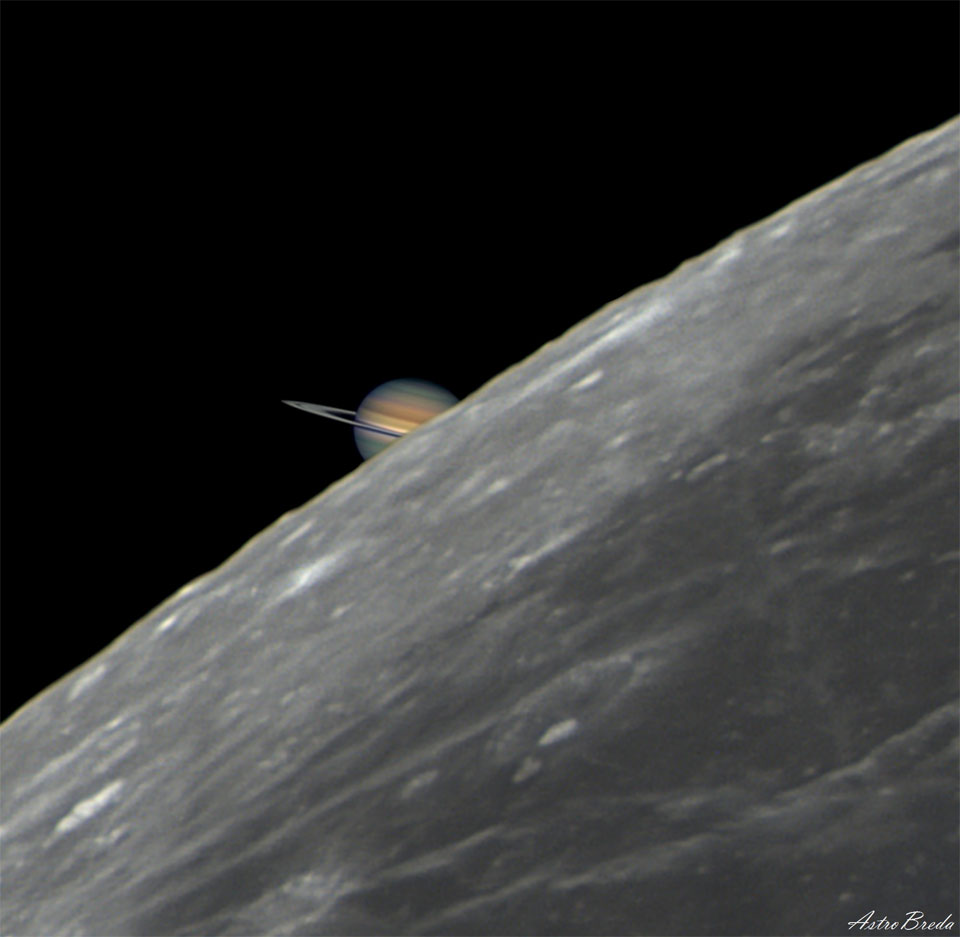
What if Saturn disappeared? Sometimes, it does. It doesn’t really go away, though, it just disappears from view when our Moon moves in front. Such a Saturnian eclipse, more formally called an occultation, was visible along a long swath of Earth — from Peru, across the Atlantic Ocean, to Italy — only a few days ago. The featured color image is a digital fusion of the clearest images captured during the event and rebalanced for color and relative brightness between the relatively dim Saturn and the comparatively bright Moon. Saturn and the comparative bright Moon. The exposures were all taken from Breda, Catalonia, Spain, just before occultation. Eclipses of Saturn by our Moon will occur each month for the rest of this year. Each time, though, the fleeting event will be visible only to those with clear skies — and the right location on Earth. [via NASA] https://ift.tt/cEhnMDK

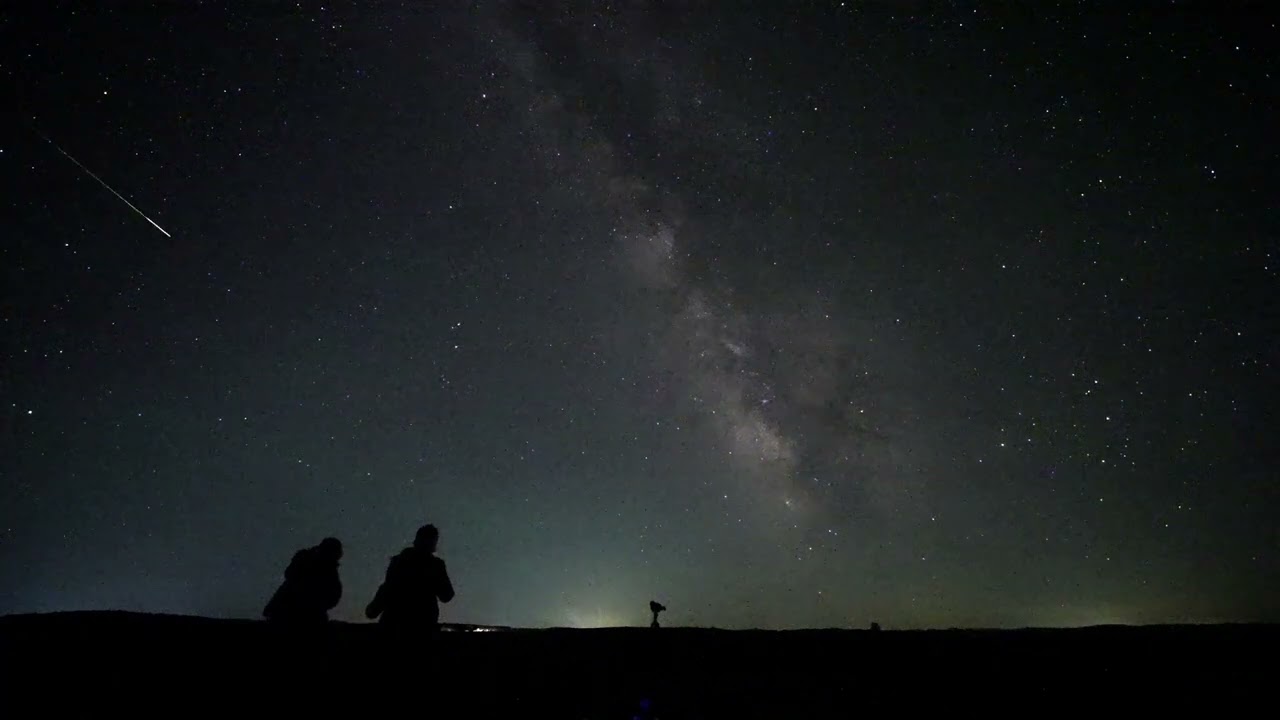
Did you see it? One of the more common questions during a meteor shower occurs because the time it takes for a meteor to flash is similar to the time it takes for a head to turn. Possibly, though, the glory of seeing bright meteors shoot across the sky — while knowing that they were once small pebbles on another world — might make it all worthwhile, even if your observing partner(s) can’t always share in your experience. The featured video is composed of short clips taken in Inner Mongolia, China during the 2023 Perseid Meteor Shower. Several bright meteors were captured while live-reaction audio was being recorded — just as the meteors flashed. This year’s 2024 Perseids also produced many beautiful meteors. Another good meteor shower to watch for is the Geminids which peak yearly in mid-December, this year with relatively little competing glow from a nearly new Moon. [via NASA] https://ift.tt/u3zDw8M

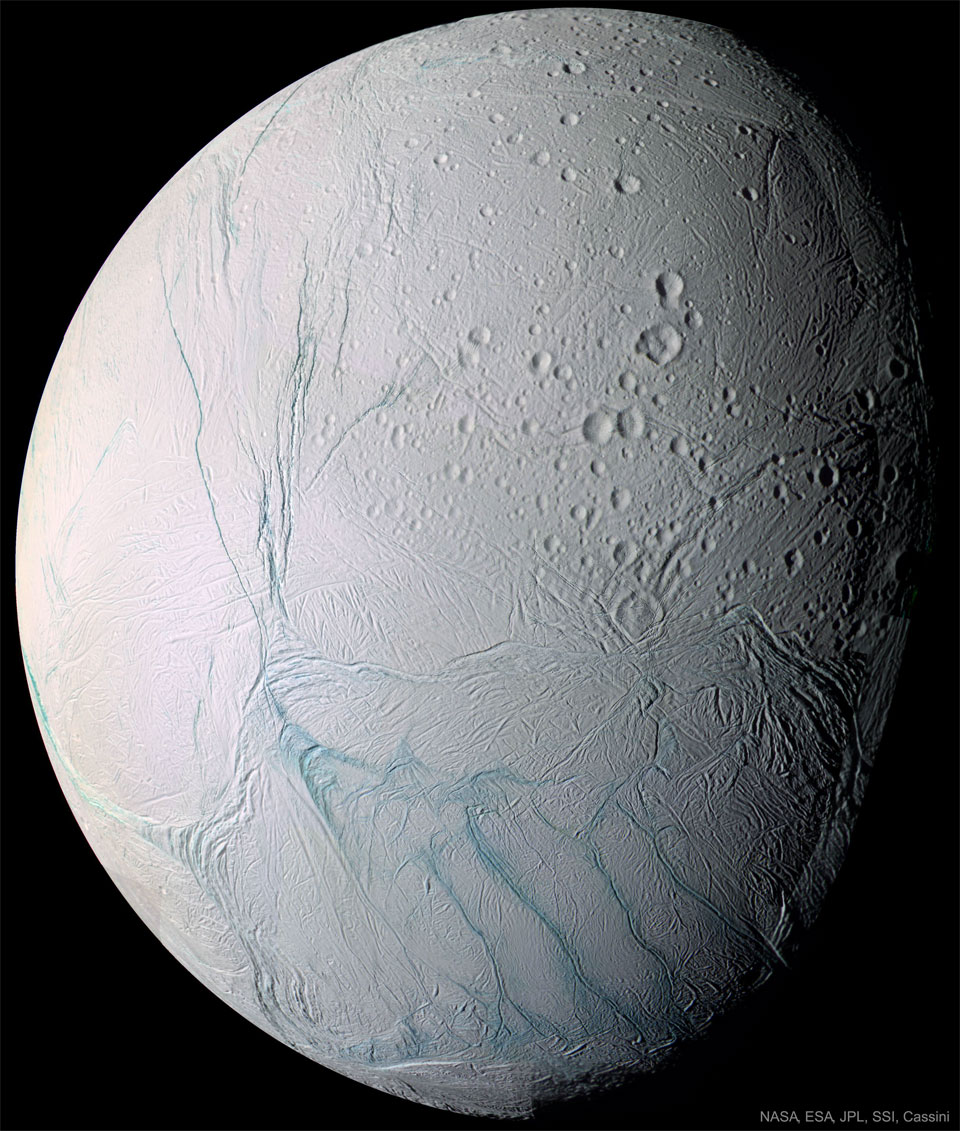
Do underground oceans vent through canyons on Saturn’s moon Enceladus? Long features dubbed tiger stripes are known to be spewing ice from the moon’s icy interior into space, creating a cloud of fine ice particles over the moon’s South Pole and creating Saturn’s mysterious E-ring. Evidence for this has come from the robot Cassini spacecraft that orbited Saturn from 2004 to 2017. Pictured here, a high resolution image of Enceladus is shown from a close flyby. The unusual surface features dubbed tiger stripes are visible in false-color blue. Why Enceladus is active remains a mystery, as the neighboring moon Mimas, approximately the same size, appears quite dead. An analysis of ejected ice grains has yielded evidence that complex organic molecules exist inside Enceladus. These large carbon-rich molecules bolster — but do not prove — that oceans under Enceladus’ surface could contain life. [via NASA] https://ift.tt/uRpMnfh

South Pacific Shadowset

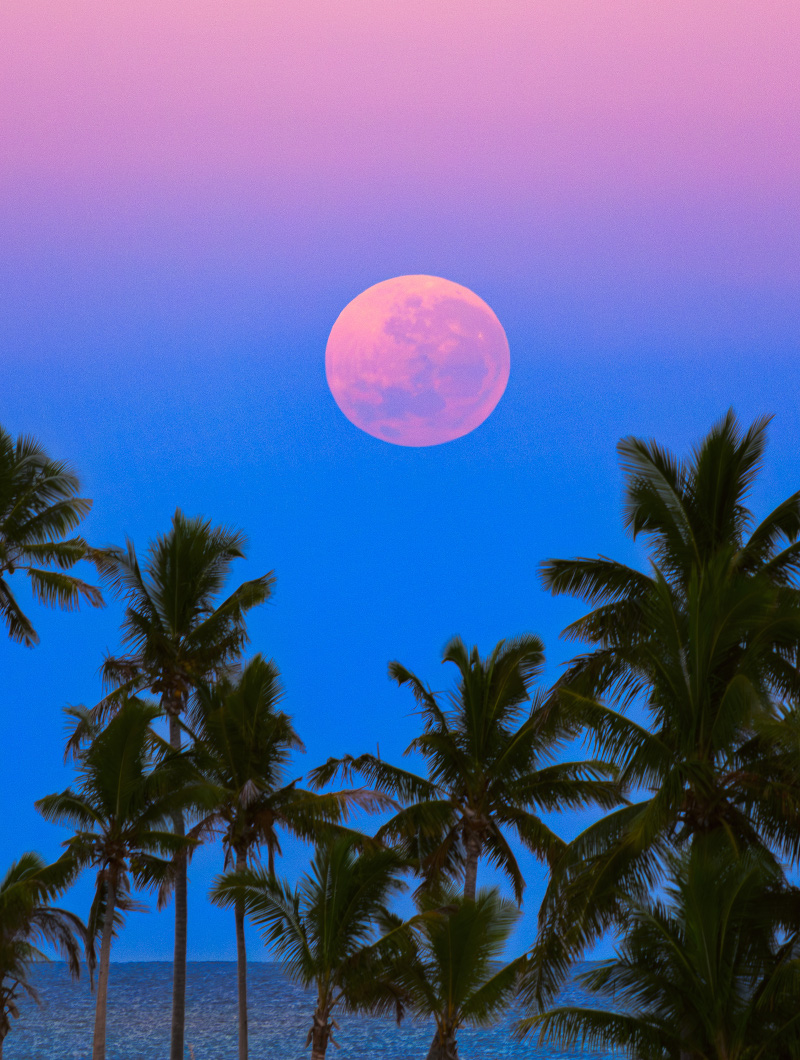
The full Moon and Earth’s shadow set together in this island skyscape. The alluring scene was captured Tuesday morning, August 20, from Fiji, South Pacific Ocean, planet Earth. For early morning risers shadowset in the western sky is a daily apparition. Still, the grey-blue shadow is often overlooked in favor of a brighter eastern horizon. Extending through the dense atmosphere, Earth’s setting shadow is bounded above by a pinkish glow or anti-twilight arch. Known as the Belt of Venus, the arch’s lovely color is due to backscattering of reddened light from the opposite horizon’s rising Sun. Of course, the setting Moon’s light is reddened by the long sight-line through the atmosphere. But on that date the full Moon could be called a seasonal Blue Moon, the third full Moon in a season with four full Moons. And even though the full Moon is always impressive near the horizon, August’s full Moon is considered by some the first of four consecutive full Supermoons in 2024. [via NASA] https://ift.tt/73gIh9L

Supernova Remnant CTA 1

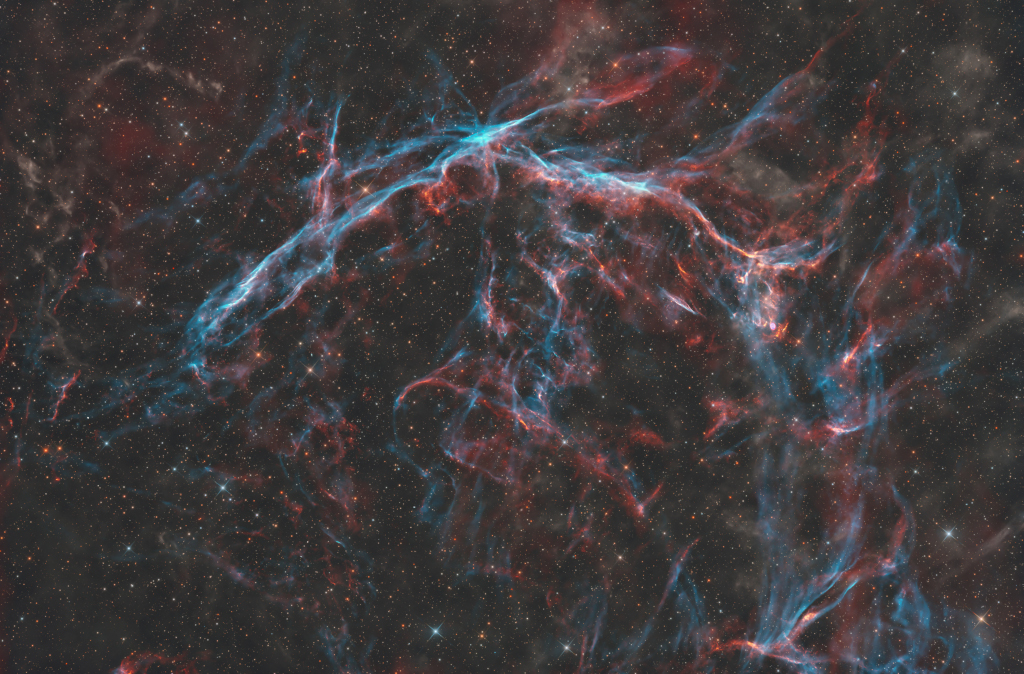
There is a quiet pulsar at the heart of CTA 1. The supernova remnant was discovered as a source of emission at radio wavelengths by astronomers in 1960 and since identified as the result of the death explosion of a massive star. But no radio pulses were detected from the expected pulsar, the rotating neutron star remnant of the massive star’s collapsed core. Seen about 10,000 years after the initial supernova explosion, the interstellar debris cloud is faint at optical wavelengths. CTA 1’s visible wavelength emission from still expanding shock fronts is revealed in this deep telescopic image, a frame that spans about 2 degrees across a starfield in the northern constellation of Cepheus. While no pulsar has since been found at radio wavelengths, in 2008 the Fermi Gamma-ray Space Telescope detected pulsed emission from CTA 1, identifying the supernova remnant’s rotating neutron star. The source has been recognized as the first in a growing class of pulsars that are quiet at radio wavelengths but pulse in high-energy gamma-rays. [via NASA] https://ift.tt/b2Kv9tf

The Dark Tower in Scorpius

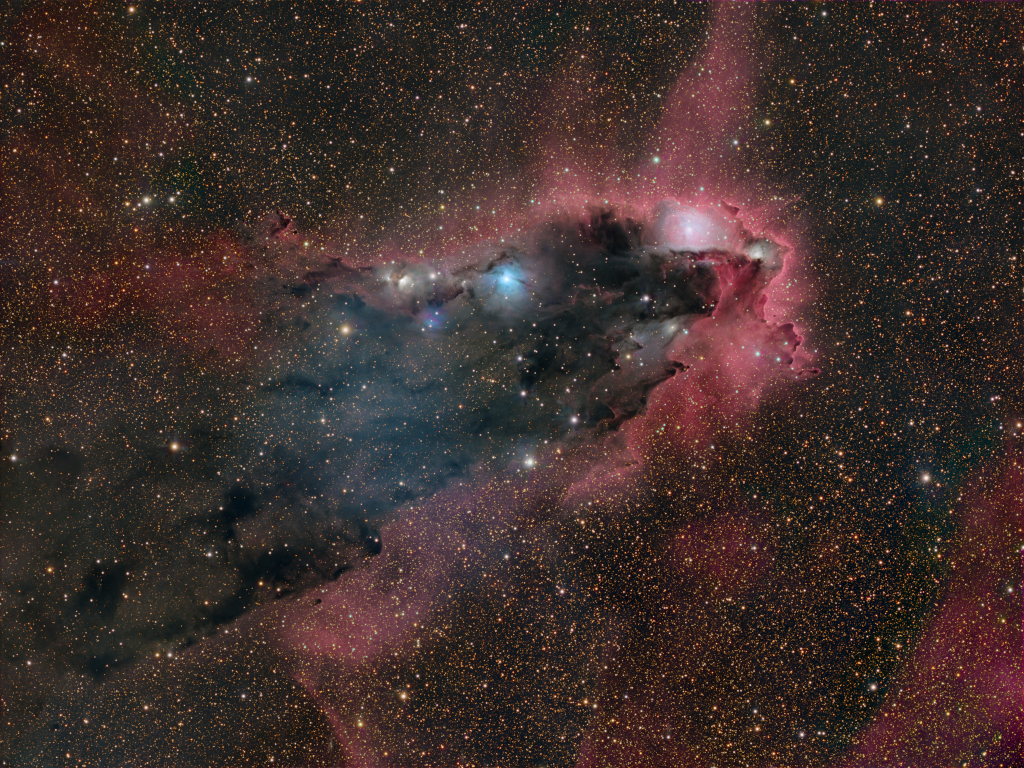
In silhouette against a crowded star field along the tail of the arachnological constellation Scorpius, this dusty cosmic cloud evokes for some the image of an ominous dark tower. In fact, monstrous clumps of dust and molecular gas collapsing to form stars may well lurk within the dark nebula, a structure that spans almost 40 light-years across this gorgeous telescopic portrait. A cometary globule, the swept-back cloud is shaped by intense ultraviolet radiation from the OB association of very hot stars in NGC 6231, off the upper right corner of the scene. That energetic ultraviolet light also powers the globule’s bordering reddish glow of hydrogen gas. Hot stars embedded in the dust can be seen as bluish reflection nebulae. This dark tower and associated nebulae are about 5,000 light-years away. [via NASA] https://ift.tt/mqjBryo