The new comet has passed its closest to the Sun and is now moving closer to the Earth. C/2023 A3 (Tsuchinshan–ATLAS) is currently moving out from inside the orbit of Venus and on track to pass its nearest to the Earth in about two weeks. Comet Tsuchinshan-ATLAS, pronounced «Choo-cheen-shahn At-less,», is near naked-eye visibility and easily picked up by long-exposure cameras. The comet can also now be found by observers in Earth’s northern hemisphere as well as the south. The featured image was captured just a few days ago above Zacatecas, Mexico. Because clouds were obscuring much of the pre-dawn sky, the astrophotographer released a drone to take pictures from higher up, several of which were later merged to enhance the comet’s visibility. Although the future brightness of comets is hard to predict, there is increasing hope that Comet Tsuchinshan-ATLAS will further brighten as it enters the early evening sky. [via NASA] https://ift.tt/1Sq3VGB

Is this really the famous Pleiades star cluster? Known for its iconic blue stars, the Pleiades is shown here in infrared light where the surrounding dust outshines the stars. Here, three infrared colors have been mapped into visual colors (R=24, G=12, B=4.6 microns). The base images were taken by NASA’s orbiting Wide Field Infrared Survey Explorer (WISE) spacecraft. Cataloged as M45 and nicknamed the Seven Sisters, the Pleiades star cluster is by chance situated in a passing dust cloud. The light and winds from the massive Pleiades stars preferentially repel smaller dust particles, causing the dust to become stratified into filaments, as seen. The featured image spans about 20 light years at the distance of the Pleiades, which lies about 450 light years distant toward the constellation of the Bull (Taurus). [via NASA] https://ift.tt/l4O9UCn

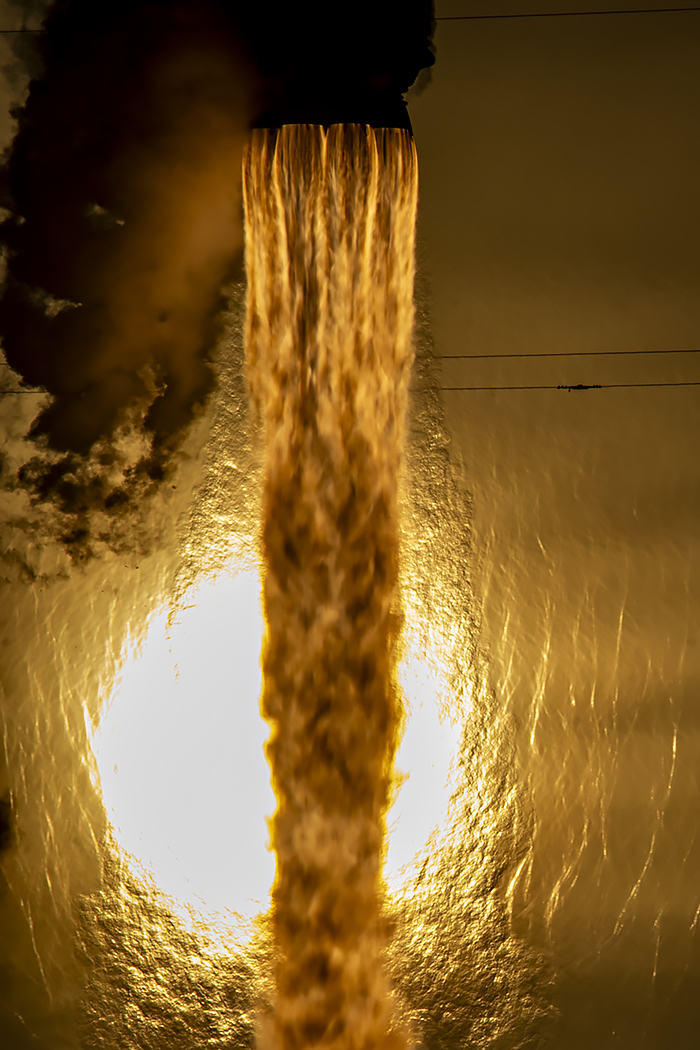
Rocket Eclipse at Sunset

Shockwaves ripple across the glare as a launch eclipses the setting Sun in this exciting close-up. Captured on September 17, the roaring Falcon 9 rocket carried European Galileo L13 navigation satellites to medium Earth orbit after a lift-off from Cape Canaveral on Florida’s space coast. The Falcon 9 booster returned safely to Earth about 8.5 minutes later, notching the 22nd launch and landing for the reusable workhorse launch vehicle. But where did it land? Just Read the Instructions. [via NASA] https://ift.tt/pUsLekt

Stellar Streams in the Local Universe

The twenty galaxies arrayed in these panels are part of an ambitious astronomical survey of tidal stellar streams. Each panel presents a composite view; a deep, inverted image taken from publicly available imaging surveys of a field that surrounds a nearby massive galaxy image. The inverted images reveal faint cosmic structures, star streams hundreds of thousands of light-years across, that result from the gravitational disruption and eventual merger of satellite galaxies in the local universe. Such surveys of mergers and gravitational tidal interactions between massive galaxies and their dwarf satellites are crucial guides for current models of galaxy formation and cosmology. Of course, the detection of stellar streams in the neighboring Andromeda Galaxy and our own Milky Way also offers spectacular evidence for ongoing satellite galaxy disruption within our more local galaxy group. [via NASA] https://ift.tt/Ip7TamW

The Great Globular Cluster in Hercules

In 1716, English astronomer Edmond Halley noted, «This is but a little Patch, but it shows itself to the naked Eye, when the Sky is serene and the Moon absent.» Of course, M13 is now less modestly recognized as the Great Globular Cluster in Hercules, one of the brightest globular star clusters in the northern sky. Sharp telescopic views like this one reveal the spectacular cluster’s hundreds of thousands of stars. At a distance of 25,000 light-years, the cluster stars crowd into a region 150 light-years in diameter. Approaching the cluster core, upwards of 100 stars could be contained in a cube just 3 light-years on a side. For comparison, the closest star to the Sun is over 4 light-years away. The deep, wide-field image also reveals distant background galaxies including NGC 6207 at the upper left, and faint, foreground Milky Way dust clouds known to some as integrated flux nebulae. [via NASA] https://ift.tt/u3UCm8K

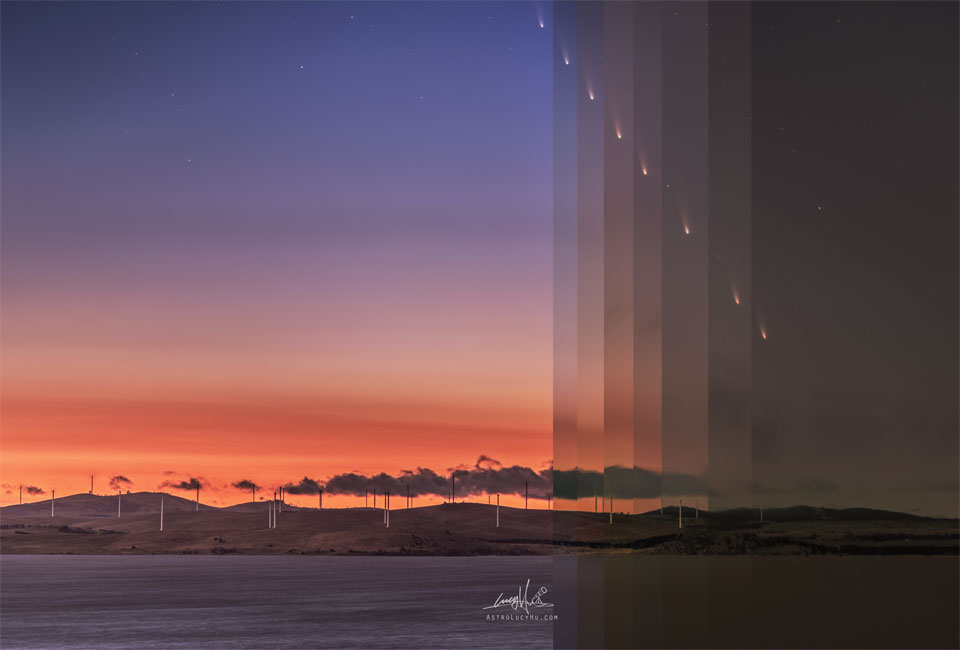
Comet Tsuchinshan-ATLAS is now visible in the early morning sky. Diving into the inner Solar System at an odd angle, this large dirty iceberg will pass its closest to the Sun — between the orbits of Mercury and Venus — in just two days. Long camera exposures are now capturing C/2023 A3 (Tsuchinshan–ATLAS), sometimes abbreviated as just A3, and its dust tail before and during sunrise. The featured image composite was taken four days ago and captured the comet as it rose above Lake George, NSW, Australia. Vertical bands further left are images of the comet as the rising Sun made the predawn sky increasingly bright and colorful. Just how bright the comet will become over the next month is currently unknown as it involves how much gas and dust the comet’s nucleus will expel. Optimistic skywatchers are hoping for a great show where Tsuchinshan–ATLAS creates dust and ion tails visible across Earth’s sky and becomes known as the GreatComet of 2024. [via NASA] https://ift.tt/U1oMfJc

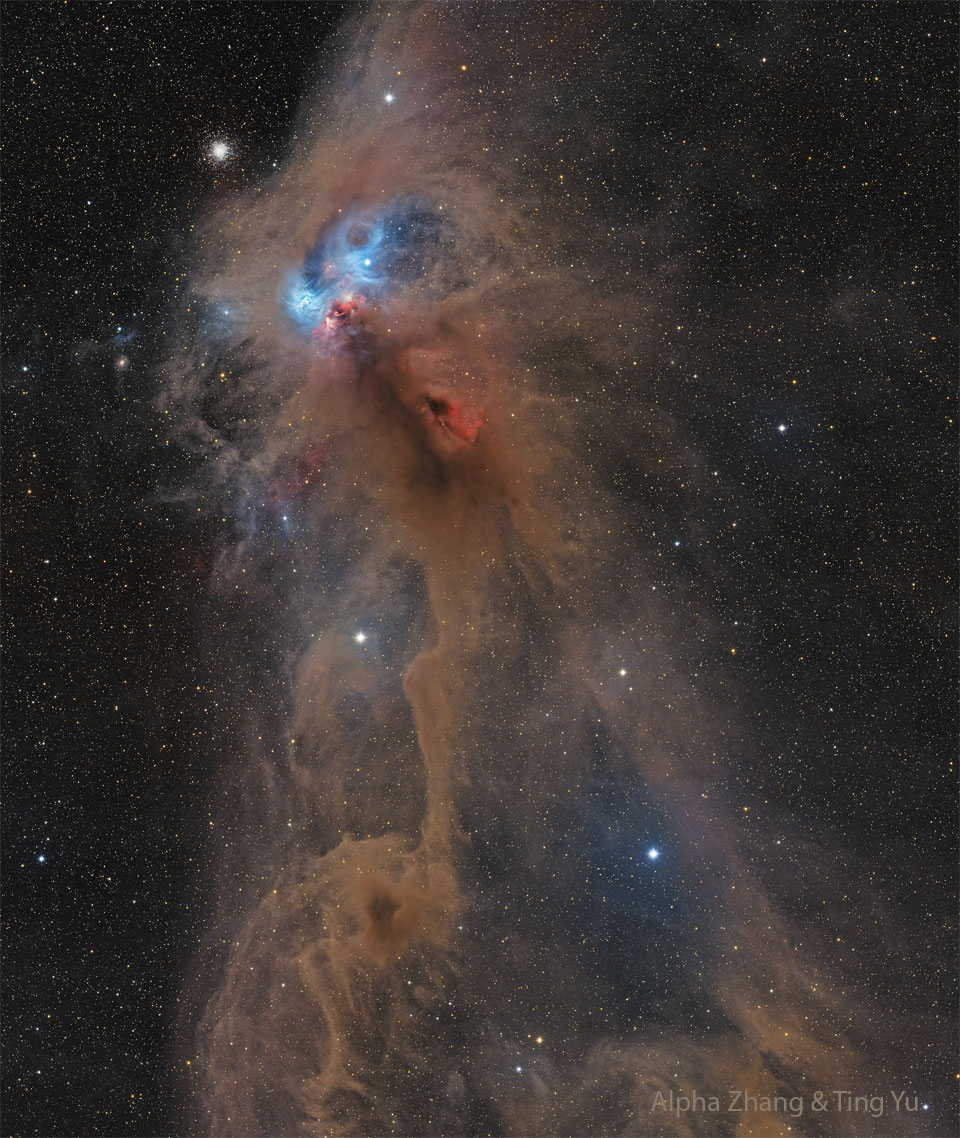
This dusty region is forming stars. Part of a sprawling molecular cloud complex that resembles, to some, a rampaging baboon, the region is a relatively close by 500 light-years away toward the constellation Corona Australis. That’s about one third the distance of the more famous stellar nursery known as the Orion Nebula. Mixed with bright nebulosities, the brown dust clouds effectively block light from more distant background stars in the Milky Way and obscure from view embedded stars still in the process of formation. The eyes of the dust creature in the featured image are actually blue reflection nebulas cataloged as NGC 6726, 6727, 6729, and IC 4812, while the red mouth glows with light emitted by hydrogen gas. Just to the upper left of the baboon’s head is NGC 6723, a whole globular cluster of stars nearly 30,000 light years in the distance. [via NASA] https://ift.tt/niVsrw5

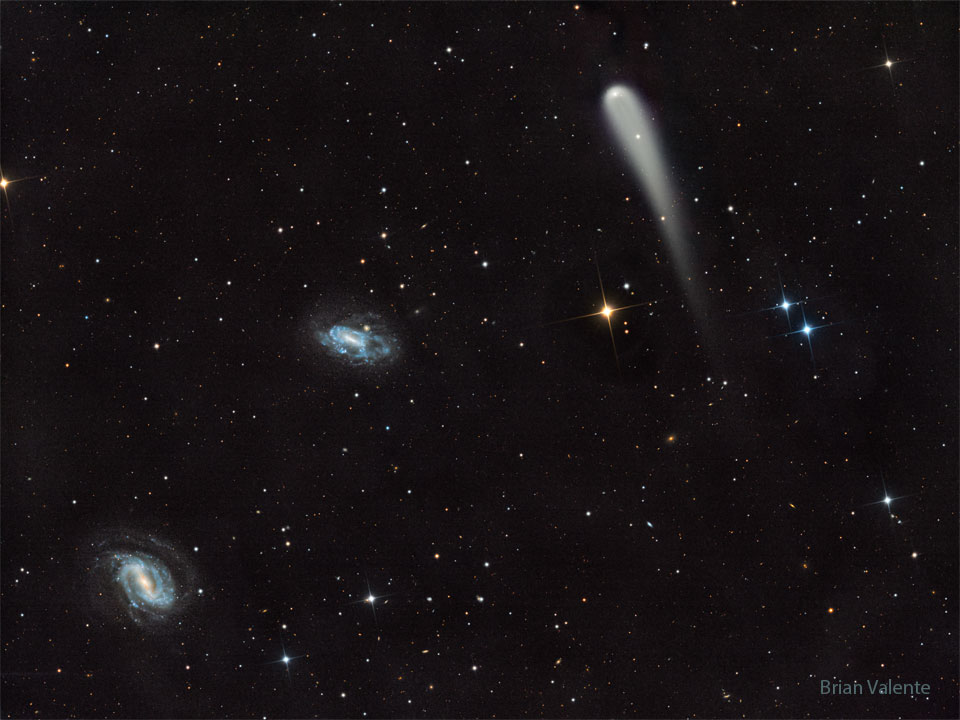
What will happen as this already bright comet approaches? Optimistic predictions have Comet C/2023 A3 (Tsuchinshan–ATLAS) briefly becoming easily visible to the unaided eye — although the future brightness of comets are notoriously hard to predict, and this comet may even break up in warming sunlight. What is certain is that the comet is now unexpectedly bright and is on track to pass its closest to the Sun (0.39 AU) later this week and closest to the Earth (0.47 AU) early next month. The featured image was taken in late May as Comet Tsuchinshan–ATLAS, discovered only last year, passed nearly in front of two distant galaxies. The comet can now be found with binoculars in the early morning sky rising just before the Sun, while over the next few weeks it will brighten as it moves to the early evening sky. [via NASA] https://ift.tt/wv9R0Bh

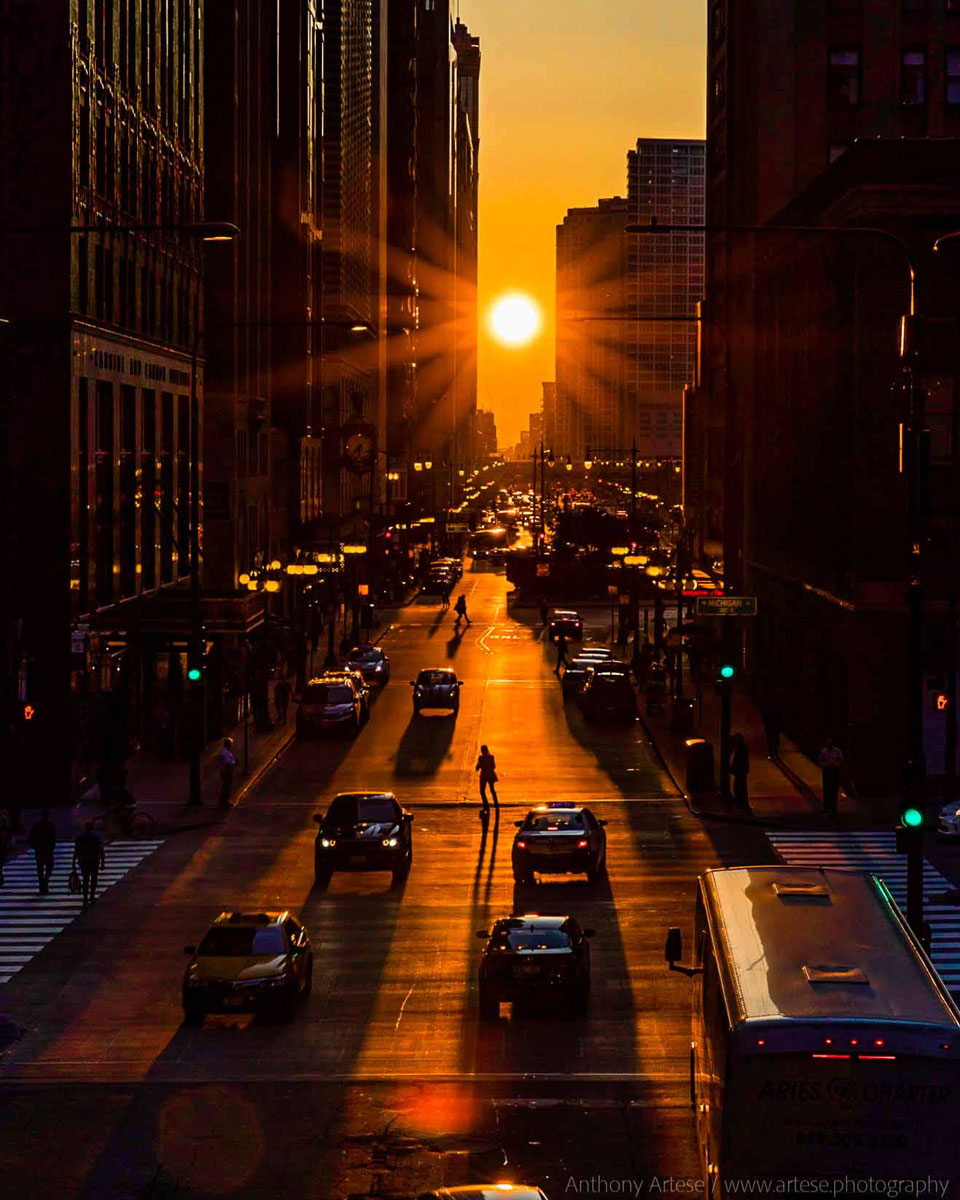
Chicago, in a way, is like a modern Stonehenge. The way is east to west, and the time is today. Today, and every equinox, the Sun will set exactly to the west, everywhere on Earth. Therefore, today in Chicago, the Sun will set directly down the long equatorially-aligned grid of streets and buildings, an event dubbed #chicagohenge. Featured here is a Chicago Henge picture taken during the equinox in mid-September of 2017 looking along part of Upper Wacker Drive. Many cities, though, have streets or other features that are well-aligned to Earth’s spin axis. Therefore, quite possibly, your favorite street may also run east – west. Tonight at sunset, with a quick glance, you can actually find out. [via NASA] https://ift.tt/WzMxdIG

Sunrise Shadows in the Sky

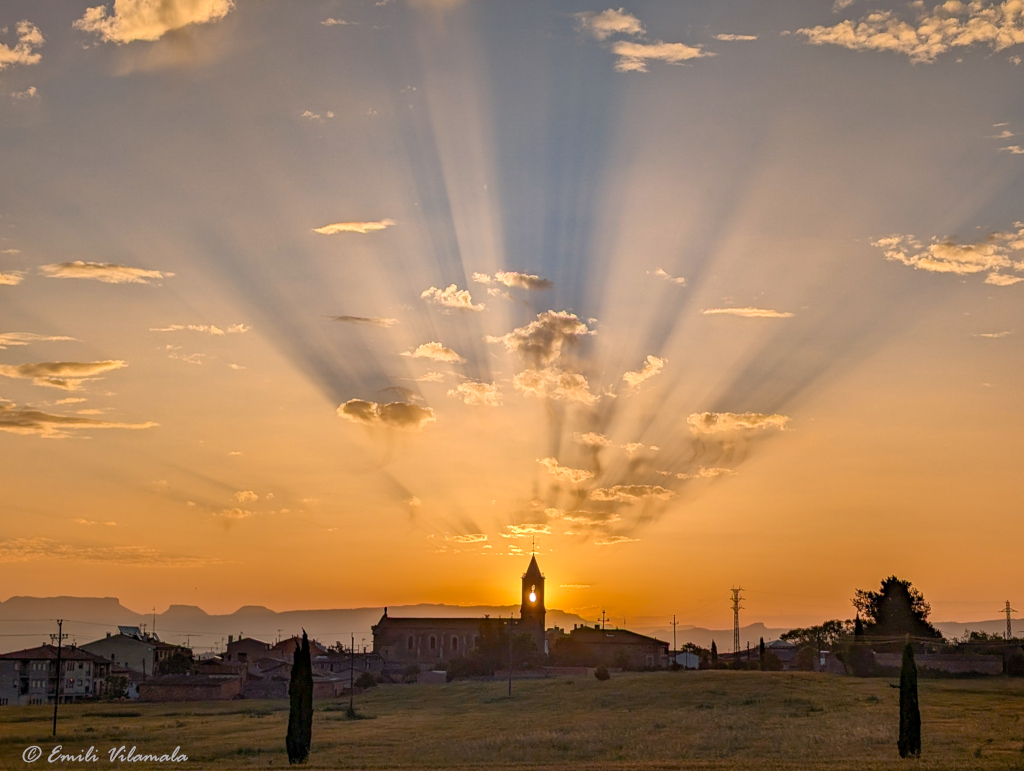
The defining astronomical moment of this September’s equinox is at 12:44 UTC on September 22, when the Sun crosses the celestial equator moving south in its yearly journey through planet Earth’s sky. That marks the beginning of fall for our fair planet in the northern hemisphere and spring in the southern hemisphere, when day and night are nearly equal around the globe. Of course, if you celebrate the astronomical change of seasons by watching a sunrise you can also look for crepuscular rays. Outlined by shadows cast by clouds, crepuscular rays can have a dramatic appearance in the twilight sky during any sunrise (or sunset). Due to perspective, the parallel cloud shadows will seem to point back to the rising Sun and a place due east on your horizon on the equinox date. But in this spectacular sunrise skyscape captured in early June, the parallel shadows and crepuscular rays appear to converge toward an eastern horizon’s more northerly sunrise. The well-composed photo places the rising Sun just behind the bell tower of a church in the town of Vic, province of Barcelona, Catalonia, Spain. [via NASA] https://ift.tt/k4XxpQM