North Celestial Tree

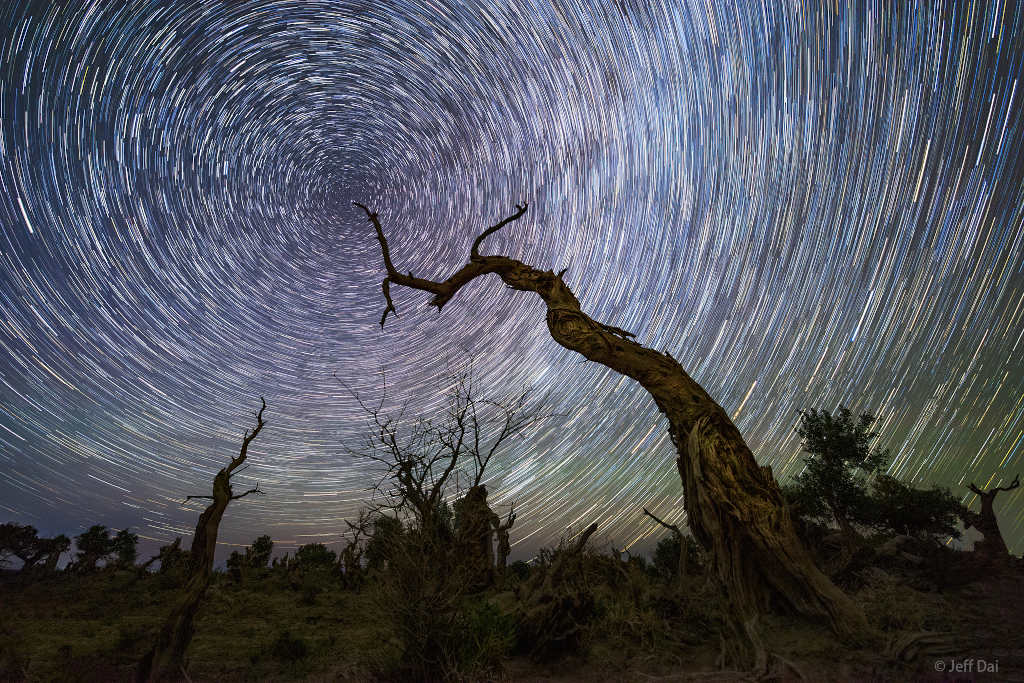
An ancient tree seems to reach out and touch Earth’s North Celestial Pole in this well-planned night skyscape. Consecutive exposures for the timelapse composition were recorded with a camera fixed to a tripod in the Yiwu Desert Poplar Forests in northwest Xinjiang, China. The graceful star trail arcs reflect Earth’s daily rotation around its axis. By extension, the axis of rotation leads to the center of the concentric arcs in the night sky. Known as the North Star, bright star Polaris is a friend to northern hemisphere night sky photographers and celestial navigators alike. That’s because Polaris lies very close to the North Celestial Pole on the sky. Of course it can be found at the tip of an outstretched barren branch in a postcard from a rotating planet. [via NASA] https://ift.tt/Ypn6em3
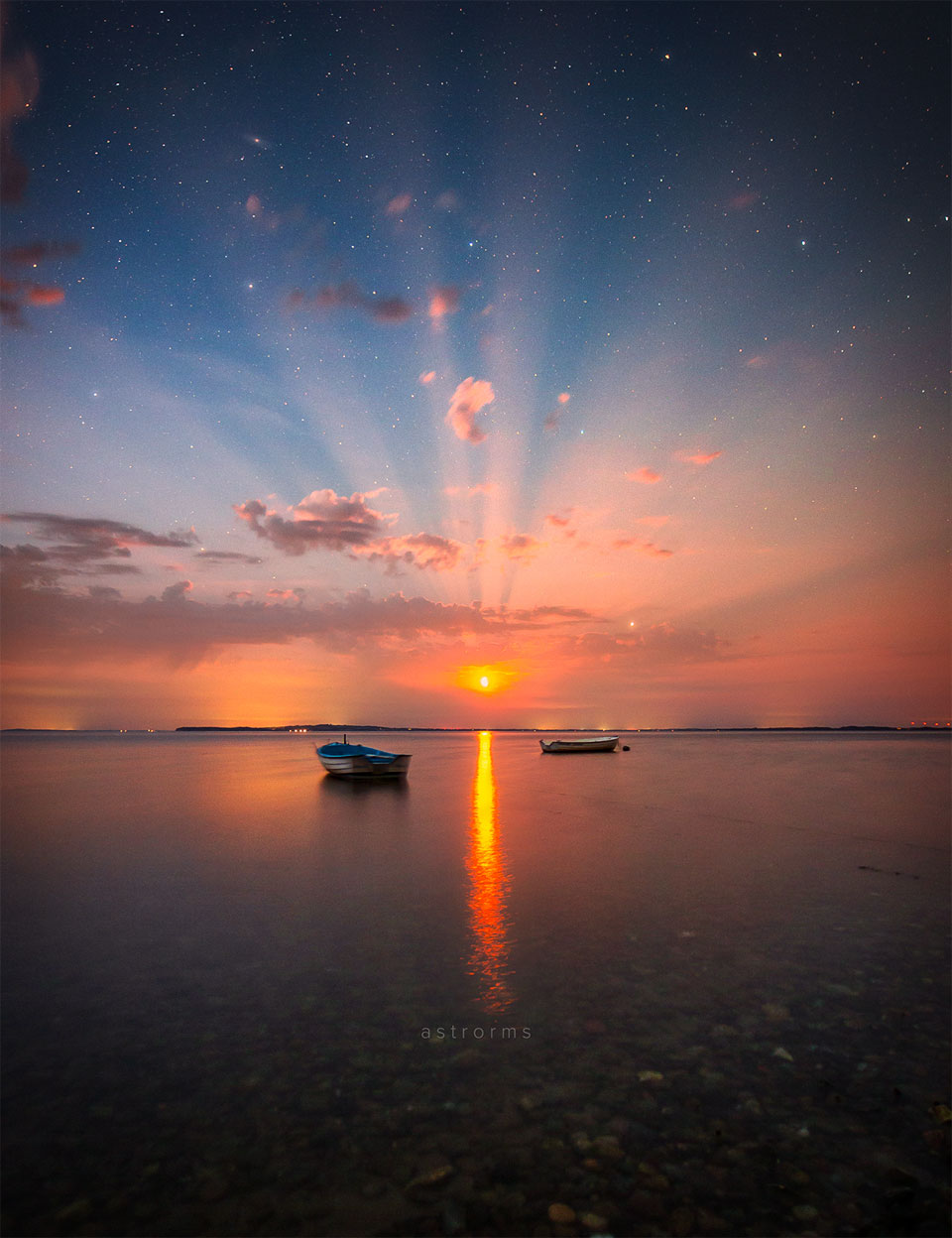
Crepuscular Moon Rays over Denmark

This moon made quite an entrance. Typically, a moonrise is quiet and serene. Taking a few minutes to fully peek above the horizon, Earth’s largest orbital companion can remain relatively obscure until it rises high in the nighttime sky. About a week ago, however, and despite being only half lit by the Sun, this rising moon put on a show — at least from this location. The reason was that, as seen from Limfjord in Nykøbing Mors, Denmark, the moon rose below scattered clouds near the horizon. The result, captured here in a single exposure, was that moonlight poured through gaps in the clouds to created what are called crepuscular rays. These rays can fan out dramatically across the sky when starting near the horizon, and can even appear to converge on the other side of the sky. Well behind our Moon, stars from our Milky Way galaxy dot the background, and our galaxy’s largest orbital companion — the Andromeda galaxy — can be found on the upper left. [via NASA] https://ift.tt/nRhdTe3

Comet NEOWISE Rising over the Adriatic Sea

This sight was worth getting out of bed early. Two years ago this month, Comet C/2020 F3 (NEOWISE) rose before dawn to the delight of northern sky enthusiasts awake that early. Up before sunrise on July 8th, the featured photographer was able to capture in dramatic fashion one of the few comets visible to the unaided eye this century, an inner-Solar System intruder that has become known as the Great Comet of 2020. The resulting video detailed Comet NEOWISE from Italy rising over the Adriatic Sea. The time-lapse video combines over 240 images taken over 30 minutes. The comet was seen rising through a foreground of bright and undulating noctilucent clouds, and before a background of distant stars. Comet NEOWISE remained unexpectedly bright until 2020 August, with its ion and dust tails found to emanate from a nucleus spanning about five kilometers across. [via NASA] https://ift.tt/KqEWfZC

Find the New Moon

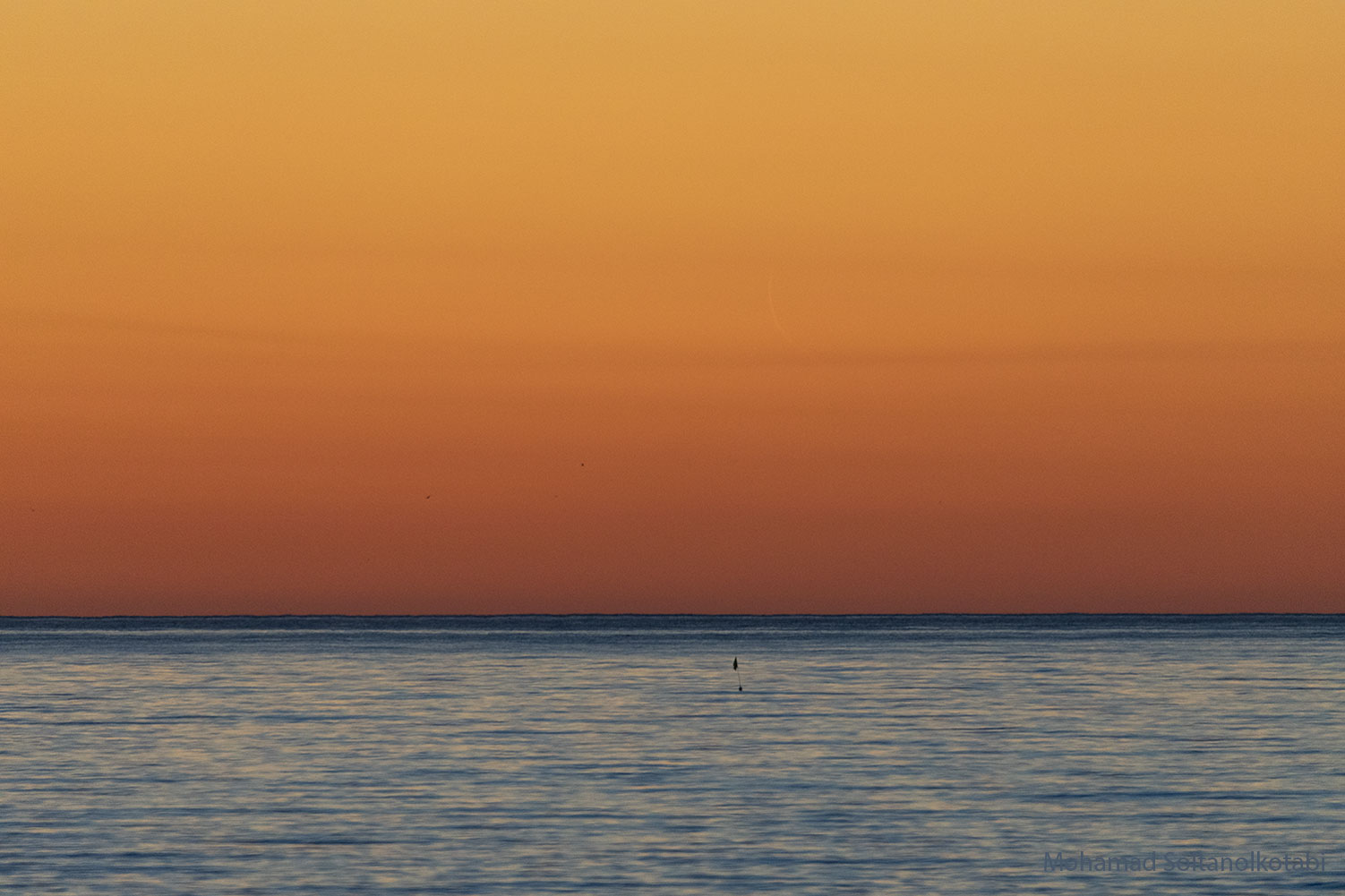
Can you find the Moon? This usually simple task can be quite difficult. Even though the Moon is above your horizon half of the time, its phase can be anything from crescent to full. The featured image was taken in late May from Sant Martí d’Empúries, Spain, over the Mediterranean Sea in the early morning. One reason you can’t find this moon is because it is very near to its new phase, when very little of the half illuminated by the Sun is visible to the Earth. Another reason is because this moon is near the horizon and so seen through a long path of Earth’s atmosphere — a path which dims the already faint crescent. Any crescent moon is only visible near the direction the Sun, and so only locatable near sunrise of sunset. The Moon runs through all of its phases in a month (moon-th), and this month the thinnest sliver of a crescent — a new moon — will occur in three days. [via NASA] https://ift.tt/10FRuvX

Saturn in Infrared from Cassini

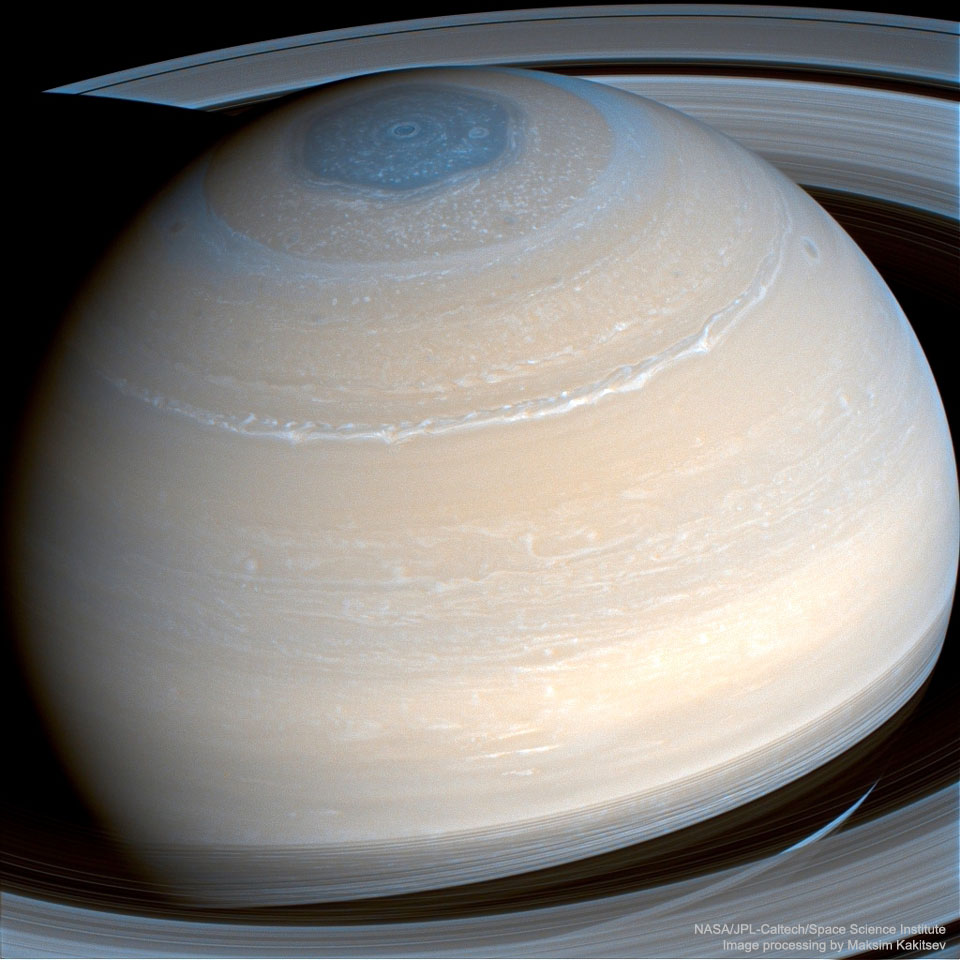
Many details of Saturn appear clearly in infrared light. Bands of clouds show great structure, including long stretching storms. Also quite striking in infrared is the unusual hexagonal cloud pattern surrounding Saturn’s North Pole. Each side of the dark hexagon spans roughly the width of our Earth. The hexagon’s existence was not predicted, and its origin and likely stability remains a topic of research. Saturn’s famous rings circle the planet and cast shadows below the equator. The featured image was taken by the robotic Cassini spacecraft in 2014 in several infrared colors. In 2017 September, the Cassini mission was brought to a dramatic conclusion when the spacecraft was directed to dive into ringed giant. [via NASA] https://ift.tt/NzEgYoH

Apollo 11 Landing Panorama

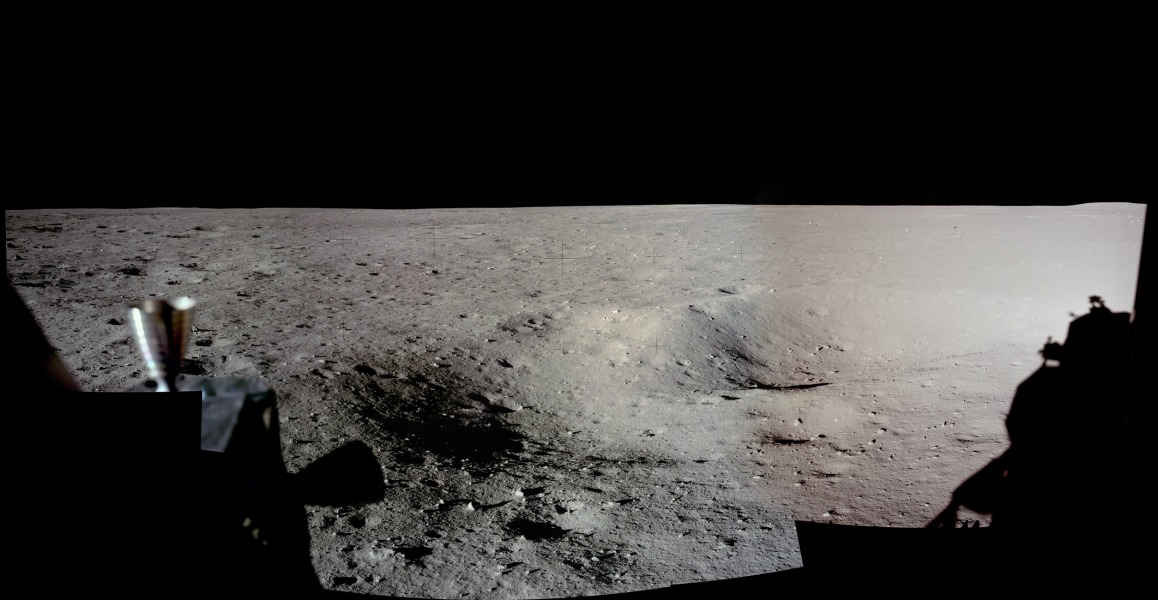
Have you seen a panorama from another world lately? Assembled from high-resolution scans of the original film frames, this one sweeps across the magnificent desolation of the Apollo 11 landing site on the Moon’s Sea of Tranquility. The images were taken by Neil Armstrong looking out his window of the Eagle Lunar Module shortly after the July 20, 1969 landing. The frame at the far left (AS11-37-5449) is the first picture taken by a person on another world. Toward the south, thruster nozzles can be seen in the foreground on the left, while at the right, the shadow of the Eagle is visible to the west. For scale, the large, shallow crater on the right has a diameter of about 12 meters. Frames taken from the Lunar Module windows about an hour and a half after landing, before walking on the lunar surface, were intended to initially document the landing site in case an early departure was necessary. [via NASA] https://ift.tt/DMIWeZ4

Spiral Galaxy M74: A Sharper View

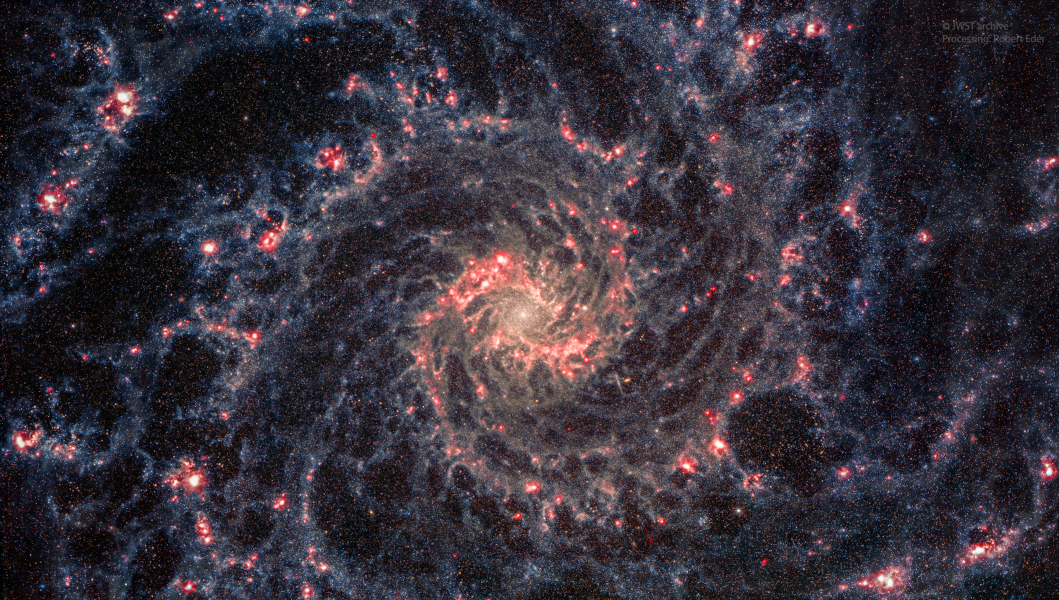
Beautiful spiral galaxy Messier 74 (also known as NGC 628) lies some 32 million light-years away toward the constellation Pisces. An island universe of about 100 billion stars with two prominent spiral arms, M74 has long been admired by astronomers as a perfect example of a grand-design spiral galaxy. M74’s central region is brought into a stunning, sharp focus in this recently processed image using publicly available data from the James Webb Space Telescope. The colorized combination of image data sets is from two of Webb’s instruments NIRcam and MIRI, operating at near- and mid-infrared wavelengths. It reveals cooler stars and dusty structures in the grand-design spiral galaxy only hinted at in previous space-based views. [via NASA] https://ift.tt/jhq3CwK

Messier 10 and Comet

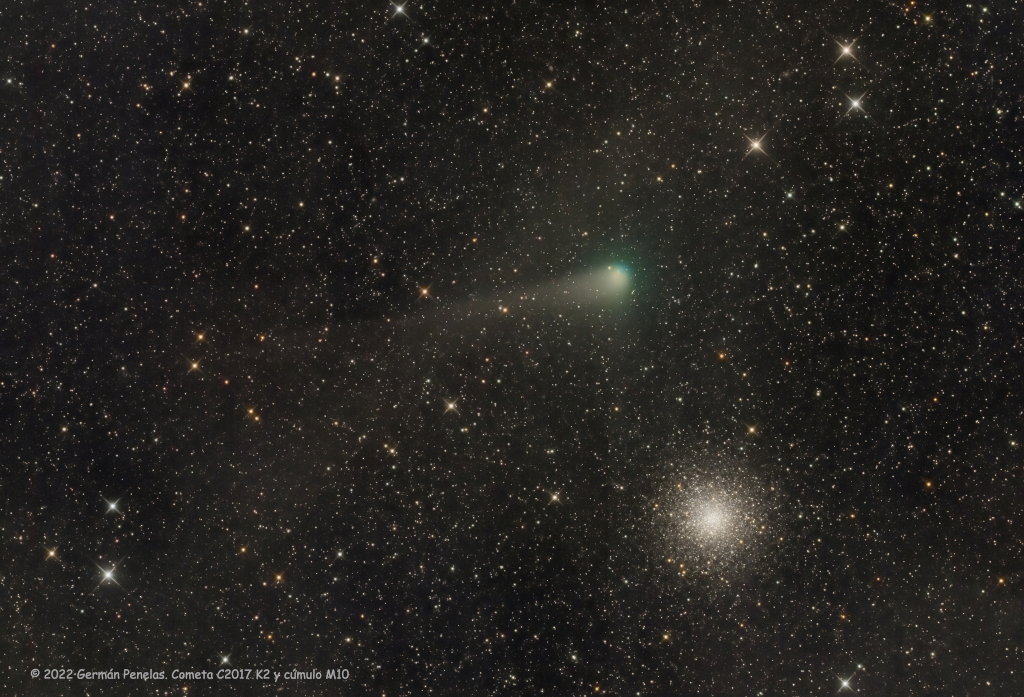
Imaged on July 15 2022, comet C/2017 K2 (PanSTARRS) had a Messier moment, sharing this wide telescopic field of view with globular star cluster Messier 10. Of course M10 was cataloged by 18th century comet hunter Charles Messier as the 10th object on his list of things that were definitely not comets. While M10 is about 14 thousand light-years distant, this comet PanSTARRS was about 15 light-seconds from our fair planet following its its July 14 closest approach. Its greenish coma and dust tail entertaining 21st century comet watchers, C/2017 K2 is expected to remain a fine telescopic comet in northern summer skies. On a maiden voyage from our Solar System’s remote Oort Cloud this comet PanSTARRS was discovered in May 2017 when it was beyond the orbit of Saturn. At the time that made it the most distant active inbound comet known. Its closest approach the Sun will be within 1.8 astronomical units on December 19, beyond the orbital distance of Mars. [via NASA] https://ift.tt/li4mHPv

Jupiter and Ring in Infrared from Webb

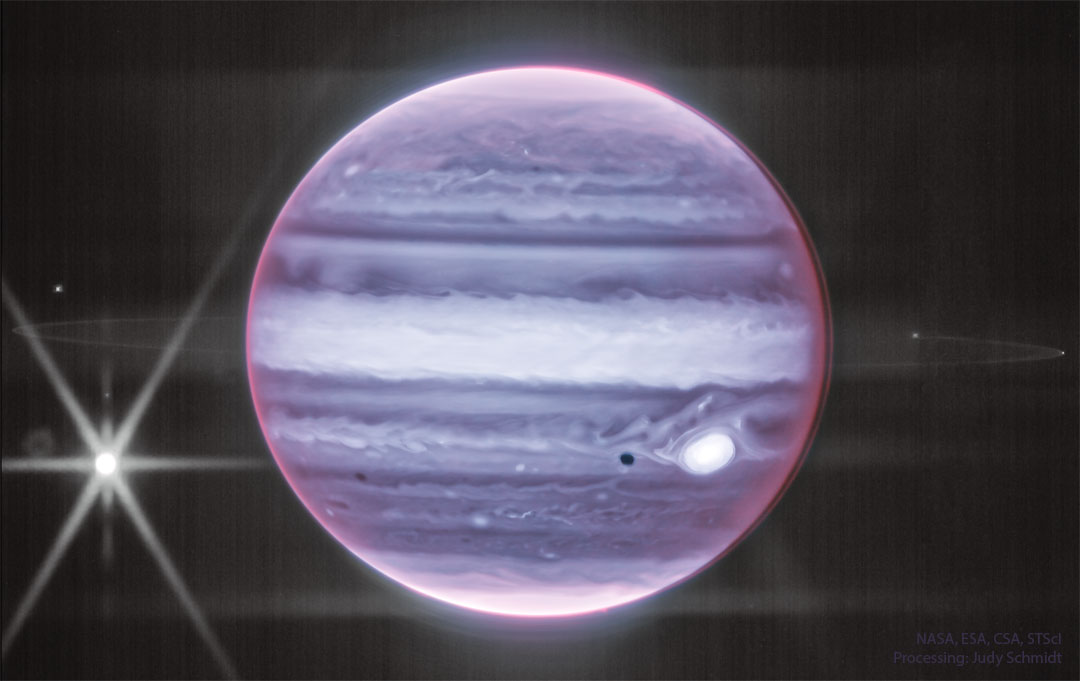
Why does Jupiter have rings? Jupiter’s main ring was discovered in 1979 by NASA’s passing Voyager 1 spacecraft, but its origin was then a mystery. Data from NASA’s Galileo spacecraft that orbited Jupiter from 1995 to 2003, however, confirmed the hypothesis that this ring was created by meteoroid impacts on small nearby moons. As a small meteoroid strikes tiny Metis, for example, it will bore into the moon, vaporize, and explode dirt and dust off into a Jovian orbit. The featured image of Jupiter in infrared light by the James Webb Space Telescope shows not only Jupiter and its clouds, but this ring as well. Also visible is Jupiter’s Great Red Spot (GRS) — in comparatively light color on the right, Jupiter’s large moon Europa — in the center of diffraction spikes on the left, and Europa’s shadow — next to the GRS. Several features in the image are not yet well understood, including the seemingly separated cloud layer on Jupiter’s right limb. [via NASA] https://ift.tt/OMH2j3U

Pleiades over Half Dome

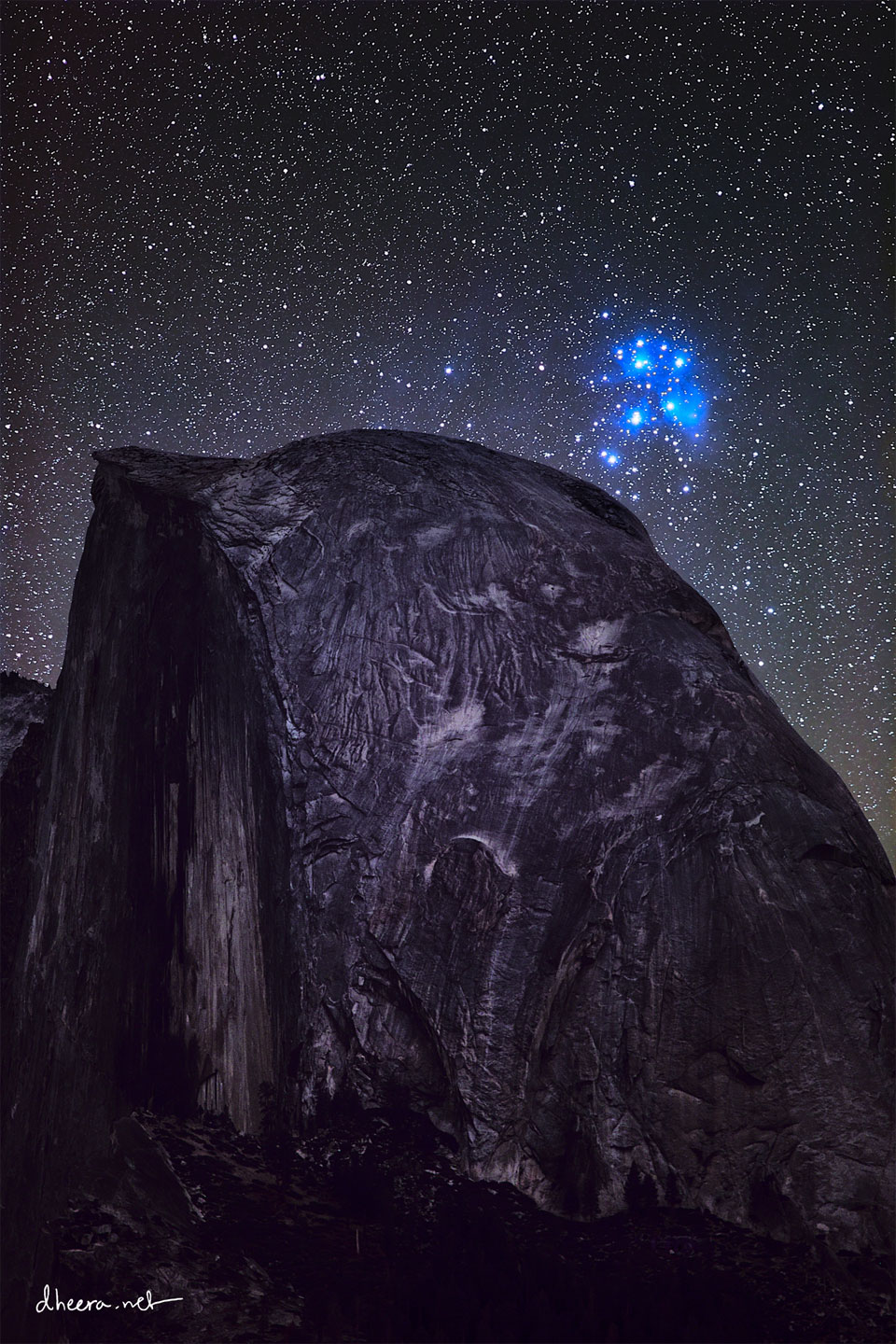
Stars come in bunches. The most famous bunch of stars on the sky is the Pleiades, a bright cluster that can be easily seen with the unaided eye. The Pleiades lies only about 450 light years away, formed about 100 million years ago, and will likely last about another 250 million years. Our Sun was likely born in a star cluster, but now, being about 4.5 billion years old, its stellar birth companions have long since dispersed. The Pleiades star cluster is pictured over Half Dome, a famous rock structure in Yosemite National Park in California, USA. The featured image is a composite of 28 foreground exposures and 174 images of the stellar background, all taken from the same location and by the same camera on the same night in October 2019. After calculating the timing of a future juxtaposition of the Pleiades and Half Dome, the astrophotrographer was unexpectedly rewarded by an electrical blackout, making the background sky unusually dark. [via NASA] https://ift.tt/8ksz0GD