Hubble s Andromeda Galaxy Mosaic

The largest photomosaic ever assembled from Hubble Space Telescope image data is a panoramic view of our neighboring spiral Andromeda Galaxy. With 600 overlapping frames assembled from observations made from July 2010 to December 2022, the full Hubble Andromeda Galaxy mosaic spans almost six full moons across planet Earth’s sky. A cropped version shown above is nearly two full moons across and partially covers Andromeda’s core and inner spiral arms. Also known as M31, the Andromeda Galaxy is 2.5 million light-years away. That makes it the closest large spiral galaxy to our own Milky Way. Our perspective on the spiral Milky Way is anchored to the view from the location of the Sun, a star found within the Milky Way’s galactic disk. But Hubble’s magnificent Andromeda mosaic offers an expansive view of a large spiral galaxy from the outside looking in. Hubble’s comprehensive, detaileddata set extending across the Andromeda Galaxy will allow astronomers to make an unprecedented holistic exploration of the mysteries of spiral galaxy structure and evolution. [via NASA] https://ift.tt/qBRNYs3
Messier 87

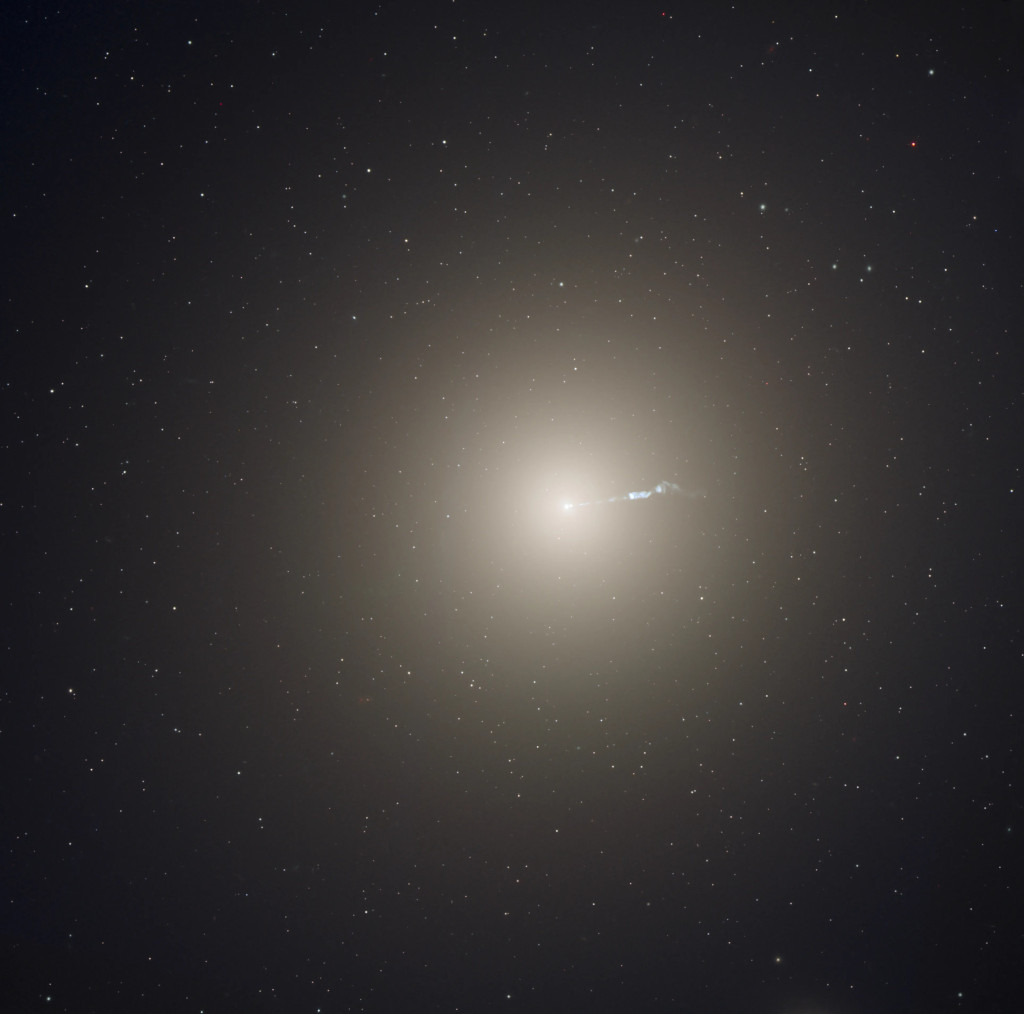
Enormous elliptical galaxy Messier 87 is about 50 million light-years away. Also known as NGC 4486, the giant galaxy holds trillions of stars compared to the mere billions of stars in our large spiral Milky Way. M87 reigns as the large central elliptical galaxy in the Virgo galaxy cluster. An energetic jet from the giant galaxy’s core is seen to stretch outward for about 5,000 light-years in this sharp optical and near-infrared view from the Hubble Space Telescope. In fact, the cosmic blow torch is seen across the electromagnetic spectrum from gamma-rays to radio wavelengths. Its ultimate power source is M87’s central, supermassive black hole. An image of this monster in the middle of M87 has been captured by planet Earth’s Event Horizon Telescope. [via NASA] https://ift.tt/xMAtDUb

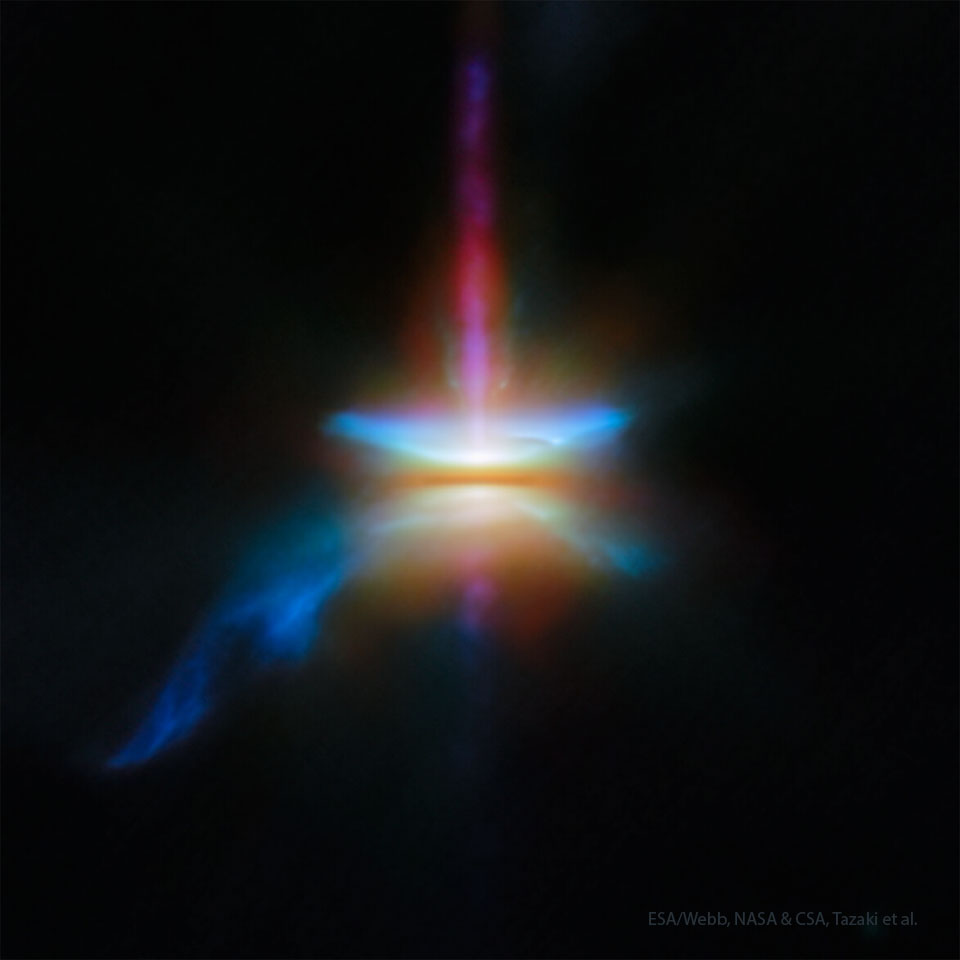
How do stars and planets form? New clues have been found in the protoplanetary system Herbig-Haro 30 by the James Webb Space Telescope in concert with Hubble and the Earth-bound ALMA. The observations show, among other things, that large dust grains are more concentrated into a central disk where they can form planets. The featured image from Webb shows many attributes of the active HH-30 system. Jets of particles are being expelled vertically, shown in red, while a dark dust-rich disk is seen across the center, blocking the light from the star or stars still forming there. Blue-reflecting dust is seen in a parabolic arc above and below the central disk, although why a tail appears on the lower left is currently unknown. Studying how planets form in HH 30 can help astronomers better understand how planets in our own Solar System once formed, including our Earth. [via NASA] https://ift.tt/acLsHou

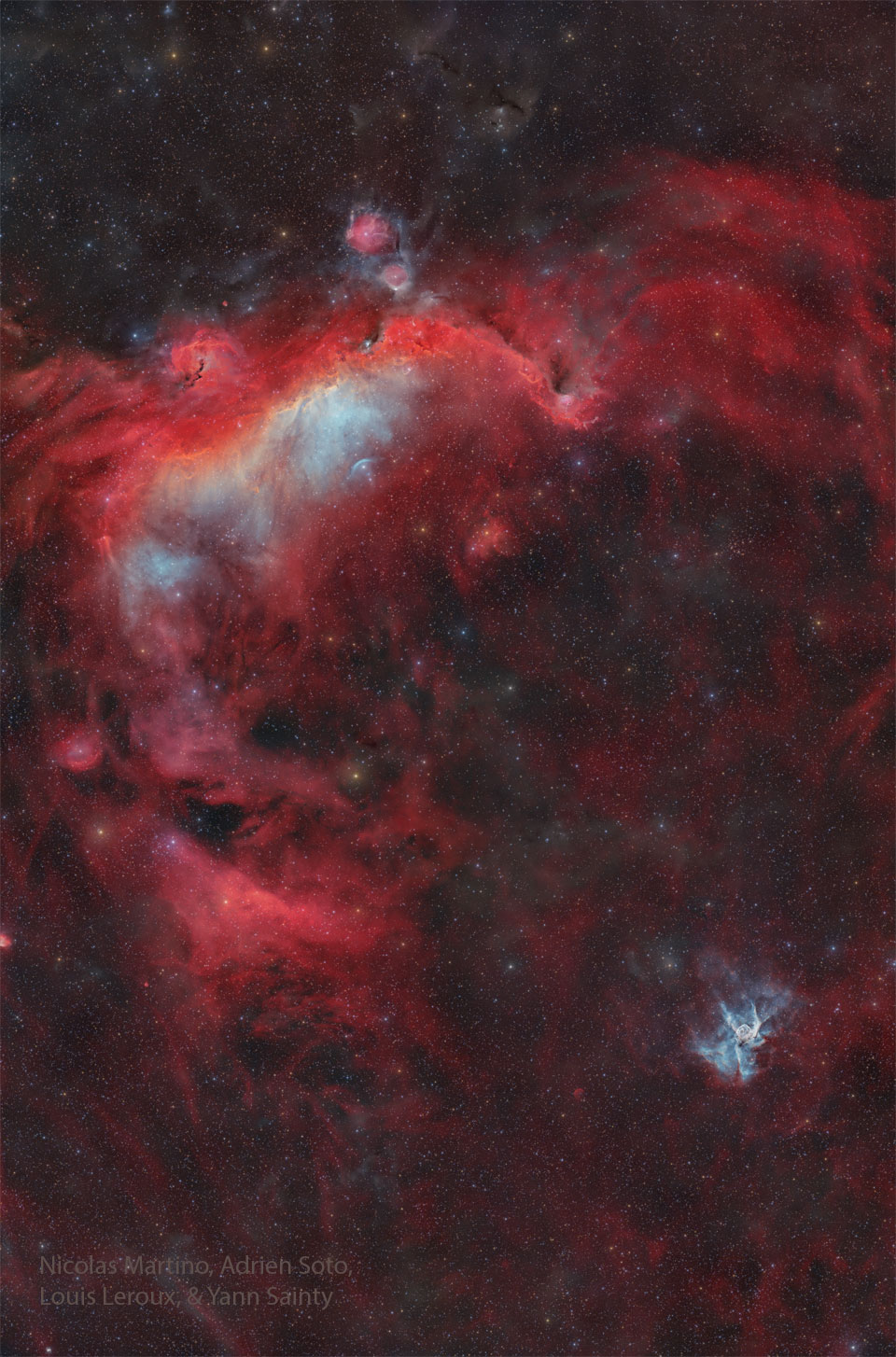
Seen as a seagull and a duck, these nebulae are not the only cosmic clouds to evoke images of flight. But both are winging their way across this broad celestial landscape, spanning almost 7 degrees across planet Earth’s night sky toward the constellation of the Big Dog (Canis Major). The expansive Seagull (top center) is itself composed of two major cataloged emission nebulas. Brighter NGC 2327 forms the head with the more diffuse IC 2177 as the wings and body. Impressively, the Seagull’s wingspan would correspond to about 250 light-years at the nebula’s estimated distance of 3,800 light-years. At the lower right, the Duck appears much more compact and would span only about 50 light-years given its 15,000 light-year distance estimate. Blown by energetic winds from an extremely massive, hot star near its center, the Duck nebula is cataloged as NGC 2359. Of course, the Duck’s thick body and winged appendages also lend it the slightly more dramatic popular moniker, Thor’s Helmet. [via NASA] https://ift.tt/nKCB5Ud

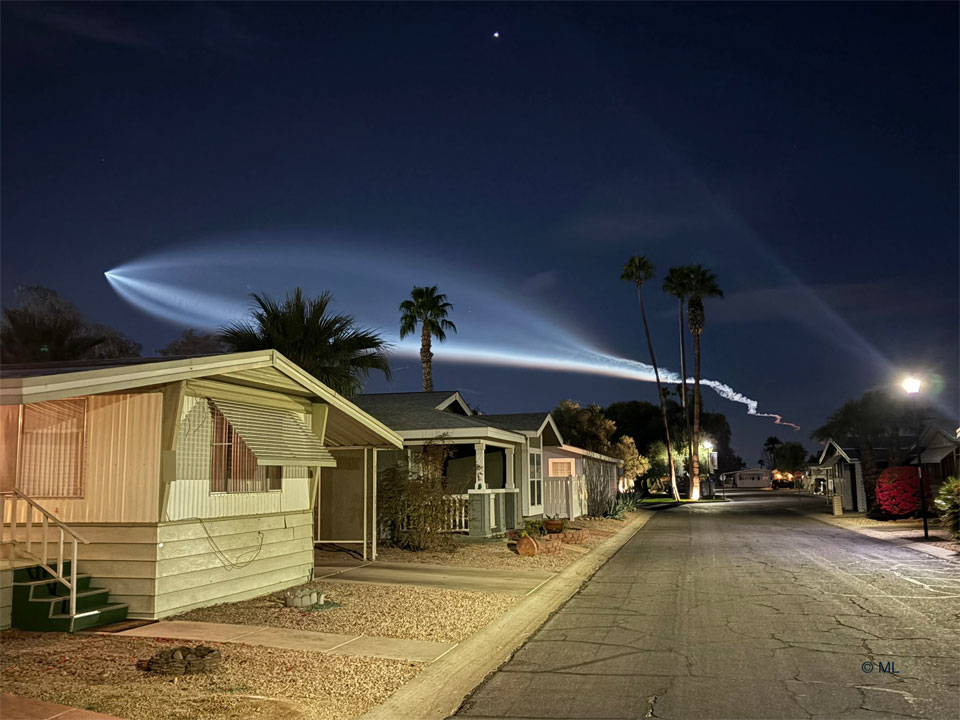
What’s happened to the sky? Last Monday, the photogenic launch plume from a SpaceXrocket launch created quite a spectacle over parts of southern California and Arizona. Looking at times like a giant space fish, the impressive rocket launch from Vandenberg Air Force Base near Lompoc, California, was so bright because it was backlit by the setting Sun. The Falcon 9 rocket successfully delivered to low Earth orbit 23 Starlink communications satellites. The plume from the first stage is seen on the right, while the soaring upper stage rocket is seen at the apex of the plume toward the left. Venus appears at the top of the frame, while a bright streetlight shines on the far right. The featured image was captured toward the west after sunset from near Phoenix, Arizona. [via NASA] https://ift.tt/zAVsG8Q

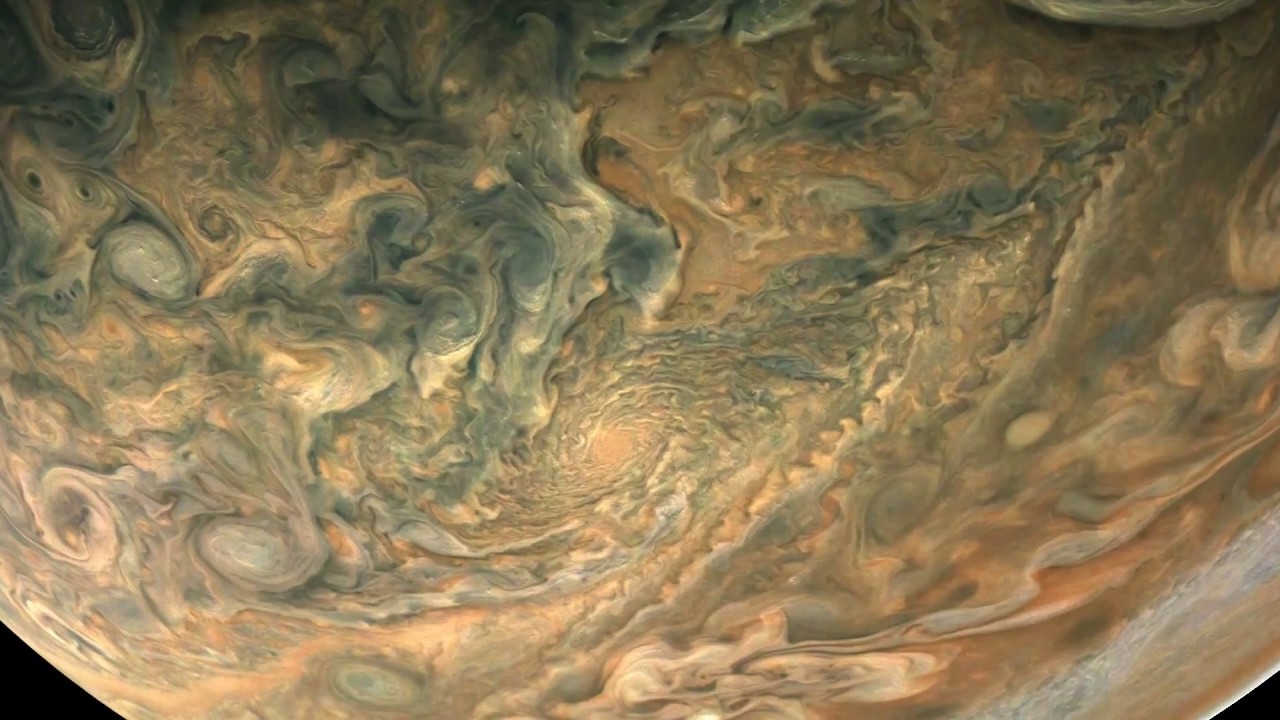
Here comes Jupiter. NASA’s robotic spacecraft Juno is continuing on its highly elongated orbits around our Solar System’s largest planet. The featured video is from perijove 11 in early 2018, the eleventh time Juno passed near Jupiter since it arrived in mid-2016. This time-lapse, color-enhanced movie covers about four hours and morphs between 36 JunoCam images. The video begins with Jupiter rising as Junoapproaches from the north. As Juno reaches its closest view — from about 3,500 kilometers over Jupiter’s cloud tops — the spacecraft captures the great planet in tremendous detail. Juno passes light zones and dark belts of clouds that circle the planet, as well as numerous swirling circular storms, many of which are larger than hurricanes on Earth. After the perijove, Jupiter recedes into the distance, then displaying the unusual clouds that appear over Jupiter’s south. To get desired science data, Juno swoops so close to Jupiter that its instruments are exposed to very high levels of radiation. [via NASA] https://ift.tt/BGiLEog

Parhelia at Abisko

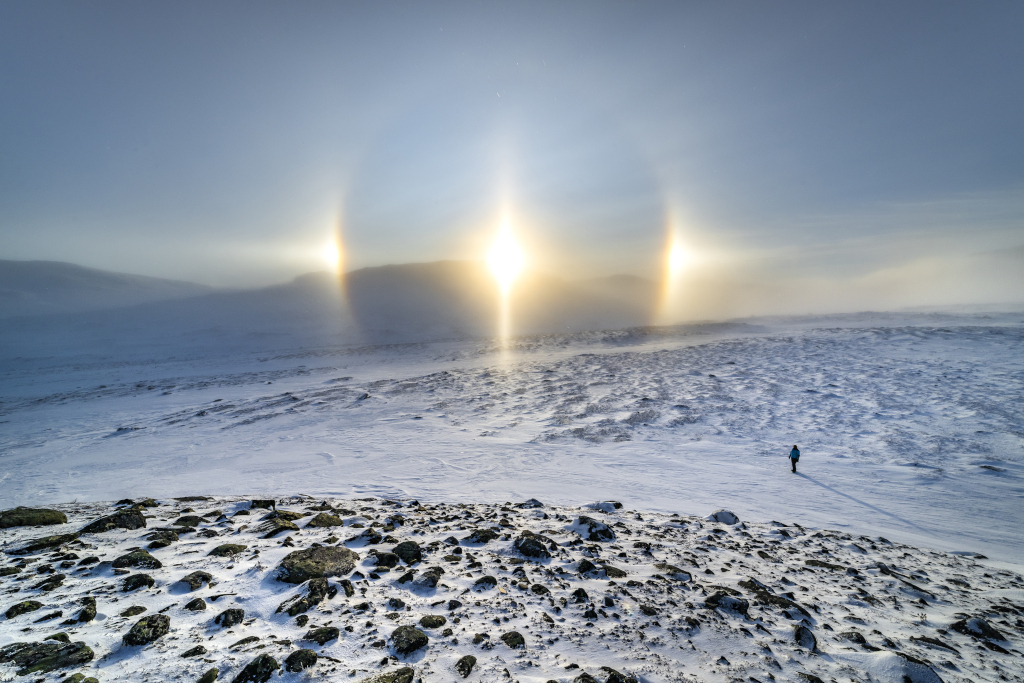
Three suns seem to hug the horizon in this otherworldly winterscape. But the evocative scene was captured during a February 3rd snowmobile exploration of the mountainous region around Abisko National Park, northern Sweden, planet Earth. The two bright spots on either side of Earth’s Sun are parhelia (singular parhelion), also known as mock suns or sun dogs. The parhelia are caused by hexagonal ice crystals suspended in the hazy atmosphere that reflect and refract sunlight. Commonly seen in winter and at high latitudes, the bright parhelia lie along the visible 22 degree ice halo of the Sun. [via NASA] https://ift.tt/dWwUDSJ

A Cosmic Rose: NGC 2237 in Monoceros

The Rosette Nebula, NGC 2237, is not the only cosmic cloud of gas and dust to evoke the imagery of flowers, but it is probably the most famous. At the edge of a large molecular cloud in Monoceros some 5,000 light years away, the petals of this cosmic rose are actually a stellar nursery. The lovely, symmetric shape is sculpted by the winds and radiation from its central cluster of hot young, O-type stars. Stars in the energetic cluster, cataloged as NGC 2244, are only a few million years young, while the central cavity in the Rosette Nebula, is about 50 light-years in diameter. The nebula can be seen with a small telescope toward the constellation of Monoceros, the Unicorn. This natural appearing telescopic portrait of the Rosette Nebula was made using broadband color filters, but sometimes roses aren’t red. [via NASA] https://ift.tt/ILWOguY

Reflections on VdB 31

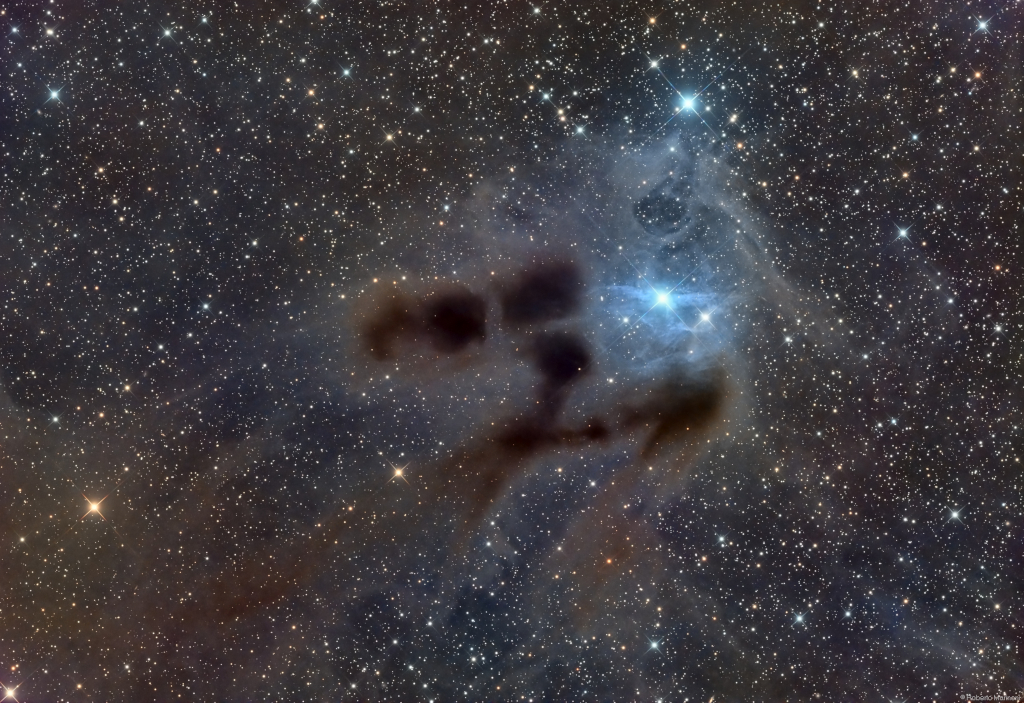
Riding high in the constellation of Auriga, beautiful, blue VdB 31 is the 31st object in Sidney van den Bergh’s 1966 catalog of reflection nebulae. It shares this well-composed celestial still life with dark, obscuring clouds B26, B27, and B28, recorded in Edward E. Barnard’s 1919 catalog of dark markings in the sky. All are these nebulae are interstellar dust clouds. Barnard’s dark nebulae block the light from background stars. For VdB 31 the dust preferentially reflects bluish starlight from embedded, hot, variable star AB Aurigae. Exploring the environs of AB Aurigae with the Hubble Space Telescope has revealed the several million year young star is itself surrounded by a flattened dusty disk with evidence for the ongoing formation of a planetary system. AB Aurigae is about 470 light-years away. At that distance this cosmic canvas would span about eight light-years. [via NASA] https://ift.tt/mjtIz6F

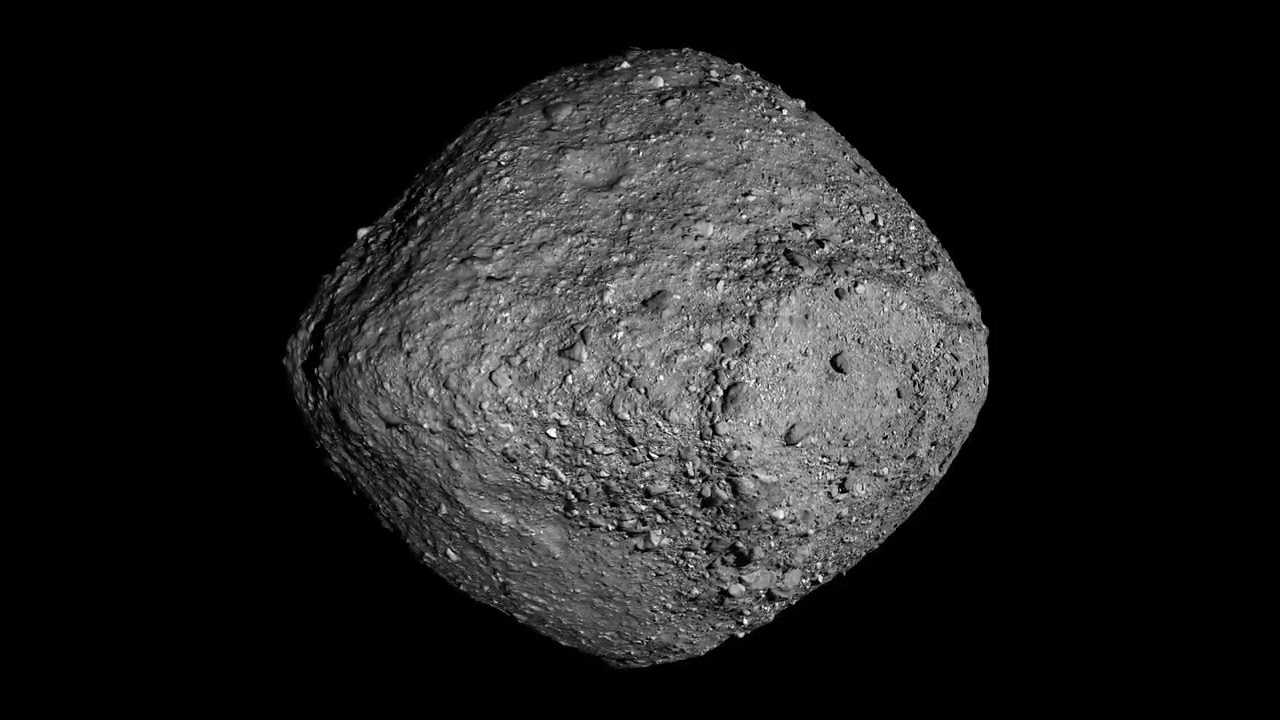
What can a space rock tell us about life on Earth? NASA’s OSIRIS-REx spacecraftmade a careful approach to the near-Earth asteroid 101955 Bennu in October of 2020 to collect surface samples. In September 2023, the robotic spaceship returned these samples to Earth. A recent analysis has shown, surprisingly, that the samples contained 14 out of the 20 known amino acids that are the essential building blocks of life. The presence of the amino acids re-introduces a big question: Could life have originated in space? However, the protein building blocks themselves held another surprise — they contained an even mixture of left-handed and right-handed amino acids — in contrast to our Earth which only has left-handed ones. This raises another big question: Why does life on Earth have only left-handed amino acids? Research on this is sure to continue. [via NASA] https://ift.tt/zpSF4We