Arecibo Telescope Collapse

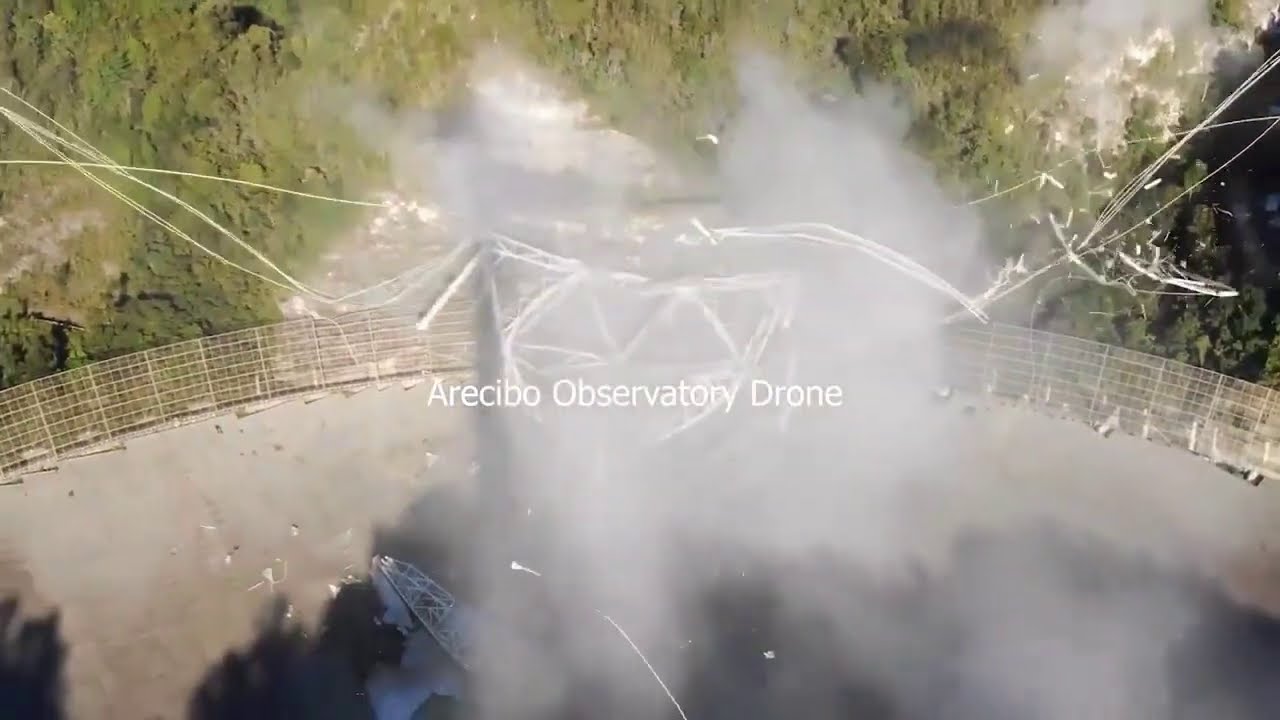
This was one great scientific instrument. Starting in 1963, the 305-meters across Arecibo Telescope in Puerto Rico USA reigned as the largest single-dish radio telescope in the world for over 50 years. Among numerous firsts and milestones, data from Arecibo has been used to measure the spin of Mercury, map the surface of Venus, discover the first planets outside of our Solar System, verify the existence of gravitational radiation, search for extraterrestrial intelligence, and, reportedly, locate hidden military radar by tracking their reflections from the Moon. Past its prime and in the process of being decommissioned, the Arecibo Telescope suffered a catastrophic structural collapse early this month, as seen in the featured composite video. [via NASA] https://ift.tt/2JQc6Nd
Great Conjunction over Sicilian Lighthouse

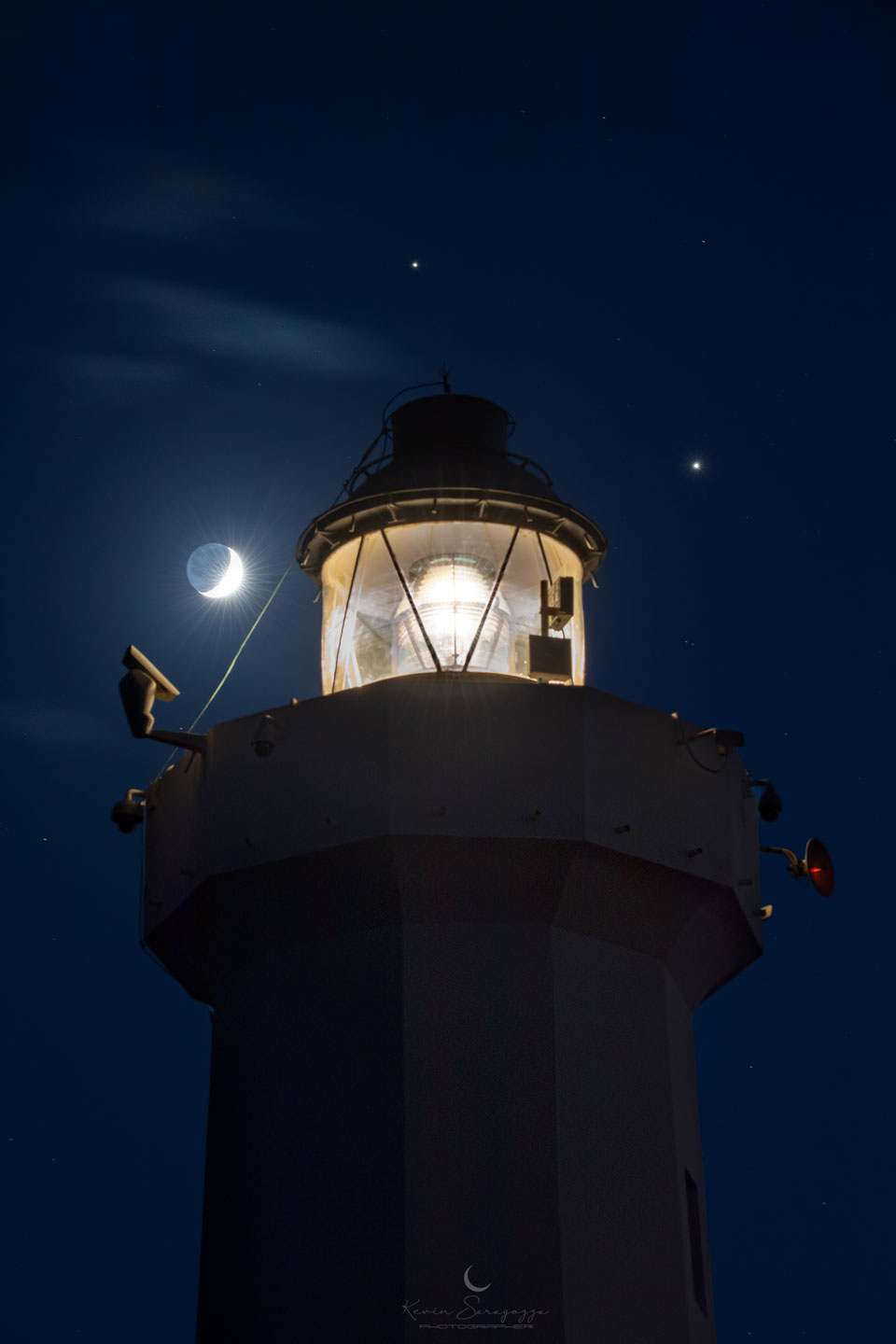
Don’t miss the coming great conjunction. In just under two weeks, the two largest planets in our Solar System will angularly pass so close together in Earth’s sky that the Moon would easily be able to cover them both simultaneously. This pending planetary passage — on December 21 — will be the closest since 1623. Jupiter and Saturn will remain noticeably bright and can already be seen together toward the southwest just after sunset. Soon after dusk is the best time to see them — because they set below the horizon soon after. In mid-November, the Jovian giants were imaged together here about three degrees apart — and slowly closing. The featured image, including a crescent moon, captured the dynamic duo beyond the Cape Murro di Porco Lighthouse in Syracuse, Sicily, Italy. [via NASA] https://ift.tt/37KvKC7

Mammatus Clouds over Mount Rushmore

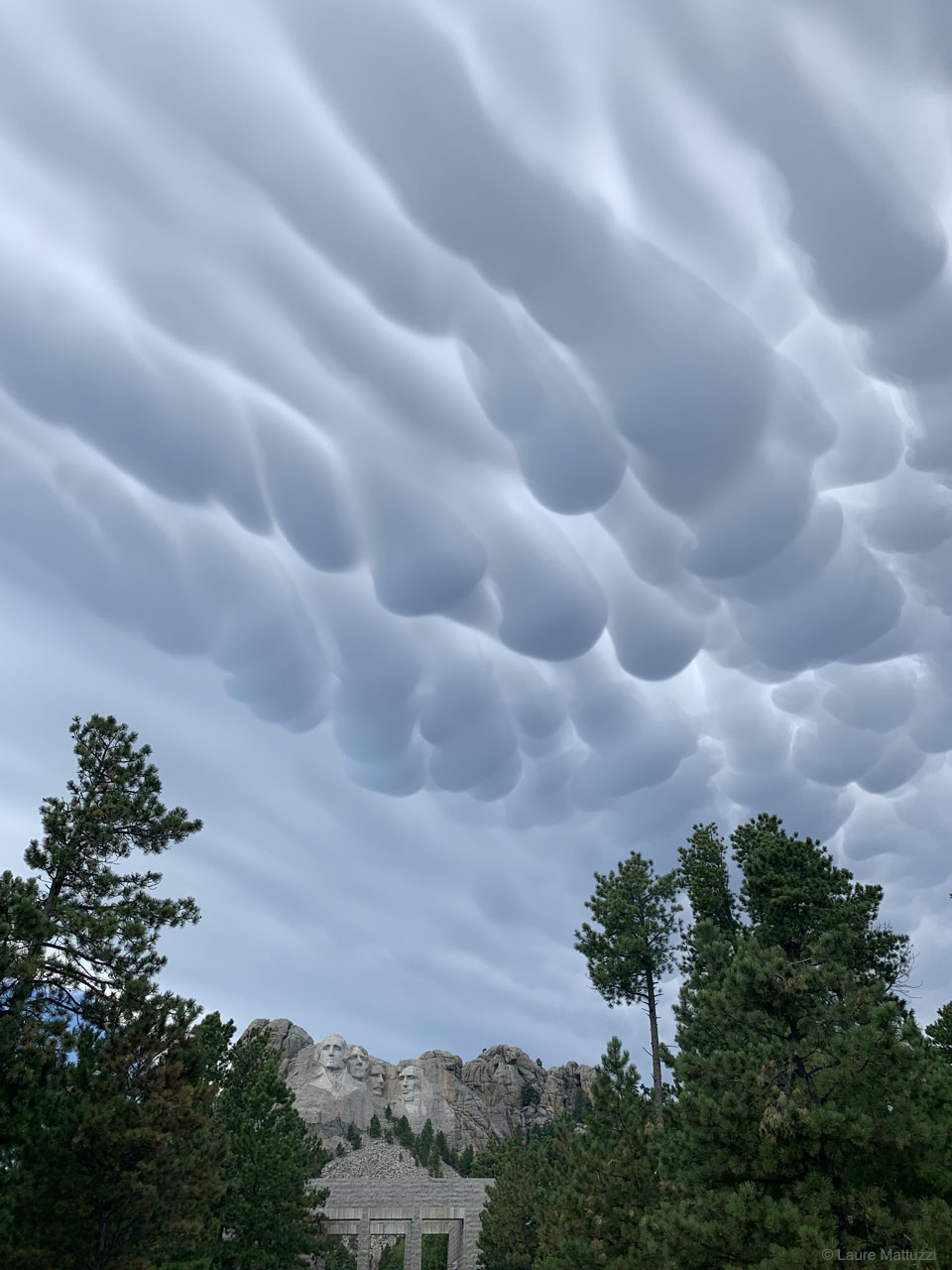
What’s that below those strange clouds? Presidents. If you look closely, you may recognize the heads of four former US Presidents carved into famous Mount Rushmore in South Dakota, USA. More obvious in the featured image are the unusual mammatus clouds that passed briefly overhead. Both were captured together by a surprised tourist with a quick camera in early September. Unlike normal flat-bottomed clouds which form when moist and calm air plateaus rise and cool, bumpy mammatus clouds form as icy and turbulent air pockets sink and heat up. Such turbulent air is frequently accompanied by a thunderstorm. Each mammatus lobe spans about one kilometer. The greater mountain is known to native Lakota Sioux as Six Grandfathers, deities responsible for the directions north, south, east, west, up, and down. [via NASA] https://ift.tt/3gmsEs6

M16: Pillars of Star Creation

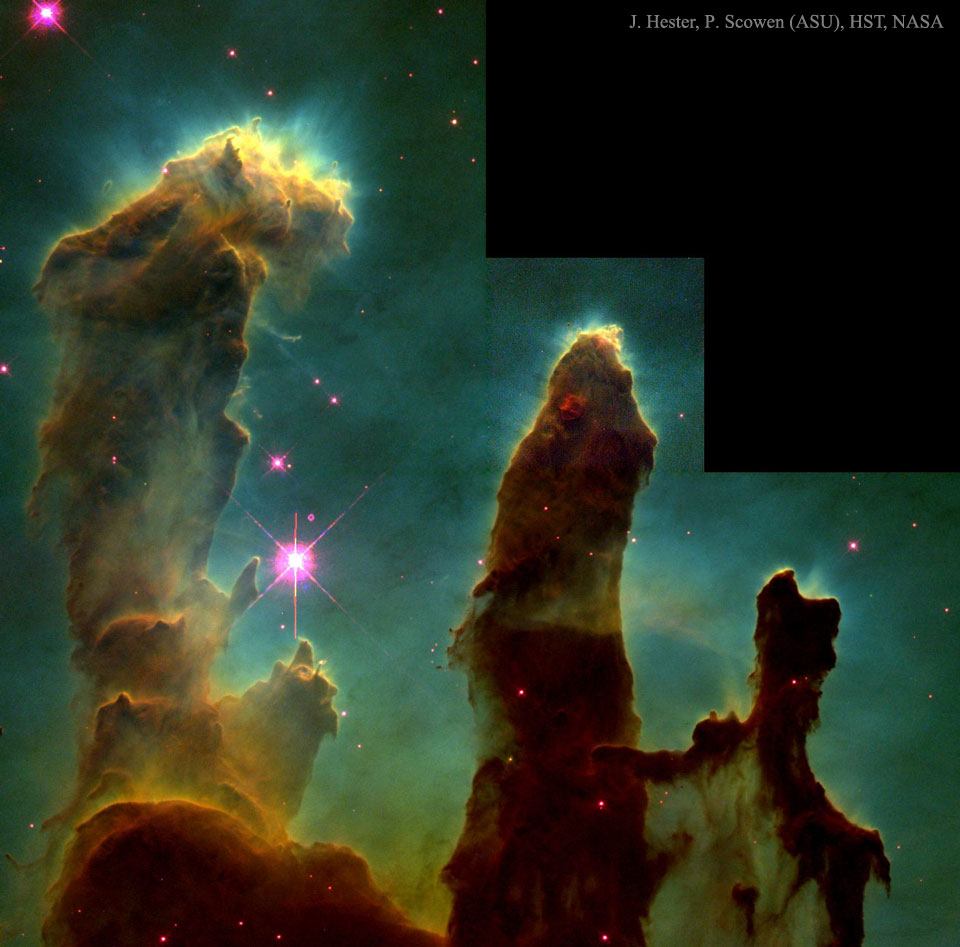
These dark pillars may look destructive, but they are creating stars. This pillar-capturing image of the inside of the Eagle Nebula, taken with the Hubble Space Telescope in 1995, shows evaporating gaseous globules (EGGs) emerging from pillars of molecular hydrogen gas and dust. The giant pillars are light years in length and are so dense that interior gas contracts gravitationally to form stars. At each pillars’ end, the intense radiation of bright young stars causes low density material to boil away, leaving stellar nurseries of dense EGGs exposed. The Eagle Nebula, associated with the open star cluster M16, lies about 7000 light years away. The pillars of creation have been imaged more recently in infrared light by Hubble, NASA’s Spitzer Space Telescope, and ESA’s Herschel Space Observatory — showing new detail. [via NASA] https://ift.tt/3lMpQWb

Mons Rumker in the Ocean of Storms

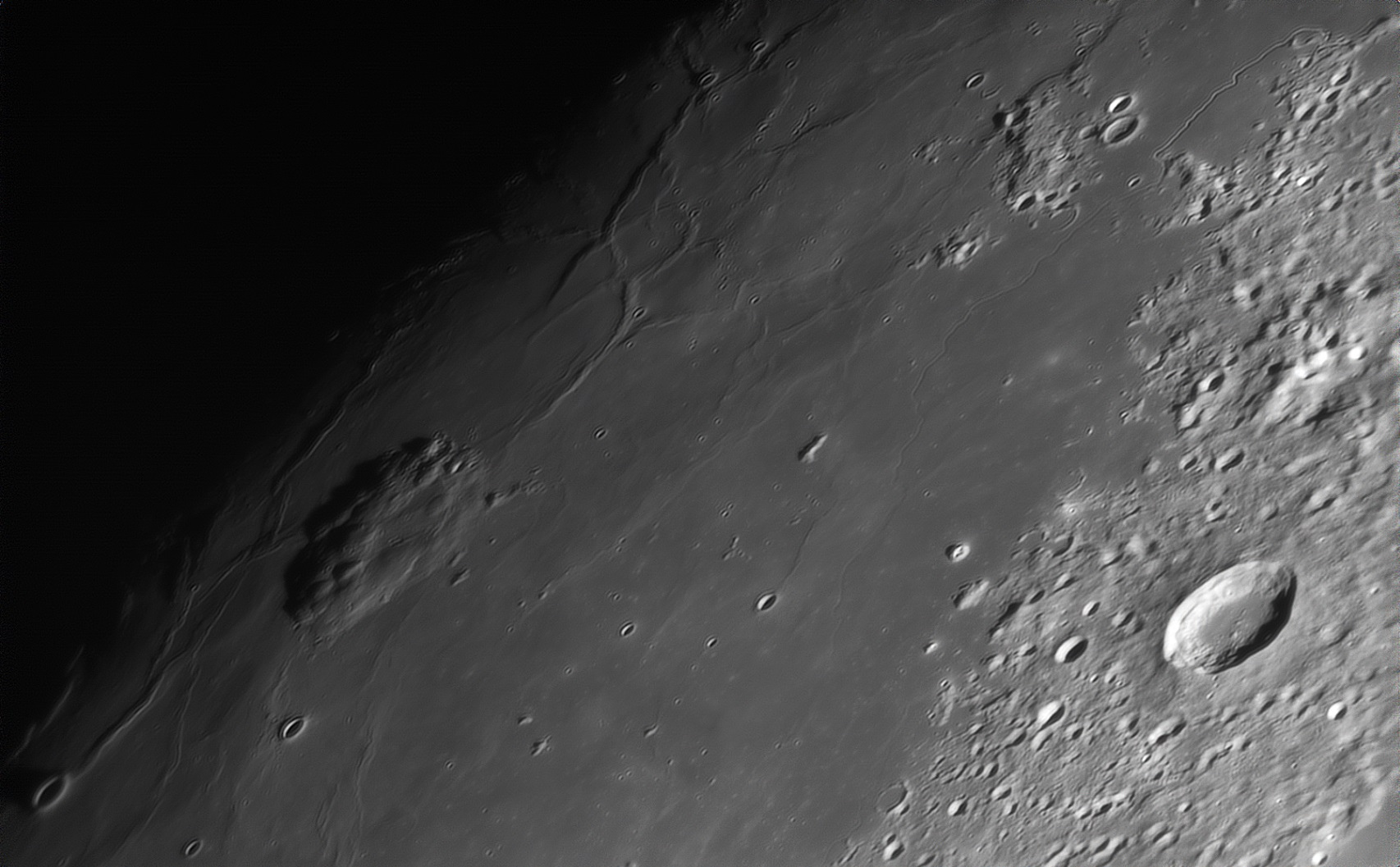
Mons Rumker, a 70 kilometer wide complex of volcanic domes, rises some 1100 meters above the vast, smooth lunar mare known as Oceanus Procellarum, the Ocean of Storms. Daylight came to the area late last month. The lunar terminator, the shadow line between night and day, runs diagonally across the left side in this telescopic close-up of a waxing gibbous Moon from November 27. China’s Chang’e-5 mission landing site is also in the frame. The probe’s lander-ascender combination touch down on the lunar surface within a region right of center and north of Mons Rumker’s domes on December 1. On December 3 the ascender left the Ocean of Storms carrying 2 kilograms of lunar material for return to planet Earth. [via NASA] https://ift.tt/3gevJdn

Curly Spiral Galaxy M63

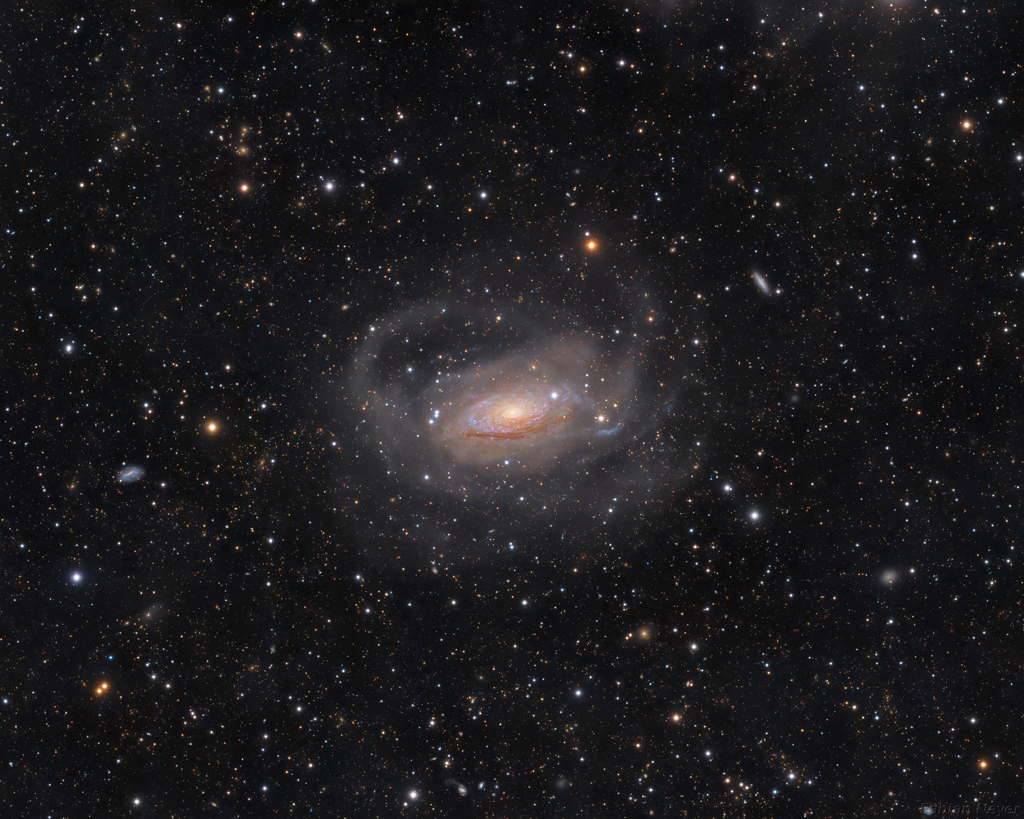
A bright spiral galaxy of the northern sky, Messier 63 is nearby, about 30 million light-years distant toward the loyal constellation Canes Venatici. Also cataloged as NGC 5055, the majestic island universe is nearly 100,000 light-years across, about the size of our own Milky Way. Its bright core and majestic spiral arms lend the galaxy its popular name, The Sunflower Galaxy, while this exceptionally deep exposure also follows faint, arcing star streams far into the galaxy’s halo. Extending nearly 180,000 light-years from the galactic center the star streams are likely remnants of tidally disrupted satellites of M63. Other satellite galaxies of M63 can be spotted in this remarkable wide-field image, made with a small telescope, including five newly identified faint dwarf galaxies, which could contribute to M63’s star streams in the next few billion years. [via NASA] https://ift.tt/2Lass3H

The Antennae Galaxies in Collision

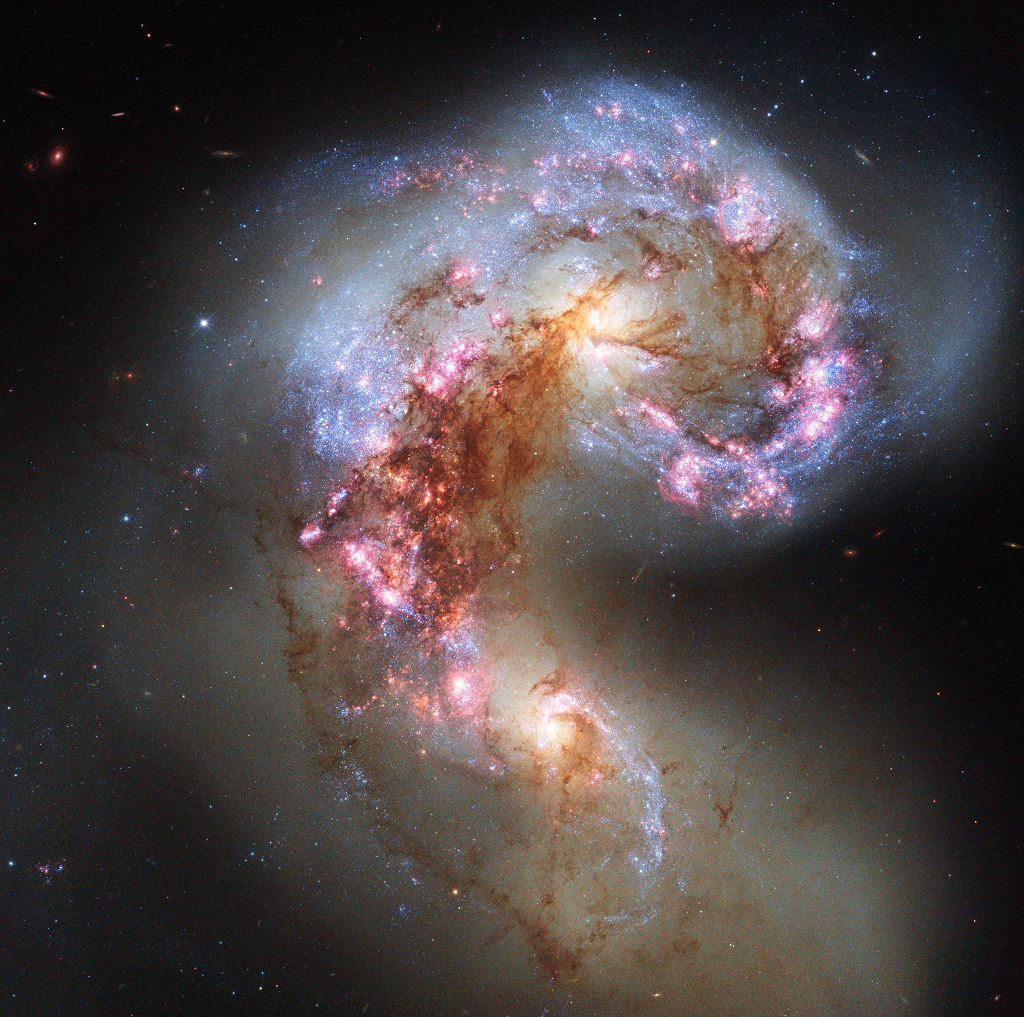
Sixty million light-years away toward the southerly constellation Corvus, these two large galaxies are colliding. The cosmic train wreck captured in stunning detail in this Hubble Space Telescope snapshot takes hundreds of millions of years to play out. Cataloged as NGC 4038 and NGC 4039, the galaxies’ individual stars don’t often collide though. Their large clouds of molecular gas and dust do, triggering furious episodes of star formation near the center of the wreckage. New star clusters and interstellar matter are jumbled and flung far from the scene of the accident by gravitational forces. This Hubble close-up frame is about 50,000 light-years across at the estimated distance of the colliding galaxies. In wider-field views their suggestive visual appearance, with extended structures arcing for hundreds of thousands of light-years, gives the galaxy pair its popular name, The Antennae Galaxies. [via NASA] https://ift.tt/2JtVNFC

Eye of Moon

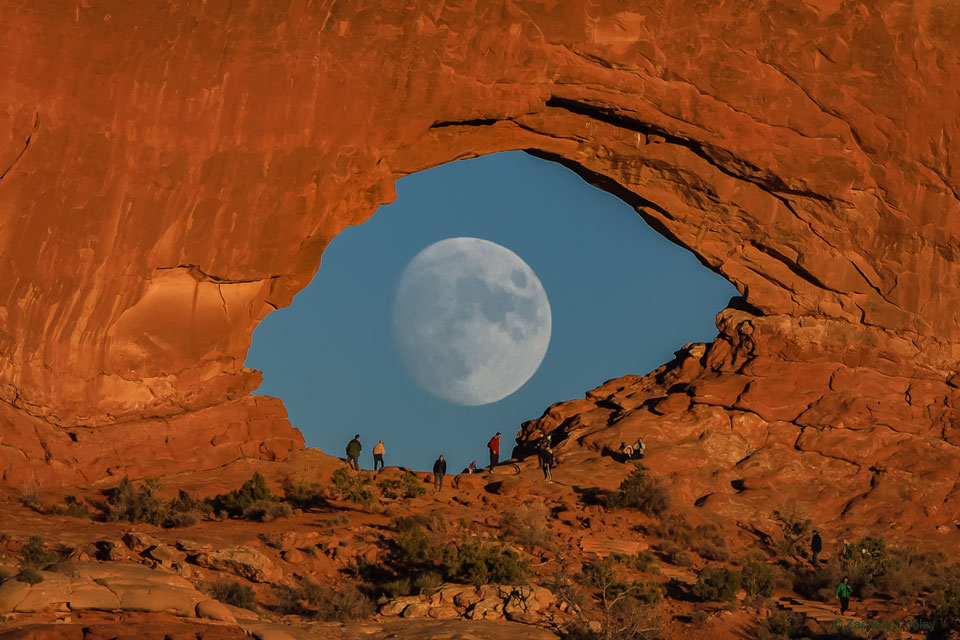
Who’s watching who? The featured image of the Moon through a gap in a wall of rock may appear like a giant eye looking back at you. Although, in late October, it took only a single exposure to capture this visual double, it also took a lot of planning. The photographic goal was achieved by precise timing — needed for a nearly full moon to appear through the eye-shaped arch, by precise locating — needed for the angular size of the Moon to fit iconically inside the rock arch, and by good luck — needed for a clear sky and for the entire scheme to work. The seemingly coincidental juxtaposition was actually engineered with the help of three smartphone apps. The pictured sandstone arch, carved by erosion, is millions of years old and just one of thousands of natural rock arches that have been found in Arches National Park near Moab, Utah, USA. Contrastingly, the pictured Moon can be found up in the sky from just about anywhere on Earth, about half the time. [via NASA] https://ift.tt/3fWyLTD

NGC 346: Star Forming Cluster in the SMC

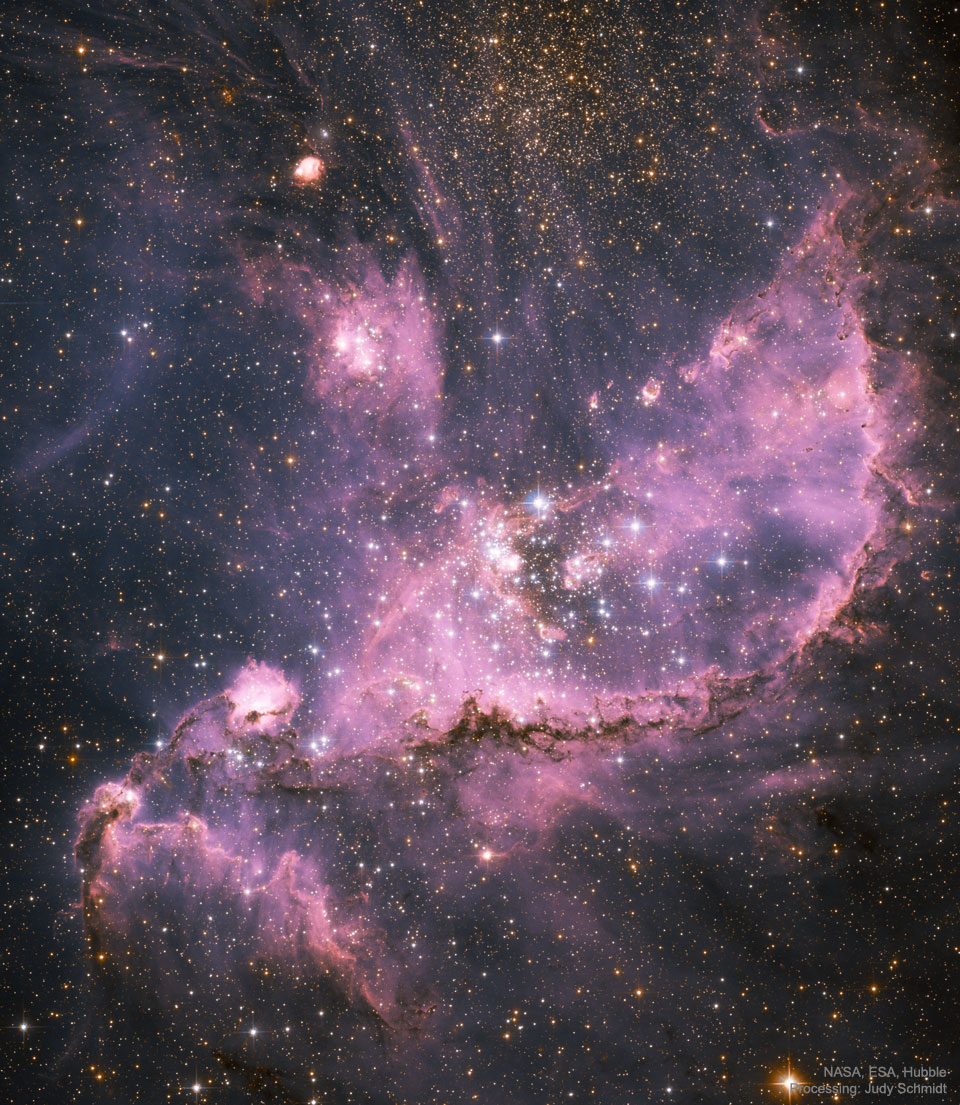
Are stars still forming in the Milky Way’s satellite galaxies? Found among the Small Magellanic Cloud’s (SMC’s) clusters and nebulas, NGC 346 is a star forming region about 200 light-years across, pictured here in the center of a Hubble Space Telescope image. A satellite galaxy of the Milky Way, the Small Magellanic Cloud (SMC) is a wonder of the southern sky, a mere 210,000 light-years distant in the constellation of the Toucan (Tucana). Exploring NGC 346, astronomers have identified a population of embryonic stars strung along the dark, intersecting dust lanes visible here on the right. Still collapsing within their natal clouds, the stellar infants’ light is reddened by the intervening dust. Toward the top of the frame is another star cluster with intrinsically older and redder stars. A small, irregular galaxy, the SMC itself represents a type of galaxy more common in the early Universe. These small galaxies, though, are thought to be building blocks for the larger galaxies present today. [via NASA] https://ift.tt/3lwxQKY

Cygnus Without Stars

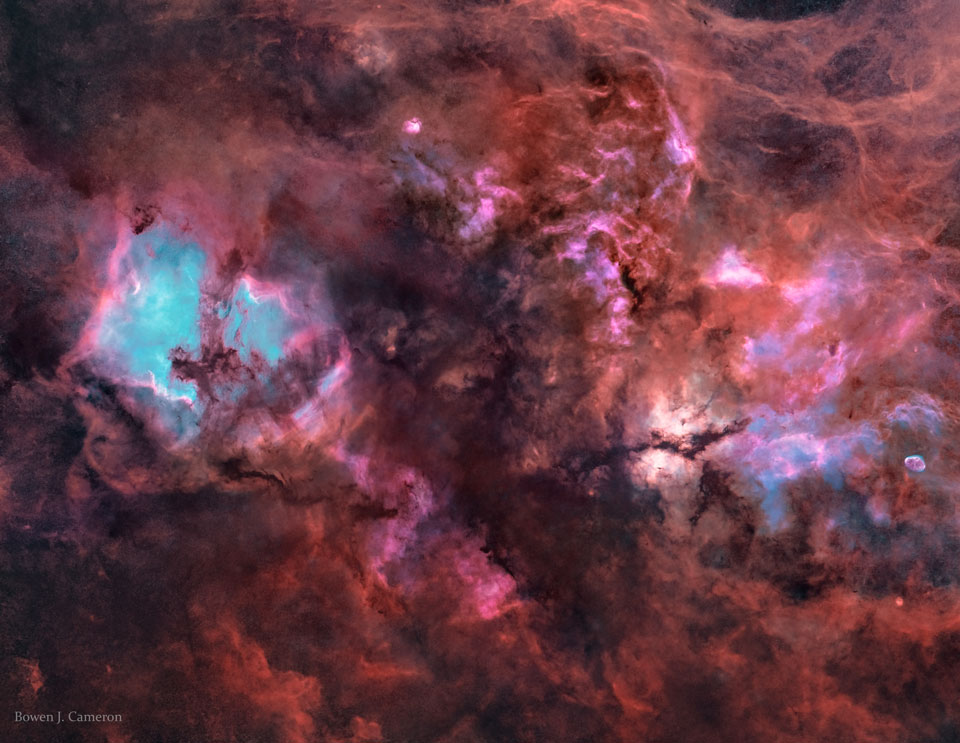
The sky is filled with faintly glowing gas, though it can take a sensitive camera and telescope to see it. For example, this twelve-degree-wide view of the northern part of the constellation Cygnus reveals a complex array of cosmic clouds of gas along the plane of our Milky Way galaxy. The featured mosaic of telescopic images was recorded through two filters: an H-alpha filter that transmits only visible red light from glowing hydrogen atoms, and a blue filter that transmits primarily light emitted by the slight amount of energized oxygen. Therefore, in this 18-hour exposure image, blue areas are hotter than red. Further digital processing has removed the myriad of point-like Milky Way stars from the scene. Recognizable bright nebulas include NGC 7000 (North America Nebula), and IC 5070 (Pelican Nebula) on the left with IC 1318 (Butterfly Nebula) and NGC 6888 (Crescent Nebula) on the right — but others can be found throughout the wide field. [via NASA] https://ift.tt/3mmdiG9