Shell Galaxies in Pisces

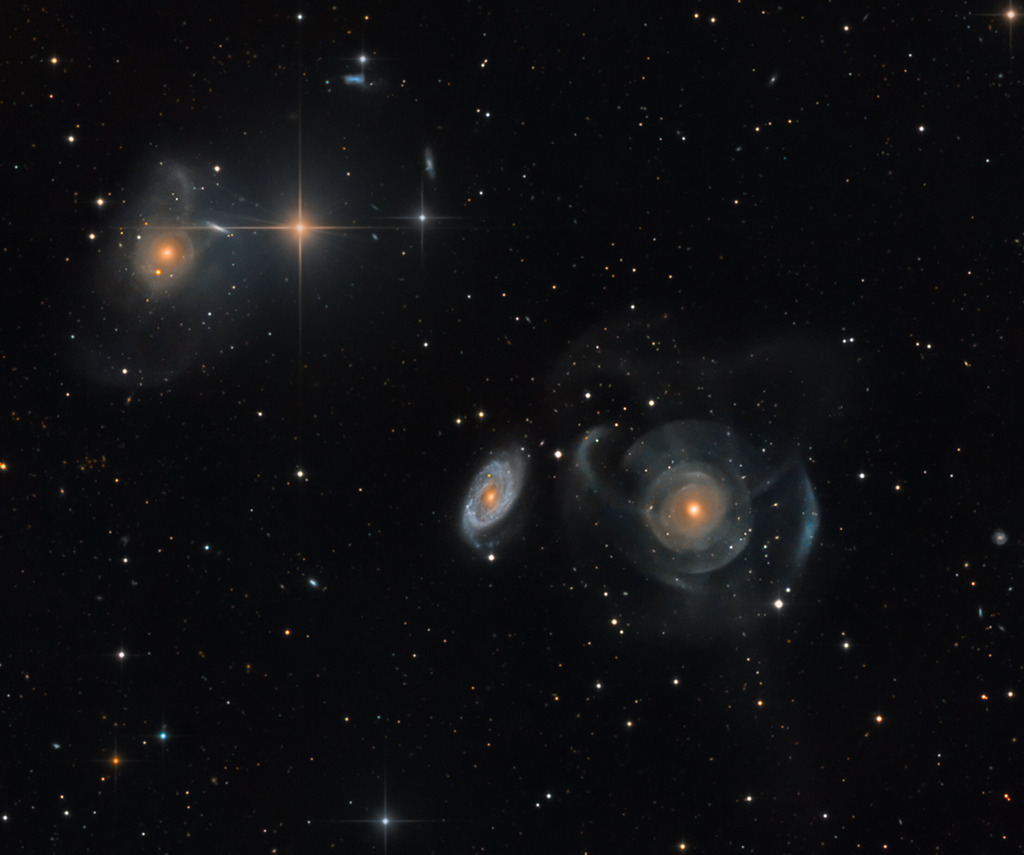
This intergalactic skyscape features a peculiar system of galaxies cataloged as Arp 227 some 100 million light-years distant. Swimming within the boundaries of the constellation Pisces, Arp 227 consists of the two galaxies prominent right of center, the curious shell galaxy NGC 474 and its blue, spiral-armed neighbor NGC 470. The faint, wide arcs or shells of NGC 474 could have been formed by a gravitational encounter with neighbor NGC 470. Alternately the shells could be caused by a merger with a smaller galaxy producing an effect analogous to ripples across the surface of a pond. The large galaxy on the top lefthand side of the deep image, NGC 467, appears to be surrounded by faint shells too, evidence of another interacting galaxy system. Intriguing background galaxies are scattered around the field that also includes spiky foreground stars. Of course, those stars lie well within our own Milky Way Galaxy. The field of view spans 25 arc minutes or about 1/2 degree on the sky. [via NASA] https://ift.tt/31vbKBt
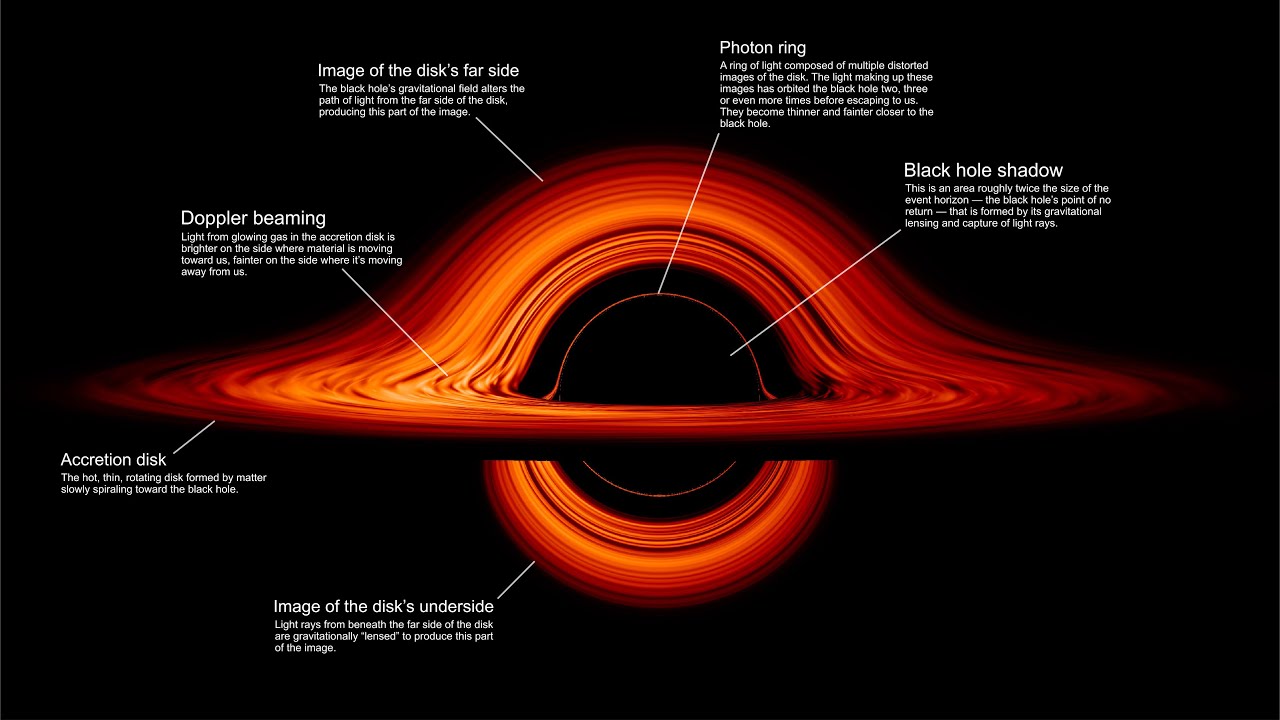
What would it look like to circle a black hole? If the black hole was surrounded by a swirling disk of glowing and accreting gas, then the great gravity of the black hole would deflect light emitted by the disk to make it look very unusual. The featured animated video gives a visualization. The video starts with you, the observer, looking toward the black hole from just above the plane of the accretion disk. Surrounding the central black hole is a thin circular image of the orbiting disk that marks the position of the photon sphere — inside of which lies the black hole’s event horizon. Toward the left, parts of the large main image of the disk appear brighter as they move toward you. As the video continues, you loop over the black hole, soon looking down from the top, then passing through the disk plane on the far side, then returning to your original vantage point. The accretion disk does some interesting image inversions — but never appears flat. Visualizations such as this are particularly relevant today as black holes are being imaged in unprecedented detail by the Event Horizon Telescope. [via NASA] https://ift.tt/3gmOee9

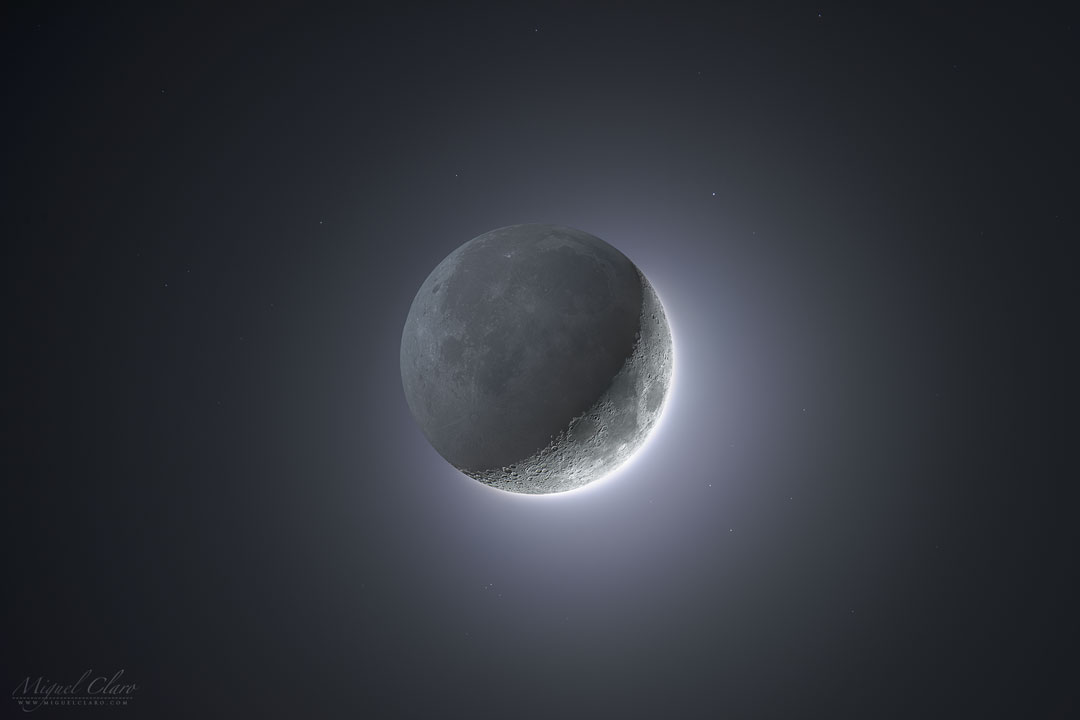
How come the crescent Moon doesn’t look like this? For one reason, because your eyes can’t simultaneously discern bright and dark regions like this. Called earthshine or the da Vinci glow, the unlit part of a crescent Moon is visible but usually hard to see because it is much dimmer than the sunlit arc. In our digital age, however, the differences in brightness can be artificially reduced. The featured image is actually a digital composite of 15 short exposures of the bright crescent, and 14 longer exposures of the dim remainder. The origin of the da Vinci glow, as explained by Leonardo da Vinci about 510 years ago, is sunlight reflected first by the Earth to the Moon, and then back from the Moon to the Earth. [via NASA] https://ift.tt/3glE0dZ

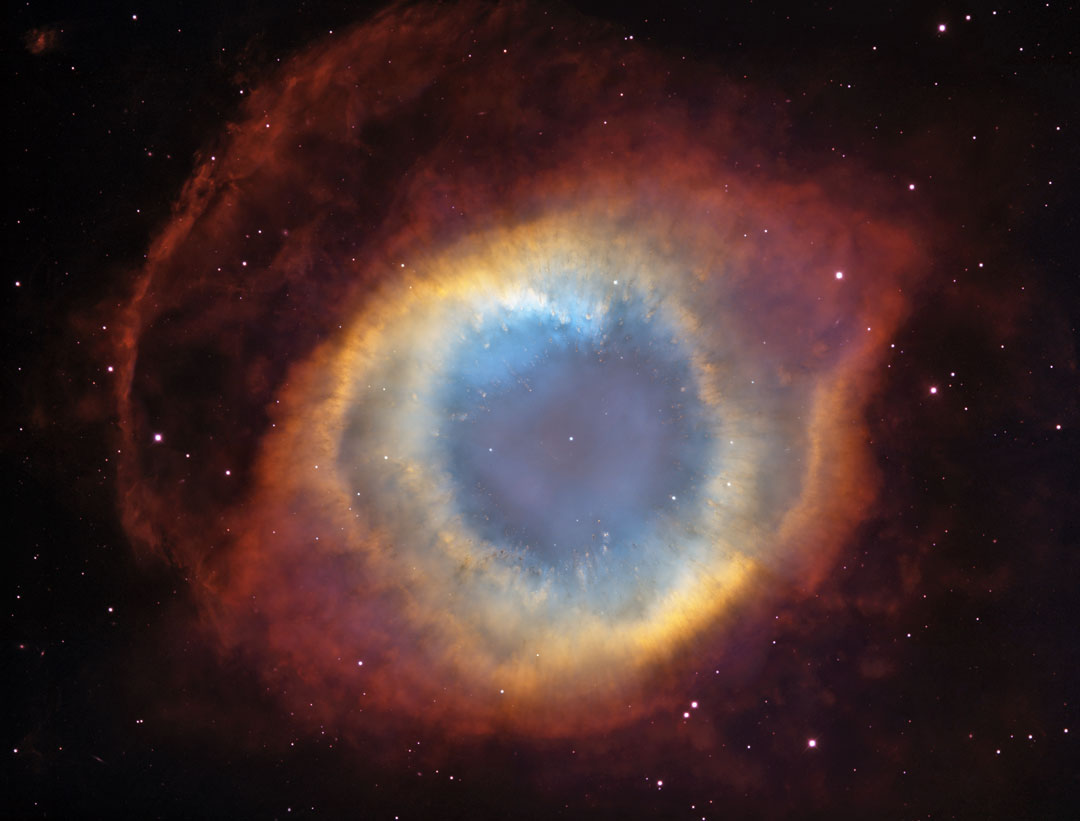
The Helix Nebula from Blanco and Hubble

How did a star create the Helix nebula? The shapes of planetary nebula like the Helix are important because they likely hold clues to how stars like the Sun end their lives. Observations by the orbiting Hubble Space Telescope and the 4-meter Blanco Telescope in Chile, however, have shown the Helix is not really a simple helix. Rather, it incorporates two nearly perpendicular disks as well as arcs, shocks, and even features not well understood. Even so, many strikingly geometric symmetries remain. How a single Sun-like star created such beautiful yet geometric complexity is a topic of research. The Helix Nebula is the nearest planetary nebula to Earth, lies only about 700 light years away toward the constellation of Aquarius, and spans about 3 light-years. [via NASA] https://ift.tt/2Qfo16D

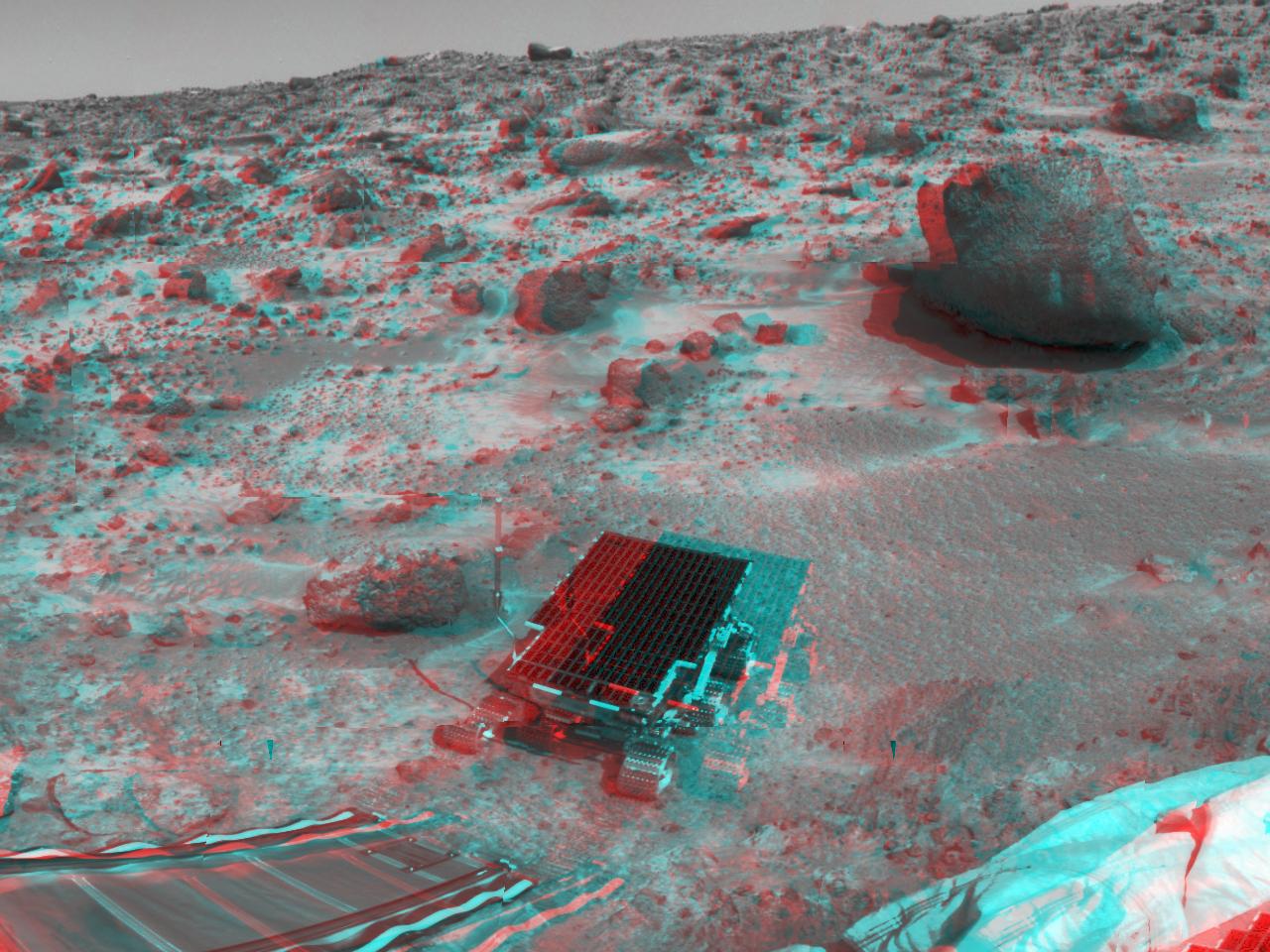
Yogi And Friends in 3D

From July of 1997, a ramp from the Pathfinder lander, the Sojourner robot rover, airbags, a couch, Barnacle Bill and Yogi Rock appear together in this 3D stereo view of the surface of Mars. Barnacle Bill is the rock just left of the solar-paneled Sojourner. Yogi is the big friendly-looking boulder at top right. The «couch» is the angular rock shape visible near center on the horizon. Look at the image with red/blue glasses (or just hold a piece of clear red plastic over your left eye and blue or green over your right) to get the dramatic 3D perspective. The stereo view was recorded by the remarkable Imager for Mars Pathfinder (IMP) camera. The IMP had two optical paths for stereo imaging and ranging and was equipped with an array of color filters for spectral analysis. Operating as the first astronomical observatory on Mars, the IMP also recorded images of the Sun and Deimos, the smallest of Mars’ two tiny moons. This July saw the launch of NASA’s Mars Perseverance Rover on a mission to the Red Planet. [via NASA] https://ift.tt/2FMWQ1f

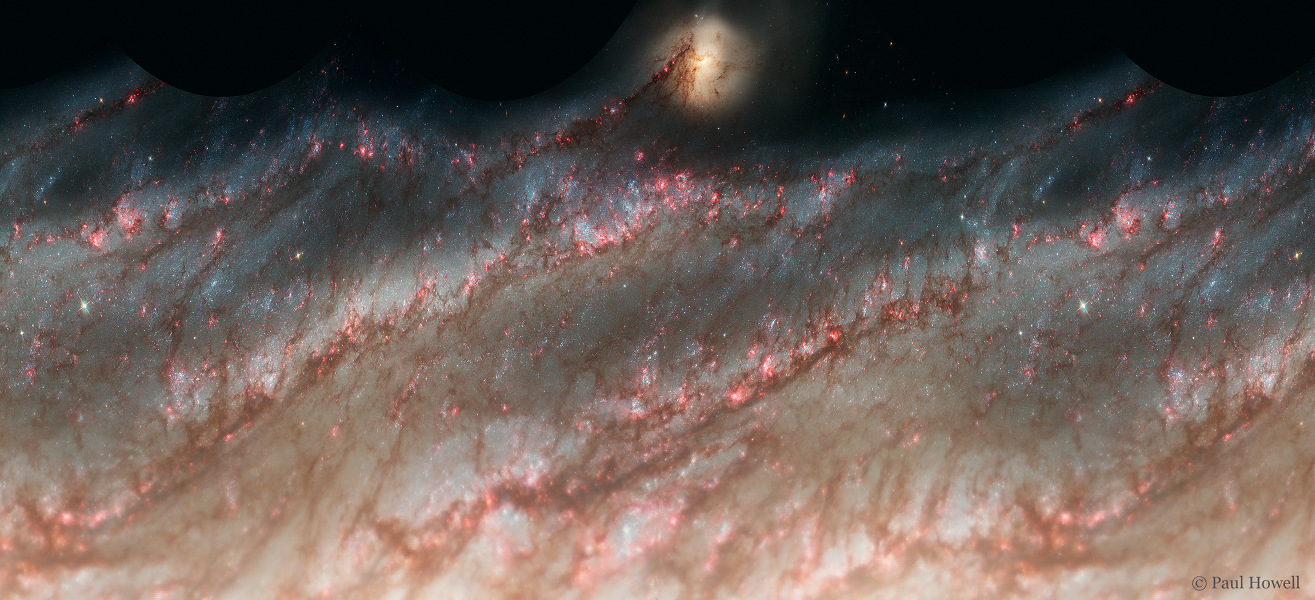
Unwinding M51

The arms of a grand design spiral galaxy 60,000 light-years across are unwound in this digital transformation of the magnificent 2005 Hubble Space Telescope portrait of M51. In fact, M51 is one of the original spiral nebulae, its winding arms described by a mathematical curve known as a logarithmic spiral, a spiral whose separation grows in a geometric way with increasing distance from the center. Applying logarithms to shift the pixel coordinates in the Hubble image relative to the center of M51 maps the galaxy’s spiral arms into diagonal straight lines. The transformed image dramatically shows the arms themselves are traced by star formation, lined with pinkish starforming regions and young blue star clusters. Companion galaxy NGC 5195 (top) seems to alter the track of the arm in front of it though, and itself remains relatively unaffected by this unwinding of M51. Also known as the spira mirabilis, logarthimic spirals can be found in nature on all scales. For example, logarithmic spirals can also describe hurricanes, the tracks of subatomic particles in a bubble chamber and, of course, cauliflower. [via NASA] https://ift.tt/3aJCUHP

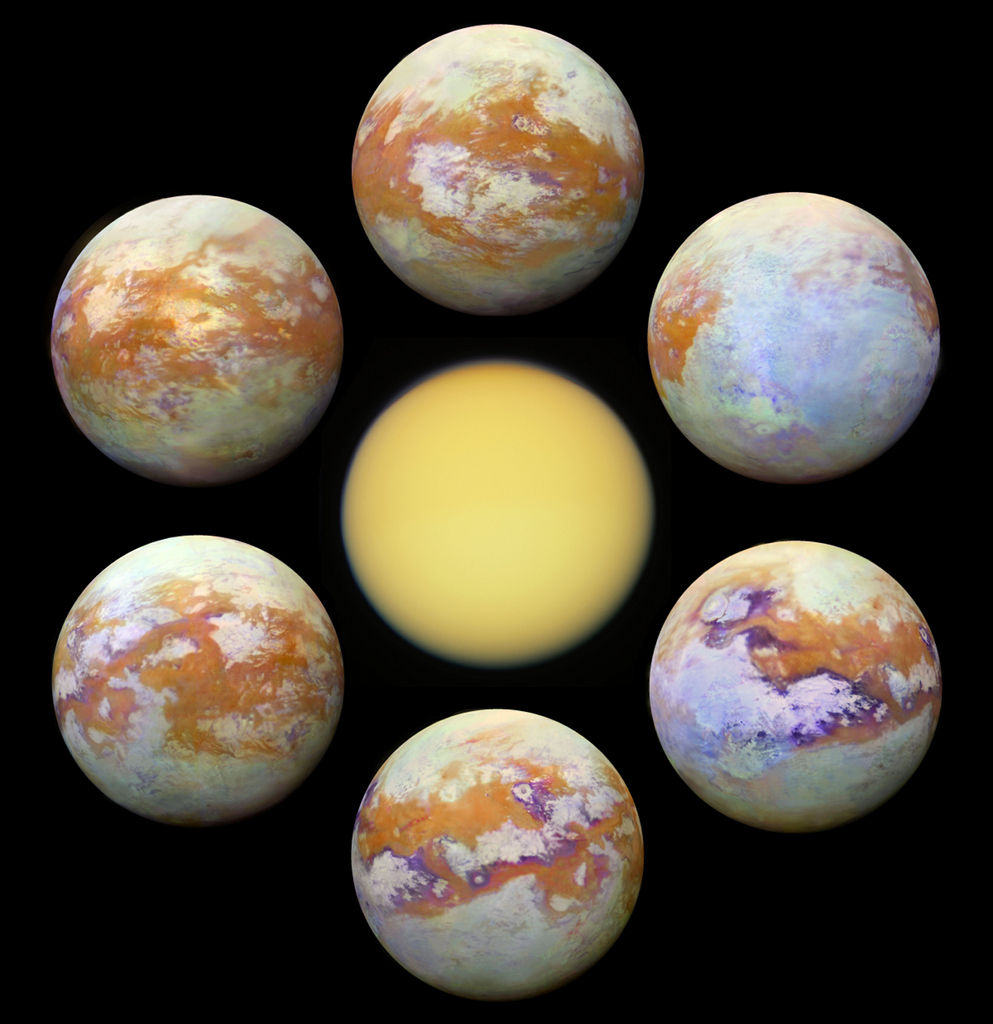
Seeing Titan

Shrouded in a thick atmosphere, Saturn’s largest moon Titan really is hard to see. Small particles suspended in the upper atmosphere cause an almost impenetrable haze, strongly scattering light at visible wavelengths and hiding Titan’s surface features from prying eyes. But Titan’s surface is better imaged at infrared wavelengths where scattering is weaker and atmospheric absorption is reduced. Arrayed around this visible light image (center) of Titan are some of the clearest global infrared views of the tantalizing moon so far. In false color, the six panels present a consistent processing of 13 years of infrared image data from the Visual and Infrared Mapping Spectrometer (VIMS) on board the Cassini spacecraft. They offer a stunning comparison with Cassini’s visible light view. [via NASA] https://ift.tt/2EctwR8

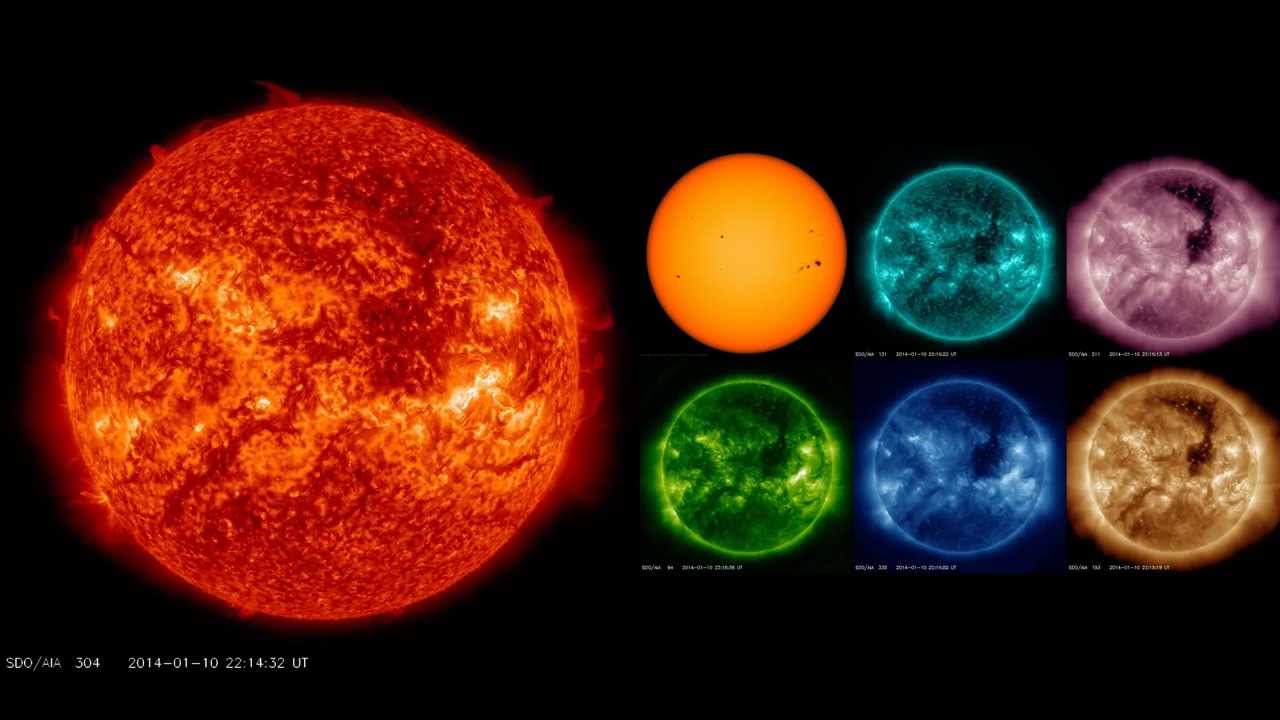
Does the Sun change as it rotates? Yes, and the changes can vary from subtle to dramatic. In the featured time-lapse sequences, our Sun — as imaged by NASA’s Solar Dynamics Observatory — is shown rotating though an entire month in 2014. In the large image on the left, the solar chromosphere is depicted in ultraviolet light, while the smaller and lighter image to its upper right simultaneously shows the more familiar solar photosphere in visible light. The rest of the inset six Sun images highlight X-ray emission by relatively rare iron atoms located at different heights of the corona, all false-colored to accentuate differences. The Sun takes just under a month to rotate completely — rotating fastest at the equator. A large and active sunspot region rotates into view soon after the video starts. Subtle effects include changes in surface texture and the shapes of active regions. Dramatic effects include numerous flashes in active regions, and fluttering and erupting prominences visible all around the Sun’s edge. Presently, our Sun is passing an unusually low Solar minimum in activity of its 11-year magnetic cycle. As the video ends, the same large and active sunspot region previously mentioned rotates back into view, this time looking different. [via NASA] https://ift.tt/3h5PEei

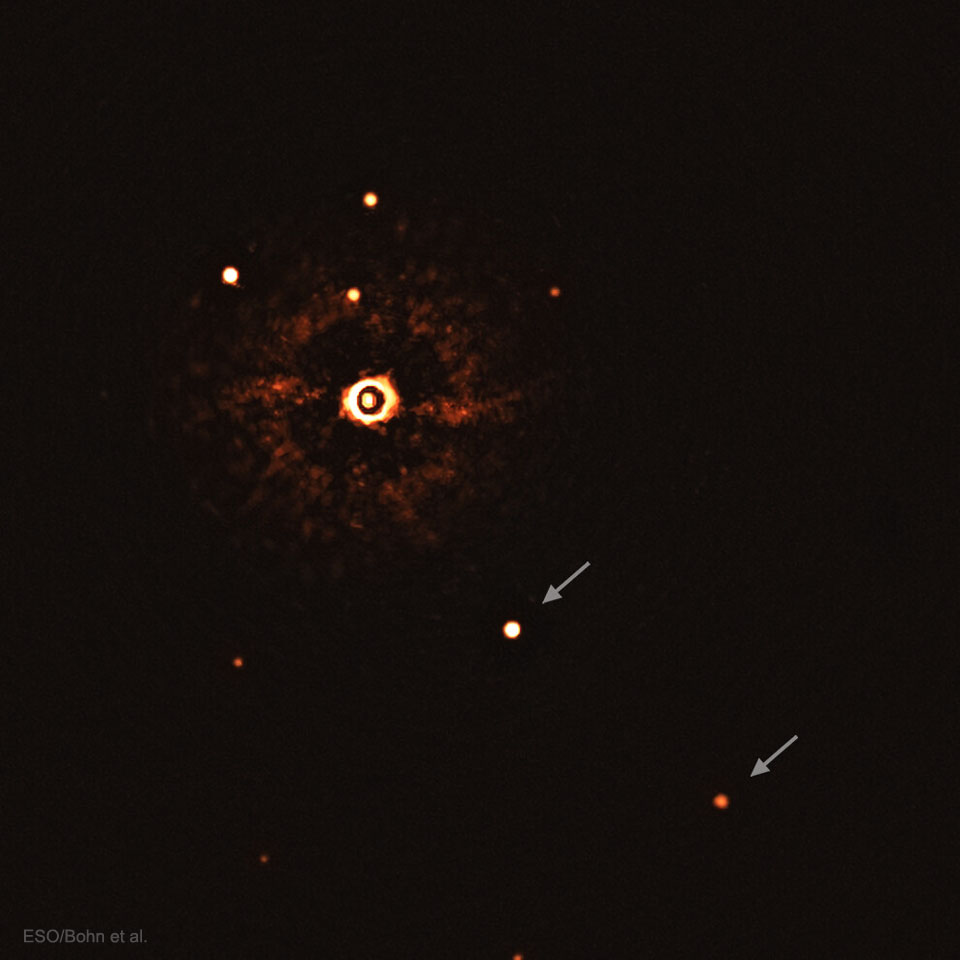
Do other stars have planets like our Sun? Previous evidence shows that they do, coming mostly from slight shifts in the star’s light created by the orbiting planets. Recently, however, and for the first time, a pair of planets has been directly imaged around a Sun-like star. These exoplanets orbit the star designated TYC 8998-760-1 and are identified by arrows in the featured infrared image. At 17 million years old, the parent star is much younger than the 5-billion-year age of our Sun. Also, the exoplanets are both more massive and orbit further out than their Solar System analogues: Jupiter and Saturn. The exoplanets were found by the ESO’s Very Large Telescope in Chile by their infrared glow – after the light from their parent star was artificially blocked. As telescope and technology improve over the next decade, it is hoped that planets more closely resembling our Earth will be directly imaged. [via NASA] https://ift.tt/2Ea7mic

Perseids Around the Milky Way

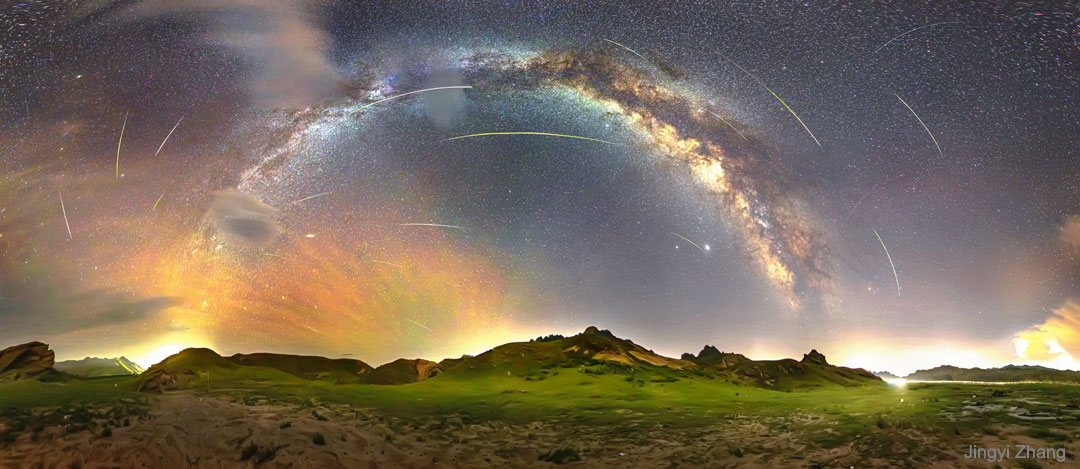
Why would meteor trails appear curved? The arcing effect arises only because the image artificially compresses (nearly) the whole sky into a rectangle. The meteors are from the Perseid Meteor Shower that peaked last week. The featured multi-frame image combines not only different directions from the 360 projection, but different times when bright Perseid meteors momentarily streaked across the sky. All Perseid meteors can be traced back to the constellation Perseus toward the lower left, even the seemingly curved (but really straight) meteor trails. Although Perseids always point back to their Perseus radiant, they can appear almost anywhere on the sky. The image was taken from Inner Mongolia, China, where grasslands meet sand dunes. Many treasures also visible in the busy night sky including the central arch of our Milky Way Galaxy, the planets Saturn and Jupiter toward the right, colorful airglow on the central left, and some relatively nearby Earthly clouds. The Perseid Meteor Shower peaks every August. [via NASA] https://ift.tt/31RvGgQ