M27: The Dumbbell Nebula

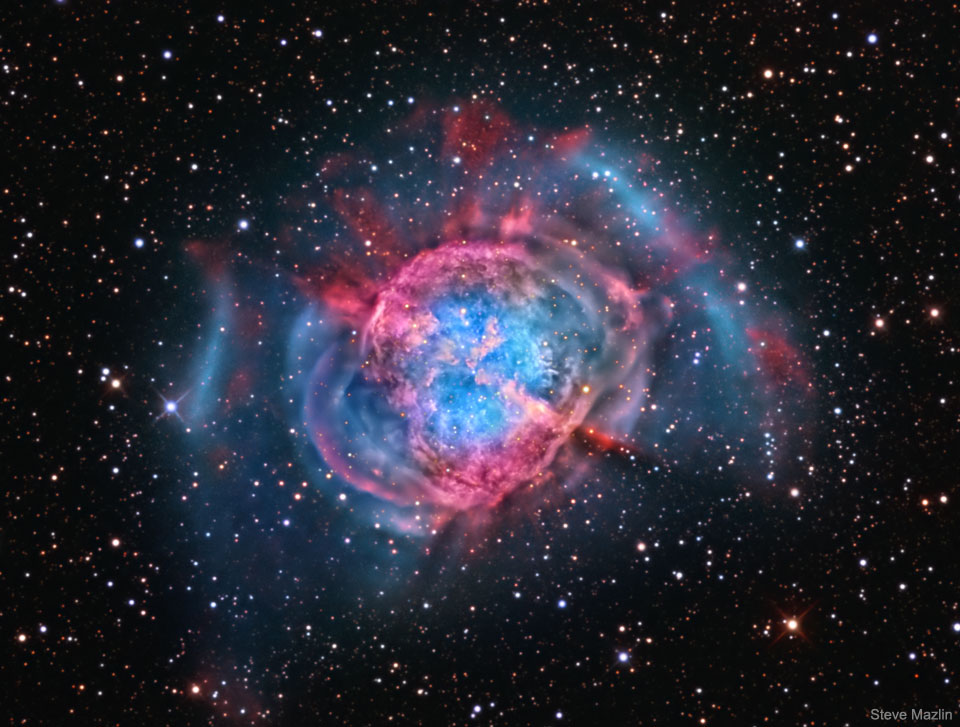
Is this what will become of our Sun? Quite possibly. The first hint of our Sun’s future was discovered inadvertently in 1764. At that time, Charles Messier was compiling a list of diffuse objects not to be confused with comets. The 27th object on Messier’s list, now known as M27 or the Dumbbell Nebula, is a planetary nebula, the type of nebula our Sun will produce when nuclear fusion stops in its core. M27 is one of the brightest planetary nebulae on the sky, and can be seen toward the constellation of the Fox (Vulpecula) with binoculars. It takes light about 1000 years to reach us from M27, featured here in colors emitted by hydrogen and oxygen. Understanding the physics and significance of M27 was well beyond 18th century science. Even today, many things remain mysterious about bipolar planetary nebula like M27, including the physical mechanism that expels a low-mass star’s gaseous outer-envelope, leaving an X-ray hot white dwarf. [via NASA] https://ift.tt/35ZOco2
Mercury Crosses a Quiet Sun

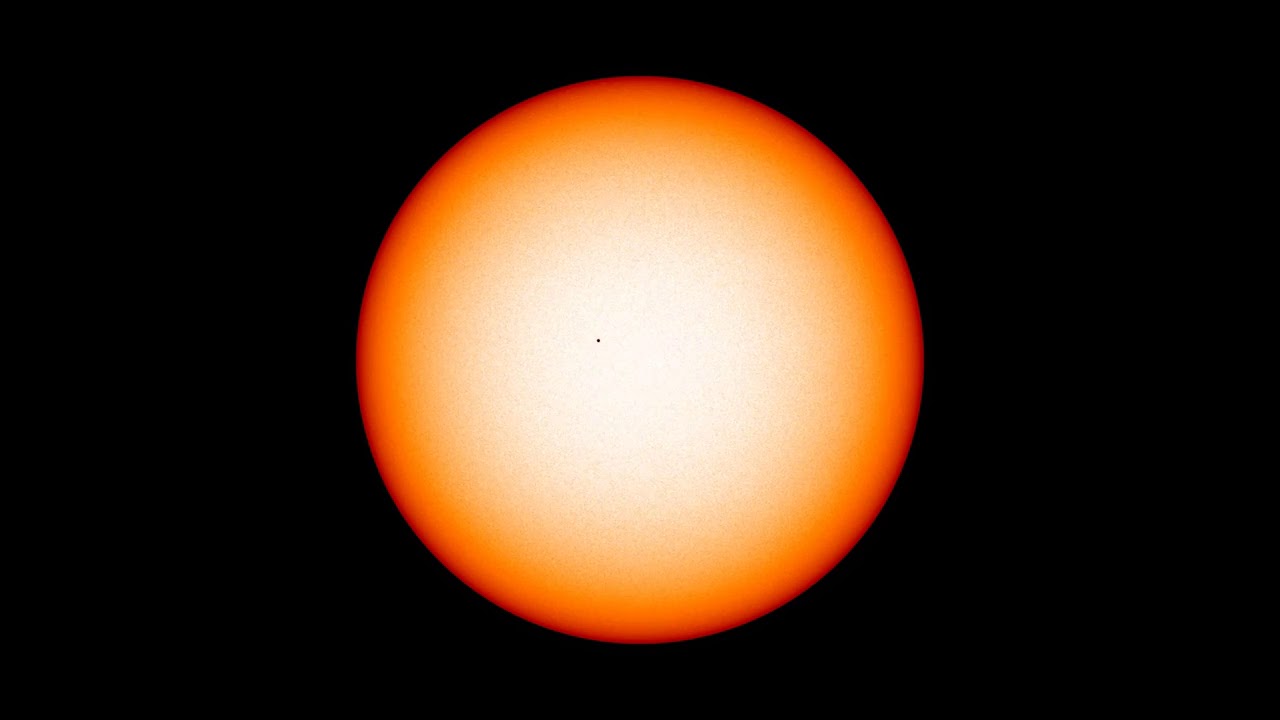
What’s that black dot crossing the Sun? The planet Mercury. Mercury usually passes over or under the Sun, as seen from Earth, but last month the Solar System’s innermost planet appeared to go just about straight across the middle. Although witnessed by planet admirers across the globe, a particularly clear view was captured by the Solar Dynamics Observatory (SDO) in Earth orbit. The featured video was captured by the SDO’s HMI instrument in a broad range of visible light, and compresses the 5 1/2 hour transit into about 13 seconds. The background Sun was unusually quiet — even for being near Solar Minimum — and showed no sunspots. The next solar transit by Mercury will occur in 2032. [via NASA] https://ift.tt/33G3wV7

Starburst Galaxy M94 from Hubble

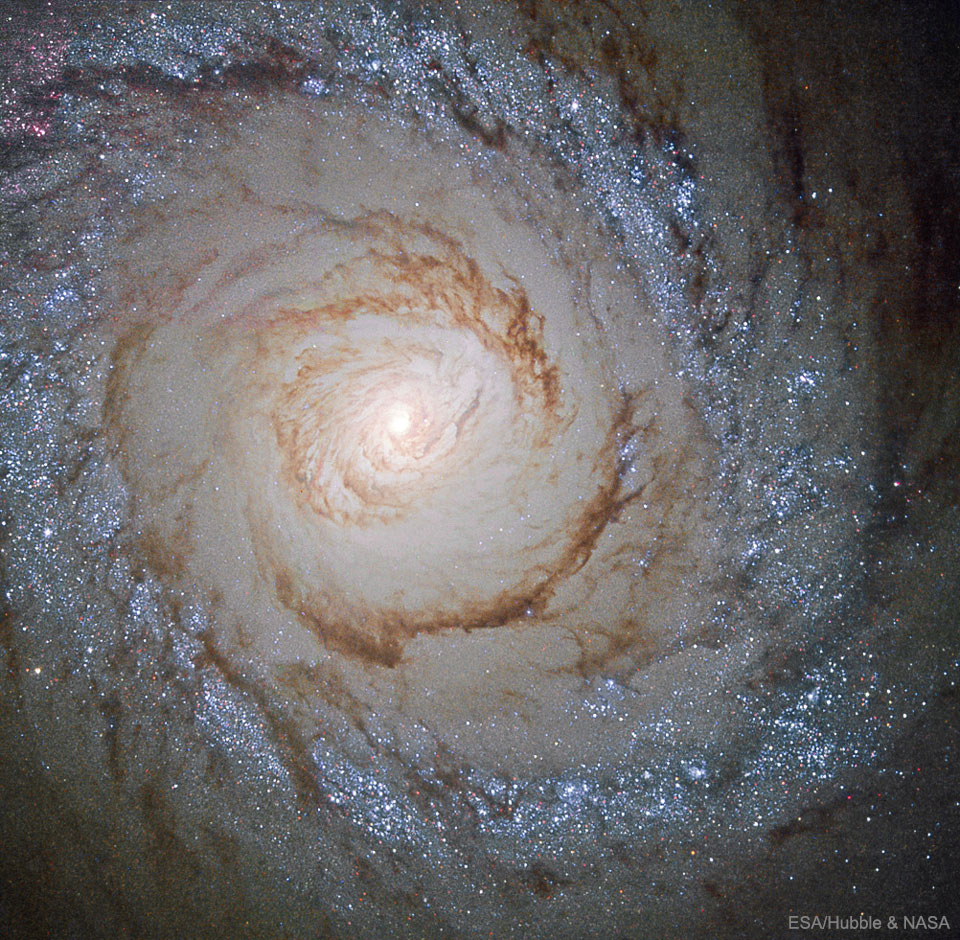
Why does this galaxy have a ring of bright blue stars? Beautiful island universe Messier 94 lies a mere 15 million light-years distant in the northern constellation of the Hunting Dogs (Canes Venatici). A popular target for Earth-based astronomers, the face-on spiral galaxy is about 30,000 light-years across, with spiral arms sweeping through the outskirts of its broad disk. But this Hubble Space Telescope field of view spans about 7,000 light-years across M94’s central region. The featured close-up highlights the galaxy’s compact, bright nucleus, prominent inner dust lanes, and the remarkable bluish ring of young massive stars. The ring stars are all likely less than 10 million years old, indicating that M94 is a starburst galaxy that is experiencing an epoch of rapid star formation. The circular ripple of blue stars is likely a wave propagating outward, having been triggered by the gravity and rotation of a oval matter distributions. Because M94 is relatively nearby, astronomers can better explore details of its starburst ring. [via NASA] https://ift.tt/2r1lDrk

Star Trails for a Red Planet

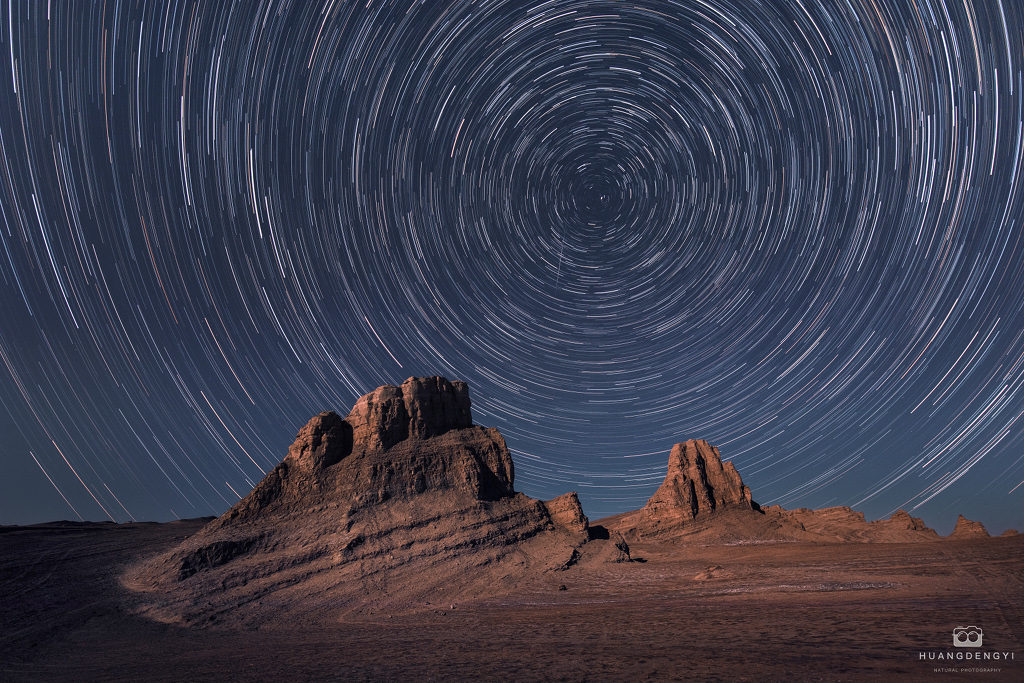
Does Mars have a north star? In long exposures of Earth’s night sky, star trails make concentric arcs around the north celestial pole, the direction of our fair planet’s axis of rotation. Bright star Polaris is presently the Earth’s North Star, close on the sky to Earth’s north celestial pole. But long exposures on Mars show star trails too, concentric arcs about a celestial pole determined by Mars’ axis of rotation. Tilted like planet Earth’s, the martian axis of rotation points in a different direction in space though. It points to a place on the sky between stars in Cygnus and Cepheus with no bright star comparable to Earth’s north star Polaris nearby. So even though this ruddy, weathered landscape is remarkably reminiscent of terrain in images from the martian surface, the view must be from planet Earth, with north star Polaris near the center of concentric star trails. The landforms in the foreground are found in Qinghai Province in northwestern China. [via NASA] https://ift.tt/2rADqpl

Galileo s Europa Remastered

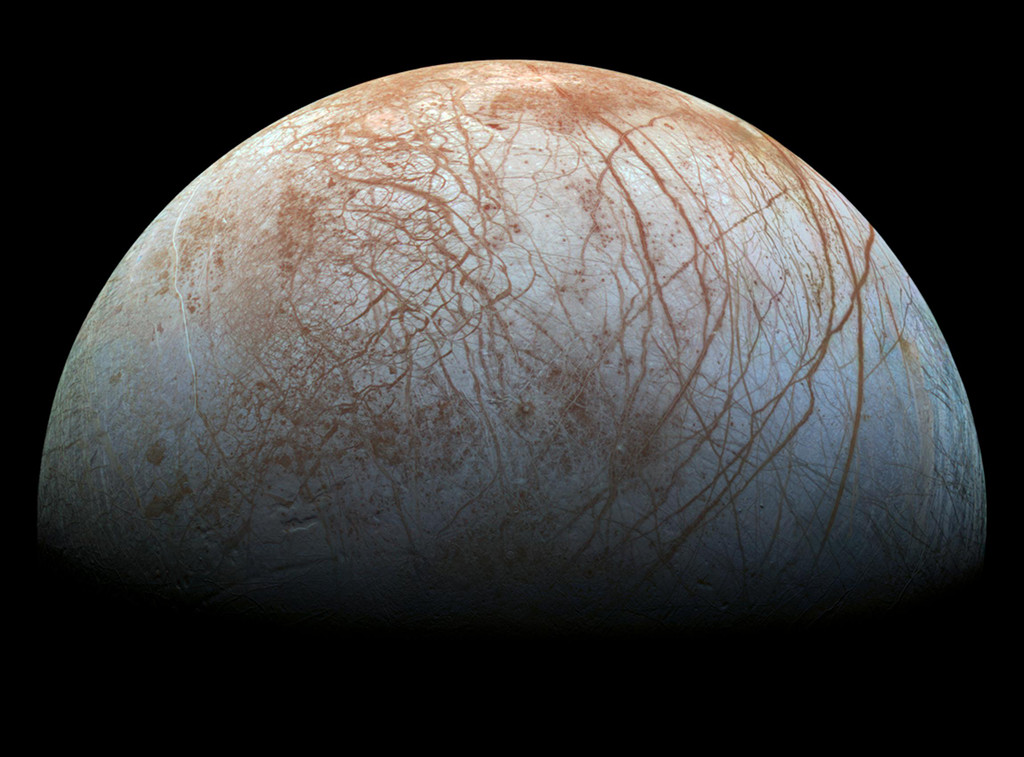
Looping through the Jovian system in the late 1990s, the Galileo spacecraft recorded stunning views of Europa and uncovered evidence that the moon’s icy surface likely hides a deep, global ocean. Galileo’s Europa image data has been remastered here, using improved new calibrations to produce a color image approximating what the human eye might see. Europa’s long curving fractures hint at the subsurface liquid water. The tidal flexing the large moon experiences in its elliptical orbit around Jupiter supplies the energy to keep the ocean liquid. But more tantalizing is the possibility that even in the absence of sunlight that process could also supply the energy to support life, making Europa one of the best places to look for life beyond Earth. What kind of life could thrive in a deep, dark, subsurface ocean? Consider planet Earth’s own extreme shrimp. [via NASA] https://ift.tt/37M1E0j

Hoags Object: A Nearly Perfect Ring Galaxy

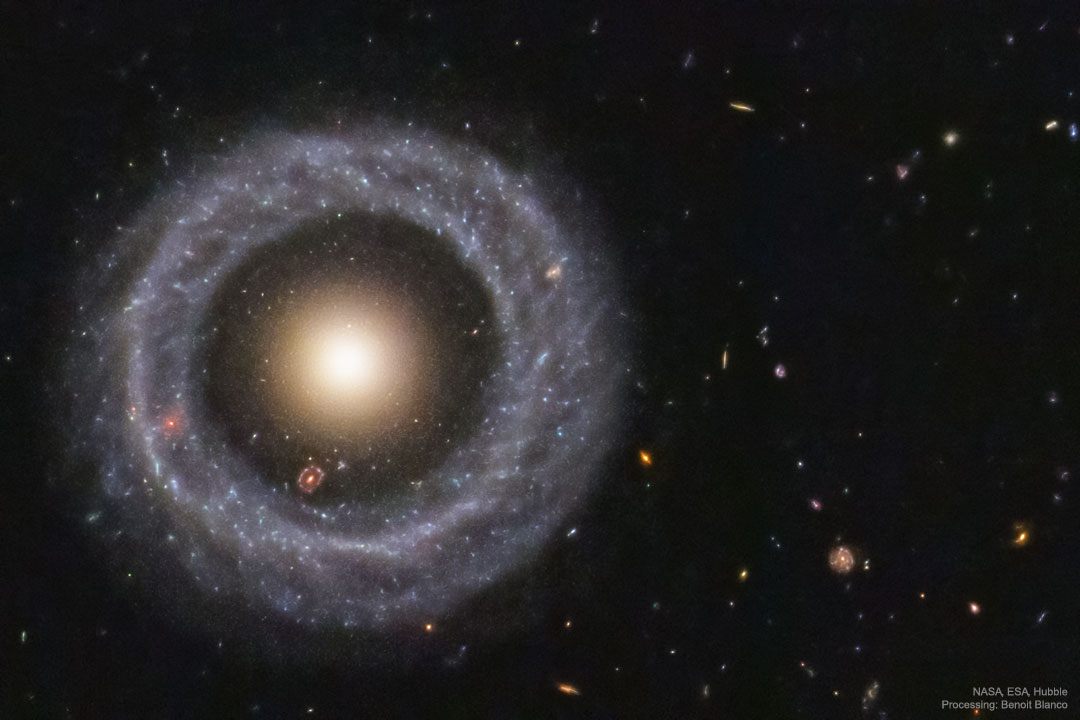
Is this one galaxy or two? This question came to light in 1950 when astronomer Arthur Hoag chanced upon this unusual extragalactic object. On the outside is a ring dominated by bright blue stars, while near the center lies a ball of much redder stars that are likely much older. Between the two is a gap that appears almost completely dark. How Hoag’s Object formed, including its nearly perfectly round ring of stars and gas, remains unknown. Genesis hypotheses include a galaxy collision billions of years ago and the gravitational effect of a central bar that has since vanished. The featured photo was taken by the Hubble Space Telescope and recently reprocessed using an artificially intelligent de-noising algorithm. Observations in radio waves indicate that Hoag’s Object has not accreted a smaller galaxy in the past billion years. Hoag’s Object spans about 100,000 light years and lies about 600 million light years away toward the constellation of the Snake (Serpens). Many galaxies far in the distance are visible toward the right, while coincidentally, visible in the gap at about seven o’clock, is another but more distant ring galaxy. [via NASA] https://ift.tt/34qUa0D

Venus and Jupiter on the Horizon

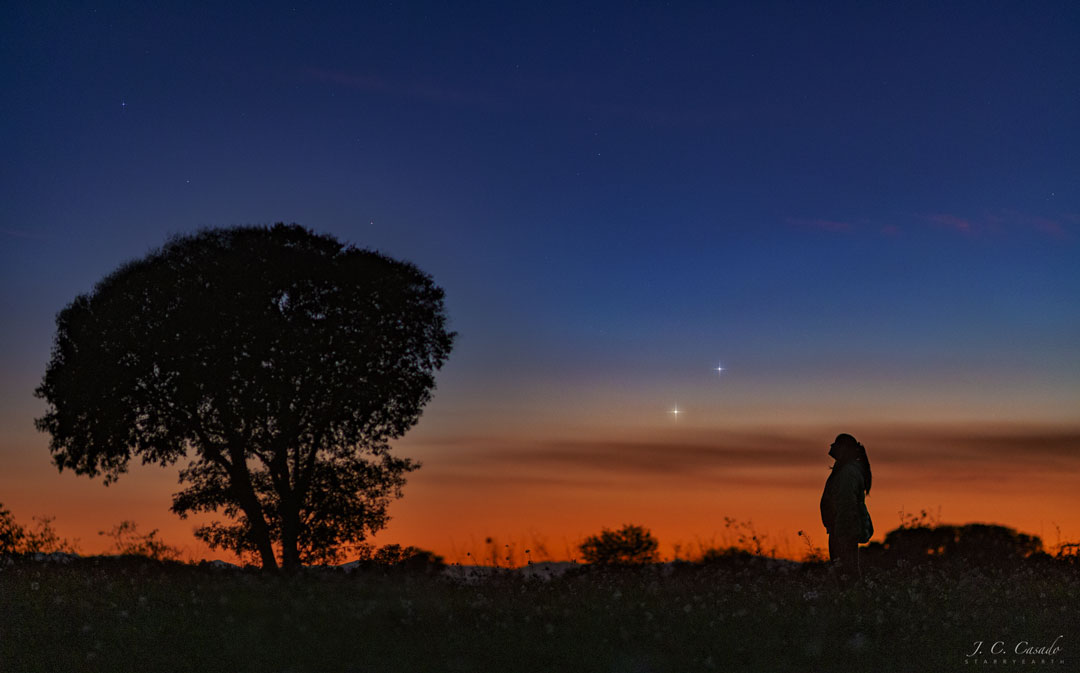
What are those two bright objects on the horizon? Venus and Jupiter. The two brightest planets in the night sky passed very close together — angularly — just two days ago. In real space, they were just about as far apart as usual, since Jupiter (on the right) orbits the Sun around seven times farther out than Venus. The planetary duo were captured together two days ago in a picturesque sunset sky from Llers, Catalonia, Spain between a tree and the astrophotographer’s daughter. These two planets will continue to stand out in the evening sky, toward the west, for the next few days, with a sliver of a crescent Moon and a fainter Saturn also visible nearby. As November ends, Jupiter will sink lower into the sunset horizon with each subsequent night, while Venus will rise higher. The next Jupiter-Venus conjunction will occur in early 2021. [via NASA] https://ift.tt/2XSeSEb

NGC 6995: The Bat Nebula

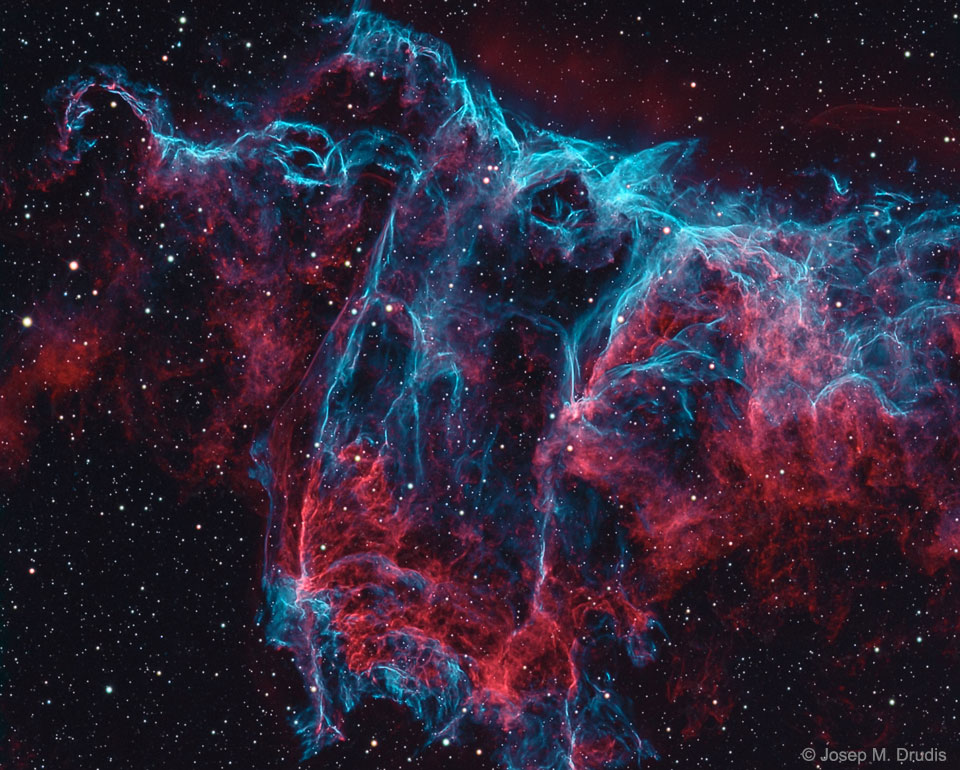
Do you see the bat? It haunts this cosmic close-up of the eastern Veil Nebula. The Veil Nebula itself is a large supernova remnant, the expanding debris cloud from the death explosion of a massive star. While the Veil is roughly circular in shape and covers nearly 3 degrees on the sky toward the constellation of the Swan (Cygnus), the Bat Nebula, NGC 6995, spans only 1/2 degree, about the apparent size of the Moon. That translates to 12 light-years at the Veil’s estimated distance, a reassuring 1,400 light-years from planet Earth. In the composite of image data recorded through broad and narrow band filters, emission from hydrogen atoms in the remnant is shown in red with strong emission from oxygen and nitrogen atoms shown in hues of blue. Of course, in the western part of the Veil lies another seasonal apparition: the Witch’s Broom Nebula. [via NASA] https://ift.tt/35yM1XY

Apollo 12 and Surveyor 3 Stereo View

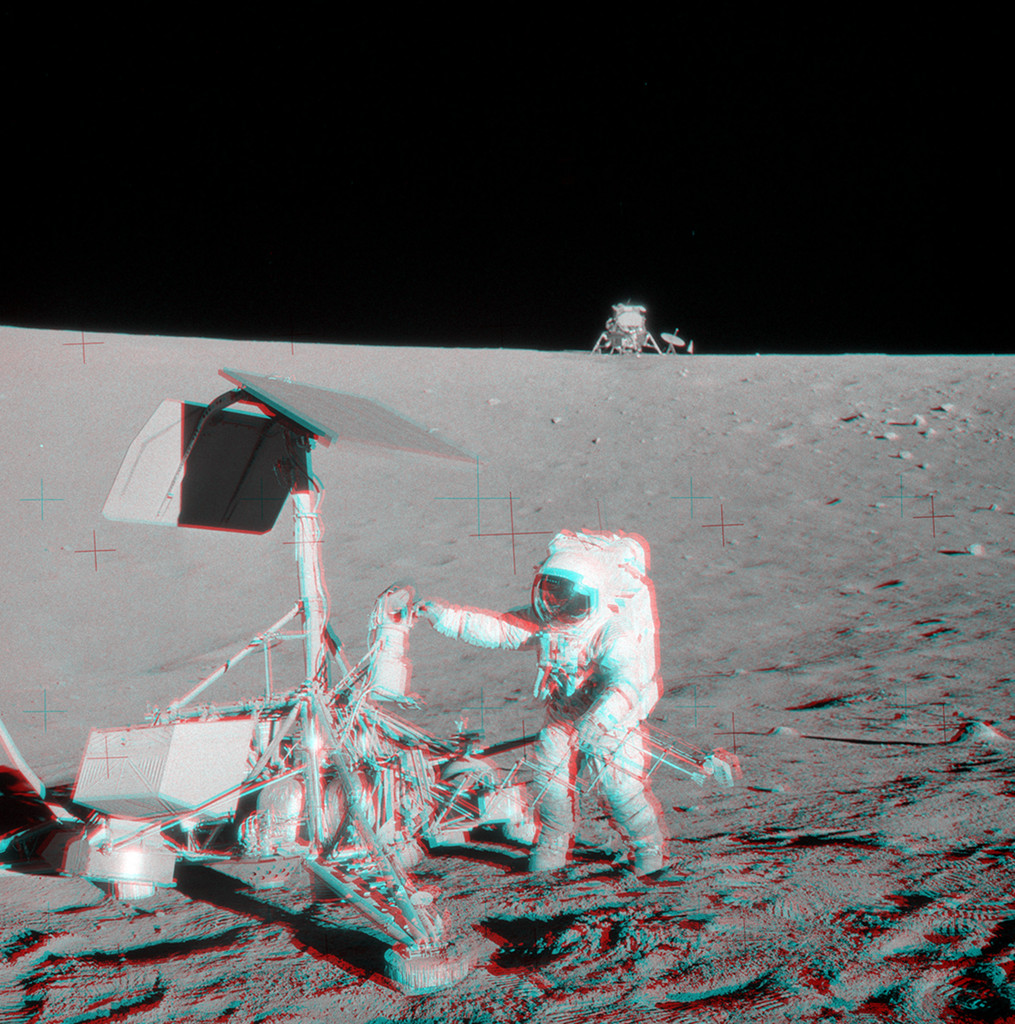
Put on your red/blue glasses and gaze across the western Ocean of Storms on the surface of the Moon. The 3D view features Apollo 12 astronaut Pete Conrad visiting the Surveyor 3 spacecraft 50 years ago in November of 1969. Surveyor 3 had landed at the site on the inside slope of a small crater about 2 1/2 years earlier in April of 1967. Visible on the horizon beyond the far crater wall, Apollo 12’s Lunar Module Intrepid touched down less than 200 meters (650 feet) away, easy moonwalking distance from the robotic Surveyor spacecraft. The stereo image was carefully created from two separate pictures (AS12-48-7133, AS12-48-7134) taken on the lunar surface. They depict the scene from only slightly different viewpoints, approximating the separation between human eyes. [via NASA] https://ift.tt/34fqWBF

Orion Rising

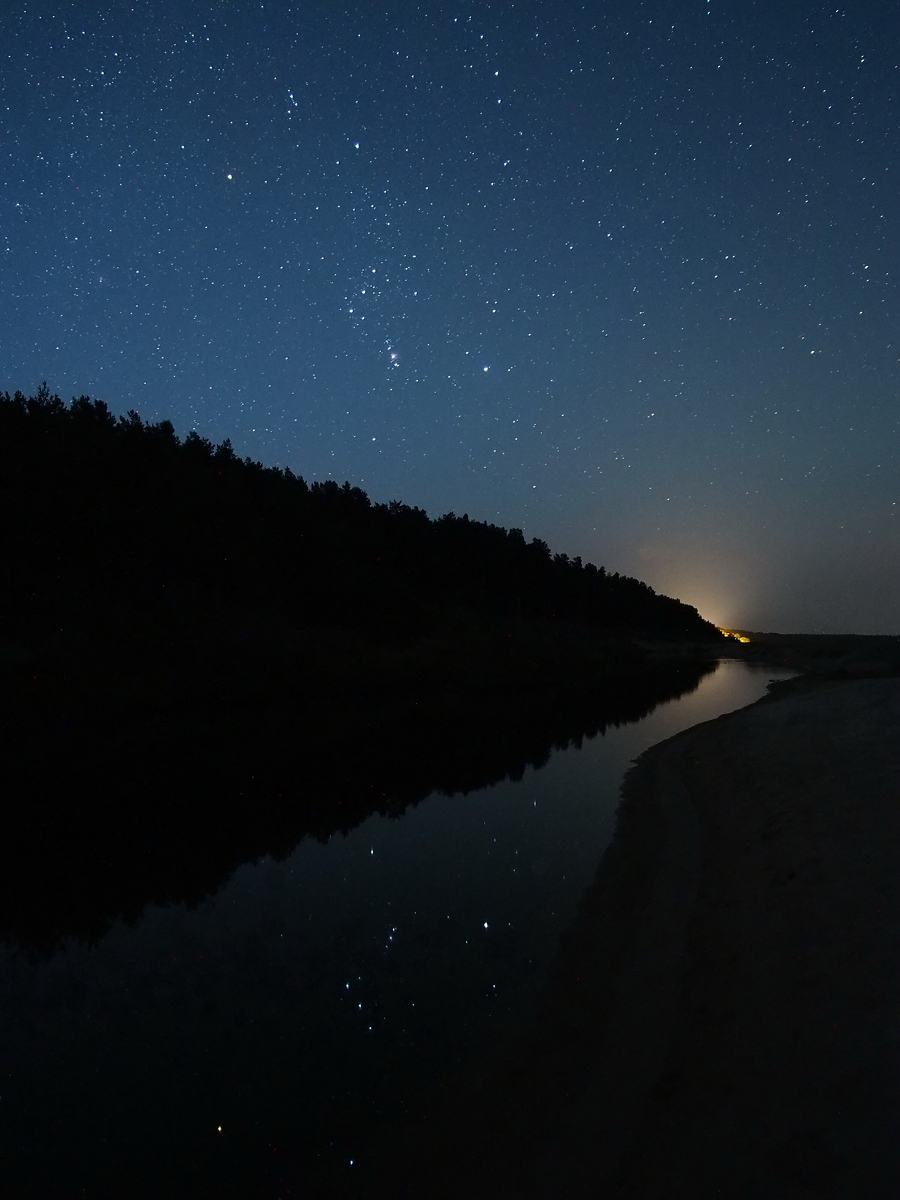
Looking toward the east in the early hours of a September morning this single exposure made with tripod and camera captured a simple visual experience. Rising above the tree-lined slope are familiar stars in planet Earth’s northern night and the constellation Orion the Hunter. Brighter stars marking the celestial Hunter’s shoulder (Betelgeuse), foot (Rigel), belt, and sword are clearly reflected in the calm waters from northern Latvia’s Vitrupe river. Of course, winter is coming to planet Earth’s northern hemisphere. By then Orion and this beautiful starry vista will be seen rising in early evening skies. [via NASA] https://ift.tt/2QHOR8Y