Simeis 147: Supernova Remnant

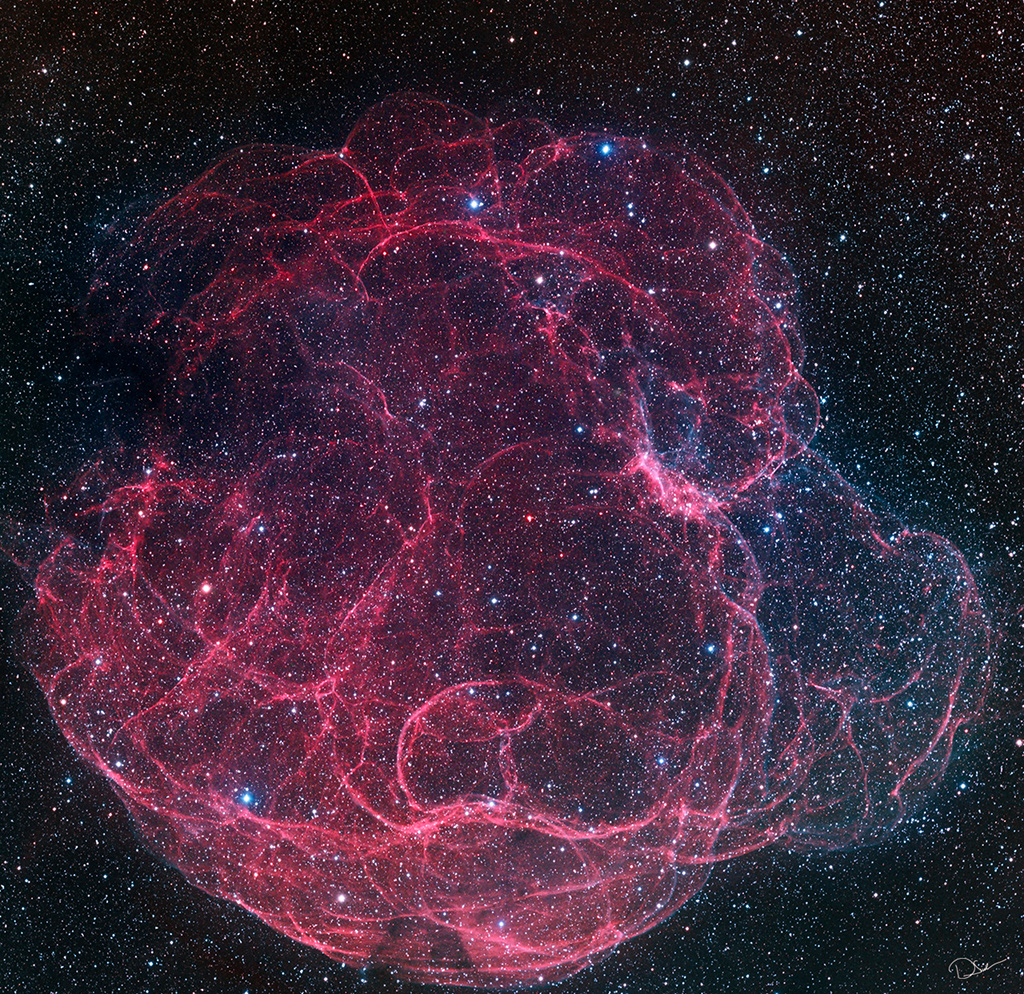
It’s easy to get lost following the intricate looping filaments in this detailed image of supernova remnant Simeis 147. Also cataloged as Sharpless 2-240 it goes by the popular nickname, the Spaghetti Nebula. Seen toward the boundary of the constellations Taurus and Auriga, it covers nearly 3 degrees or 6 full moons on the sky. That’s about 150 light-years at the stellar debris cloud’s estimated distance of 3,000 light-years. This composite includes image data taken through narrow-band filters where reddish emission from ionized hydrogen atoms and doubly ionized oxygen atoms in faint blue-green hues trace the shocked, glowing gas. The supernova remnant has an estimated age of about 40,000 years, meaning light from the massive stellar explosion first reached Earth 40,000 years ago. But the expanding remnant is not the only aftermath. The cosmic catastrophe also left behind a spinning neutron star or pulsar, all that remains of the original star’s core. [via NASA] https://ift.tt/2D3lw0J
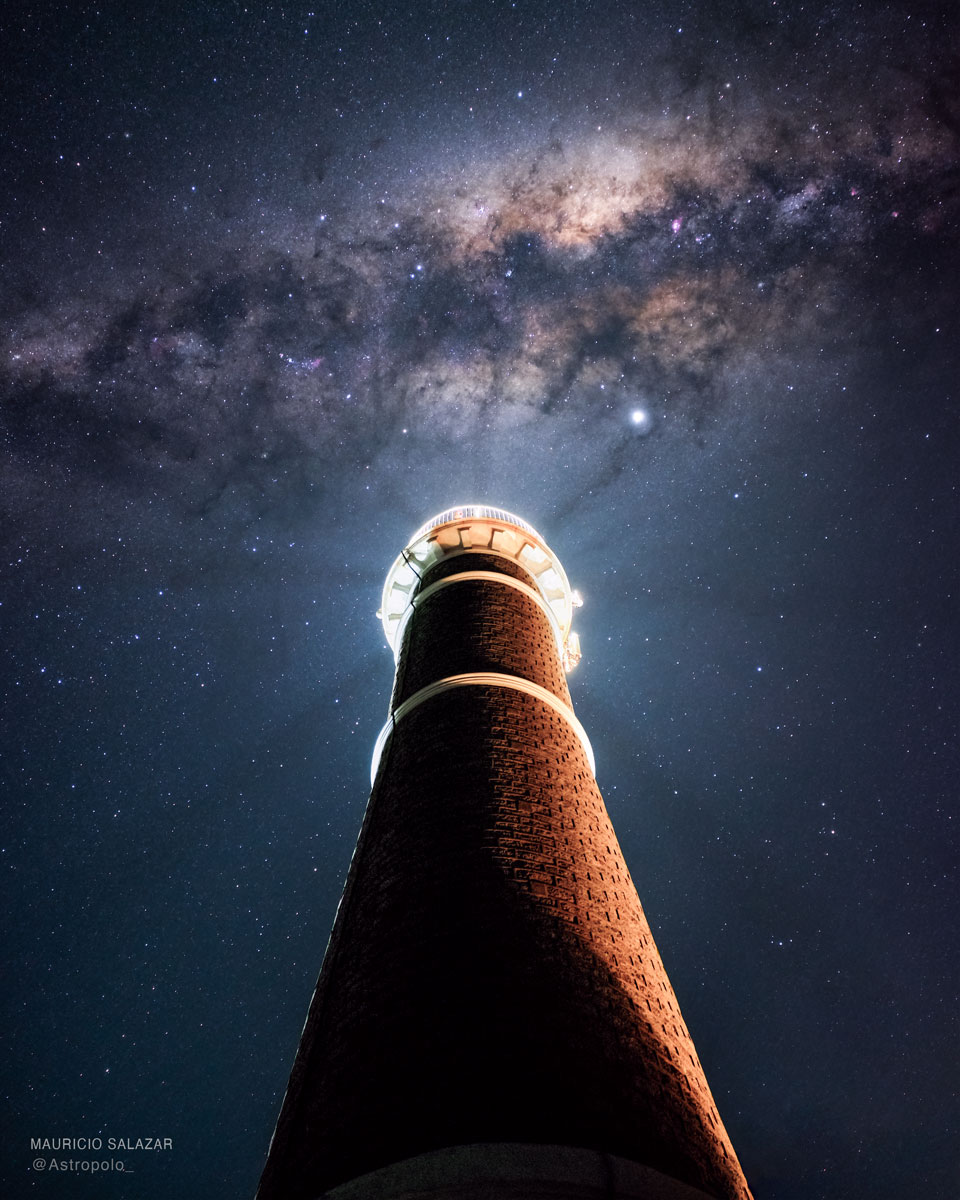
Milky Way over Uruguayan Lighthouse

Can a lighthouse illuminate a galaxy? No, but in the featured image, gaps in light emanating from the Jose Ignacio Lighthouse in Uruguay appear to match up nicely, although only momentarily and coincidently, with dark dust lanes of our Milky Way Galaxy. The bright dot on the right is the planet Jupiter. The central band of the Milky Way Galaxy is actually the central spiral disk seen from within the disk. The Milky Way band is not easily visible through city lights but can be quite spectacular to see in dark skies. The featured picture is actually the addition of ten consecutive images taken by the same camera from the same location. The images were well planned to exclude direct light from the famous lighthouse. [via NASA] https://ift.tt/2KxfbyK

Passing Asteroid Arrokoth

What would it look like to pass asteroid Arrokoth? The robotic New Horizons spacecraft zoomed past Arrokoth in January, 3.5 years after the spacecraft passed Pluto. If this object’s name doesn’t sound familiar, that may be because the distant, double-lobed, Kuiper-belt object was unofficially dubbed Ultima Thule until recently receiving its official name: 486958 Arrokoth. The featured black and white video animates images of Arrokoth taken by New Horizons at different angles as it zoomed by. The video clearly shows Arrokoth’s two lobes, and even hints that the larger lobe is significantly flattened. New Horizons found that Arrokoth is different from any known asteroid in the inner Solar System and is likely composed of two joined planetesimals — the building blocks of planets as they existed billions of years ago. New Horizons continues to speed out of our Solar System gaining about three additional Earth-Sun separations every year. [via NASA] https://ift.tt/2Kvz1KO

The Star Streams of NGC 5907

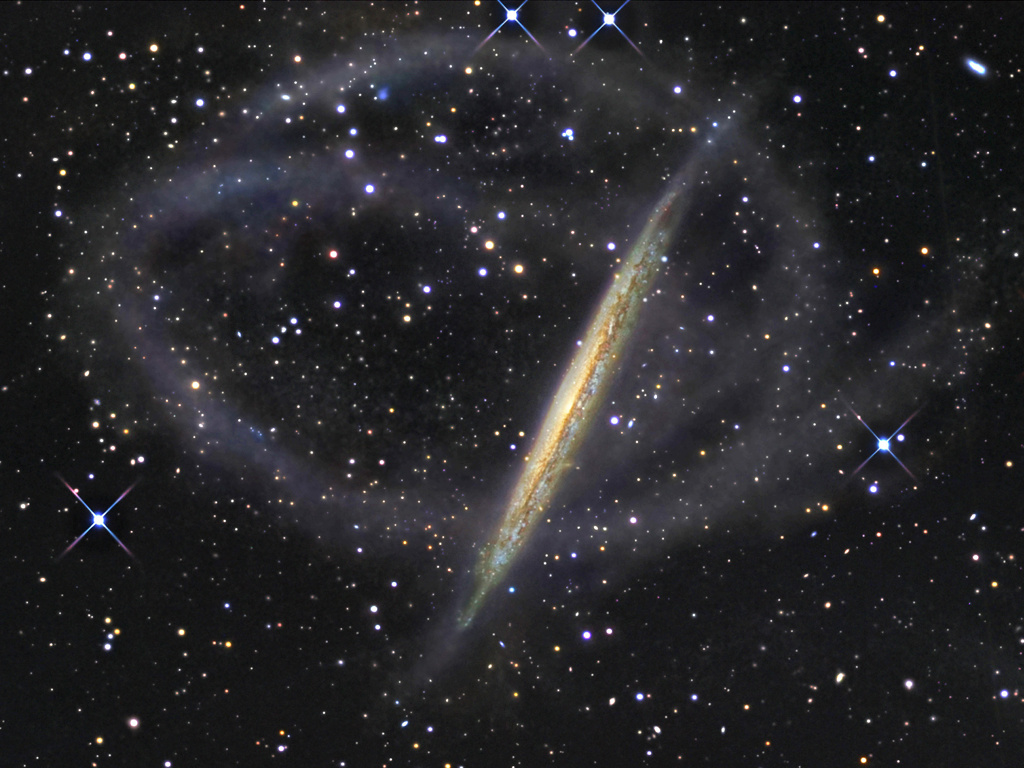
Grand tidal streams of stars seem to surround galaxy NGC 5907. The arcing structures form tenuous loops extending more than 150,000 light-years from the narrow, edge-on spiral, also known as the Splinter or Knife Edge Galaxy. Recorded only in very deep exposures, the streams likely represent the ghostly trail of a dwarf galaxy – debris left along the orbit of a smaller satellite galaxy that was gradually torn apart and merged with NGC 5907 over four billion years ago. Ultimately this remarkable discovery image, from a small robotic observatory in New Mexico, supports the cosmological scenario in which large spiral galaxies, including our own Milky Way, were formed by the accretion of smaller ones. NGC 5907 lies about 40 million light-years distant in the northern constellation Draco. [via NASA] https://ift.tt/359zxG2

M16 and the Eagle Nebula

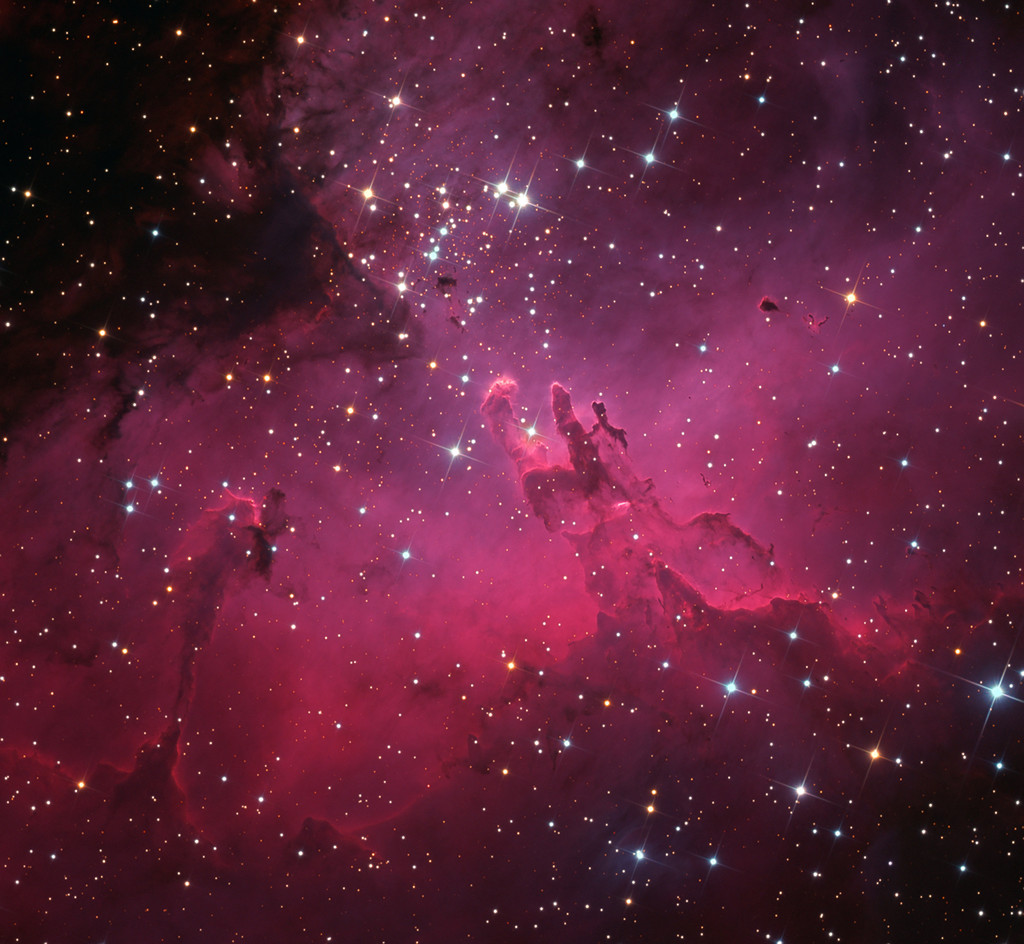
A star cluster around 2 million years young surrounded by natal clouds of dust and glowing gas, M16 is also known as The Eagle Nebula. This beautifully detailed portrait of the region was made with groundbased narrow and broadband image data. It includes cosmic sculptures made famous in Hubble Space Telescope close-ups of the starforming complex. Described as elephant trunks or Pillars of Creation, dense, dusty columns rising near the center are light-years in length but are gravitationally contracting to form stars. Energetic radiation from the cluster stars erodes material near the tips, eventually exposing the embedded new stars. Extending from the ridge of bright emission at lower left is another dusty starforming column known as the Fairy of Eagle Nebula. M16 lies about 7,000 light-years away, an easy target for binoculars or small telescopes in a nebula rich part of the sky toward the split constellation Serpens Cauda (the tail of the snake). [via NASA] https://ift.tt/2NNSzfl

Mercury in Silhouette

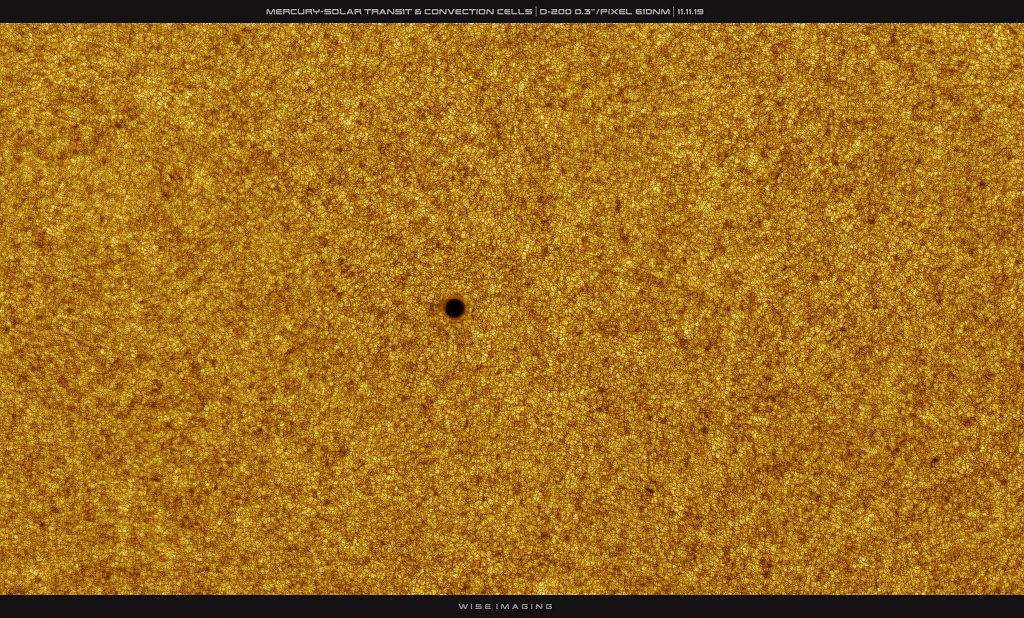
The small, dark, round spot in this solar close up is planet Mercury. In the high resolution telescopic image, a colorized stack of 61 sharp video frames, a turbulent array of photospheric convection cells tile the bright solar surface. Mercury’s more regular silhouette still stands out though. Of course, only inner planets Mercury and Venus can transit the Sun to appear in silhouette when viewed from planet Earth. For this November 11, 2019 transit of Mercury, the innermost planet’s silhouette was a mere 1/200th the solar diameter. So even under clear daytime skies it was difficult to see without the aid of a safe solar telescope. Following its transit in 2016, this was Mercury’s 4th of 14 transits across the solar disk in the 21st century. The next transit of Mercury will be on November 13, 2032. [via NASA] https://ift.tt/34ZcihQ

NGC 3717: A Nearly Sideways Spiral Galaxy

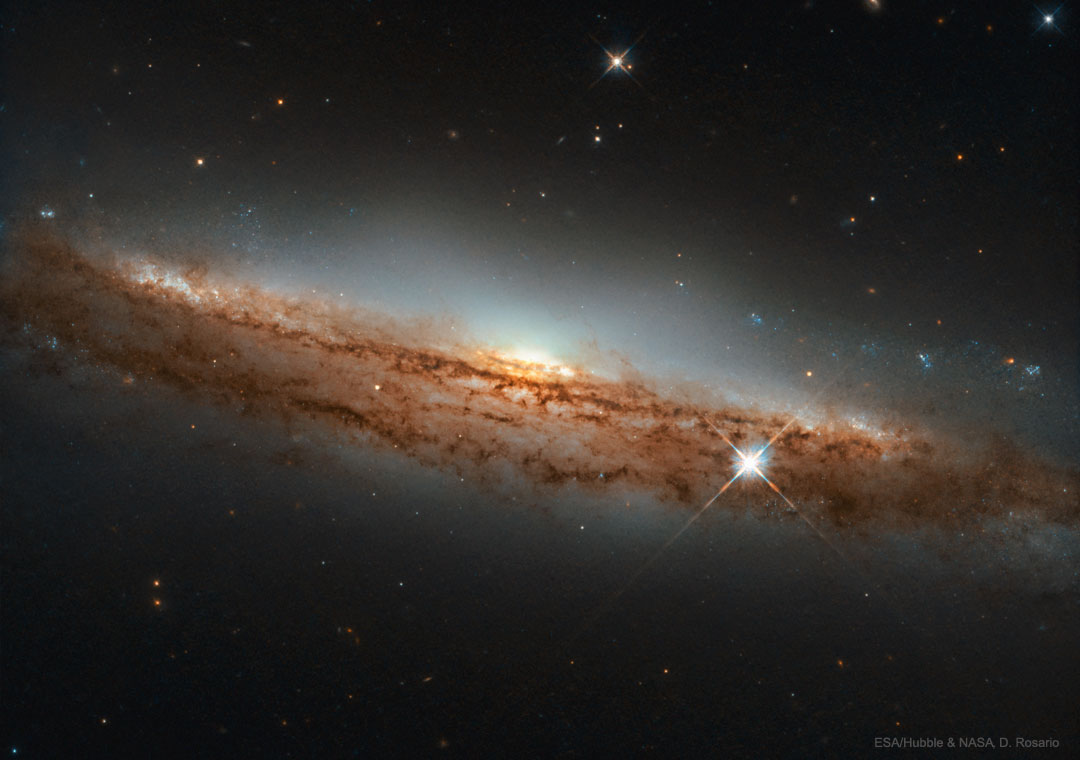
Some spiral galaxies are seen nearly sideways. Most bright stars in spiral galaxies swirl around the center in a disk, and seen from the side, this disk can be appear quite thin. Some spiral galaxies appear even thinner than NGC 3717, which is actually seen tilted just a bit. Spiral galaxies form disks because the original gas collided with itself and cooled as it fell inward. Planets may orbit in disks for similar reasons. The featured image by the Hubble Space Telescope shows a light-colored central bulge composed of older stars beyond filaments of orbiting dark brown dust. NGC 3717 spans about 100,000 light years and lies about 60 million light years away toward the constellation of the Water Snake (Hydra). [via NASA] https://ift.tt/2CyVwdB

Lunar Craters Langrenus and Petavius

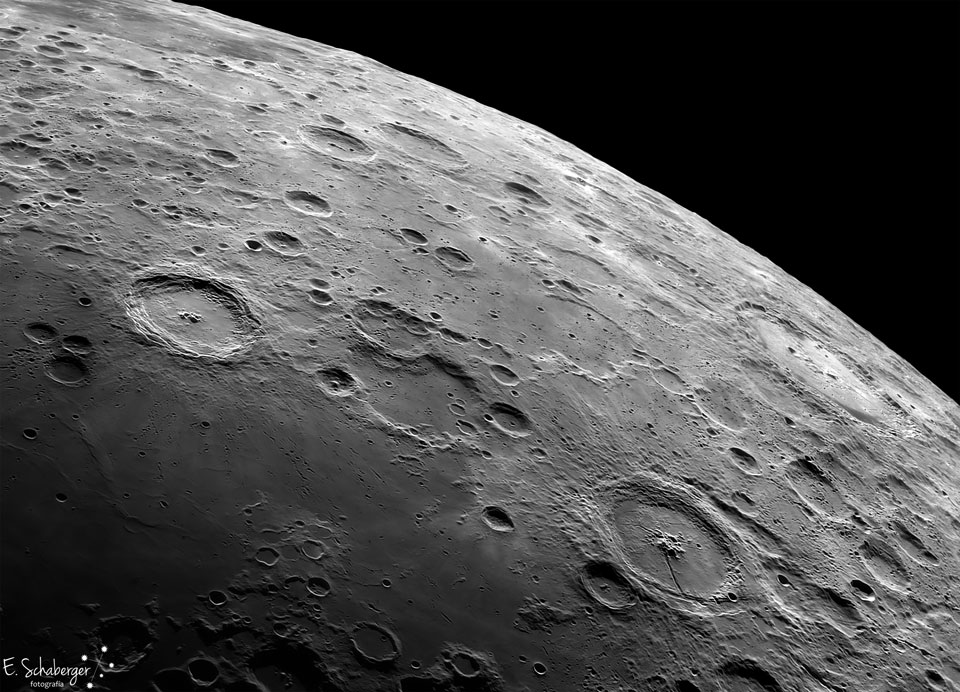
The history of the Moon is partly written in its craters. Pictured here is a lunar panorama taken from Earth featuring the large craters Langrenus, toward the left, and Petavius, toward the right. The craters formed in separate impacts. Langrenus spans about 130 km, has a terraced rim, and sports a central peak rising about 3 km. Petavius is slightly larger with a 180 km diameter and has a distinctive fracture that runs out from its center. Although it is known that Petravius crater is about 3.9 billion years old, the origin of its large fracture is unknown. The craters are best visible a few days after a new Moon, when shadows most greatly accentuate vertical walls and hills. The featured image is a composite of the best of thousands of high-resolution, infrared, video images taken through a small telescope. Although mountains on Earth will likely erode into soil over a billion years, lunar craters Langrenus and Petavius will likely survive many billions more years, possibly until the Sun expands and engulfs both the Earth and Moon. [via NASA] https://ift.tt/2Q5qEcp

Saturn the Giant

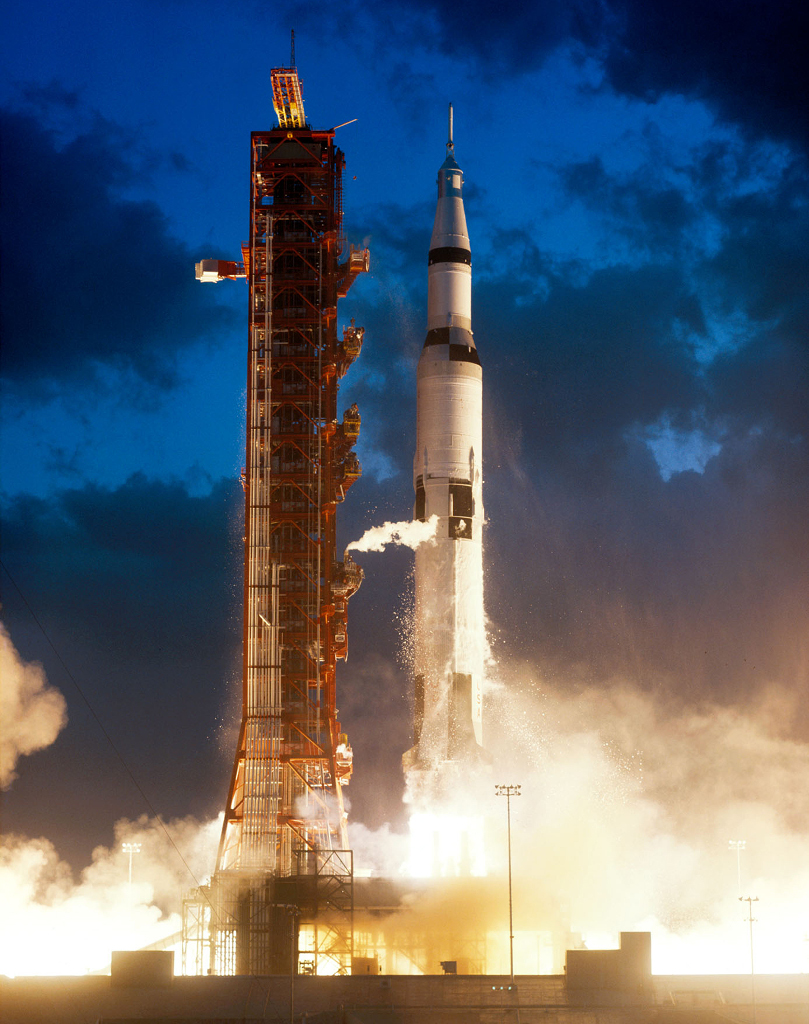
On May 25, 1961 U.S. president John Kennedy announced the goal of landing astronauts on the Moon by the end of the decade. By November 9, 1967 this Saturn V rocket was ready for launch and the first full test of its capabilities on the Apollo 4 mission. Its development directed by rocket pioneer Wernher Von Braun, the three stage Saturn V stood over 36 stories tall. It had a cluster of five first stage engines fueled by liquid oxygen and kerosene which together were capable of producing 7.9 million pounds of thrust. Giant Saturn V rockets ultimately hurled nine Apollo missions to the Moon and back again with six landing on the lunar surface. The first landing mission, Apollo 11, achieved Kennedy’s goal on July 20, 1969. [via NASA] https://ift.tt/2NV0oyU

NGC 3572 and the Southern Tadpoles

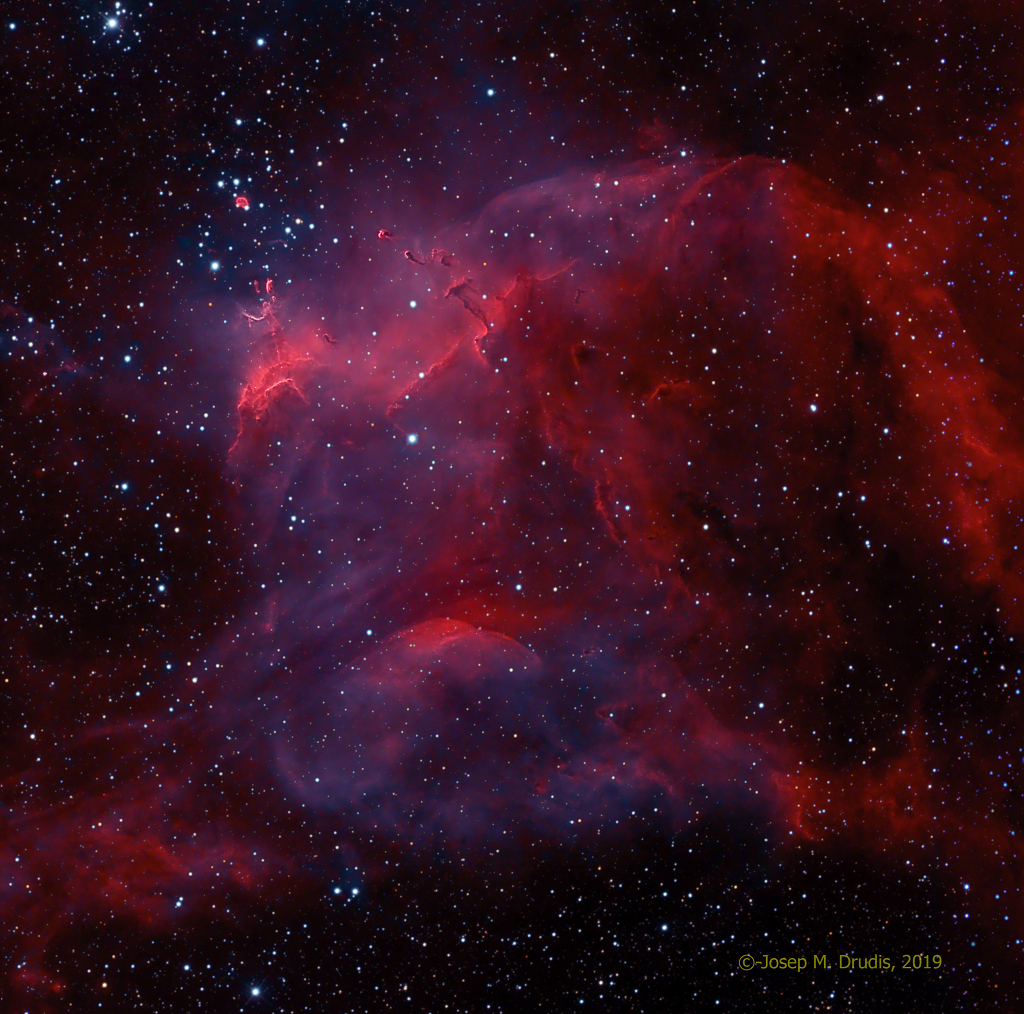
This cosmic skyscape features glowing gas and dark dust clouds along side the young stars of NGC 3572. A beautiful emission nebula and star cluster in far southern skies, the region is often overlooked by astroimagers in favor of its brighter neighbor, the nearby Carina Nebula. Stars from NGC 3572 are toward the upper left in the telescopic frame that would measure about 100 light-years across at the cluster’s estimated distant of 9,000 light-years. The visible interstellar gas and dust is part of the star cluster’s natal molecular cloud. Dense streamers of material within the nebula, eroded by stellar winds and radiation, clearly trail away from the energetic young stars. They are likely sites of ongoing star formation with shapes reminiscent of the cosmic Tadpoles of IC 410 better known to northern skygazers. In the coming tens to hundreds of millions of years, gas and stars in the cluster will be dispersed though, by gravitational tides and by violent supernova explosions that end the short lives of the massive cluster stars. [via NASA] https://ift.tt/33sRsah