Messier 45: The Daughters of Atlas and Pleione

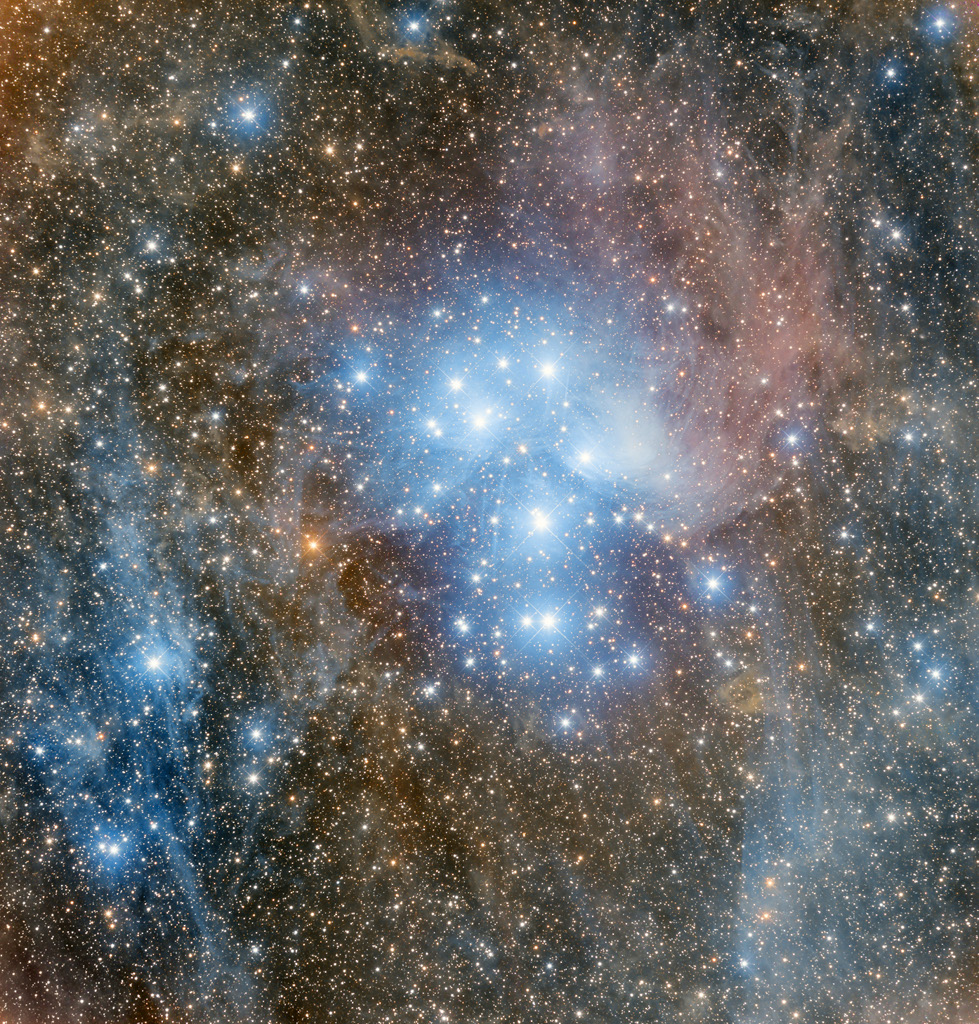
Hurtling through a cosmic dust cloud a mere 400 light-years away, the lovely Pleiades or Seven Sisters open star cluster is well-known for its striking blue reflection nebulae. It lies in the night sky toward the constellation Taurus and the Orion Arm of our Milky Way Galaxy. The sister stars and cosmic dust cloud are not related though, they just happen to be passing through the same region of space. Known since antiquity as a compact grouping of stars, Galileo first sketched the star cluster viewed through his telescope with stars too faint to be seen by eye. Charles Messier recorded the position of the cluster as the 45th entry in his famous catalog of things which are not comets. In Greek myth, the Pleiades were seven daughters of the astronomical Titan Atlas and sea-nymph Pleione. Their parents names are included in the cluster’s nine brightest stars. This deep and wide telescopic image spans over 20 light-years across the Pleides star cluster. [via NASA] https://ift.tt/2Nn4ikQ
21st Century M101

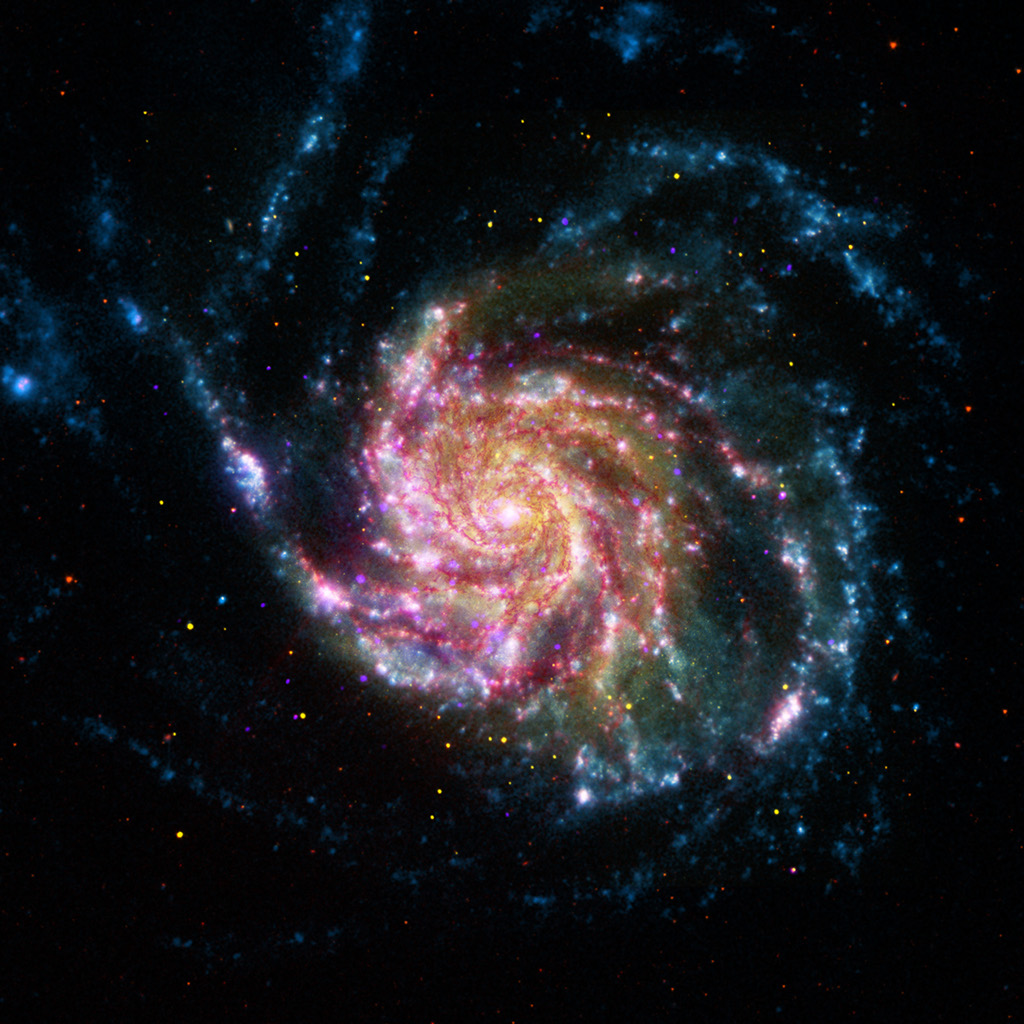
One of the last entries in Charles Messier’s famous catalog, big, beautiful spiral galaxy M101 is definitely not one of the least. About 170,000 light-years across, this galaxy is enormous, almost twice the size of our own Milky Way Galaxy. M101 was also one of the original spiral nebulae observed with Lord Rosse’s large 19th century telescope, the Leviathan of Parsonstown. In contrast, this multiwavelength view of the large island universe is a composite of images recorded by space-based telescopes in the 21st century. Color coded from X-rays to infrared wavelengths (high to low energies), the image data was taken from the Chandra X-ray Observatory (purple), the Galaxy Evolution Explorer (blue), Hubble Space Telescope(yellow), and the Spitzer Space Telescope(red). While the X-ray data trace the location of multimillion degree gas around M101’s exploded stars and neutron star and black hole binary star systems, the lower energy data follow the stars and dust that define M101’s grand spiral arms. Also known as the Pinwheel Galaxy, M101 lies within the boundaries of the northern constellation Ursa Major, about 25 million light-years away. [via NASA] https://ift.tt/2pJL4gg

Spiral Galaxies Spinning Super Fast

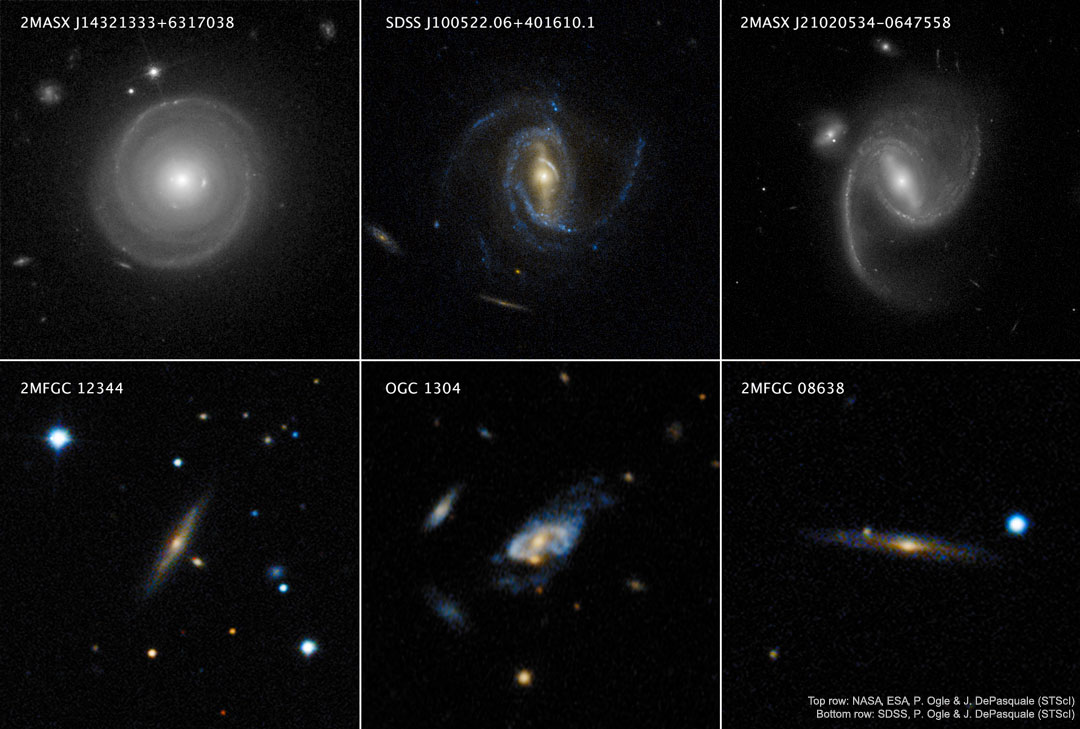
Why are these galaxies spinning so fast? If you estimated each spiral’s mass by how much light it emits, their fast rotations should break them apart. The leading hypothesis as to why these galaxies don’t break apart is dark matter — mass so dark we can’t see it. But these galaxies are even out-spinning this break-up limit — they are the fastest rotating disk galaxies known. It is therefore further hypothesized that their dark matter halos are so massive — and their spins so fast — that it is harder for them to form stars than regular spirals. If so, then these galaxies may be among the most massive spirals possible. Further study of surprising super-spirals like these will continue, likely including observations taken by NASA’s James Webb Space Telescope scheduled for launch in 2021. [via NASA] https://ift.tt/2NT3raX

Near the Center of the Lagoon Nebula

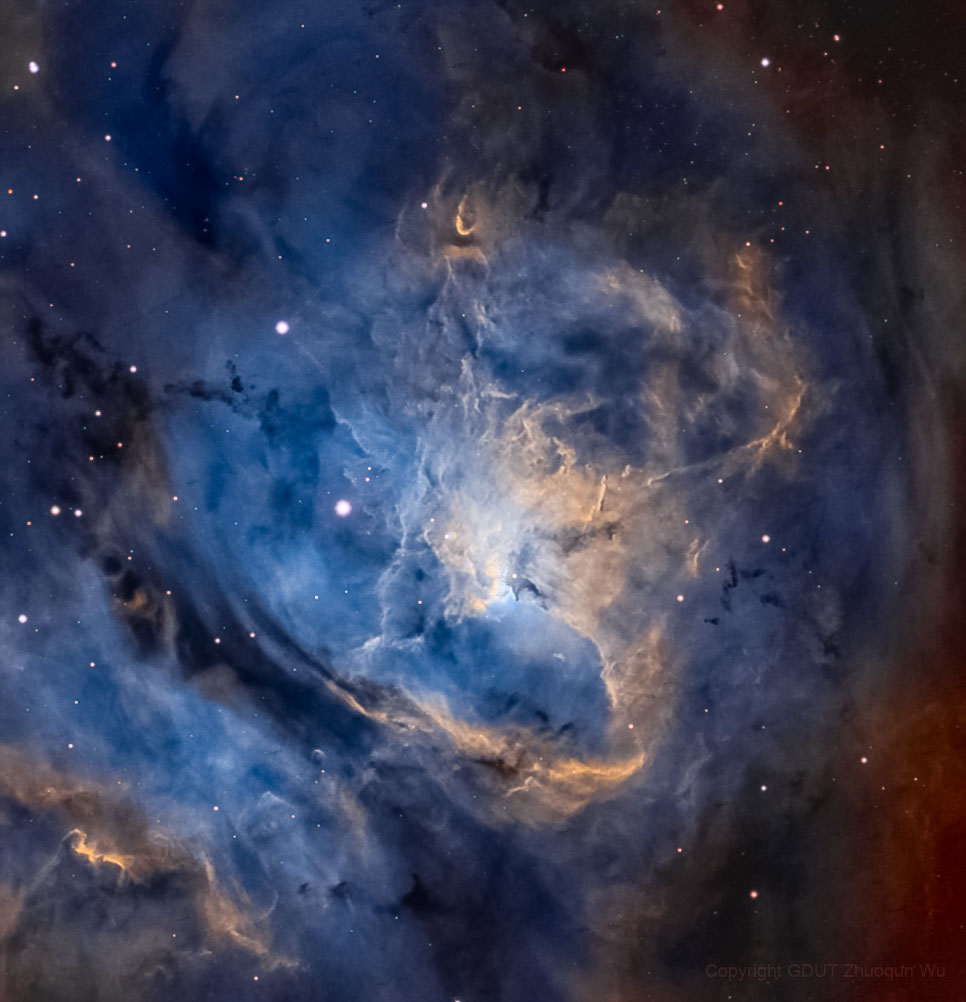
Stars are battling gas and dust in the Lagoon Nebula but the photographers are winning. Also known as M8, this photogenic nebula is visible even without binoculars towards the constellation of the Archer (Sagittarius). The energetic processes of star formation create not only the colors but the chaos. The glowing gas results from high-energy starlight striking interstellar hydrogen gas and trace amounts of sulfur, and oxygen gases. The dark dust filaments that lace M8 were created in the atmospheres of cool giant stars and in the debris from supernovae explosions. The light from M8 we see today left about 5,000 years ago. Light takes about 50 years to cross this section of M8. [via NASA] https://ift.tt/2NDZqXr

M42: Inside the Orion Nebula

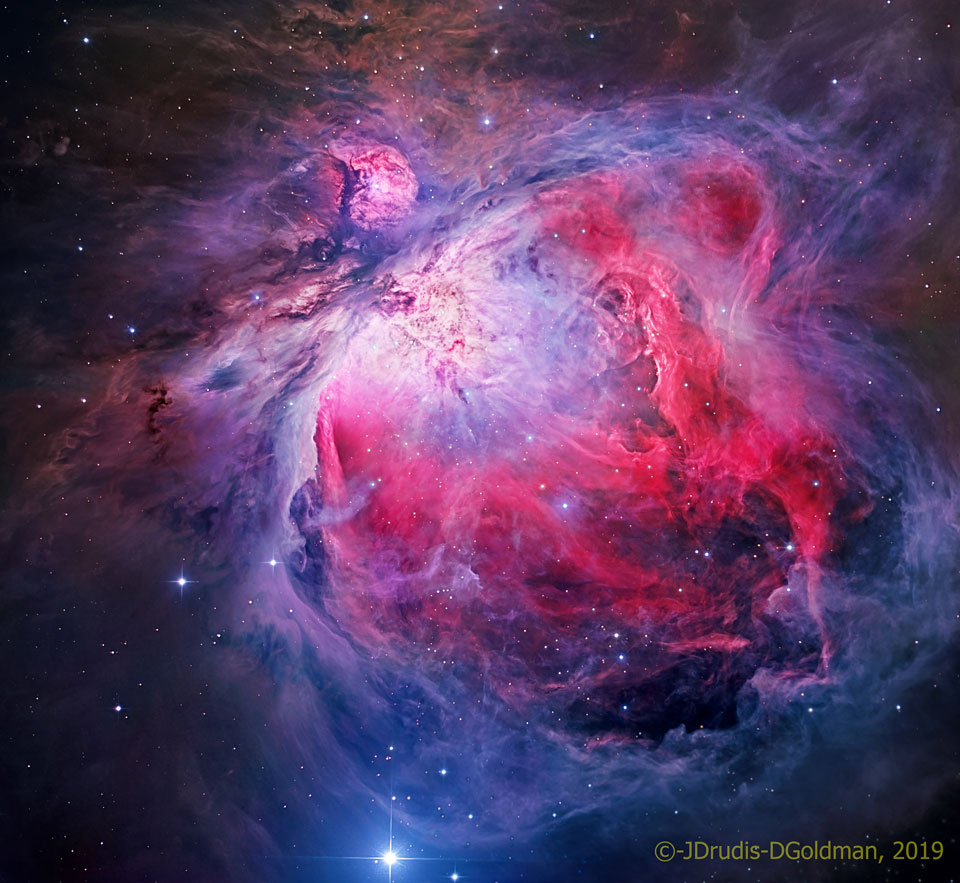
The Great Nebula in Orion, an immense, nearby starbirth region, is probably the most famous of all astronomical nebulas. Here, glowing gas surrounds hot young stars at the edge of an immense interstellar molecular cloud only 1500 light-years away. In the featured deep image in assigned colors highlighted by emission in oxygen and hydrogen, wisps and sheets of dust and gas are particularly evident. The Great Nebula in Orion can be found with the unaided eye near the easily identifiable belt of three stars in the popular constellation Orion. In addition to housing a bright open cluster of stars known as the Trapezium, the Orion Nebula contains many stellar nurseries. These nurseries contain much hydrogen gas, hot young stars, proplyds, and stellar jets spewing material at high speeds. Also known as M42, the Orion Nebula spans about 40 light years and is located in the same spiral arm of our Galaxy as the Sun. [via NASA] https://ift.tt/2NjuSu4

Curiosity Rover Finds a Clay Cache on Mars

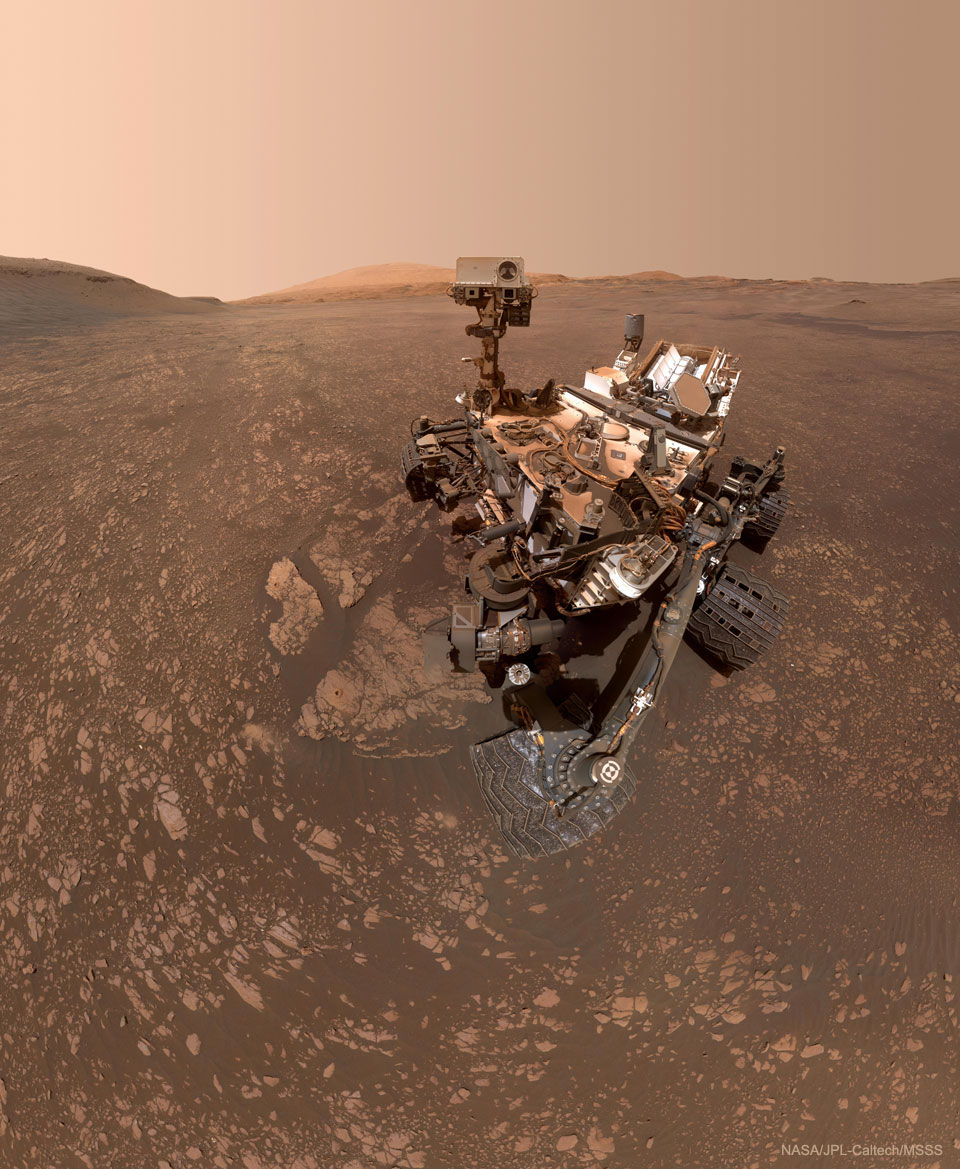
Why is there clay on Mars? On Earth, clay can form at the bottom of a peaceful lake when specific minerals trap water. At the pictured site on Mars, the robotic rover Curiosity drilled into two rocks and found the highest concentration of clay yet. The clay cache is considered addition evidence that Gale Crater once held water in the distant past. Pictured, 57 images taken by Curiosity have been combined into a selfie. The images were taken by a camera at the end of its robotic arm. Many details of the car-sized rover are visible, including its rugged wheels, numerous scientific instruments, and a high mast that contains camera «eyes», one of which can shoot out an infrared laser beam. Curiosity continues to roll around and up Mount Sharp — in the center of Gale Crater — in a search for new clues about the ancient history of Mars and whether or not the red planet once had conditions that could support life. [via NASA] https://ift.tt/2WnzOSX

The Space Station Crosses a Spotless Sun

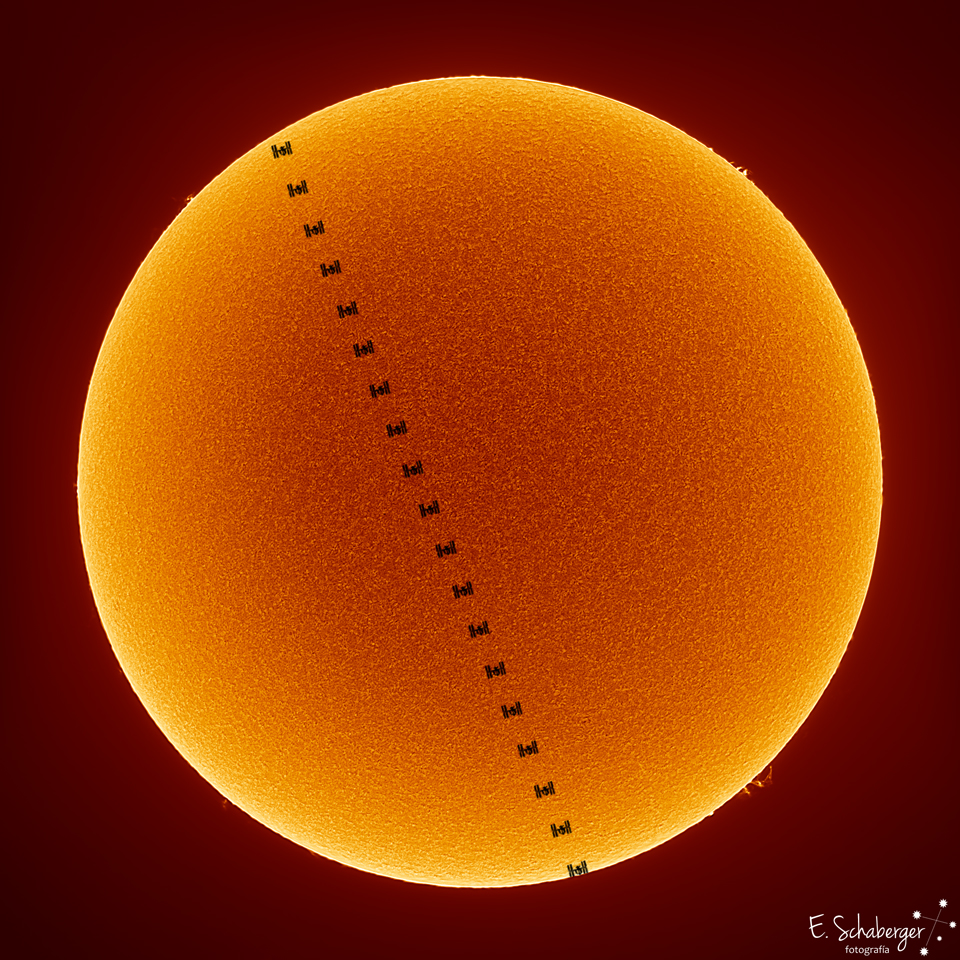
Typically, the International Space Station is visible only at night. Slowly drifting across the night sky as it orbits the Earth, the International Space Station (ISS) can be seen as a bright spot about once a month from many locations. The ISS is then visible only just after sunset or just before sunrise because it shines by reflected sunlight — once the ISS enters the Earth’s shadow, it will drop out of sight. The only occasion when the ISS is visible during the day is when it passes right in front of the Sun. Then, it passes so quickly that only cameras taking short exposures can visually freeze the ISS’s silhouette onto the background Sun. The featured picture did exactly that — it is actually a series of images taken a month ago from Santa Fe, Argentina with perfect timing. This image series was later combined with a separate image highlighting the texture of the spotless Sun, and an image bringing up the Sun’s prominences around the edge. At an unusually low Solar Minimum, the Sun has gone without sunspots now for most of 2019. [via NASA] https://ift.tt/2NhTbsh

Ghost Aurora over Canada

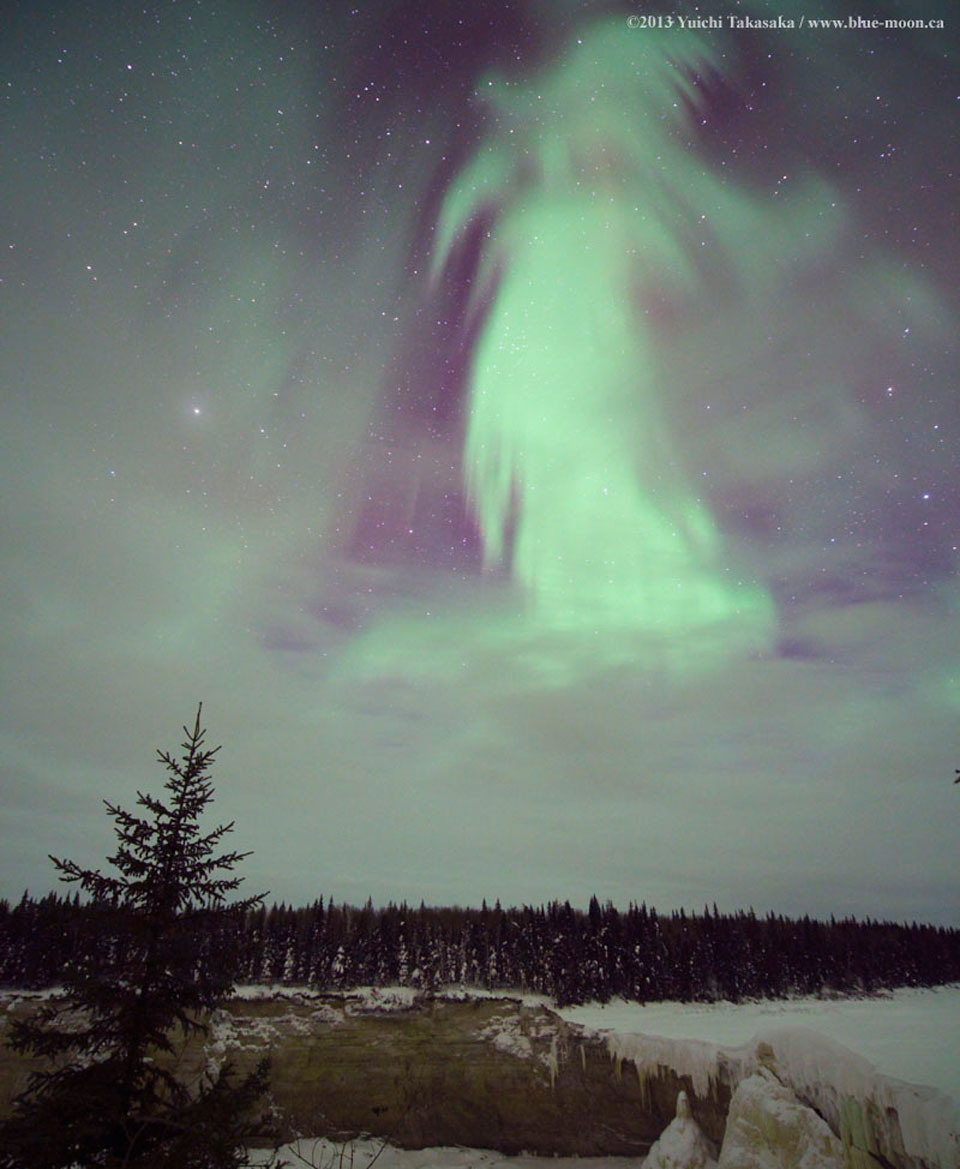
What does this aurora look like to you? While braving the cold to watch the skies above northern Canada early one morning in 2013, a most unusual aurora appeared. The aurora definitely appeared to be shaped like something , but what? Two ghostly possibilities recorded by the astrophotographer were «witch» and «goddess of dawn», but please feel free to suggest your own Halloween-enhanced impressions. Regardless of fantastical pareidolic interpretations, the pictured aurora had a typical green color and was surely caused by the scientifically commonplace action of high energy particles from space interacting with oxygen in Earth’s upper atmosphere. In the image foreground, at the bottom, is a frozen Alexandra Falls, while evergreen trees cross the middle. [via NASA] https://ift.tt/2Njd9CP

Gravity s Grin

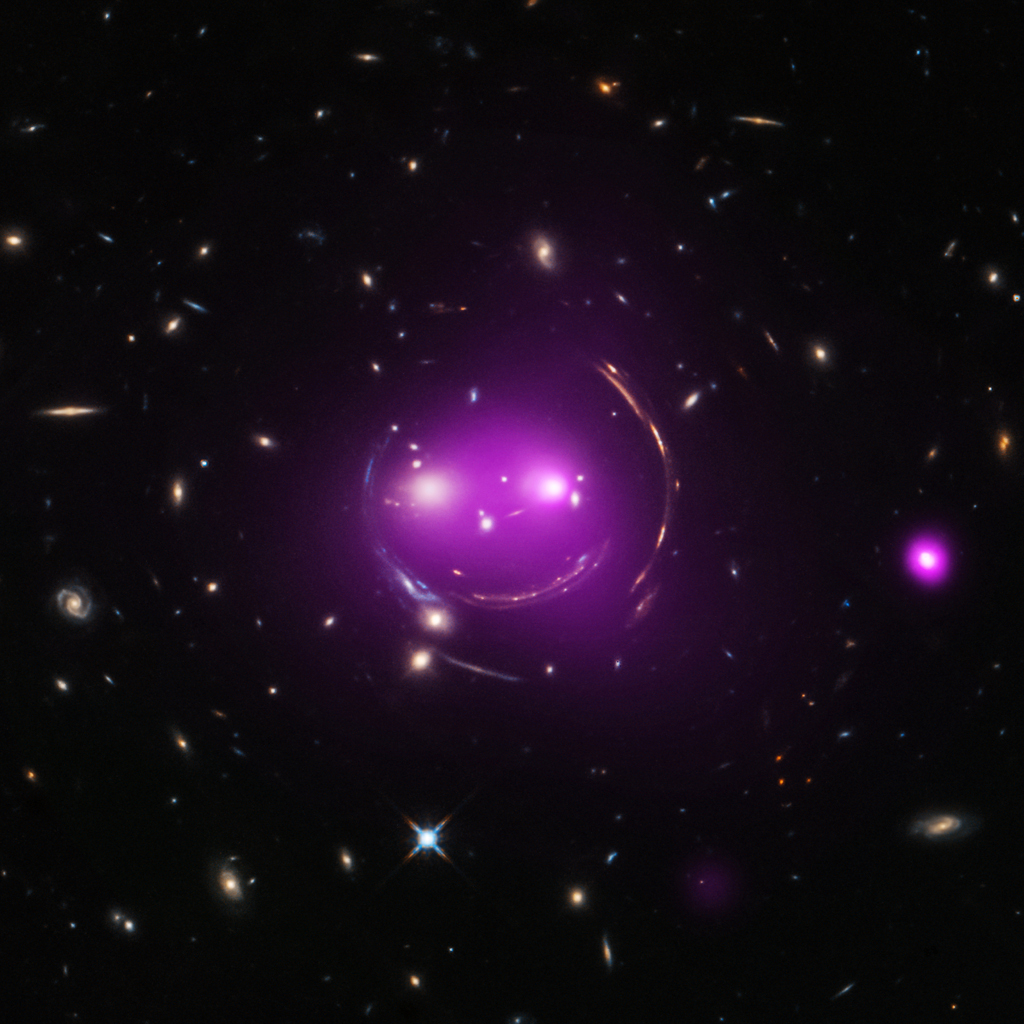
Albert Einstein’s general theory of relativity, published over 100 years ago, predicted the phenomenon of gravitational lensing. And that’s what gives these distant galaxies such a whimsical appearance, seen through the looking glass of X-ray and optical image data from the Chandra and Hubble space telescopes. Nicknamed the Cheshire Cat galaxy group, the group’s two large elliptical galaxies are suggestively framed by arcs. The arcs are optical images of distant background galaxies lensed by the foreground group’s total distribution of gravitational mass. Of course, that gravitational mass is dominated by dark matter. The two large elliptical «eye» galaxies represent the brightest members of their own galaxy groups which are merging. Their relative collisional speed of nearly 1,350 kilometers/second heats gas to millions of degrees producing the X-ray glow shown in purple hues. Curiouser about galaxy group mergers? The Cheshire Cat group grins in the constellation Ursa Major, some 4.6 billion light-years away. [via NASA] https://ift.tt/2PkdyaR

The Ghosts of Cassiopeia

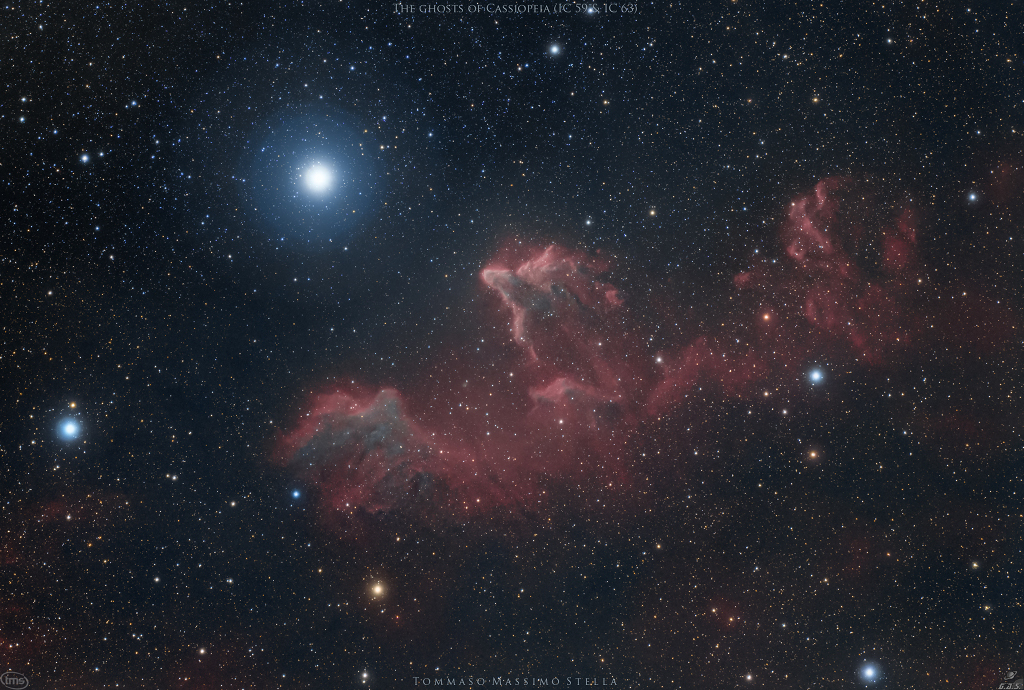
These bright rims and flowing shapes look ghostly on a cosmic scale. A telescopic view toward the constellation Cassiopeia, the colorful skyscape features swept-back, comet-shaped clouds IC 59 (left) and IC 63. About 600 light-years distant, the clouds aren’t actually ghosts. They are slowly disappearing though, under the influence of energetic radiation from hot,luminous star gamma Cas. Gamma Cas is physically located only 3 to 4 light-years from the nebulae, the bright star just above and left in the frame. Slightly closer to gamma Cas, IC 63 is dominated by red H-alpha light emitted as hydrogen atoms ionized by the star’s ultraviolet radiation recombine with electrons. Farther from the star, IC 59 shows proportionally less H-alpha emission but more of the characteristic blue tint of dust reflected star light. The field of view spans over 1 degree or 10 light-years at the estimated distance of gamma Cas and friends. [via NASA] https://ift.tt/2BEIpHa