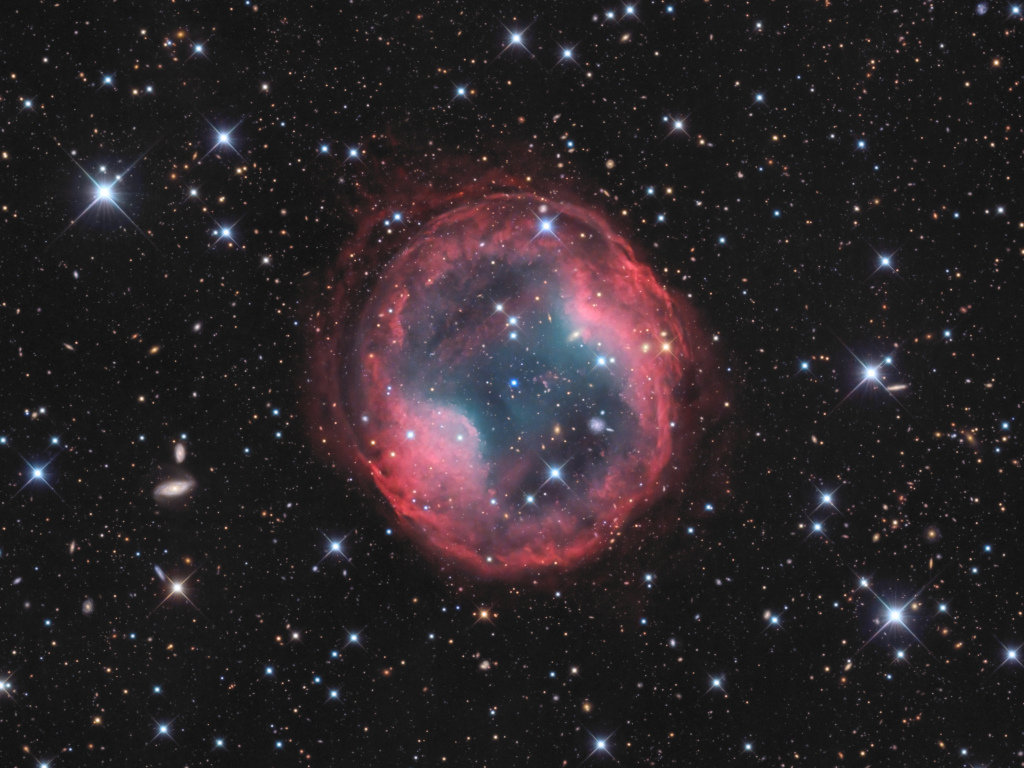
Jones Emberson 1

Planetary nebula Jones-Emberson 1 is the death shroud of a dying Sun-like star. It lies some 1,600 light-years from Earth toward the sharp-eyed constellation Lynx. About 4 light-years across, the expanding remnant of the dying star’s atmosphere was shrugged off into interstellar space, as the star’s central supply of hydrogen and then helium for fusion was finally depleted after billions of years. Visible near the center of the planetary nebula is what remains of the stellar core, a blue-hot white dwarf star. Also known as PK 164 +31.1, the nebula is faint and very difficult to glimpse at a telescope’s eyepiece. But this deep broadband image combining 22 hours of exposure time does show it off in exceptional detail. Stars within our own Milky Way galaxy as well as background galaxies across the universe are scattered through the clear field of view. Ephemeral on the cosmic stage, Jones-Emberson 1 will fade away over the next few thousand years. Its hot, central white dwarf star will take billions of years to cool. [via NASA] https://ift.tt/VNCe3vj
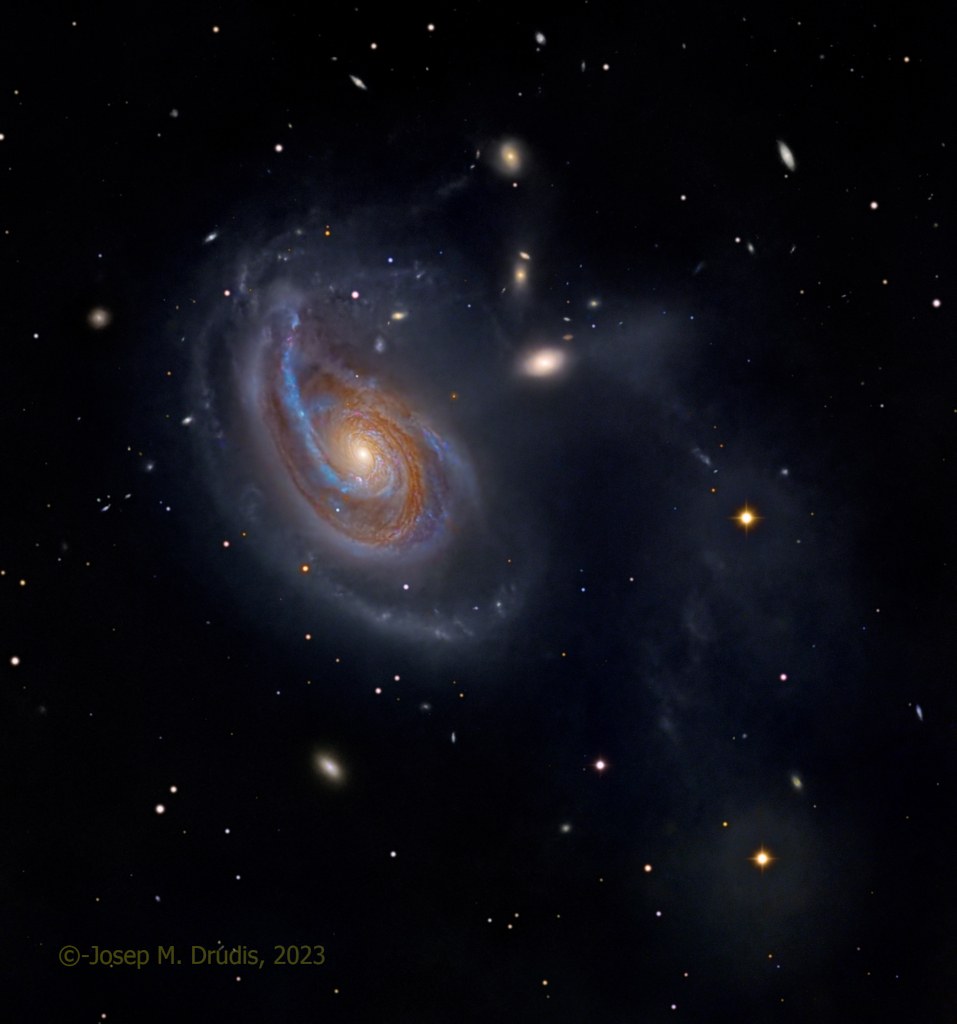
Peculiar spiral galaxy Arp 78 is found within the boundaries of the head strong constellation Aries. Some 100 million light-years beyond the stars and nebulae of our Milky Way galaxy, the island universe is an enormous 200,000 light-years across. Also known as NGC 772, it sports a prominent, outer spiral arm in this detailed cosmic portrait. Tracking along sweeping dust lanes and lined with young blue star clusters, Arp 78’s overdeveloped spiral arm is pumped-up by galactic-scale gravitational tides. Interactions with its brightest companion galaxy, the more compact NGC 770 seen above and right of the larger spiral, are likely responsible. Embedded in faint star streams revealed in the deep telescopic exposure, NGC 770’s fuzzy, elliptical appearance contrasts nicely with spiky foreground Milky Way stars in matching yellowish hues. [via NASA] https://ift.tt/MGQBEov

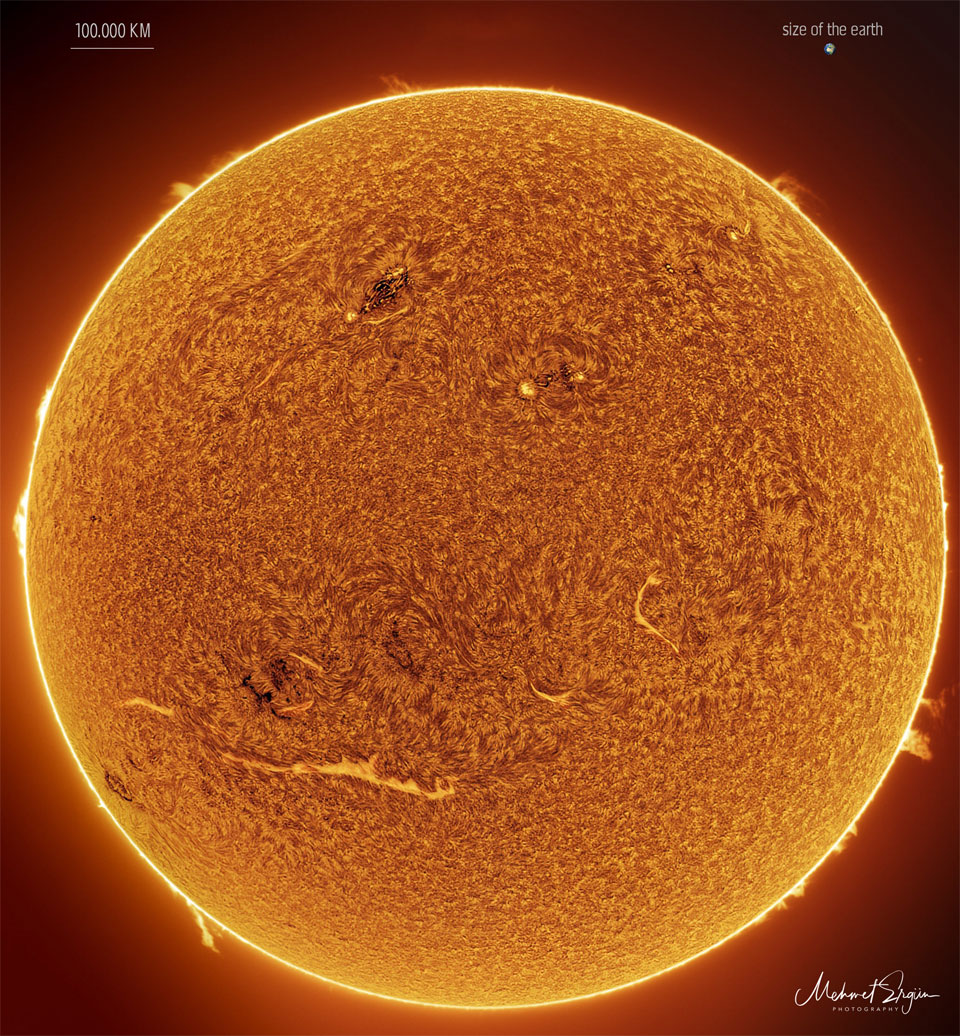
Our Sun is becoming a busy place. Only two years ago, the Sun was emerging from a solar minimum so quiet that months would go by without even a single sunspot. In contrast, already this year and well ahead of schedule, our Sun is unusually active, already nearing solar activity levels seen a decade ago during the last solar maximum. Our increasingly active Sun was captured two weeks ago sporting numerous interesting features. The image was recorded in a single color of light called Hydrogen Alpha, color-inverted, and false colored. Spicules carpet much of the Sun’s face. The brightening towards the Sun’s edges is caused by increased absorption of relatively cool solar gas and called limb darkening. Just outside the Sun’s disk, several scintillating prominences protrude, while prominences on the Sun’s face are known as filaments and show as light streaks. Magnetically tangled active regions are both dark and light and contain cool sunspots. As our Sun’s magnetic field winds toward solar maximum over the next few years, whether the Sun’s high activity will continue to increase is unknown. [via NASA] https://ift.tt/wpn7692

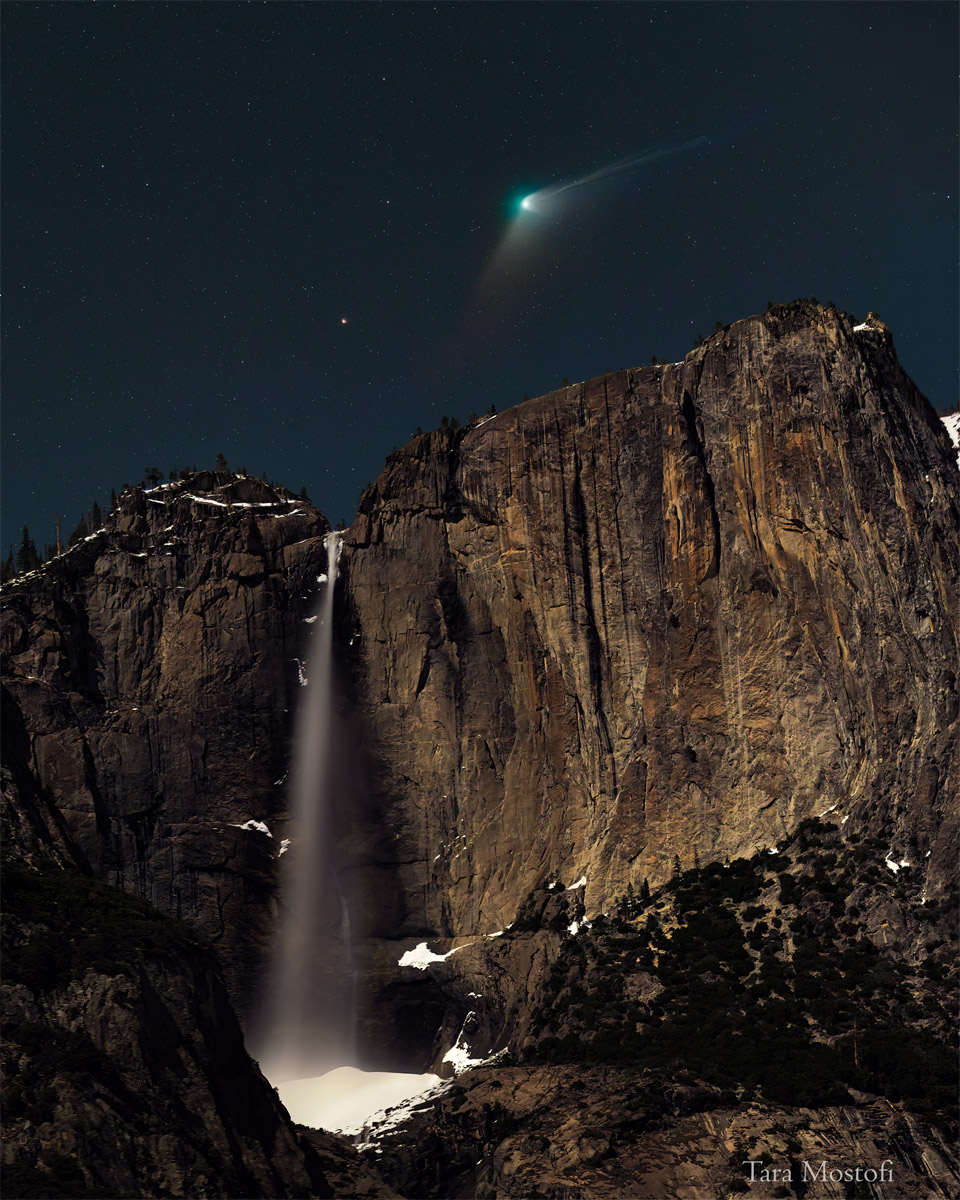
They are both falling. The water in Yosemite Falls, California, USA, is falling toward the Earth. Comet ZTF is falling toward the Sun. This double cosmic cascade was captured late last month as fading Comet C/2022 E3 (ZTF) had just passed its closest to planet Earth. The orange star just over the falls is Kochab. With the exception of a brief encounter with a black bear, the featured image was a well-planned composite of a moonlit-foreground and long-duration background exposures – all designed to reconstruct a deep version of an actual single sight. Although Comet ZTF is now fading as it glides back to the outer Solar System, its path is determined by gravity and so it can be considered to still be falling toward the Sun — but backwards. [via NASA] https://ift.tt/RAa4mc0

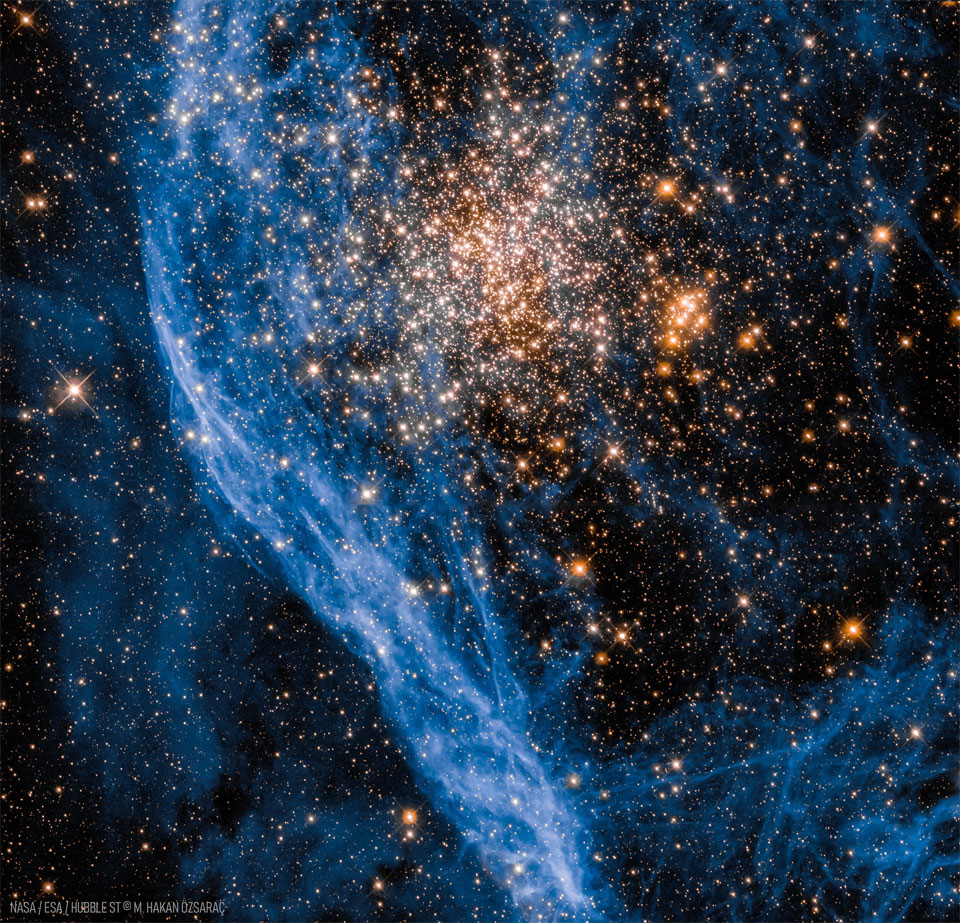
There is nothing like this ball of stars in our Milky Way Galaxy. This is surprising because, at first glance, this featured image by the Hubble Space Telescope suggests that star cluster NGC 1850’s size and shape are reminiscent of the many ancient globular star clusters which roam our own Milky Way Galaxy’s halo. But NGC 1850’s stars are all too young, making it a type of star cluster with no known counterpart in the Milky Way. Moreover, NGC 1850 is also a double star cluster, with a second, compact cluster of stars visible here just to the right of the large cluster’s center. Stars in the large cluster are estimated to be 50 million years young, while stars in the compact cluster are younger still, with an age of about 4 million years. A mere 168,000 light-years distant, NGC 1850 is located near the outskirts of the Large Magellanic Cloud galaxy. The glowing gas filaments across the image left, like supernova remnants in our own galaxy, testify to violent stellar explosions and indicate that short-lived massive stars have recently been present in the region. [via NASA] https://ift.tt/uofV7c4

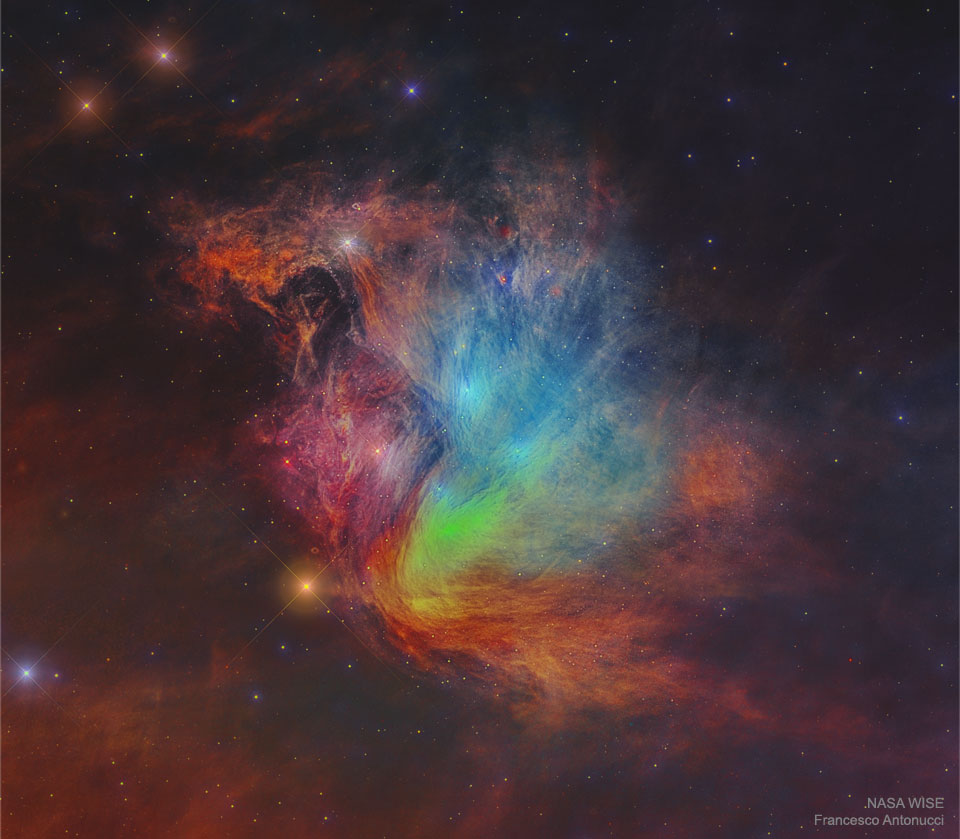
Is this really the famous Pleiades star cluster? Known for its iconic blue stars, the Pleiades is shown here in infrared light where the surrounding dust outshines the stars. Here three infrared colors have been mapped into visual colors (R=24, G=12, B=4.6 microns). The base images were taken by NASA’s orbiting Wide Field Infrared Survey Explorer (WISE) spacecraft. Cataloged as M45 and nicknamed the Seven Sisters, the Pleiades star cluster is by chance situated in a passing dust cloud. The light and winds from the massive Pleiades stars preferentially repel smaller dust particles, causing the dust to become stratified into filaments, as seen. The featured image spans about 20 light years at the distance of the Pleiades, which lies about 450 light years distant toward the constellation of the Bull (Taurus). [via NASA] https://ift.tt/MFyviOS

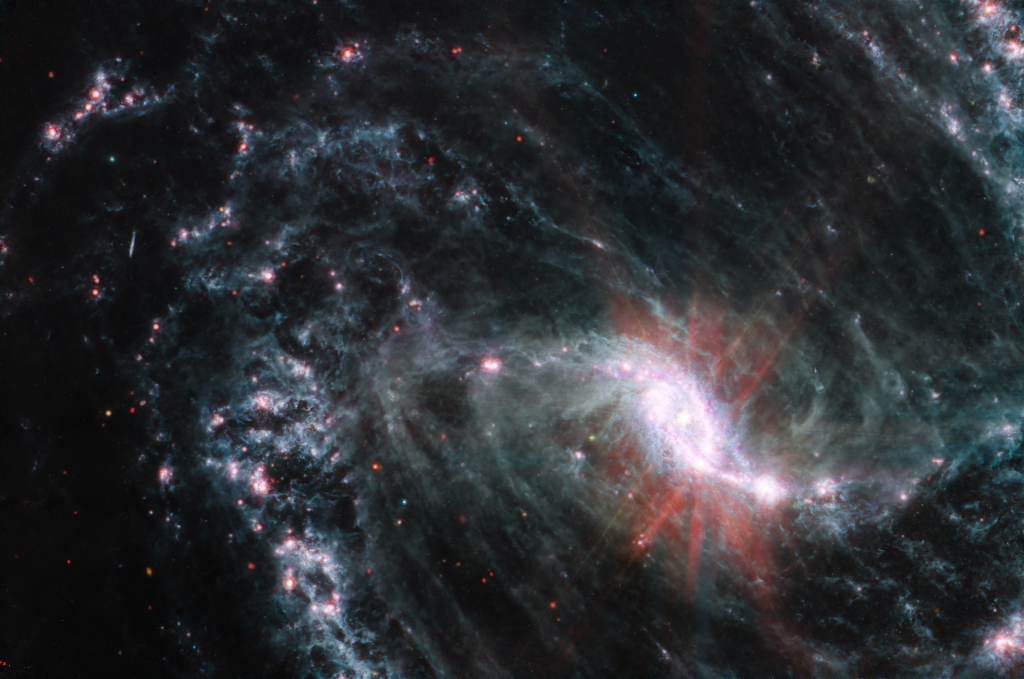
Barred Spiral Galaxy NGC 1365 from Webb

A mere 56 million light-years distant toward the southern constellation Fornax, NGC 1365 is an enormous barred spiral galaxy about 200,000 light-years in diameter. That’s twice the size of our own barred spiral Milky Way. This sharp image from the James Webb Space Telescope’s Mid-Infrared Instrument (MIRI) reveals stunning details of this magnificent spiral in infrared light. Webb’s field of view stretches about 60,000 light-years across NGC 1365, exploring the galaxy’s core and bright newborn star clusters. The intricate network of dusty filaments and bubbles is created by young stars along spiral arms winding from the galaxy’s central bar. Astronomers suspect the gravity field of NGC 1365’s bar plays a crucial role in the galaxy’s evolution, funneling gas and dust into a star-forming maelstrom and ultimately feeding material into the active galaxy’s central, supermassive black hole. [via NASA] https://ift.tt/4fZ2USy

2023 CX1 Meteor Flash

While scanning the skies for near earth objects Hungarian astronomer Krisztián Sárneczky first imaged the meter-sized space rock now cataloged as 2023 CX1 on 12 February 2023 at 20:18:07 UTC. That was about 7 hours before it impacted planet Earth’s atmosphere. Its predicted trajectory created a rare opportunity for meteor observers and a last minute plan resulted in this spectacular image of the fireball, captured from the Netherlands as 2023 CX1 vaporized and broke up over northern France. Remarkably it was Sárneczky’s second discovery of an impacting asteroid, while 2023 CX1 is only the seventh asteroid to be detected before being successfully predicted to impact Earth. It has recently become the third such object from which meteorites have been recovered. This fireball was witnessed almost 10 years to the day following the infamous Chelyabinsk Meteor flash. [via NASA] https://ift.tt/nCg6Ue5

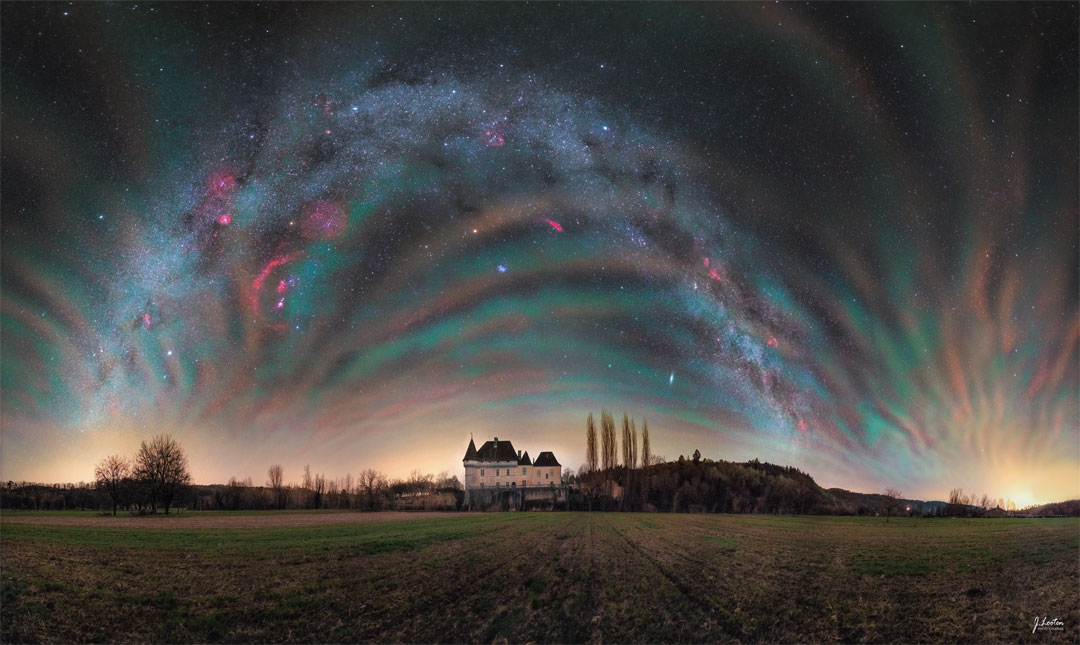
This unusual sky was both familiar and unfamiliar. The photographer’s mission was to capture the arch of the familiar central band of our Milky Way Galaxy over a picturesque medieval manor. The surprise was that on this January evening, the foreground sky was found glowing in a beautiful but unfamiliar manner. The striped bands are called airglow and they result from air high in Earth’s atmosphere being excited by the Sun’s light and emitting a faint light of its own. The bands cross the entire sky — their curved appearance is due to the extremely wide angle of the camera lens. In the foreground lies Château de Losse in southwest France. Other familiar sky delights dot the distant background including the bright white star Sirius, the orange planet Mars, the blue Pleiades star cluster, the red California Nebula, and, on the far right, the extended Andromeda Galaxy. The initial mission was also successful: across the top of the frame is the arching band of our Milky Way. [via NASA] https://ift.tt/jrN25aw

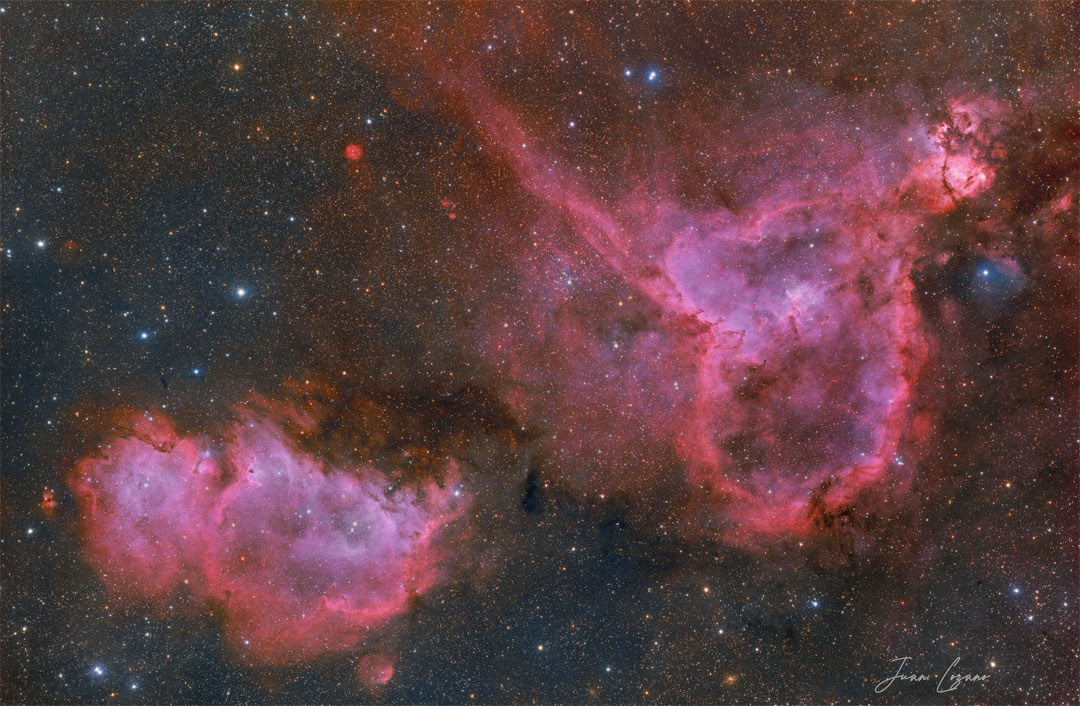
Is the heart and soul of our Galaxy located in Cassiopeia? Possibly not, but that is where two bright emission nebulas nicknamed Heart and Soul can be found. The Heart Nebula, officially dubbed IC 1805 and visible in the featured image on the upper right, has a shape reminiscent of a classical heart symbol. The shape is perhaps fitting for Valentine’s Day. The Soul Nebula is officially designated IC 1871 and is visible on the lower left. Both nebulas shine brightly in the red light of energized hydrogen, one of three colors shown in this three-color montage. Light takes about 6,000 years to reach us from these nebulas, which together span roughly 300 light years. Studies of stars and clusters like those found in the Heart and Soul nebulas have focused on how massive stars form and how they affect their environment. [via NASA] https://ift.tt/tNY0pOE