M64: The Evil Eye Galaxy

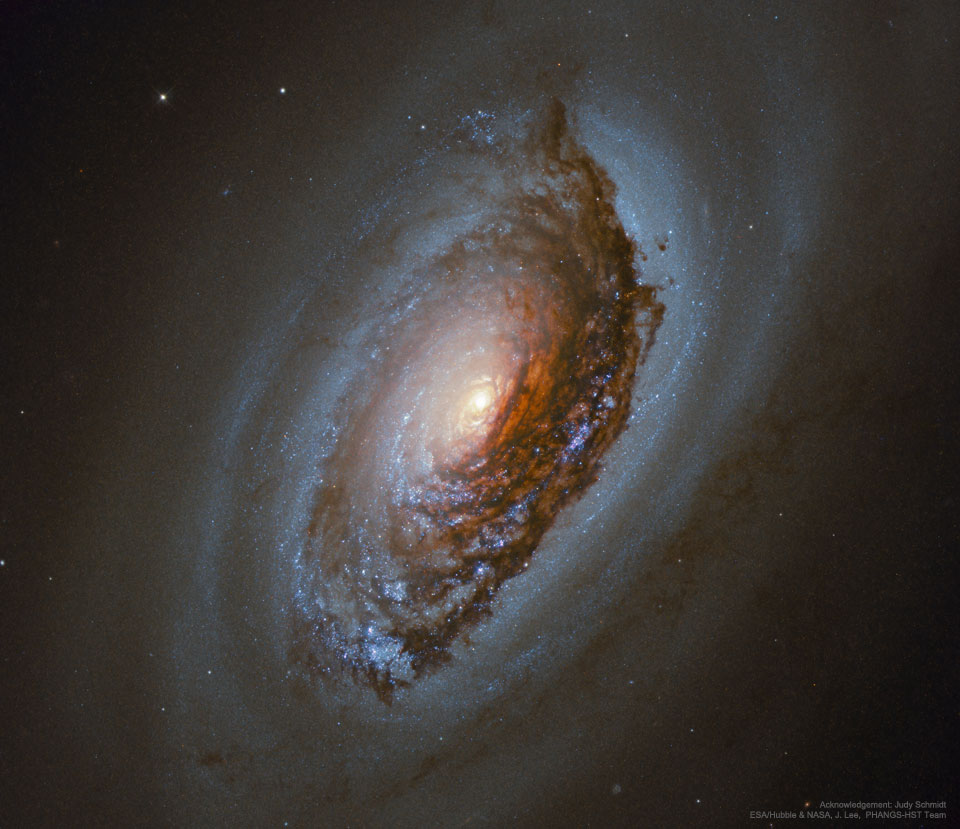
Who knows what evil lurks in the eyes of galaxies? The Hubble knows — or in the case of spiral galaxy M64 — is helping to find out. Messier 64, also known as the Evil Eye or Sleeping Beauty Galaxy, may seem to have evil in its eye because all of its stars rotate in the same direction as the interstellar gas in the galaxy’s central region, but in the opposite direction in the outer regions. Captured here in great detail by the Earth-orbiting Hubble Space Telescope, enormous dust clouds obscure the near-side of M64’s central region, which are laced with the telltale reddish glow of hydrogen associated with star formation. M64 lies about 17 million light years away, meaning that the light we see from it today left when the last common ancestor between humans and chimpanzees roamed the Earth. The dusty eye and bizarre rotation are likely the result of a billion-year-old merger of two different galaxies. [via NASA] https://ift.tt/3dd8fo0
SuitSat 1: A Spacesuit Floats Free

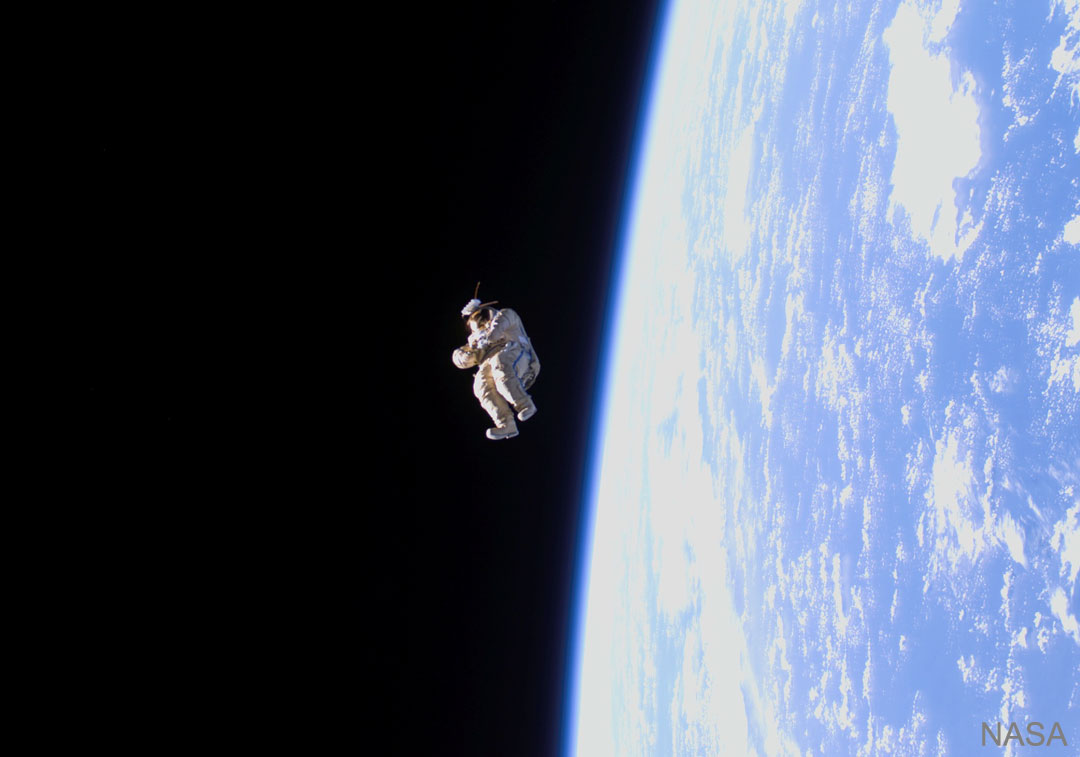
A spacesuit floated away from the International Space Station 15 years ago, but no investigation was conducted. Everyone knew that it was pushed by the space station crew. Dubbed Suitsat-1, the unneeded Russian Orlan spacesuit filled mostly with old clothes was fitted with a faint radio transmitter and released to orbit the Earth. The suit circled the Earth twice before its radio signal became unexpectedly weak. Suitsat-1 continued to orbit every 90 minutes until it burned up in the Earth’s atmosphere after a few weeks. Pictured, the lifeless spacesuit was photographed in 2006 just as it drifted away from space station. [via NASA] https://ift.tt/3u5MMnX

Exploring the Antennae

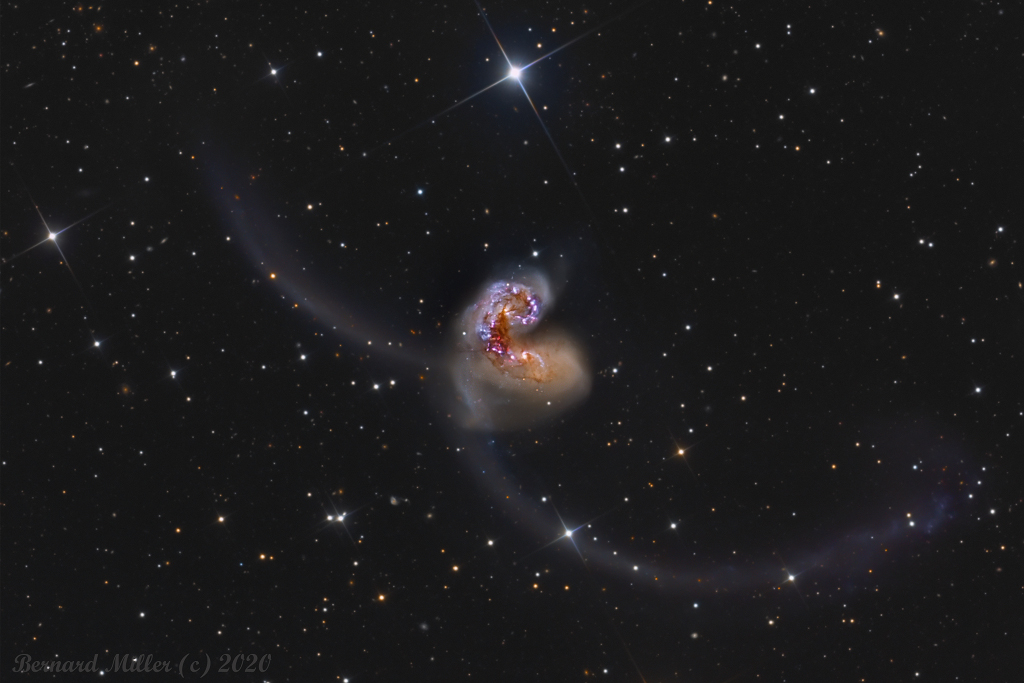
Some 60 million light-years away in the southerly constellation Corvus, two large galaxies are colliding. Stars in the two galaxies, cataloged as NGC 4038 and NGC 4039, very rarely collide in the course of the ponderous cataclysm that lasts for hundreds of millions of years. But the galaxies’ large clouds of molecular gas and dust often do, triggering furious episodes of star formationi near the center of the cosmic wreckage. Spanning over 500 thousand light-years, this stunning view also reveals new star clusters and matter flung far from the scene of the accident by gravitational tidal forces. The remarkably sharp ground-based image includes narrowband data that highlights the characteristic red glow of atomic hydrogen gas in star-forming regions. The suggestive overall visual appearance of the extended arcing structures gives the galaxy pair its popular name – The Antennae. [via NASA] https://ift.tt/3w5bPJl

The Medusa Nebula

Braided and serpentine filaments of glowing gas suggest this nebula’s popular name, The Medusa Nebula. Also known as Abell 21, this Medusa is an old planetary nebula some 1,500 light-years away in the constellation Gemini. Like its mythological namesake, the nebula is associated with a dramatic transformation. The planetary nebula phase represents a final stage in the evolution of low mass stars like the sun as they transform themselves from red giants to hot white dwarf stars and in the process shrug off their outer layers. Ultraviolet radiation from the hot star powers the nebular glow. The Medusa’s transforming star is the faint one near the center of the overall bright crescent shape. In this deep telescopic view, fainter filaments clearly extend above and right of the bright crescent region. The Medusa Nebula is estimated to be over 4 light-years across. [via NASA] https://ift.tt/3ssudK7

Curiosity: Sol 3048

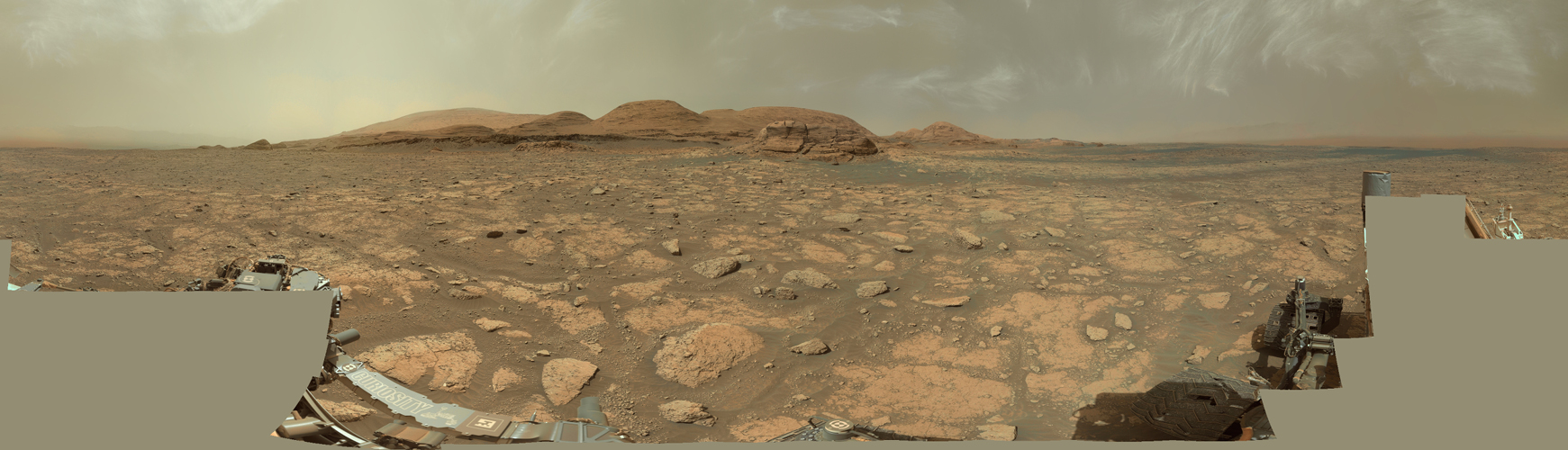
Before Perseverance there was Curiosity. In fact, the Curiosity rover accomplished the first sky crane maneuver touchdown on Mars on April 5, 2012. March 2, 2021 marked Curiosity’s 3,048th martian day operating on the surface of the Red Planet. This 360 degree panorama from sol 3048 is a mosaic of 149 frames from Curiosity’s Mastcam above the rover’s deck. It includes 23 frames of icy, thin, high clouds drifting through the martian sky. The cloudy sky frames were recorded throughout that martian day and are digitally stitched together in the panoramic view. Near center is a layered and streaked Mont Mercou. The peak of central Mount Sharp, rising over 5 kilometers above the floor of Gale Crater, is in the distant background on the left. [via NASA] https://ift.tt/3vSSsDz

Aurorae and Lightning on Jupiter

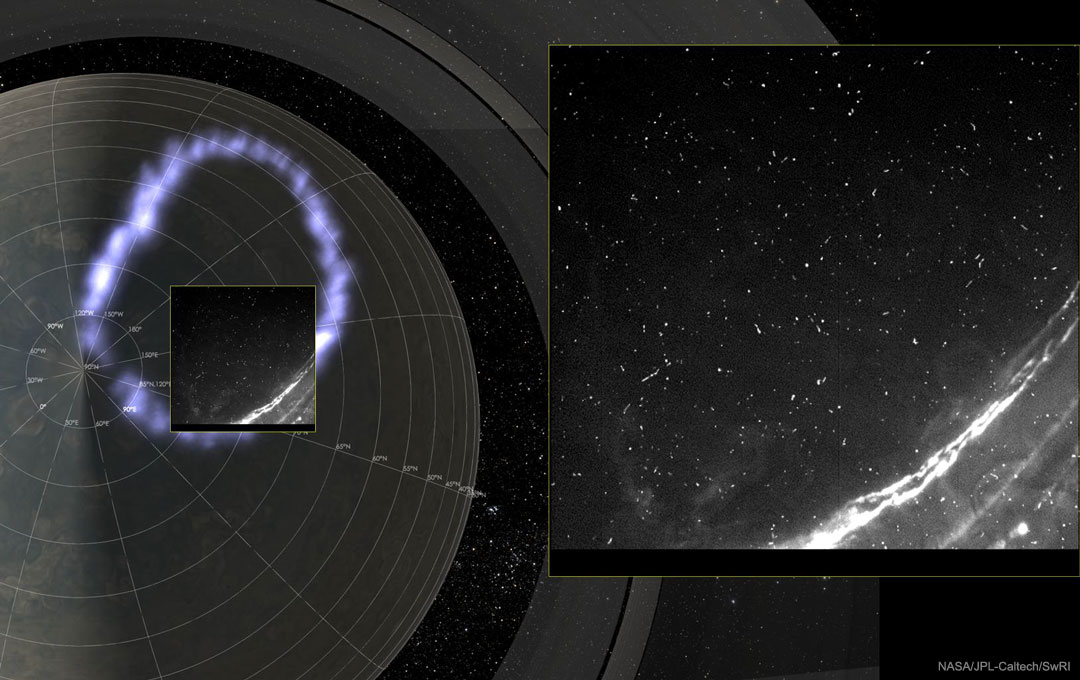
Why does so much of Jupiter’s lightning occur near its poles? Similar to Earth, Jupiter experiences both aurorae and lightning. Different from Earth, though, Jupiter’s lightning usually occurs near its poles — while much of Earth’s lightning occurs near its equator. To help understand the difference, NASA’s Juno spacecraft, currently orbiting Jupiter, has observed numerous aurora and lightning events. The featured image, taken by Juno’s Stellar Reference Unit camera on 2018 May 24, shows Jupiter’s northern auroral oval and several bright dots and streaks. An eye-catching event is shown in the right inset image — which is a flash of Jupiter’s lightning — one of the closest images of aurora and lightning ever. On Earth (which is much nearer to the Sun than Jupiter), sunlight is bright enough to create, by itself, much stronger atmospheric heating at the equator than the poles, driving turbulence, storms, and lightning. On Jupiter, in contrast, atmospheric heating comes mostly from its interior (as a remnant from its formation), leading to the hypothesis that more intense equatorial sunlight reduces temperature differences between upper atmospheric levels, hence reducing equatorial lightning-creating storms. [via NASA] https://ift.tt/2NKoSyE

Mars over Duddo Stone Circle

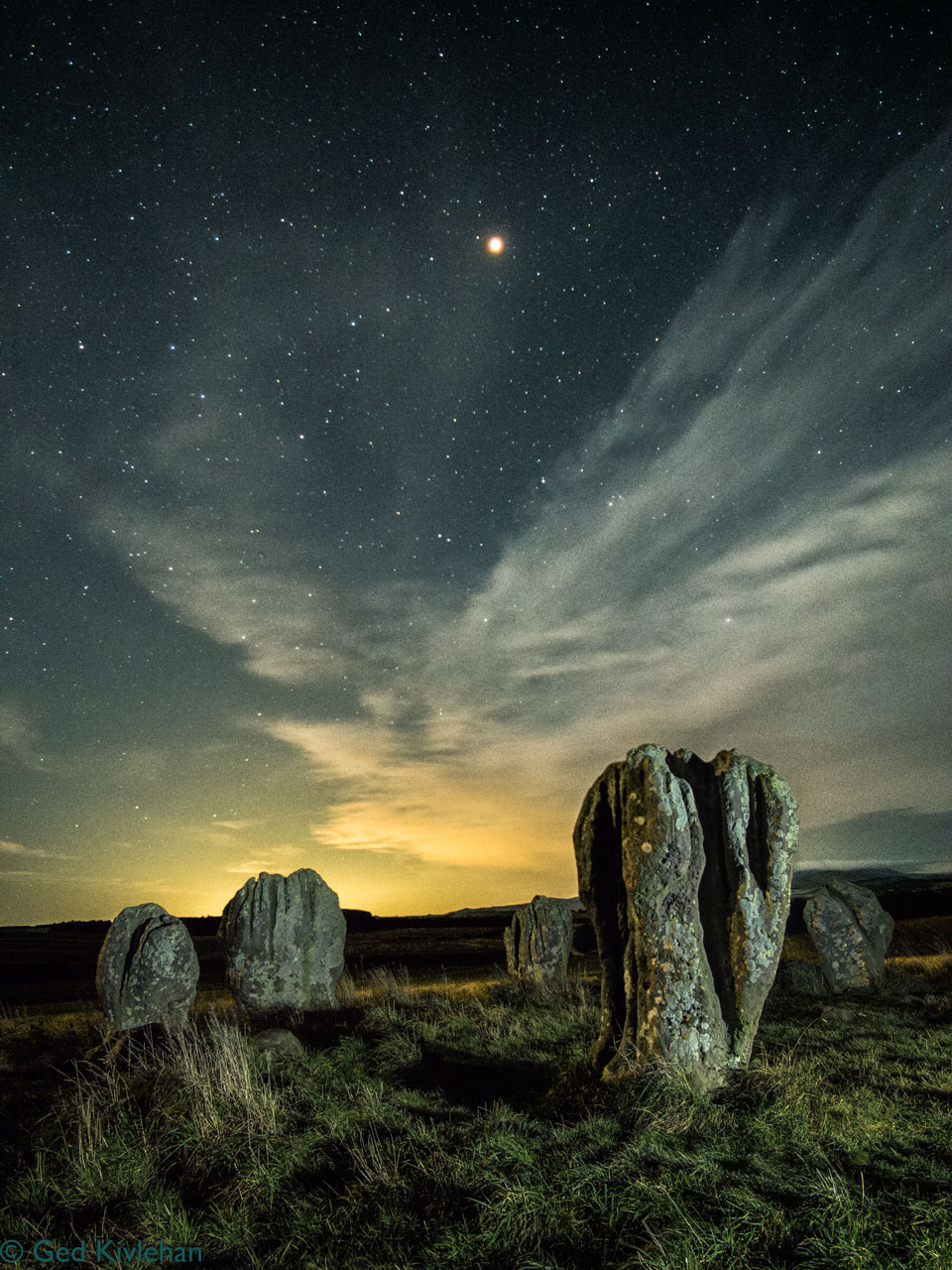
Why are these large stones here? One the more famous stone circles is the Duddo Five Stones of Northumberland, England. Set in the open near the top of a modest incline, a short hike across empty fields will bring you to unusual human -sized stones that are unlike anything surrounding them. The grooved, pitted, and deeply weathered surfaces of the soft sandstones are consistent with being placed about 4000 years ago — but placed for reasons now unknown. The featured image — a composite of two consecutive images taken from the same location — was captured last October under a starry sky when the Earth was passing near Mars, making the red planet unusually large and bright. Mars remains visible at sunset, although increasingly close to the horizon over the next few months. [via NASA] https://ift.tt/3lIymH7

From Auriga to Orion

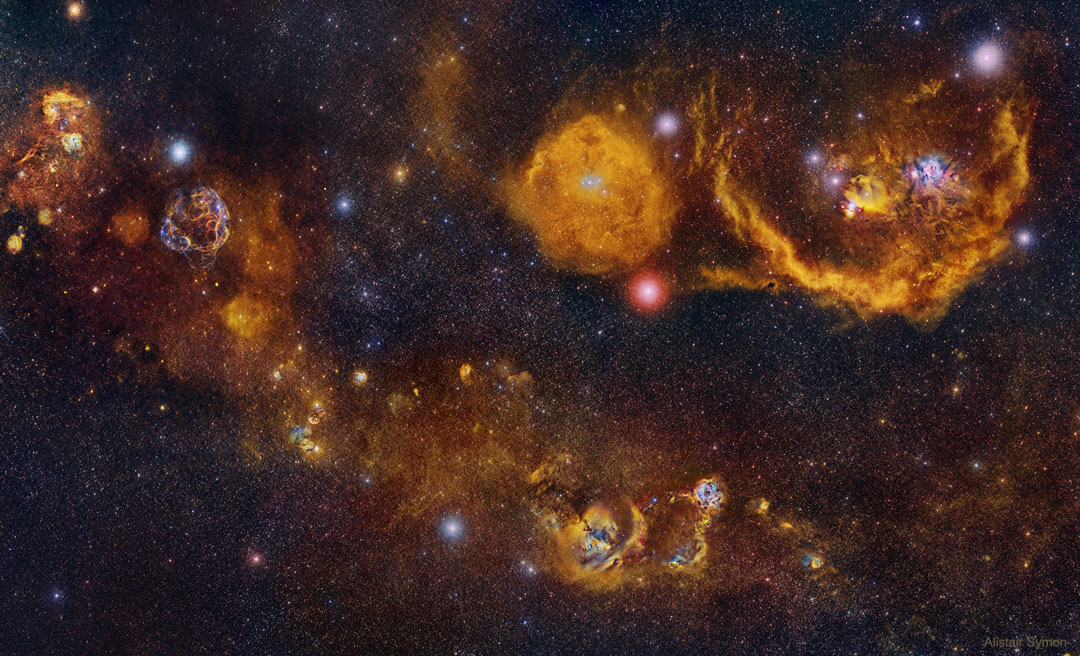
What’s up in the sky from Auriga to Orion? Many of the famous stars and nebulas in this region were captured on 34 separate images, taking over 430 hours of exposure, and digitally combined to reveal the featured image. Starting on the far upper left, toward the constellation of Auriga (the Chariot driver), is the picturesque Flaming Star Nebula (IC 405). Continuing down along the bright arc of our Milky Way Galaxy, from left to right crossing the constellations of the Twins and the Bull, notable appearing nebulas include the Tadpole, Simeis 147, Monkey Head, Jellyfish, Cone and Rosette nebulas. In the upper right quadrant of the image, toward the constellation of Orion (the hunter), you can see Sh2-264, the half-circle of Barnard’s Loop, and the Horsehead and Orion nebulas. Famous stars in and around Orion include, from left to right, orange Betelgeuse (just right of the image center), blue Bellatrix (just above it), the Orion belt stars of Mintaka, Alnilam, and Alnitak, while bright Rigel appears on the far upper right. This stretch of sky won’t be remaining up in the night very long — it will be setting continually earlier in the evening as mid-year approaches. [via NASA] https://ift.tt/3s9ZhOJ

The Antikythera Mechanism

No one knew that 2,000 years ago, the technology existed to build such a device. The Antikythera mechanism, pictured, is now widely regarded as the first computer. Found at the bottom of the sea aboard a decaying Greek ship, its complexity prompted decades of study, and even today some of its functions likely remain unknown. X-ray images of the device, however, have confirmed that a main function of its numerous clock-like wheels and gears is to create a portable, hand-cranked, Earth-centered, orrery of the sky, predicting future star and planet locations as well as lunar and solar eclipses. The corroded core of the Antikythera mechanism’s largest gear is featured, spanning about 13 centimeters, while the entire mechanism was 33 centimeters high, making it similar in size to a large book. Recently, modern computer modeling of missing components is allowing for the creation of a more complete replica of this surprising ancient machine. [via NASA] https://ift.tt/3lzJdTI

The Leo Trio

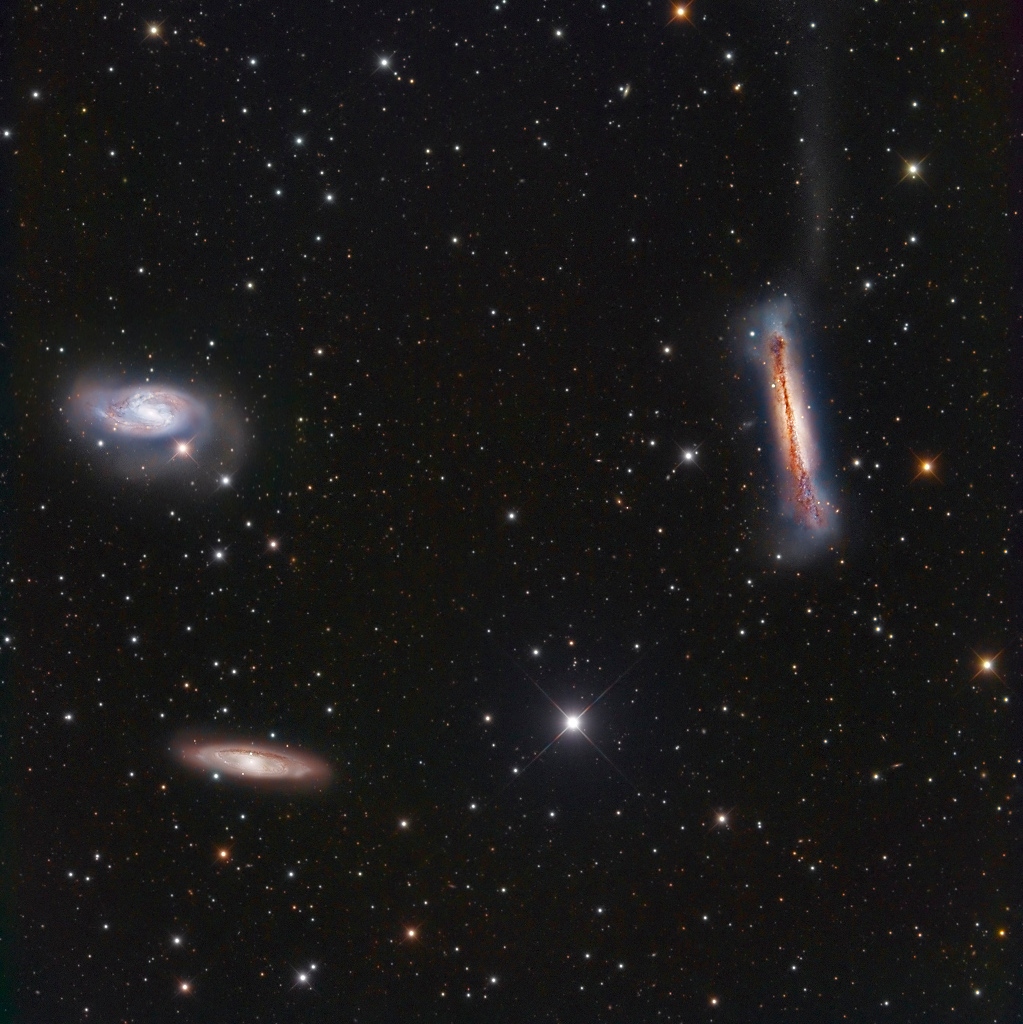
This popular group leaps into the early evening sky around the March equinox and the northern hemisphere spring. Famous as the Leo Triplet, the three magnificent galaxies found in the prominent constellation Leo gather here in one astronomical field of view. Crowd pleasers when imaged with even modest telescopes, they can be introduced individually as NGC 3628 (right), M66 (upper left), and M65 (bottom). All three are large spiral galaxies but tend to look dissimilar, because their galactic disks are tilted at different angles to our line of sight. NGC 3628, also known as the Hamburger Galaxy, is temptingly seen edge-on, with obscuring dust lanes cutting across its puffy galactic plane. The disks of M66 and M65 are both inclined enough to show off their spiral structure. Gravitational interactions between galaxies in the group have left telltale signs, including the tidal tails and warped, inflated disk of NGC 3628 and the drawn out spiral arms of M66. This gorgeous view of the region spans over 1 degree (two full moons) on the sky in a frame that covers over half a million light-years at the trio’s estimated distance of 30 million light-years. Of course the spiky foreground stars lie well within our own Milky Way. [via NASA] https://ift.tt/3c3yQ7N