Landing on Mars: Seven Minutes of Terror

Starting Thursday, there may be an amazing new robotic explorer on Mars. Or there may be a new pile of junk. It all likely depends on things going correctly in the minutes after the Mars 2020 mission arrives at its new home planet and attempts to deploy the Perseverance rover. Arguably the most sophisticated landing yet attempted on the red planet, consecutive precision events will involve a heat shield, a parachute, several rocket maneuvers, and the automatic operation of an unusual device called a Sky Crane. Thursday’s Seven Minutes of Terror echo the landing of the Curiosity rover on Mars in 2012, as depicted in the featured video. If successful, the car-sized Perseverance rover will rest on the surface of Mars, soon to begin exploring Jezero Crater to better determine the habitability of this seemingly barren world to life — past, present, and future. Although multiple media outlets may cover this event, one way to watch these landing events unfold is on the NASA channel live on the web. [via NASA] https://ift.tt/37ihstc
Long Stem Rosette Nebula

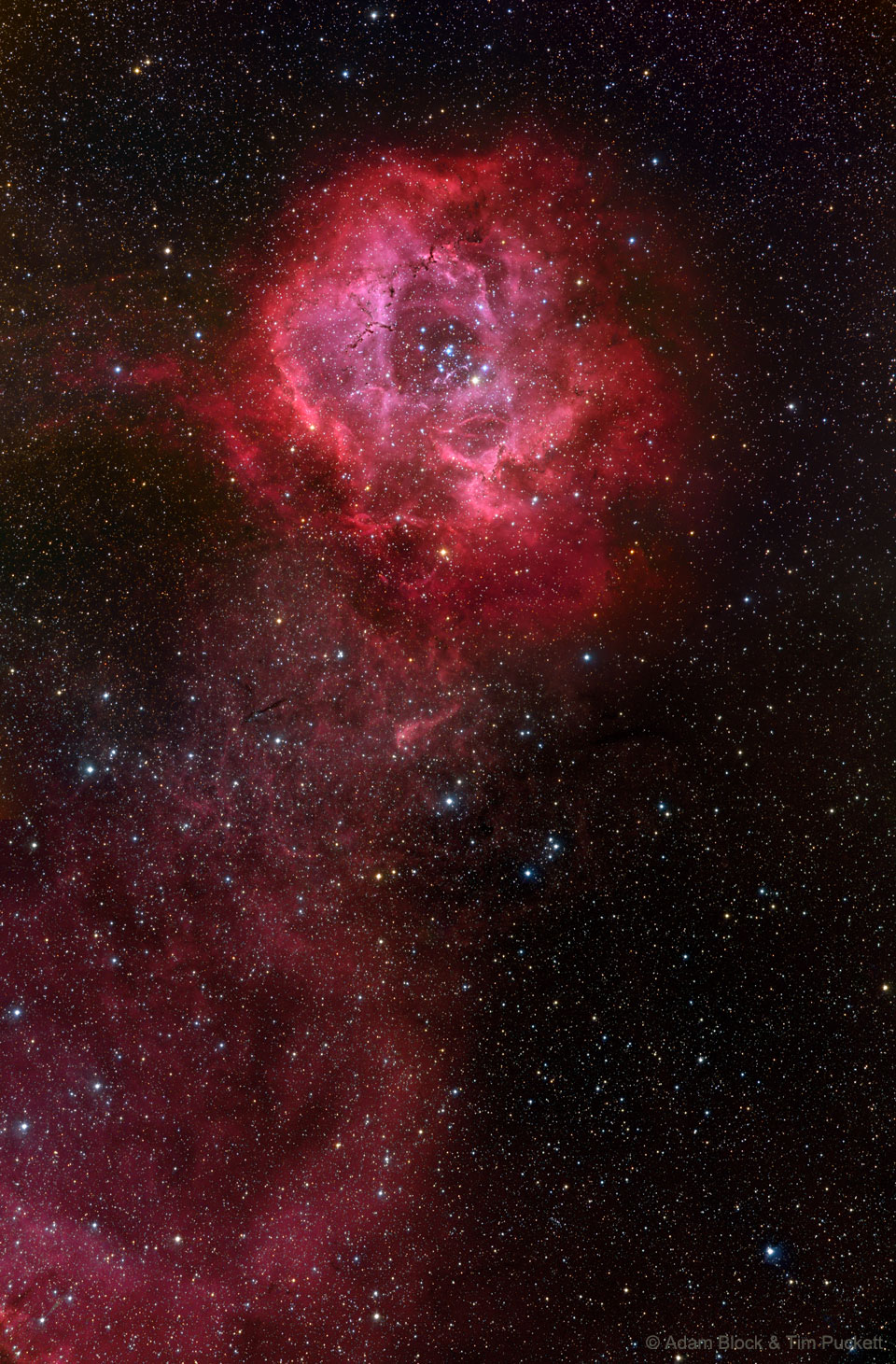
Would the Rosette Nebula by any other name look as sweet? The bland New General Catalog designation of NGC 2237 doesn’t appear to diminish the appearance of this flowery emission nebula, at the top of the image, atop a long stem of glowing hydrogen gas. Inside the nebula lies an open cluster of bright young stars designated NGC 2244. These stars formed about four million years ago from the nebular material and their stellar winds are clearing a hole in the nebula’s center, insulated by a layer of dust and hot gas. Ultraviolet light from the hot cluster stars causes the surrounding nebula to glow. The Rosette Nebula spans about 100 light-years across, lies about 5000 light-years away, and can be seen with a small telescope towards the constellation of the Unicorn (Monoceros). [via NASA] https://ift.tt/3b8k1im

Stereo Eros

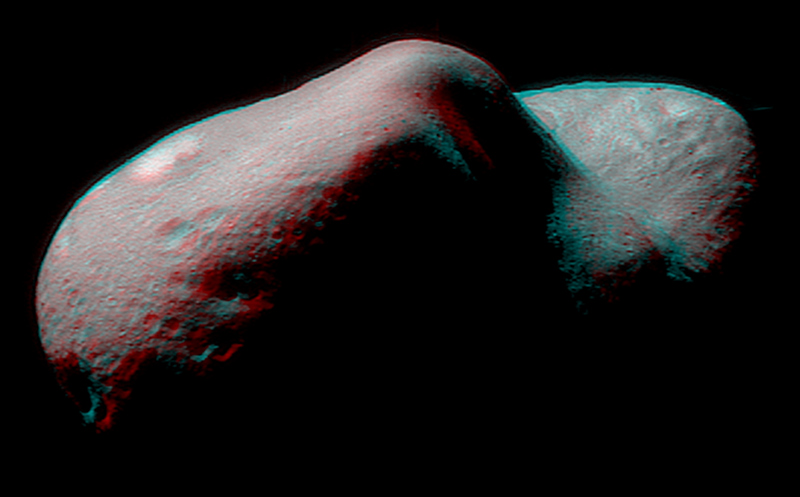
Get out your red/blue glasses and float next to asteroid 433 Eros. Orbiting the Sun once every 1.8 years, the near-Earth asteroid is named for the Greek god of love. Still, its shape more closely resembles a lumpy potato than a heart. Eros is a diminutive 40 x 14 x 14 kilometer world of undulating horizons, craters, boulders and valleys. Its unsettling scale and unromantic shape are emphasized in this mosaic of images from the NEAR Shoemaker spacecraft processed to yield a stereo anaglyphic view. Along with dramatic chiaroscuro, NEAR Shoemaker’s 3-D imaging provided important measurements of the asteroid’s landforms and structures, and clues to the origin of this city-sized chunk of Solar System. The smallest features visible here are about 30 meters across. Beginning on February 14, 2000, historic NEAR Shoemaker spent a year in orbit around Eros, the first spacecraft to orbit an asteroid. Twenty years ago, on February 12 2001, it landed on Eros, the first ever landing on an asteroid’s surface. NEAR Shoemaker’s final transmission from the surface of Eros was on February 28, 2001. [via NASA] https://ift.tt/3aVURUc

Spiral Galaxy NGC 1350

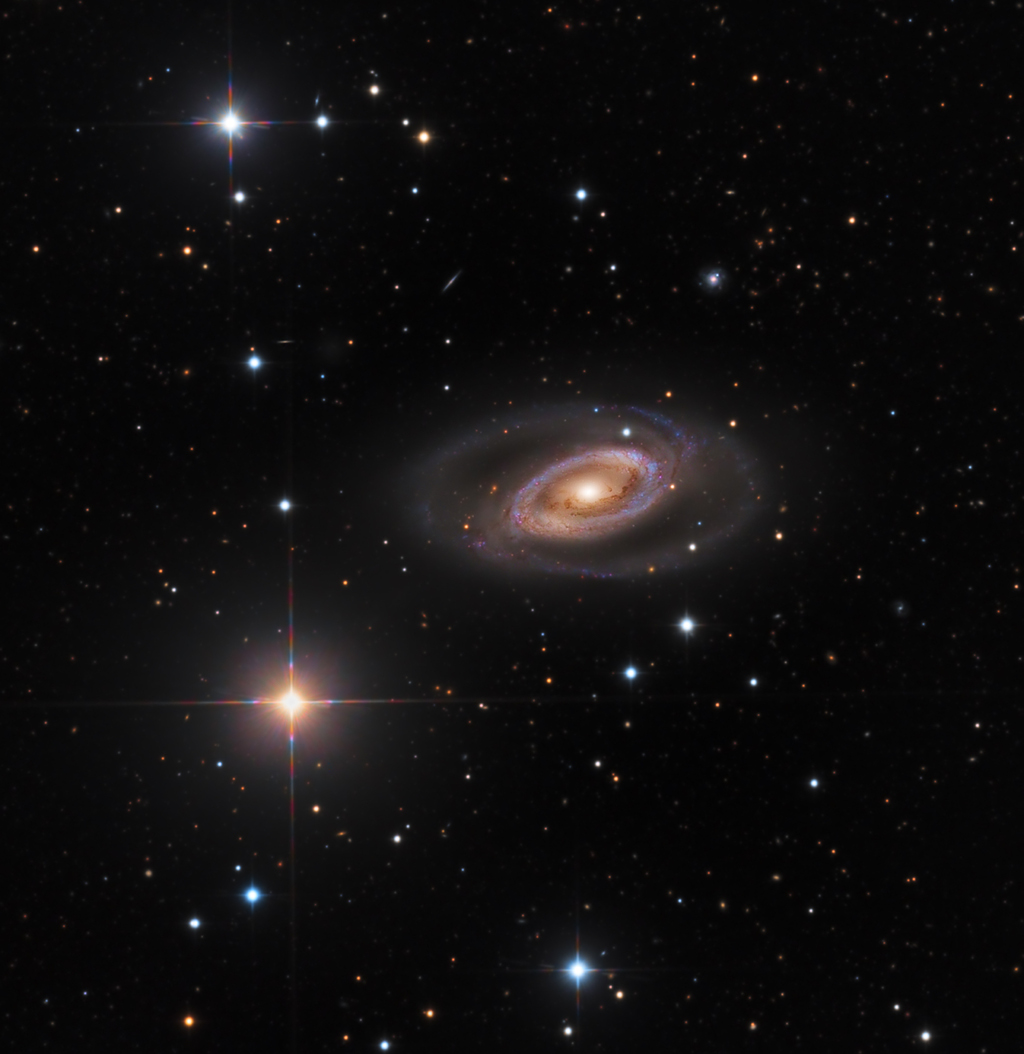
This gorgeous island universe lies about 85 million light-years distant in the southern constellation Fornax. Inhabited by young blue star clusters, the tightly wound spiral arms of NGC 1350 seem to join in a circle around the galaxy’s large, bright nucleus, giving it the appearance of a cosmic eye. In fact, NGC 1350 is about 130,000 light-years across. That makes it as large or slightly larger than the Milky Way. For earth-based astronomers, NGC 1350 is seen on the outskirts of the Fornax cluster of galaxies, but its estimated distance suggests that it is not itself a cluster member. Of course, the bright spiky stars in the foreground of this telescopic field of view are members of our own spiral Milky Way galaxy. [via NASA] https://ift.tt/2ZckwlY

Cygnus Mosaic 2010 2020

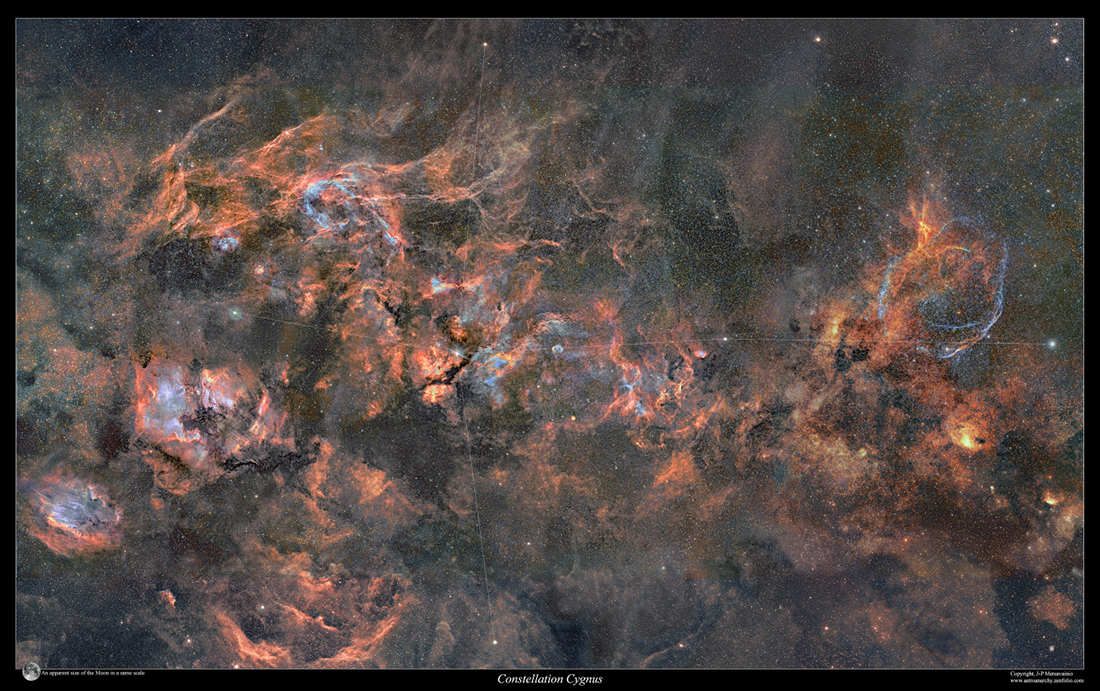
In brush strokes of interstellar dust and glowing gas, this beautiful skyscape is painted across the plane of our Milky Way Galaxy near the northern end of the Great Rift and the constellation Cygnus the Swan. Composed over a decade with 400 hours of image data, the broad mosaic spans an impressive 28×18 degrees across the sky. Alpha star of Cygnus, bright, hot, supergiant Deneb lies at the left. Crowded with stars and luminous gas clouds Cygnus is also home to the dark, obscuring Northern Coal Sack Nebula and the star forming emission regions NGC 7000, the North America Nebula and IC 5070, the Pelican Nebula, just left and a little below Deneb. Many other nebulae and star clusters are identifiable throughout the cosmic scene. Of course, Deneb itself is also known to northern hemisphere skygazers for its place in two asterisms, marking a vertex of the Summer Triangle, the top of the Northern Cross. [via NASA] https://ift.tt/3aSeiNM

Firing Lasers to Tame the Sky

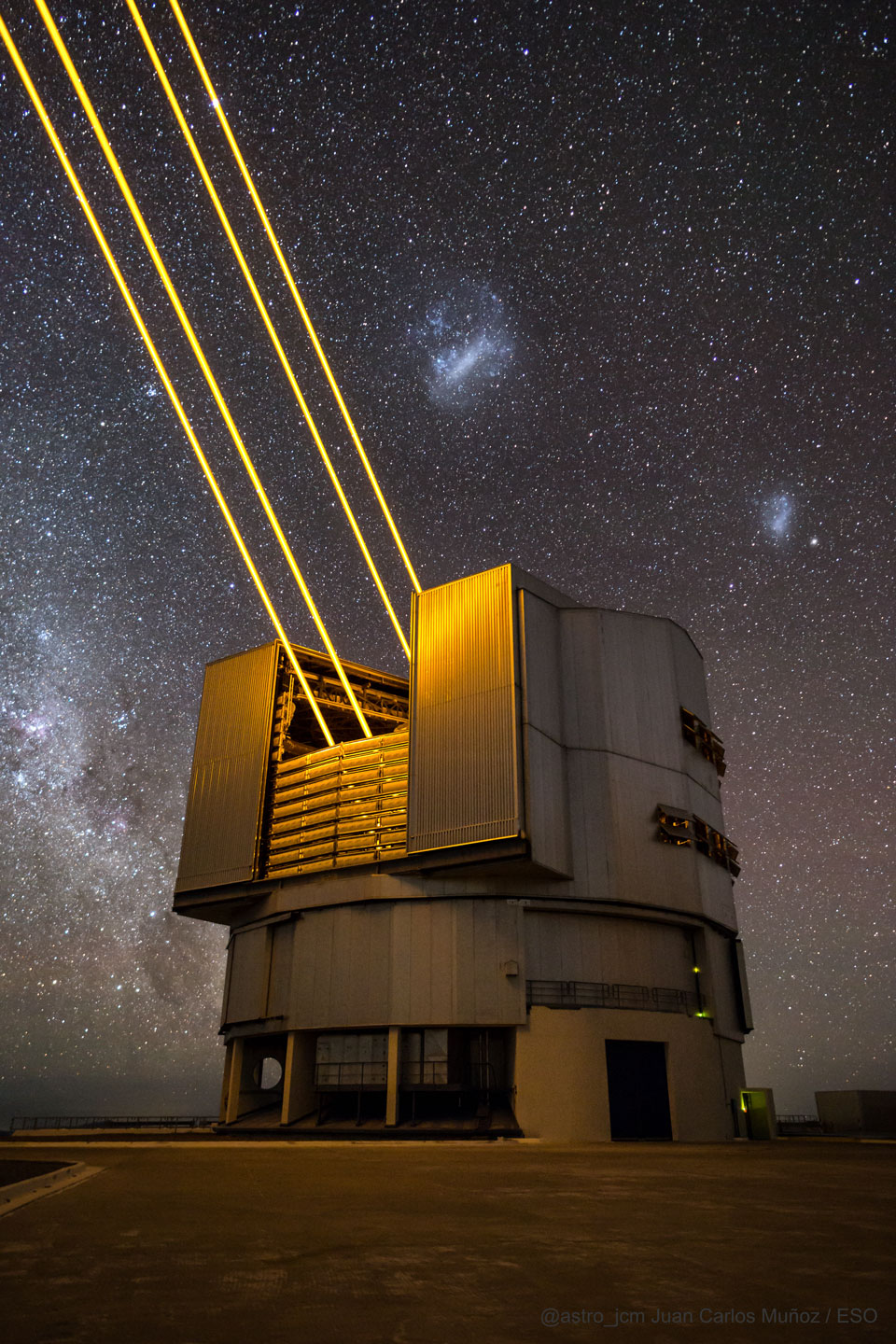
Why do stars twinkle? Our atmosphere is to blame as pockets of slightly off-temperature air, in constant motion, distort the light paths from distant astronomical objects. Atmospheric turbulence is a problem for astronomers because it blurs the images of the sources they want to study. The telescope featured in this image, located at ESO’s Paranal Observatory, is equipped with four lasers to combat this turbulence. The lasers are tuned to a color that excites atoms floating high in Earth’s atmosphere — sodium left by passing meteors. These glowing sodium spots act as artificial stars whose twinkling is immediately recorded and passed to a flexible mirror that deforms hundreds of times per second, counteracting atmospheric turbulence and resulting in crisper images. The de-twinkling of stars is a developing field of technology and allows, in some cases, Hubble-class images to be taken from the ground. This technique has also led to spin-off applications in human vision science, where it is used to obtain very sharp images of the retina. [via NASA] https://ift.tt/3q7JhM9

Flashes of the Crab Pulsar

It somehow survived an explosion that would surely have destroyed our Sun. Now it is spins 30 times a second and is famous for the its rapid flashes. It is the Crab Pulsar, the rotating neutron star remnant of the supernova that created the Crab Nebula. A careful eye can spot the pulsar flashes in the featured time-lapse video, just above the image center. The video was created by adding together images taken only when the pulsar was flashing, as well as co-added images from other relative times. The Crab Pulsar flashes may have been first noted by an unknown woman attending a public observing night at the University of Chicago in 1957 — but who was not believed. The progenitor supernova explosion was seen by many in the year 1054 AD. The expanding Crab Nebula remains a picturesque expanding gas cloud that glows across the electromagnetic spectrum. The pulsar is now thought to have survived the supernova explosion because it is composed of extremely-dense quantum-degenerate matter. [via NASA] https://ift.tt/3jxYEuB

WR32 and Interstellar Clouds in Carina

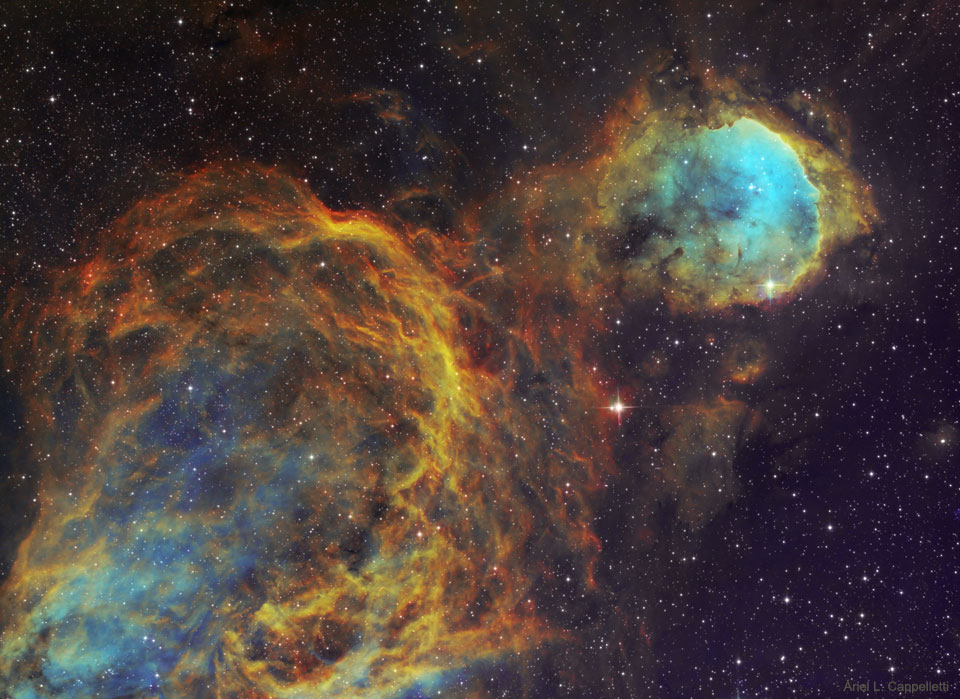
Stars can be like artists. With interstellar gas as a canvas, a massive and tumultuous Wolf-Rayet star has created the picturesque ruffled half-circular filaments called WR32, on the image left. Additionally, the winds and radiation from a small cluster of stars, NGC 3324, have sculpted a 35 light year cavity on the upper right, with its right side appearing as a recognizable face in profile. This region’s popular name is the Gabriela Mistral Nebula for the famous Chilean poet. Together, these interstellar clouds lie about 8,000 light-years away in the Great Carina Nebula, a complex stellar neighborhood harboring numerous clouds of gas and dust rich with imagination inspiring shapes. The featured telescopic view captures these nebulae’s characteristic emission from ionized sulfur, hydrogen, and oxygen atoms mapped to the red, green, and blue hues of the popular Hubble Palette. [via NASA] https://ift.tt/3rBSgWh

Blue Straggler Stars in Globular Cluster M53

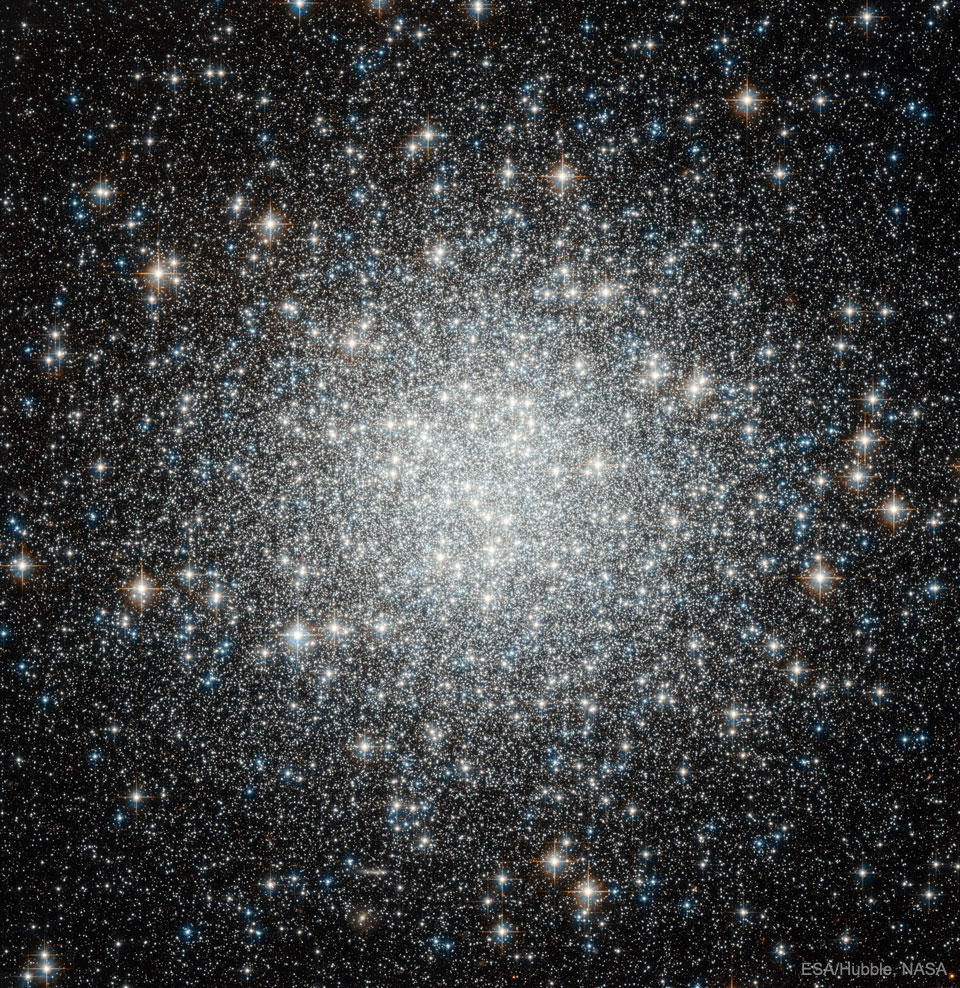
If our Sun were part of this star cluster, the night sky would glow like a jewel box of bright stars. This cluster, known as M53 and cataloged as NGC 5024, is one of about 250 globular clusters that survive in our Galaxy. Most of the stars in M53 are older and redder than our Sun, but some enigmatic stars appear to be bluer and younger. These young stars might contradict the hypothesis that all the stars in M53 formed at nearly the same time. These unusual stars are known as blue stragglers and are unusually common in M53. After much debate, blue stragglers are now thought to be stars rejuvenated by fresh matter falling in from a binary star companion. By analyzing pictures of globular clusters like the featured image taken by the Hubble Space Telescope, astronomers use the abundance of stars like blue stragglers to help determine the age of the globular cluster and hence a limit on the age of the universe. M53, visible with a binoculars towards the constellation of Bernice’s Hair (Coma Berenices), contains over 250,000 stars and is one of the furthest globulars from the center of our Galaxy. [via NASA] https://ift.tt/3oUfSDx

A Northern Winter Night

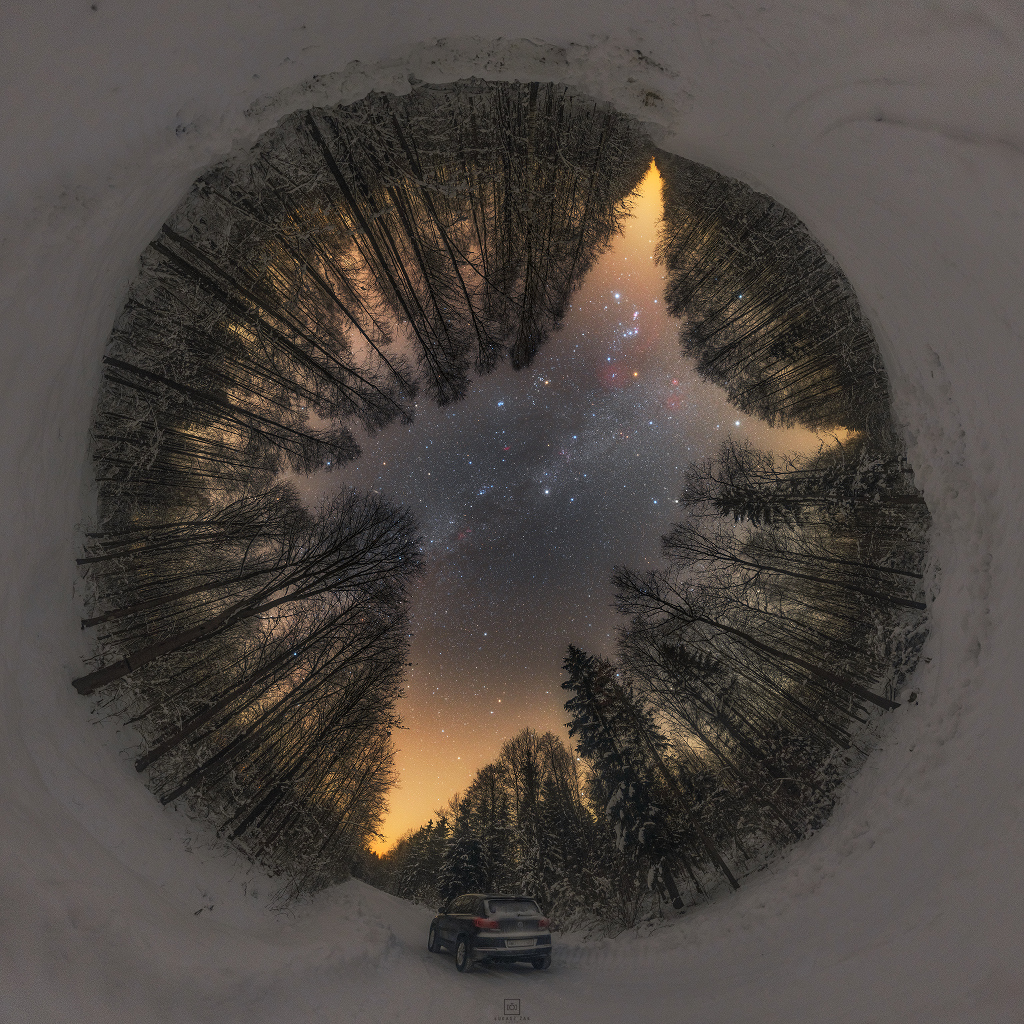
Snow blankets the ground in this serene forest and sky view. Assembled in a 360 degree panoramic projection, the mosaicked frames were captured at January’s end along a quiet country road near Siemiony, northeastern Poland, planet Earth. The night was cold and between trees reaching toward the sky shine the stars and nebulae of the northern winter Milky Way. Near zenith is bright star Capella, a mere 43 light-years above the tree tops. Alpha star of the constellation Auriga the Charioteer and part of the winter hexagon asterism, Capella is a well-studied double star system. Follow the Milky Way above and right of Capella and you might spot the familiar stars of Orion in the northern winter night. [via NASA] https://ift.tt/39Uzovz