The North America Nebula in Infrared

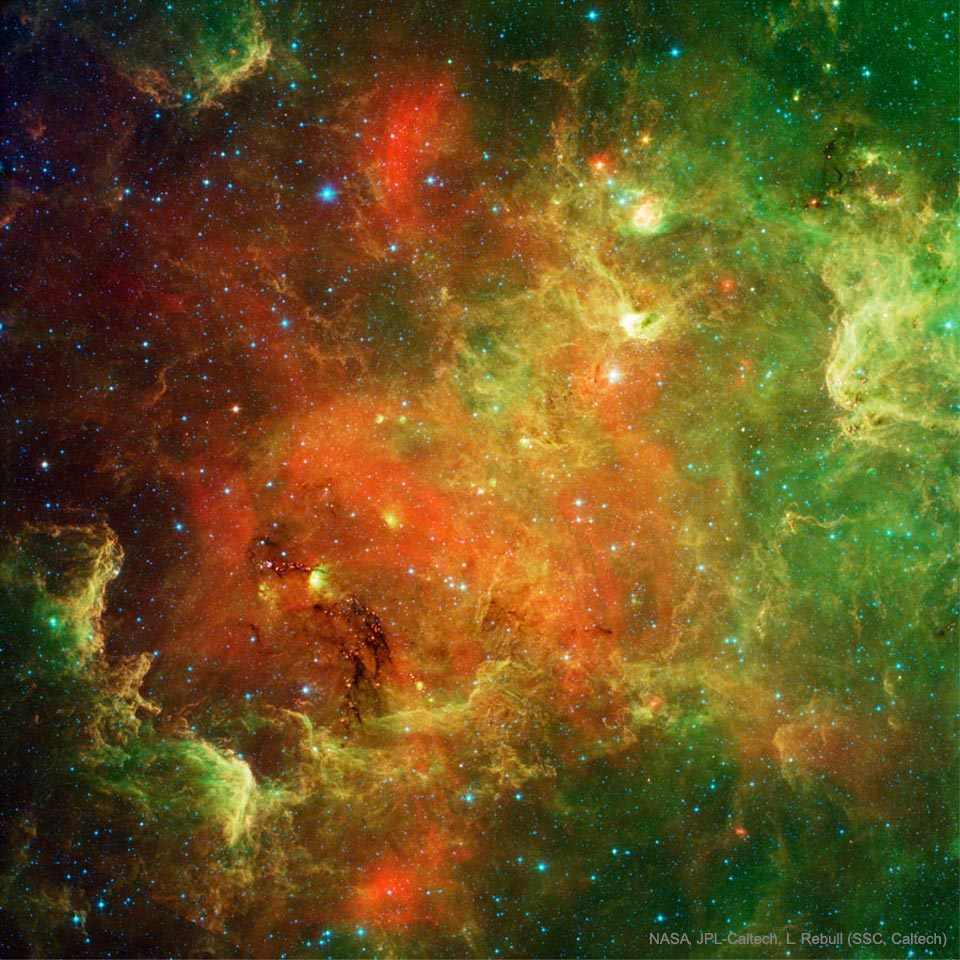
The North America Nebula can do what most North Americans cannot — form stars. Precisely where in the nebula these stars are forming has been mostly obscured by some of the nebula’s thick dust that is opaque to visible light. However, a view of the North America Nebula in infrared light by the orbiting Spitzer Space Telescope has peered through much of the dust and uncovered thousands of newly formed stars. Rolling your cursor over the above scientifically-colored infrared image will bring up a corresponding optical image of the same region for comparison. The infrared image neatly captures young stars in many stages of formation, from being imbedded in dense knots of gas and dust, to being surrounded by disks and emitted jets, to being clear of their birth cocoons. The North America Nebula (NGC 7000) spans about 50 light years and lies about 1,500 light years away toward the constellation of the Swan (Cygnus). Still, of all the stars known in the North America Nebula, which massive stars emit the energetic light that gives the ionized red glow is still debated. [via NASA] https://ift.tt/2Gy6Tox
Chandrayaan 2 Launch

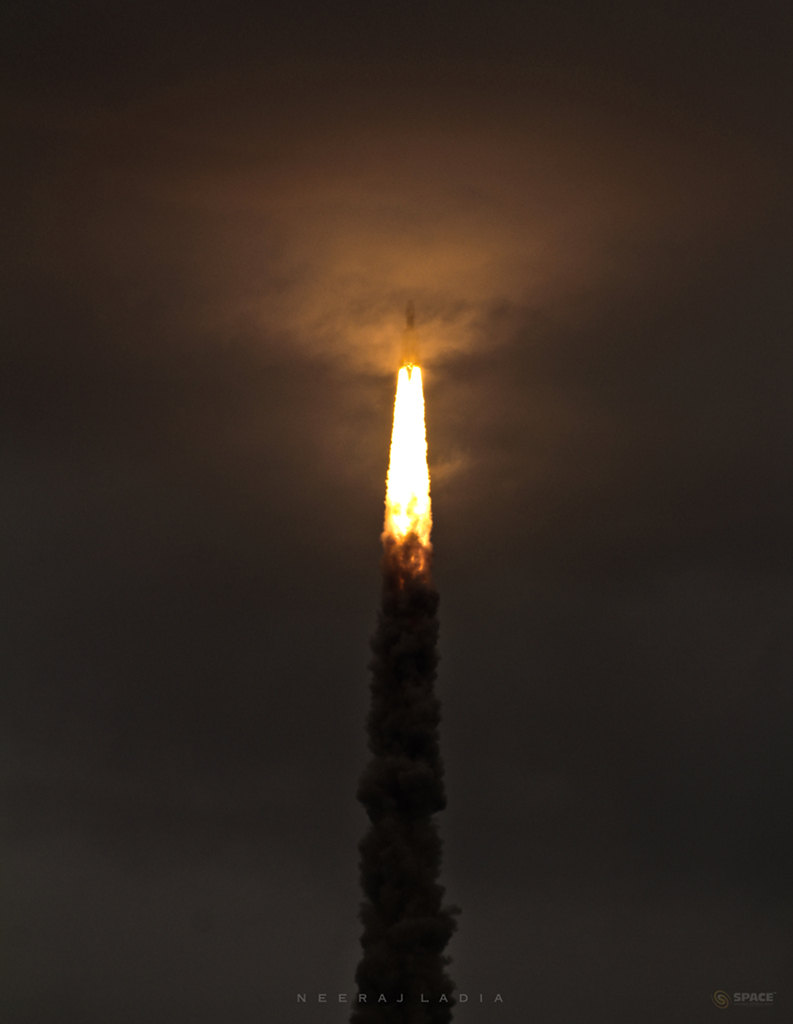
On July 22nd this GSLV (Geosynchronous Satellite Launch Vehicle) MkIII rocket vanished from sight into a cloud bank an instant after this dramatic snapshot was taken. Launched from India’s Satish Dhawan Space Centre it carried the Chandrayaan 2 mission spacecraft into Earth orbit. The spacecraft’s orbiter, lander, and rover are destined for the Moon, though. In the coming weeks it will perform a series of orbit raising maneuvers, eventually transferring to lunar orbit in early September. Carrying the solar-powered rover, the lander is scheduled to separate and attempt its autonomous soft landing at high latitudes near the lunar south pole. It should arrive on the lunar nearside near local sunrise and the start of a two Earth-week long lunar day on September 7. [via NASA] https://ift.tt/2Grz8VN

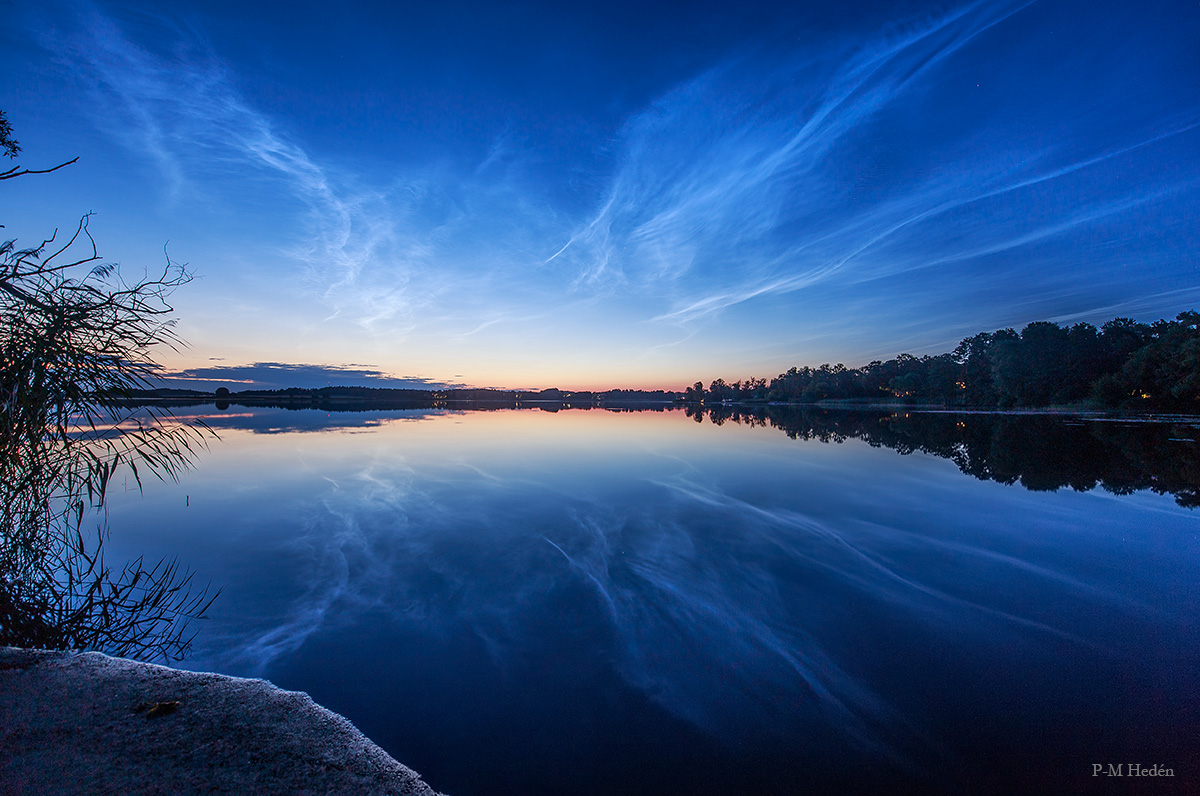
The Veins of Heaven

Transfusing sunlight through a still dark sky, this exceptional display of noctilucent clouds was captured earlier this month, reflected in the calm waters of Vallentuna Lake near Stockholm, Sweden. From the edge of space, about 80 kilometers above Earth’s surface, the icy clouds themselves still reflect sunlight even though the Sun is below the horizon as seen from the ground. Usually spotted at high latitudes in summer months the night shining clouds have made a strong showing so far during the short northern summer nights. Also known as polar mesopheric clouds they are understood to form as water vapor driven into the cold upper atmosphere condenses on the fine dust particles supplied by disintegrating meteors or volcanic ash. NASA’s AIM mission provides daily projections of noctilucent clouds as seen from space. [via NASA] https://ift.tt/2K2znHP

Zodiacal Road

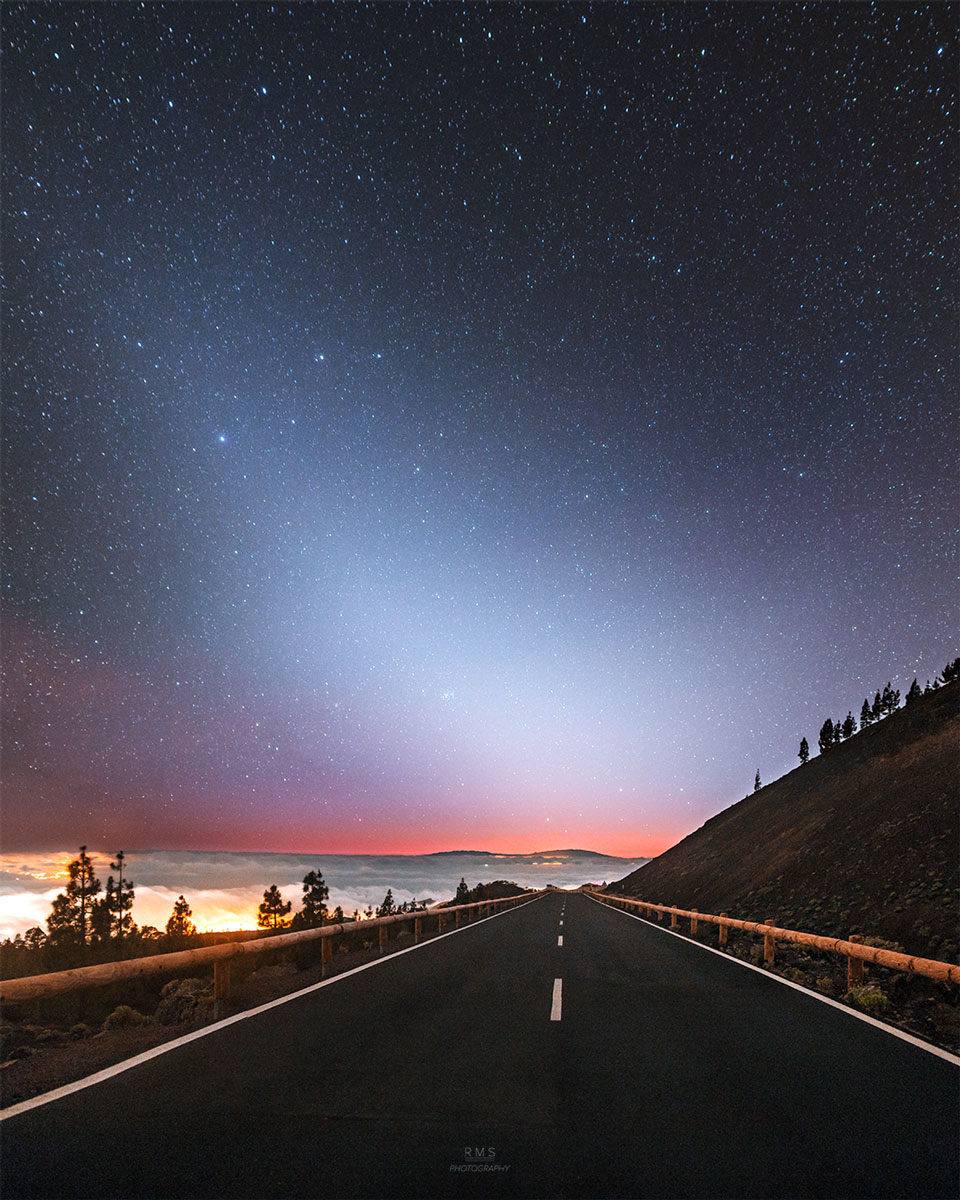
What’s that strange light down the road? Dust orbiting the Sun. At certain times of the year, a band of sun-reflecting dust from the inner Solar System appears prominently just after sunset — or just before sunrise — and is called zodiacal light. Although the origin of this dust is still being researched, a leading hypothesis holds that zodiacal dust originates mostly from faint Jupiter-family comets and slowly spirals into the Sun. Recent analysis of dust emitted by Comet 67P, visited by ESA’s robotic Rosetta spacecraft, bolster this hypothesis. Pictured when climbing a road up to Teide National Park in the Canary Islands of Spain, a bright triangle of zodiacal light appeared in the distance soon after sunset. Captured on June 21, the scene includes bright Regulus, alpha star of Leo, standing above center toward the left. The Beehive Star Cluster (M44) can be spotted below center, closer to the horizon and also immersed in the zodiacal glow. [via NASA] https://ift.tt/2YoF8sv

M82: Galaxy with a Supergalactic Wind

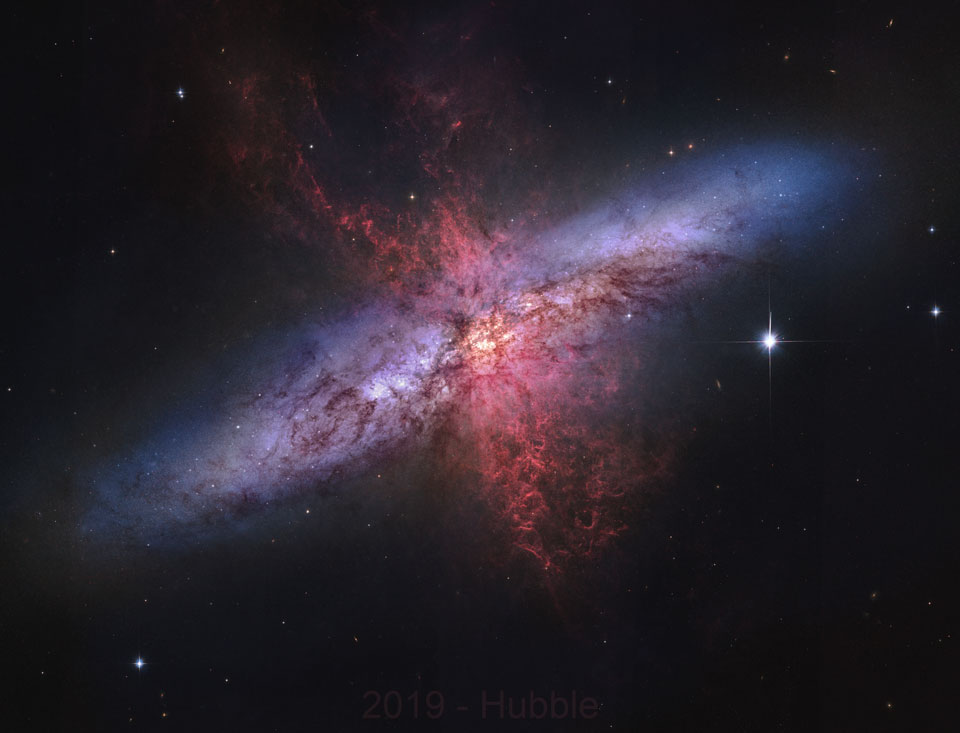
Why is the Cigar Galaxy billowing red smoke? M82, as this starburst galaxy is also known, was stirred up by a recent pass near large spiral galaxy M81. This doesn’t fully explain the source of the red-glowing outwardly expanding gas and dust, however. Evidence indicates that this gas and dust is being driven out by the combined emerging particle winds of many stars, together creating a galactic superwind. The dust particles are thought to originate in M82’s interstellar medium and are actually similar in size to particles in cigar smoke. The featured photographic mosaic highlights a specific color of red light strongly emitted by ionized hydrogen gas, showing detailed filaments of this gas and dust. The filaments extend for over 10,000 light years. The 12-million light-year distant Cigar Galaxy is the brightest galaxy in the sky in infrared light, and can be seen in visible light with a small telescope towards the constellation of the Great Bear (Ursa Major). [via NASA] https://ift.tt/2OdU3BX

HDR: Earths Circular Shadow on the Moon

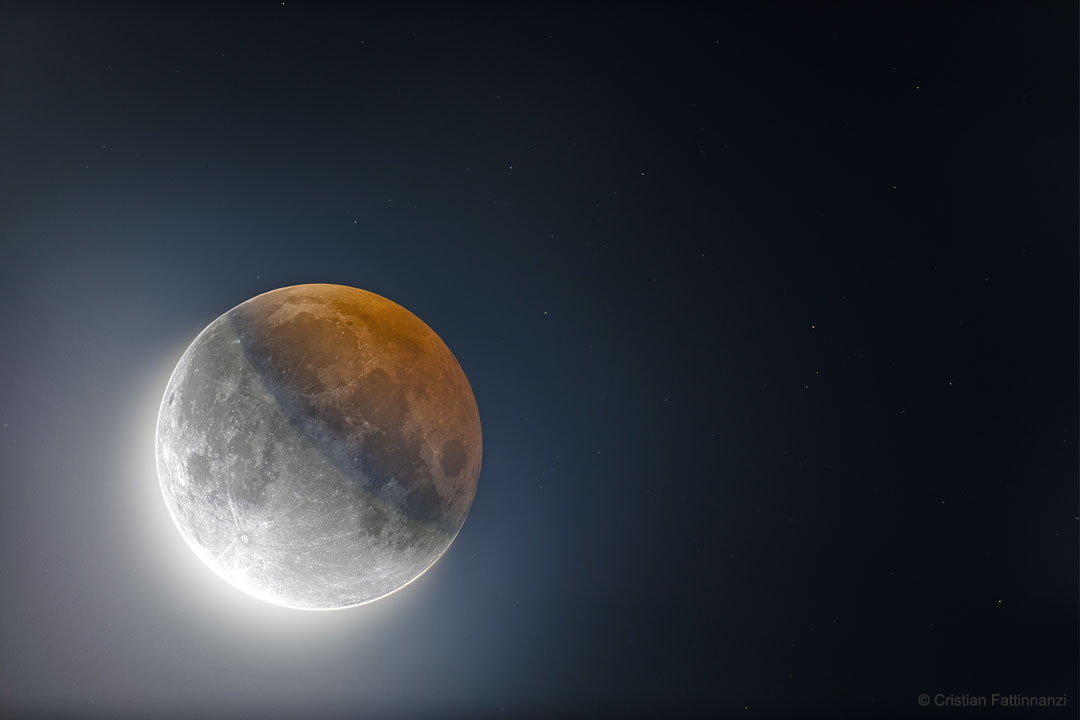
What could create such a large circular shadow on the Moon? The Earth. Last week’s full Moon — the Buck Moon — was so full that it fell almost exactly in a line with the Sun and the Earth. When that happens the Earth casts its shadow onto the Moon. The circularity of the Earth’s shadow on the Moon was commented on by Aristotle and so has been noticed since at least the 4th century BC. What’s new is humanity’s ability to record this shadow with such high dynamic range (HDR). The featured HDR composite of last week’s partial lunar eclipse combines 15 images and include an exposure as short as 1/400th of a second — so as not to overexpose the brightest part — and an exposure that lasted five seconds — to bring up the dimmest part. This dimmest part — inside Earth’s umbra — is not completely dark because some light is refracted through the Earth’s atmosphere onto the Moon. A total lunar eclipse will occur next in 2021 May. [via NASA] https://ift.tt/2JTAABc

Moonquakes Surprisingly Common

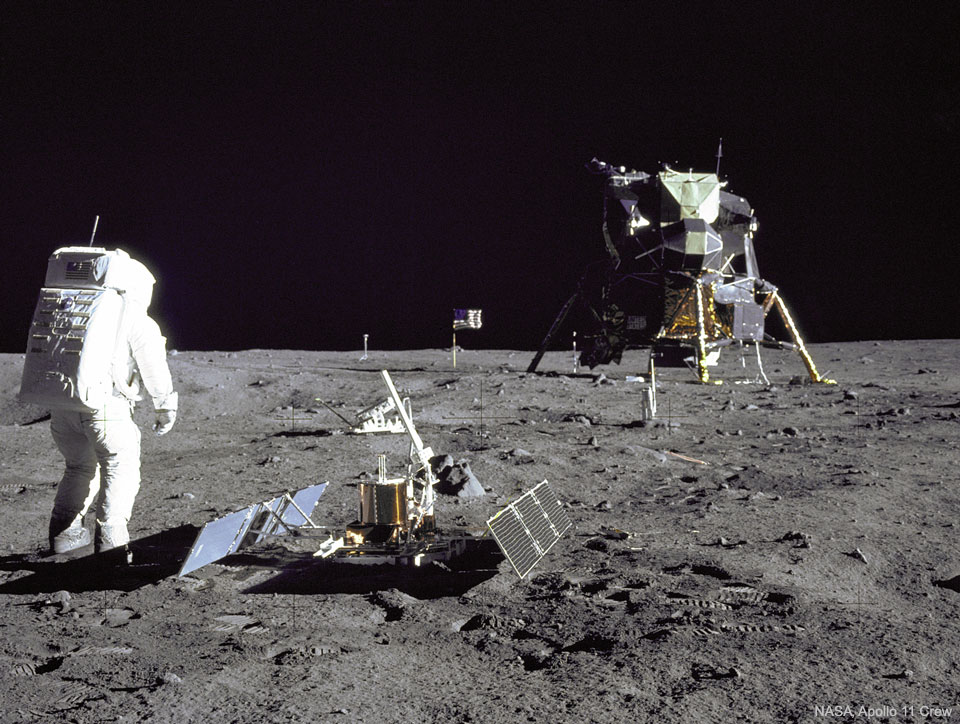
Why are there so many moonquakes? Analyses of seismometers left on the moon by the Apollo moon landings reveals a surprising number of moonquakes occurring within 100 kilometers of the surface. In fact, 62 moonquakes were detected in data recorded between 1972 and 1977. Many of these moonquakes are not only strong enough to move furniture in a lunar apartment, but the stiff rock of the moon continues to vibrate for many minutes, significantly longer than the softer rock earthquakes on Earth. The cause of the moonquakes remains unknown, but a leading hypothesis is the collapse of underground faults. Regardless of the source, future moon dwellings need to be built to withstand the frequent shakings. Pictured here 50 years ago today, Apollo 11 astronaut Buzz Aldrin stands beside a recently deployed lunar seismometer, looking back toward the lunar landing module. [via NASA] https://ift.tt/2O7yD9s

Apollo 11 Landing Panorama

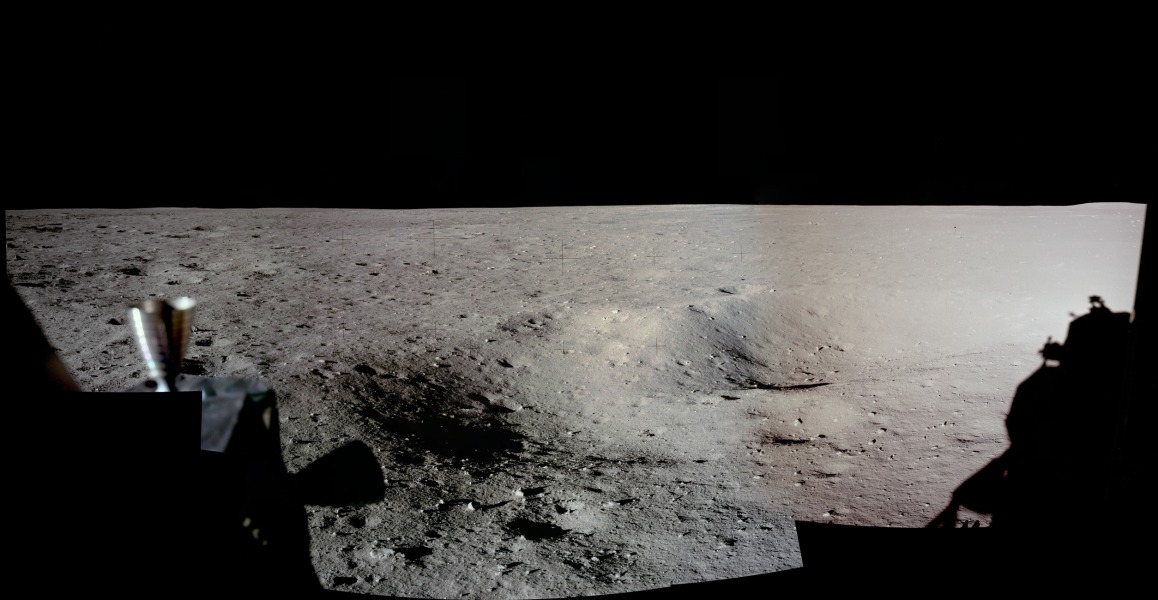
Have you seen a panorama from another world lately? Assembled from high-resolution scans of the original film frames, this one sweeps across the magnificent desolation of the Apollo 11 landing site on the Moon’s Sea of Tranquility. The images were taken by Neil Armstrong looking out his window of the Eagle Lunar Module fifty years ago, shortly after the July 20, 1969 landing. The frame at the far left (AS11-37-5449) is the first picture taken by a person on another world. Toward the south, thruster nozzles can be seen in the foreground on the left, while at the right, the shadow of the Eagle is visible to the west. For scale, the large, shallow crater on the right has a diameter of about 12 meters. Frames taken from the Lunar Module windows about an hour and a half after landing, before walking on the lunar surface, were intended to initially document the landing site in case an early departure was necessary. [via NASA] https://ift.tt/2XYjZBe

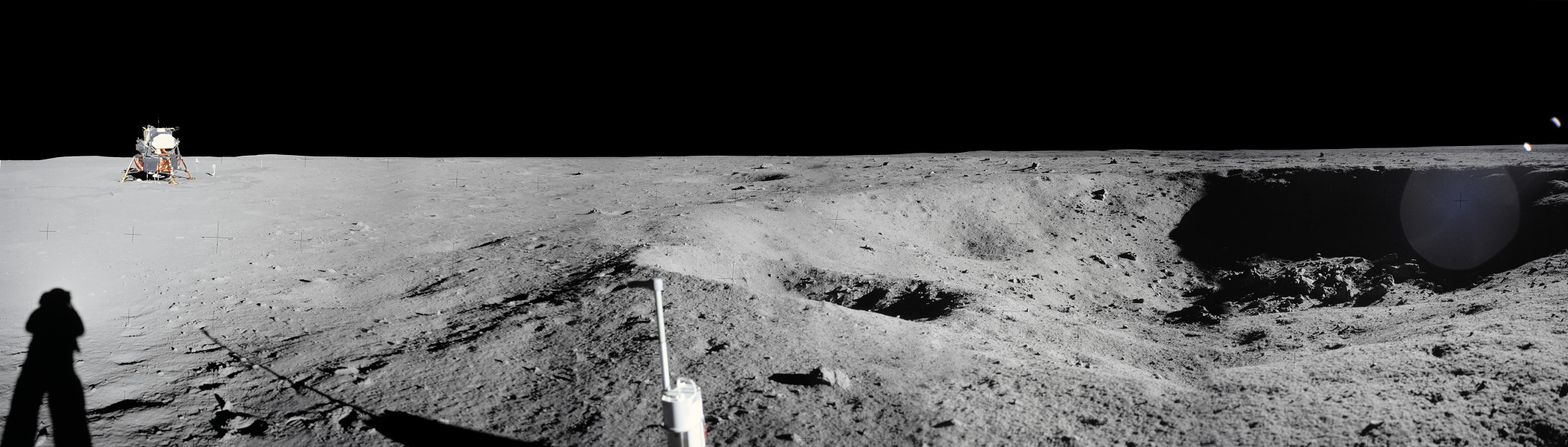
On July 20, 1969 the Apollo 11 lunar module Eagle safely touched down on the Moon. It landed near the southwestern corner of the Moon’s Mare Tranquillitatis at a landing site dubbed Tranquility Base. This panoramic view of Tranquility Base was constructed from the historic photos taken from the lunar surface. On the far left astronaut Neil Armstrong casts a long shadow with Sun is at his back and the Eagle resting about 60 meters away (AS11-40-5961). He stands near the rim of 30 meter-diameter Little West crater seen here to the right (AS11-40-5954). Also visible in the foreground is the top of the camera intended for taking stereo close-ups of the lunar surface. [via NASA] https://ift.tt/2O2nyqk