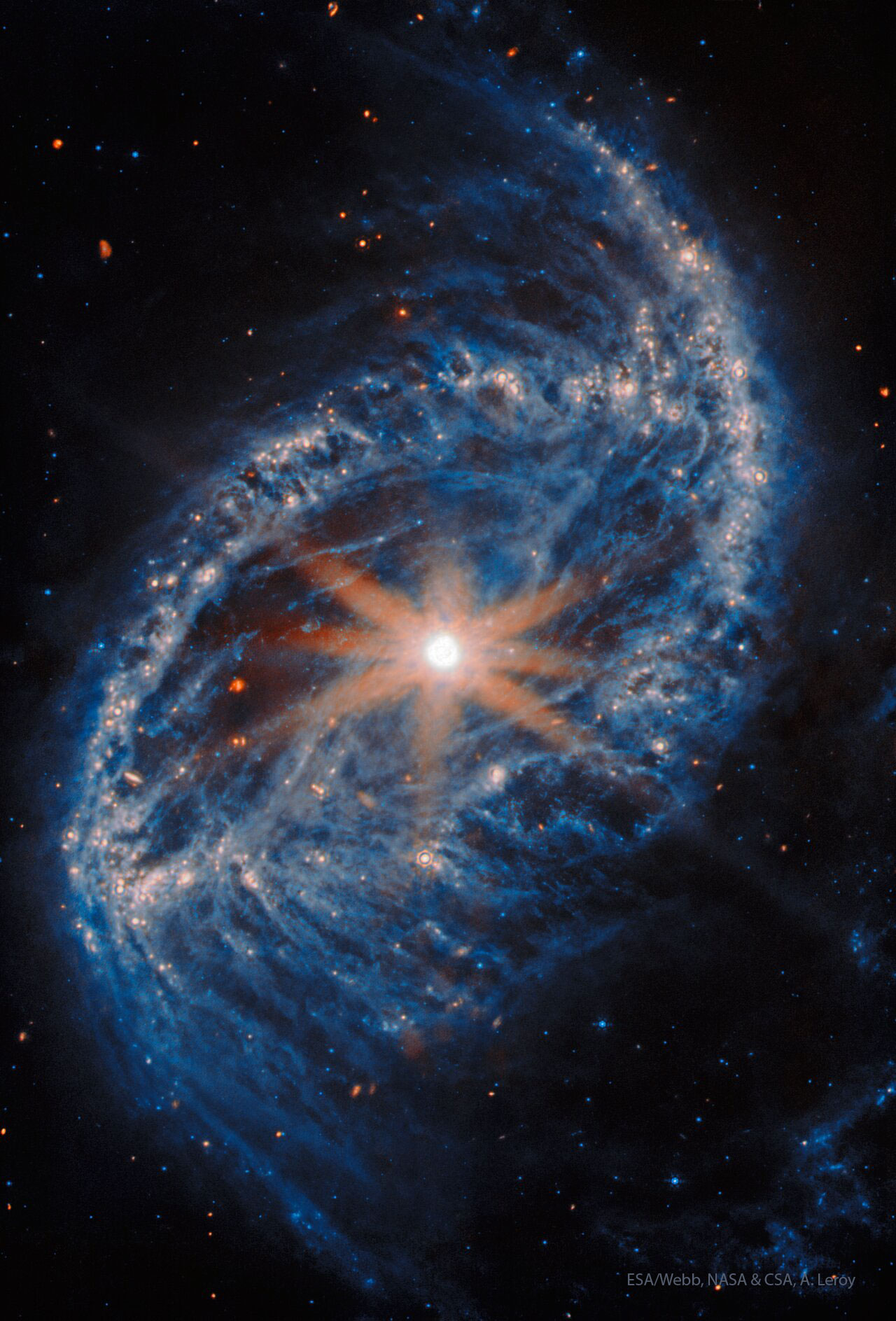
What’s happening in the center of spiral galaxy NGC 2566? First, the eight rays that appear to be coming out of the center in the featuredinfraredimage are not real — they are diffractionspikes caused by the mechanical structure of the Webb space telescope itself. The center of NGC 2566 is bright but not considered unusual, which means that it likely contains a supermassive black hole, although currently not very active. At only 76 million light years away, the light we see from NGC 2566 today left when dinosaurs roamed the Earth. The picturesque galaxy is close enough so that Earthly telescopes, including Webb and Hubble, can resolve the turbulent clouds of gas and dust where stars can form and so allows study of stellar evolution. NGC 2566, similar in size to our Milky Way Galaxy, is notable for its bright central bar and its prominent outer spiral arms. [via NASA] https://ift.tt/SI0EqhL
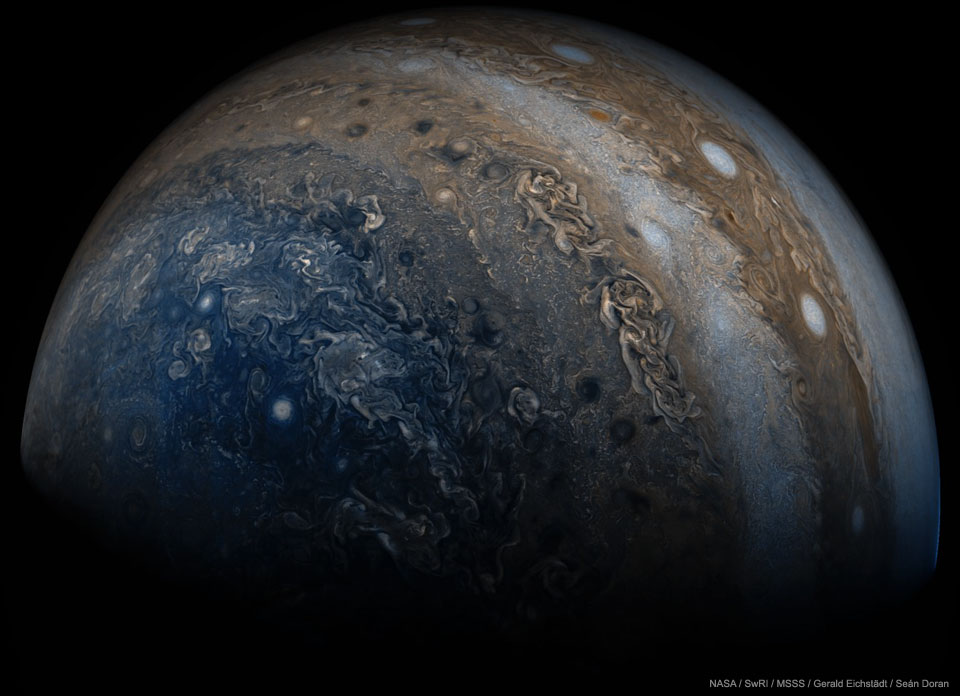
Jupiter is stranger than we knew. NASA’s Juno spacecraft has now completed over 70 swoops past Jupiter as it moves around its highly elliptical orbit. Pictured from 2017, Jupiter is seen from below where, surprisingly, the horizontal bands that cover most of the planet disappear into swirls and complex patterns. A line of white oval clouds is visible nearer to the equator. Impressive results from Juno show that Jupiter’s weather phenomena can extend deep below its cloud tops, that Jupiter’s center has a core that is unexpectedly large and soft, and that Jupiter’s magnetic field varies greatly with location. Although Juno is scheduled to keep orbiting Jupiter further into 2025, at some time the robotic spacecraft will be maneuvered to plunge into the giant planet. [via NASA] https://ift.tt/Qp8PjDF

Deimos Before Sunrise

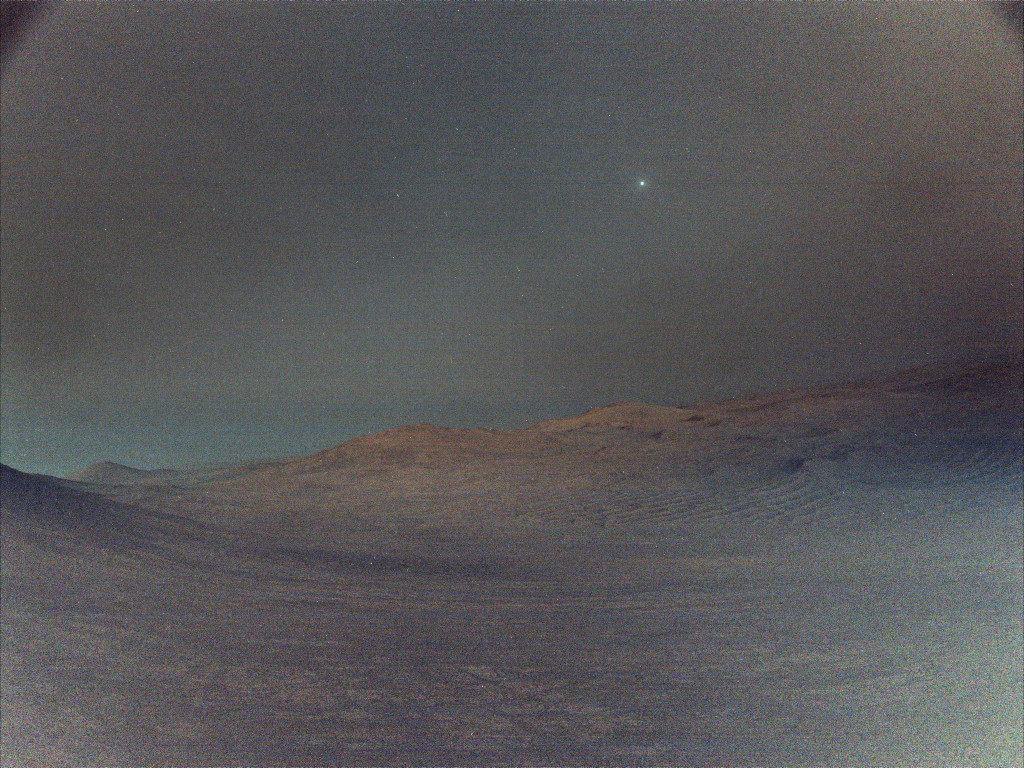
Deimos takes 30 hours and 18 minutes to complete one orbit around the Red Planet. That’s a little more than one Martian day or sol which is about 24 hours and 40 minutes long, so Deimos drifts westward across the Martian sky. About 15 kilometers across at its widest, the smallest of Mars’ two moons is bright though. In fact Deimos is the brightest celestial object in this Martian skyscape captured before sunrise by Perseverance on March 1, the 1,433rd sol of the Mars rover’s mission. The image is a composed of 16 exposures recorded by one of the rover’s navigation cameras. The individual exposures were combined into a single image for an enhanced low light view. Regulus and Algeiba, bright stars in the constellation Leo, are also visible in the dark Martian predawn sky. [via NASA] https://ift.tt/j8EkvZ9

NGC6366 vs 47 Ophiuchi

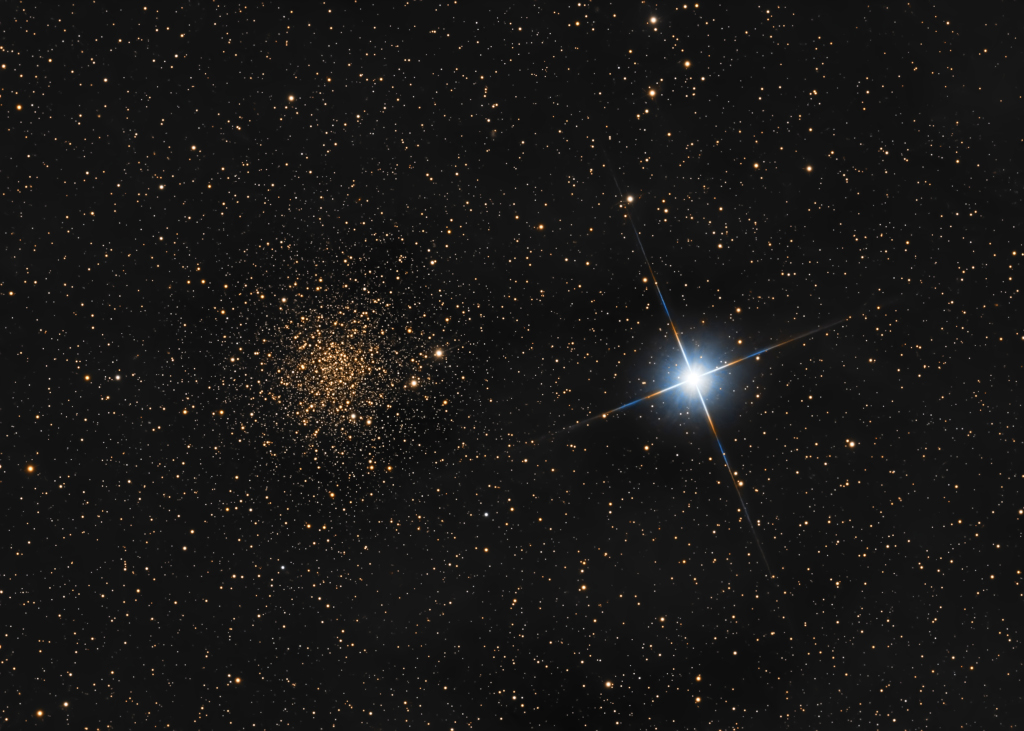
Most globular star clusters roam the halo of our Milky Way galaxy, but globular cluster NGC 6366 lies close to the galactic plane. About 12,000 light-years away toward the constellation Ophiuchus, the cluster’s starlight is dimmed and reddened by the Milky Way’s interstellar dust when viewed from planet Earth. As a result, the stars of NGC 6366 look almost golden in this telescopic scene, especially when seen next to relatively bright, bluish, and nearby star 47 Ophiuchi. Compared to the hundred thousand stars or so gravitationally bound in distant NGC 6366, 47 Oph itself is a binary star system a mere 100 light-years away. Still, the co-orbiting stars of 47 Oph are too close together to be individually distinguished in the image. [via NASA] https://ift.tt/74gzWaR

Curly Spiral Galaxy M63

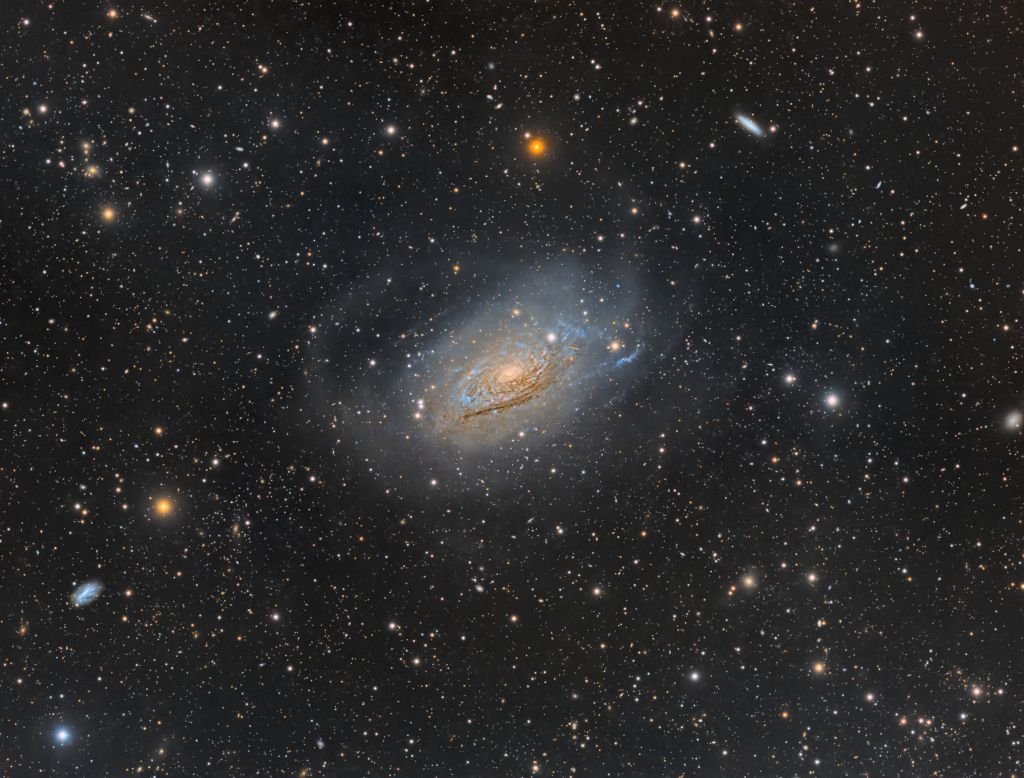
A bright spiral galaxy of the northern sky, Messier 63 is nearby, about 30 million light-years distant toward the loyal constellation Canes Venatici. Also cataloged as NGC 5055, the majestic island universe is nearly 100,000 light-years across, about the size of our own Milky Way. Its bright core and majestic spiral arms lend the galaxy its popular name, The Sunflower Galaxy. This exceptionally deep exposure also follows faint loops and curling star streams far into the galaxy’s halo. Extending nearly 180,000 light-years from the galactic center, the star streams are likely remnants of tidally disrupted satellites of M63. Other satellite galaxies of M63 can be spotted in the remarkable wide-field image, including dwarf galaxies, which could contribute to M63’s star streams in the next few billion years. [via NASA] https://ift.tt/kPzRZTb

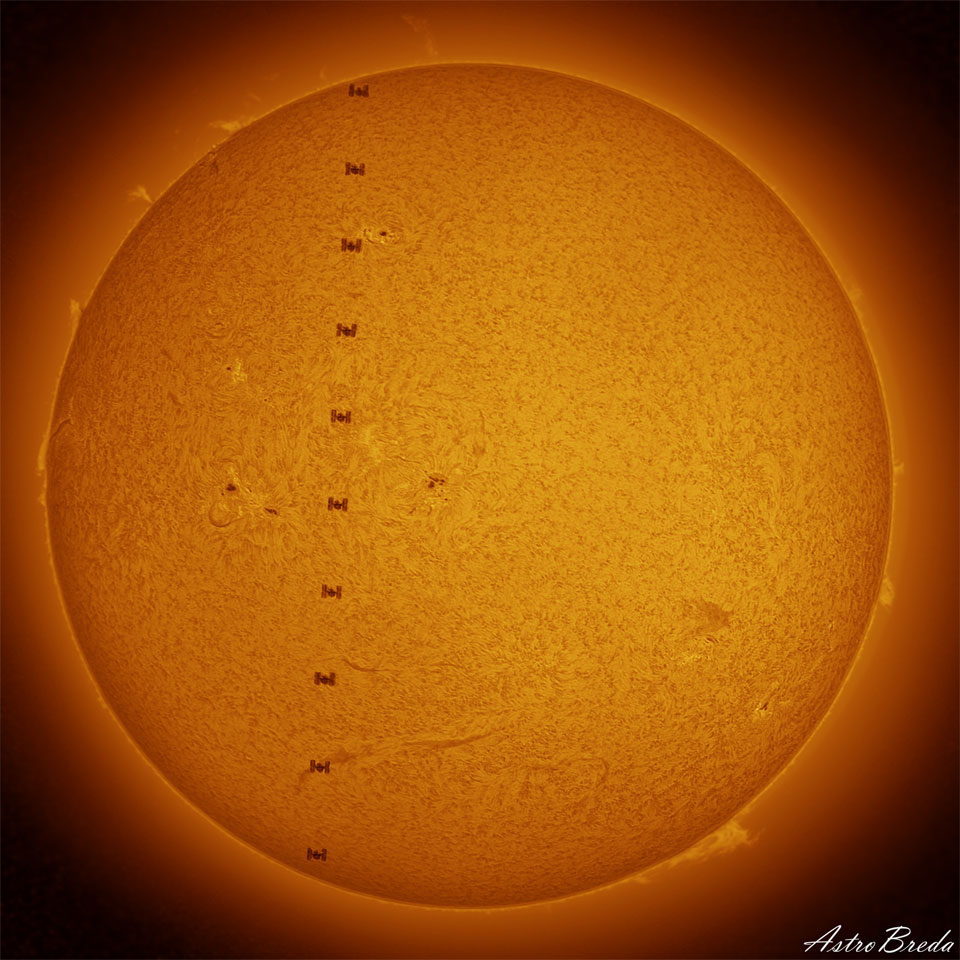
Typically, the International Space Station is visible only at night. Slowly drifting across the night sky as it orbits the Earth, the International Space Station (ISS) can be seen as a bright spot about once a month from many locations. The ISS is then visible only just after sunset or just before sunrise because it shines by reflected sunlight — once the ISS enters the Earth’s shadow, it will drop out of sight. The only occasion when the ISS is visible during the day is when it passes right in front of the Sun. Then, it passes so quickly that only cameras taking short exposures can visually freeze the ISS’s silhouette onto the background Sun. The featured picture did exactly that — it is actually a series of images taken a month ago from Sant Feliu de Buixalleu, Spain with perfect timing. This image series was later combined with a separate image highlighting the texture of the active Sun which included several Sun’s prominences around the edge. [via NASA] https://ift.tt/Ilim39X

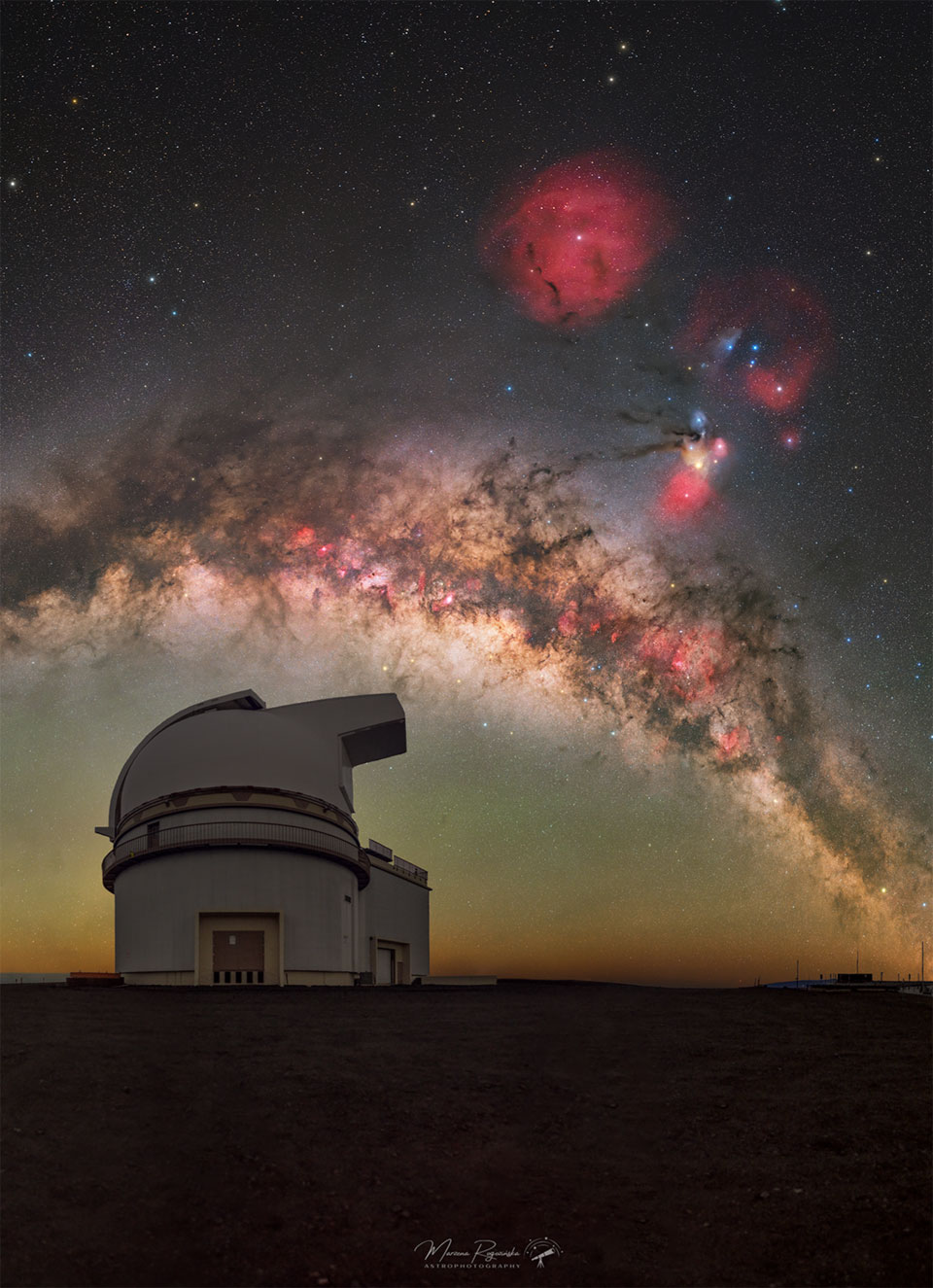
Have you ever seen the band of our Milky Way Galaxy? In a clear sky from a dark location at the right time, a faint band of light becomes visible across the sky. Soon after your eyes become dark adapted, you might spot the band for the first time. It may then become obvious. Then spectacular. One reason for your growing astonishment might be the realization that this fuzzy swath, the Milky Way, contains billions of stars. Visible in the featured image, high above in the night sky, the band of the Milky Way Galaxy arcs. Also visible are the colorful clouds of Rho Ophiuchi on the right, and the red and circular Zeta Ophiuchi nebula near the top center. Taken in late February from Maunakea, Hawaii, USA, the foreground telescope is the University of Hawaii’s 2.2-Meter Telescope. Fortunately, you don’t need to be near the top of a Hawaiian volcano to see the Milky Way. [via NASA] https://ift.tt/HnMERbk

Ares 3 Landing Site: The Martian Revisited

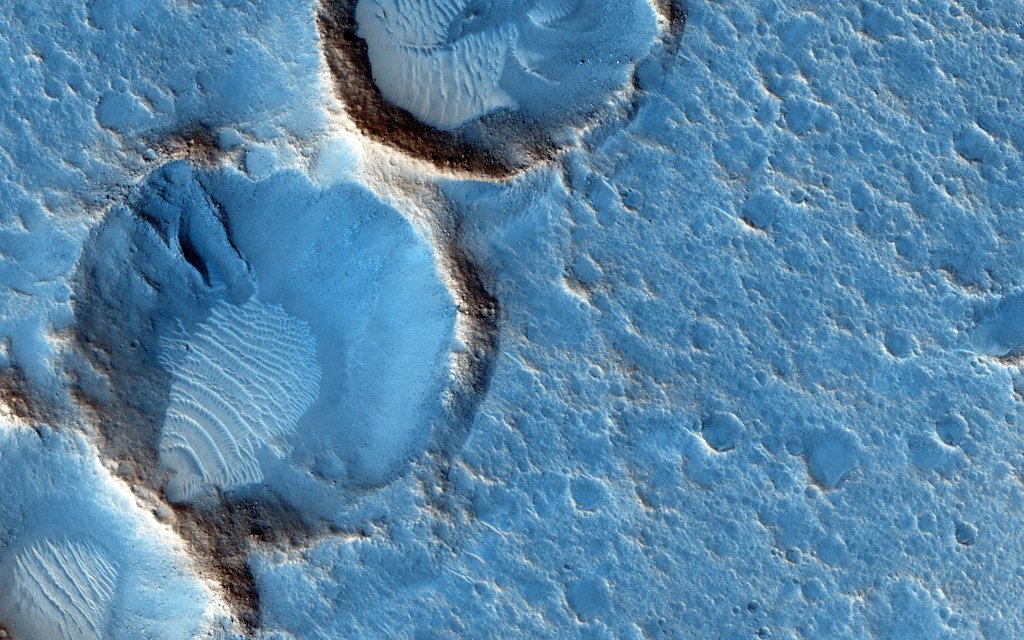
This close-up from the Mars Reconnaissance Orbiter’s HiRISE camera shows weathered craters and windblown deposits in southern Acidalia Planitia. A striking shade of blue in standard HiRISE image colors, to the human eye the area would probably look grey or a little reddish. But human eyes have not gazed across this terrain, unless you count the eyes of NASA astronauts in the sci-fi novel, «The Martian,» by Andy Weir. The novel chronicles the adventures of Mark Watney, an astronaut stranded at the fictional Mars mission Ares 3 landing site, corresponding to the coordinates of this cropped HiRISE frame. For scale, Watney’s 6-meter-diameter habitat at the site would be about 1/10th the diameter of the large crater. Of course, the Ares 3 landing coordinates are only about 800 kilometers north of the (real life) Carl Sagan Memorial Station, the 1997 Pathfinder landing site. [via NASA] https://ift.tt/HaFt7QZ

Messier 101

Big, beautiful spiral galaxy M101 is one of the last entries in Charles Messier’s famous catalog, but definitely not one of the least. About 170,000 light-years across, this galaxy is enormous, almost twice the size of our own Milky Way. M101 was also one of the original spiral nebulae observed by Lord Rosse’s large 19th century telescope, the Leviathan of Parsontown. Assembled from 51 exposures recorded by the Hubble Space Telescope in the 20th and 21st centuries, with additional data from ground based telescopes, this mosaic spans about 40,000 light-years across the central region of M101 in one of the highest definition spiral galaxy portraits ever released from Hubble. The sharp image shows stunning features of the galaxy’s face-on disk of stars and dust along with background galaxies, some visible right through M101 itself. Also known as the Pinwheel Galaxy, M101 lies within the boundaries of the northern constellation Ursa Major, about 25 million light-years away. [via NASA] https://ift.tt/x0cCoQn

A Plutonian Landscape

This shadowy landscape of majestic mountains and icy plains stretches toward the horizon on a small, distant world. It was captured from a range of about 18,000 kilometers when New Horizons looked back toward Pluto, 15 minutes after the spacecraft’s closest approach on July 14, 2015. The dramatic, low-angle, near-twilight scene follows rugged mountains formally known as Norgay Montes from foreground left, and Hillary Montes along the horizon, giving way to smooth Sputnik Planum at right. Layers of Pluto’s tenuous atmosphere are also revealed in the backlit view. With a strangely familiar appearance, the frigid terrain likely includes ices of nitrogen and carbon monoxide with water-ice mountains rising up to 3,500 meters (11,000 feet). That’s comparable in height to the majestic mountains of planet Earth. The Plutonian landscape is 380 kilometers (230 miles) across. [via NASA] https://ift.tt/c6VHST2