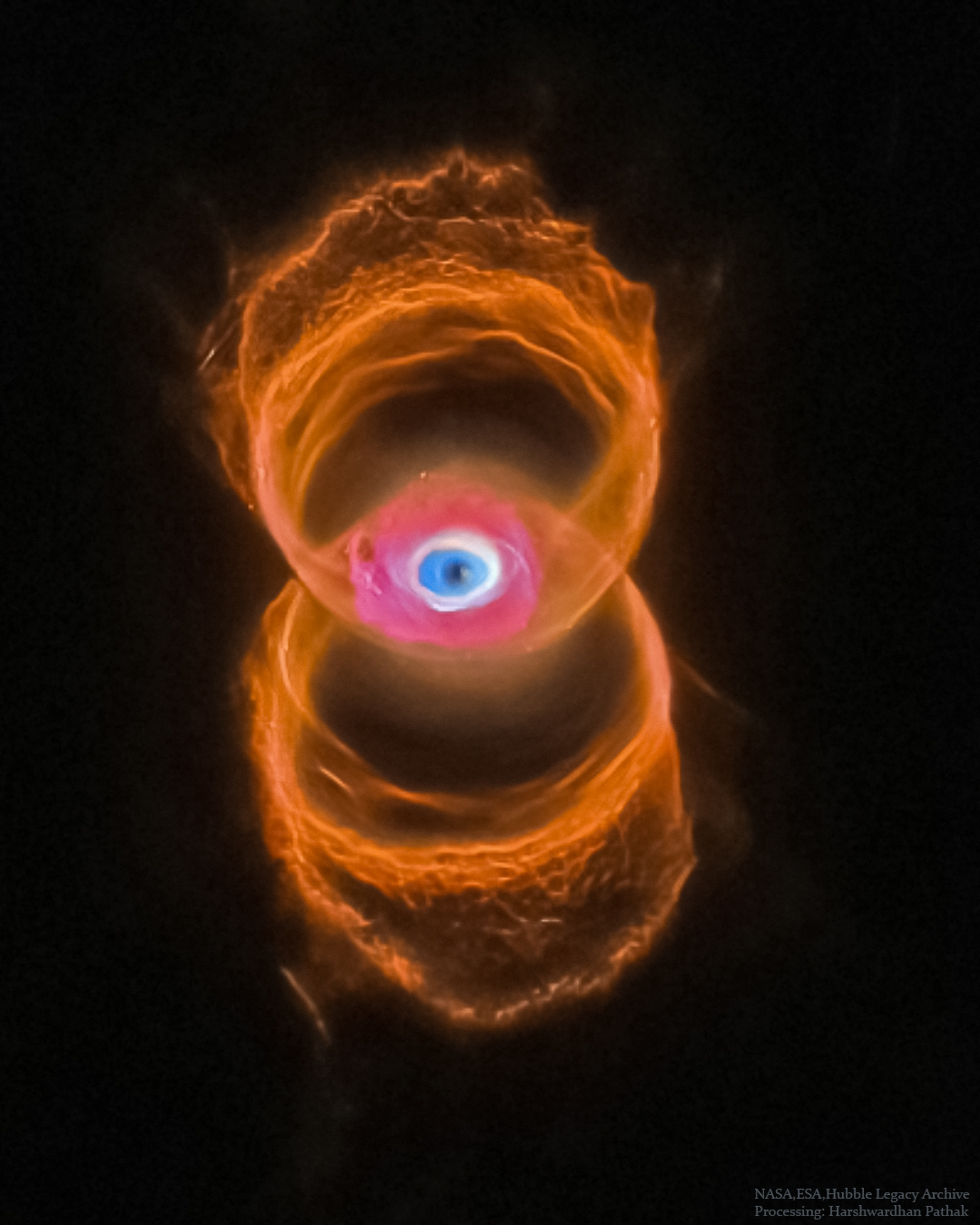
Do you see the hourglass shape — or does it see you? If you can picture it, the rings of MyCn 18 trace the outline of an hourglass — although one with an unusual eye in its center. Either way, the sands of time are running out for the central star of this hourglass-shaped planetary nebula. With its nuclear fuel exhausted, this brief, spectacular, closing phase of a Sun-like star’s life occurs as its outer layers are ejected – its core becoming a cooling, fading white dwarf. In 1995, astronomers used the Hubble Space Telescope (HST) to make a series of images of planetary nebulae, including the one featured here. Pictured, delicate rings of colorful glowing gas (nitrogen-red, hydrogen-green, and oxygen-blue) outline the tenuous walls of the hourglass. The unprecedented sharpness of the Hubble images has revealed surprising details of the nebula ejection process that are helping to resolve the outstanding mysteries of the complex shapes and symmetries of planetary nebulas like MyCn 18. [via NASA] https://ift.tt/vsrfTG3
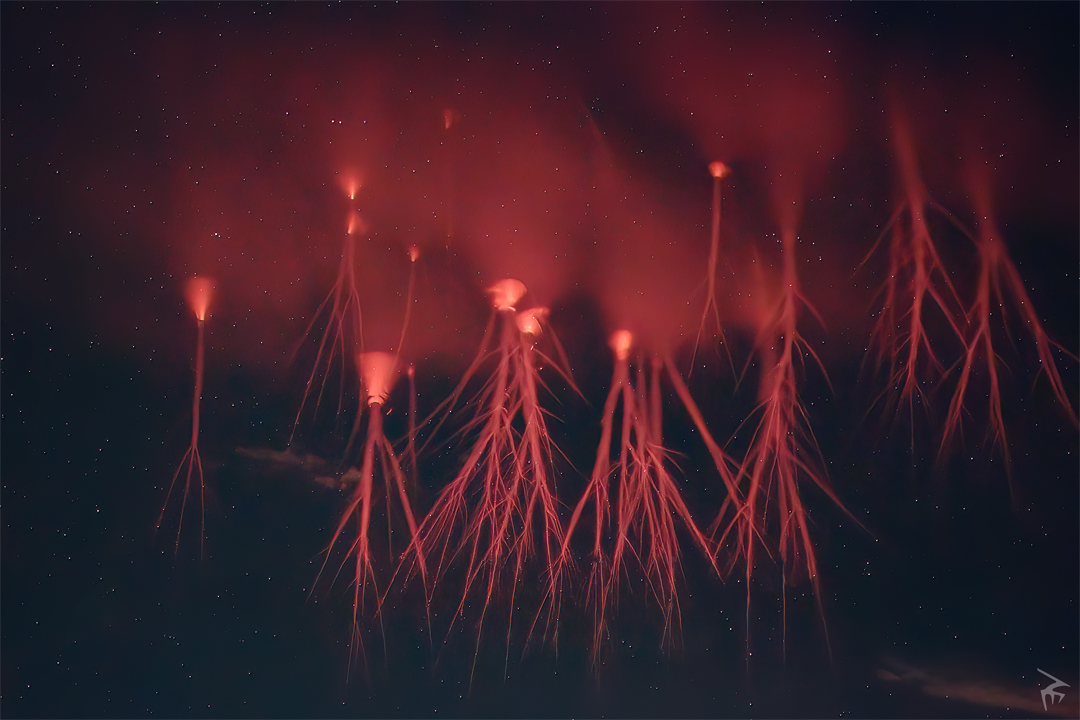
Sometimes lightning occurs out near space. One such lightning type is red sprite lightning, which has only been photographed and studied on Earth over the past 25 years. The origins of all types of lightning remain topics for research, and scientists are still trying to figure out why red sprite lightning occurs at all. Research has shown that following a powerful positive cloud-to-ground lightning strike, red sprites may start as 100-meter balls of ionized air that shoot down from about 80-km high at 10 percent the speed of light. They are quickly followed by a group of upward streaking ionized balls. Featured here is an extraordinarily high-resolution image of a group of red sprites. This image is a single frame lasting only 1/25th of a second from a video taken above Castelnaud Castle in Dordogne, France, about three weeks ago. The sprites quickly vanished — no sprites were visible even on the very next video frame. [via NASA] https://ift.tt/mQnAzW7

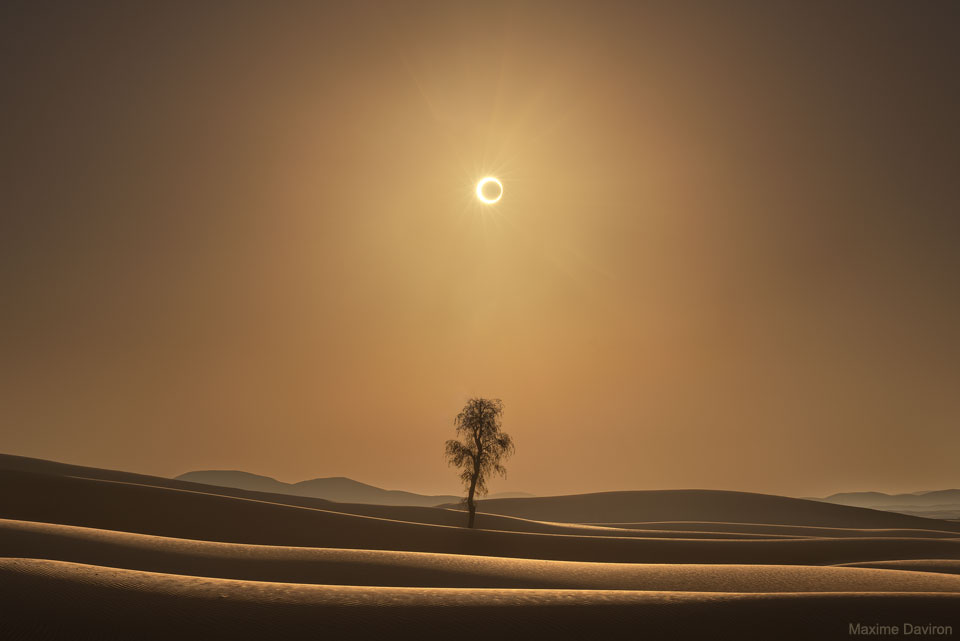
A good place to see a ring-of-fire eclipse, it seemed, would be from a desert. In a desert, there should be relatively few obscuring clouds and trees. Therefore late December of 2019, a group of photographers traveled to the United Arab Emirates and Rub al-Khali, the largest continuous sand desert in world, to capture clear images of an unusual eclipse that would be passing over. A ring-of-fire eclipse is an annular eclipse that occurs when the Moon is far enough away on its elliptical orbit around the Earth so that it appears too small, angularly, to cover the entire Sun. At the maximum of an annular eclipse, the edges of the Sun can be seen all around the edges of the Moon, so that the Moon appears to be a dark spot that covers most — but not all — of the Sun. This particular eclipse, they knew, would peak soon after sunrise. After seeking out such a dry and barren place, it turned out that some of the most interesting eclipse images actually included a tree in the foreground, because, in addition to the sand dunes, the tree gave the surreal background a contrasting sense of normalcy, scale, and texture. On Saturday, October 14, a new ring of fire will be visible through clear skies from a thin swath crossing both North and South America. [via NASA] https://ift.tt/OwloZ90

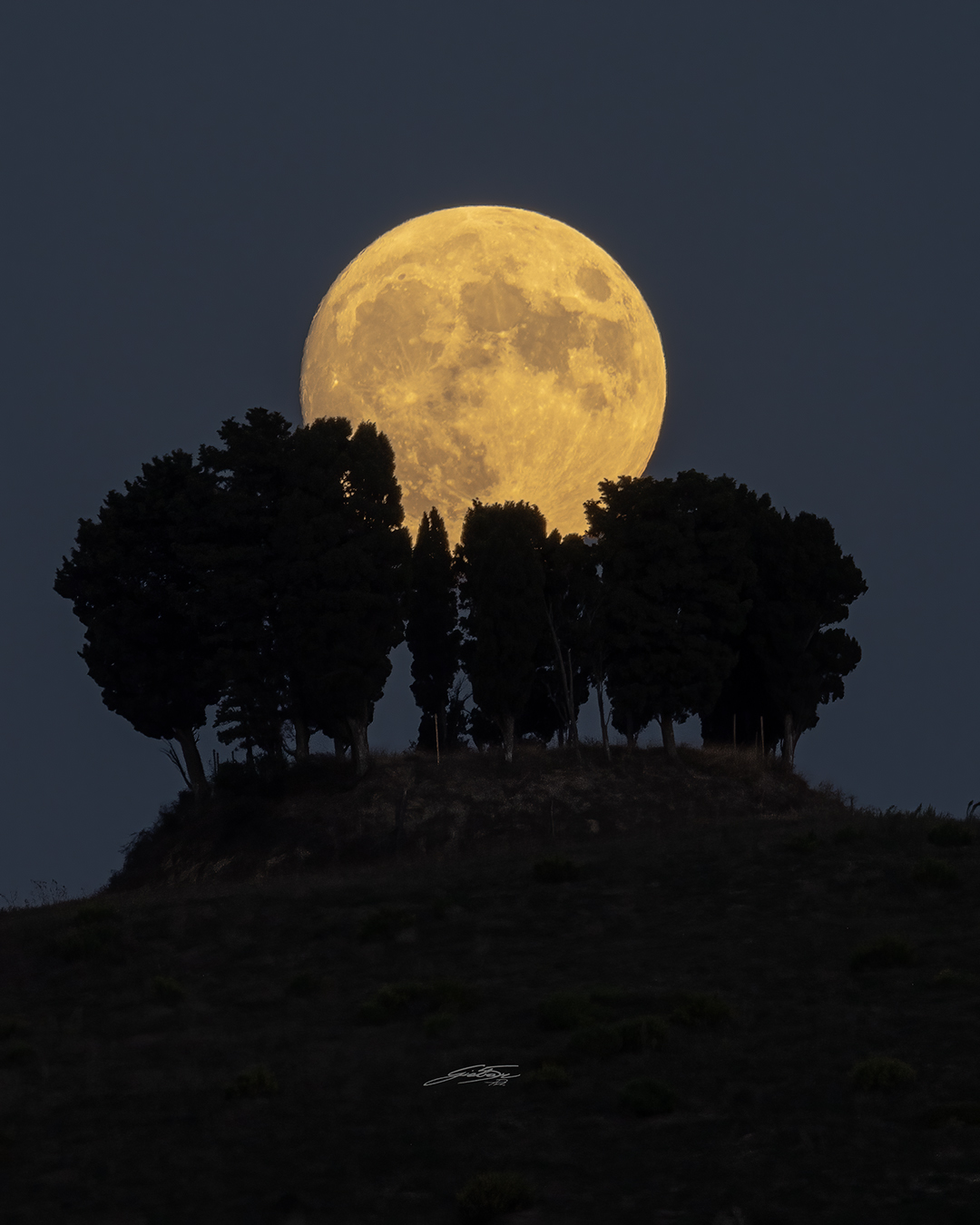
A Harvest Moon over Tuscany

For northern hemisphere dwellers, September’s Full Moon was the Harvest Moon. Reflecting warm hues at sunset, it rises behind cypress trees huddled on a hill top in Tuscany, Italy in this telephoto view from September 28. Famed in festival, story, and song, Harvest Moon is just the traditional name of the full moon nearest the autumnal equinox. According to lore the name is a fitting one. Despite the diminishing daylight hours as the growing season drew to a close, farmers could harvest crops by the light of a full moon shining on from dusk to dawn. This Harvest Moon was also known to some as a supermoon, a term becoming a traditional name for a full moon near perigee. It was the fourth and final supermoon for 2023. [via NASA] https://ift.tt/7wl5qHK

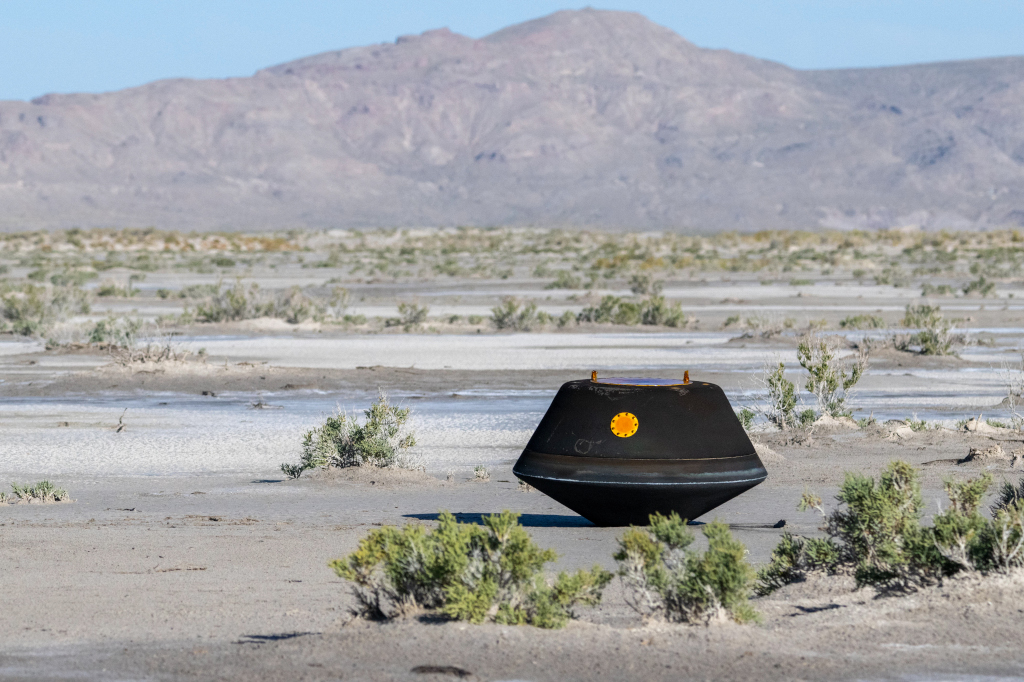
Back from Bennu

Back from asteroid 101955 Bennu, a 110-pound, 31-inch wide sample return capsule rests in a desert on planet Earth in this photo, taken at the Department of Defense Utah Test and Training Range near Salt Lake City last Sunday, September 24. Dropped off by the OSIRIS-Rex spacecraft, the capsule looks charred from the extreme temperatures experienced during its blistering descent through Earth’s dense atmosphere. OSIRIS-Rex began its home-ward journey from Bennu in May of 2021. Delivered to NASA’s Johnson Space Center in Houston on September 25, the capsule’s canister is expected to contain an uncontaminated sample of about a half pound (250 grams) of Bennu’s loosely packed regolith. Working in a new laboratory designed for the OSIRIS-REx mission, scientists and engineers will complete the canister disassembly process, and plan to unveil the sample of the near-Earth asteroid in a broadcast event on October 11. [via NASA] https://ift.tt/NfQYqHr

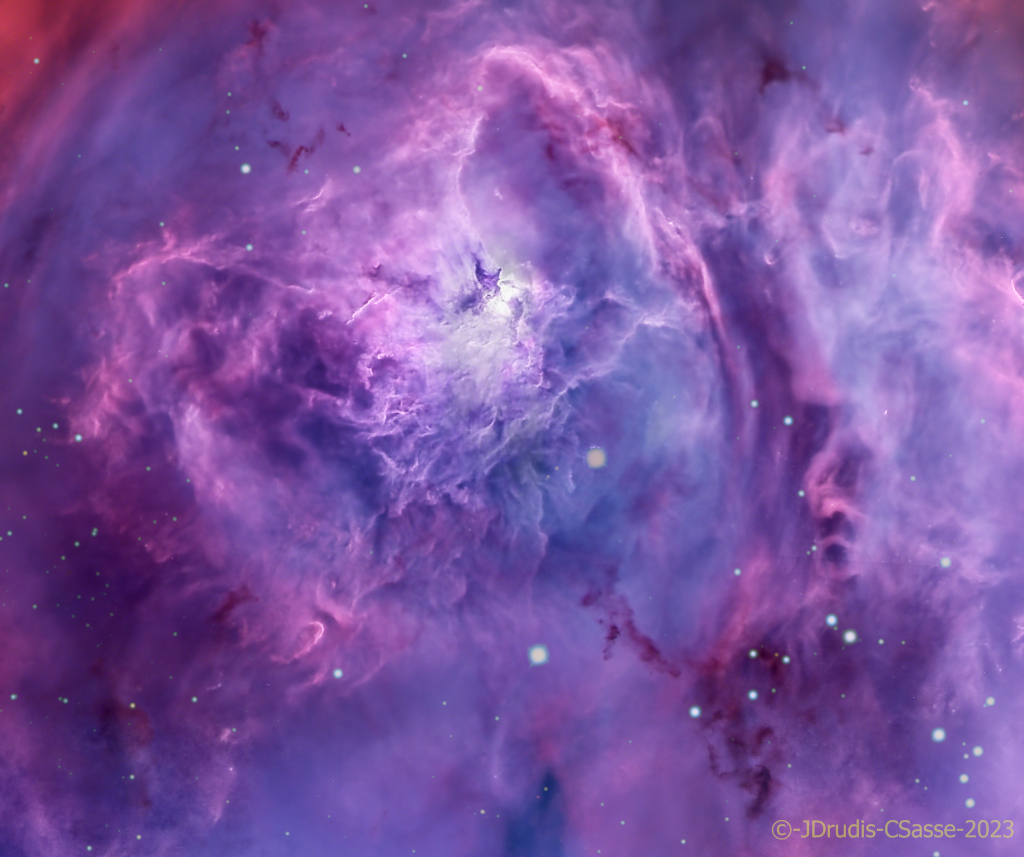
The Deep Lagoon

Ridges of glowing interstellar gas and dark dust clouds inhabit the turbulent, cosmic depths of the Lagoon Nebula. Also known as M8, The bright star forming region is about 5,000 light-years distant. It makes for a popular stop on telescopic tours of the constellation Sagittarius toward the center of our Milky Way Galaxy. Dominated by the telltale red emission of ionized hydrogen atoms recombining with stripped electrons, this deep telescopic view of the Lagoon’s central reaches is about 40 light-years across. The bright hourglass shape near the center of the frame is gas ionized and sculpted by energetic radiation and extreme stellar winds from a massive young star. [via NASA] https://ift.tt/n6hNUvs

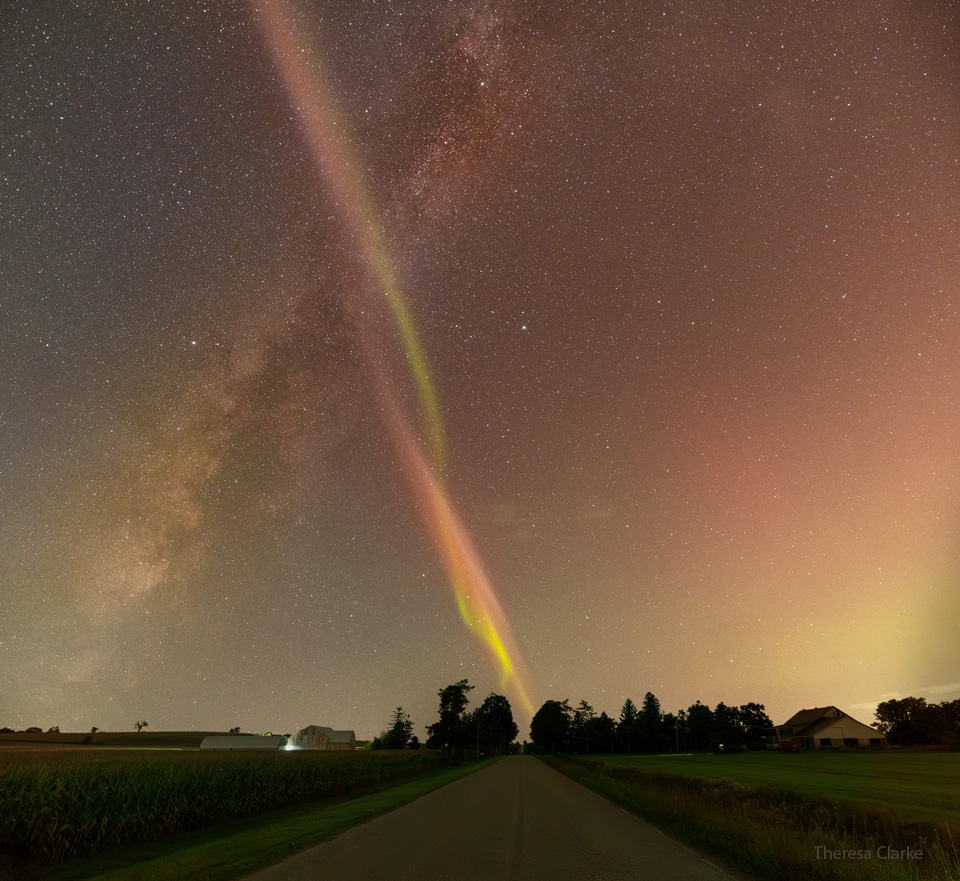
Not every road ends in a STEVE. A week ago, a sky enthusiast’s journey began with a goal: to photograph an aurora over Lake Huron. Driving through rural Ontario, Canada, the forecasted sky show started unexpectedly early, causing the photographer to stop before arriving at the scenic Great Lake. Aurora images were taken toward the north — but over land, not sea. While waiting for a second round of auroras, a peculiar band of light was noticed to the west. Slowly, the photographer and friends realized that this western band was likely an unusual type of aurora: a Strong Thermal Emission Velocity Enhancement (STEVE). Moreover, this STEVE was putting on quite a show: appearing intertwined with the central band of our Milky Way Galaxy while intersecting the horizon just near the end of the country road. After capturing this cosmic X on camera, the photographer paused to appreciate the unexpected awesomeness of finding extraordinary beauty in an ordinary setting. [via NASA] https://ift.tt/uQnRp4x

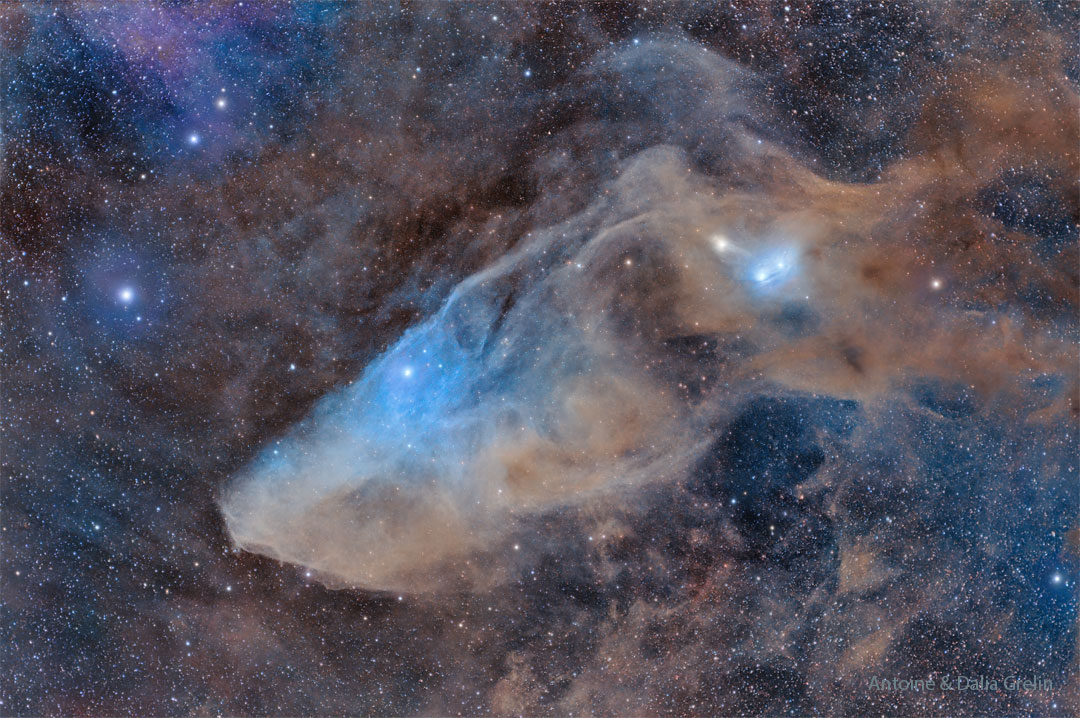
Do you see the horse’s head? What you are seeing is not the famous Horsehead nebula toward Orion, but rather a fainter nebula that only takes on a familiar form with deeper imaging. The main part of the here-imaged molecular cloud complex is reflection nebula IC 4592. Reflection nebulas are made up of very fine dust that normally appears dark but can look quite blue when reflecting the visible light of energetic nearby stars. In this case, the source of much of the reflected light is a star at the eye of the horse. That star is part of Nu Scorpii, one of the brighter star systems toward the constellation of the Scorpion (Scorpius). A second reflection nebula dubbed IC 4601 is visible surrounding two stars above and to the right of the image center. [via NASA] https://ift.tt/mXfWD5o

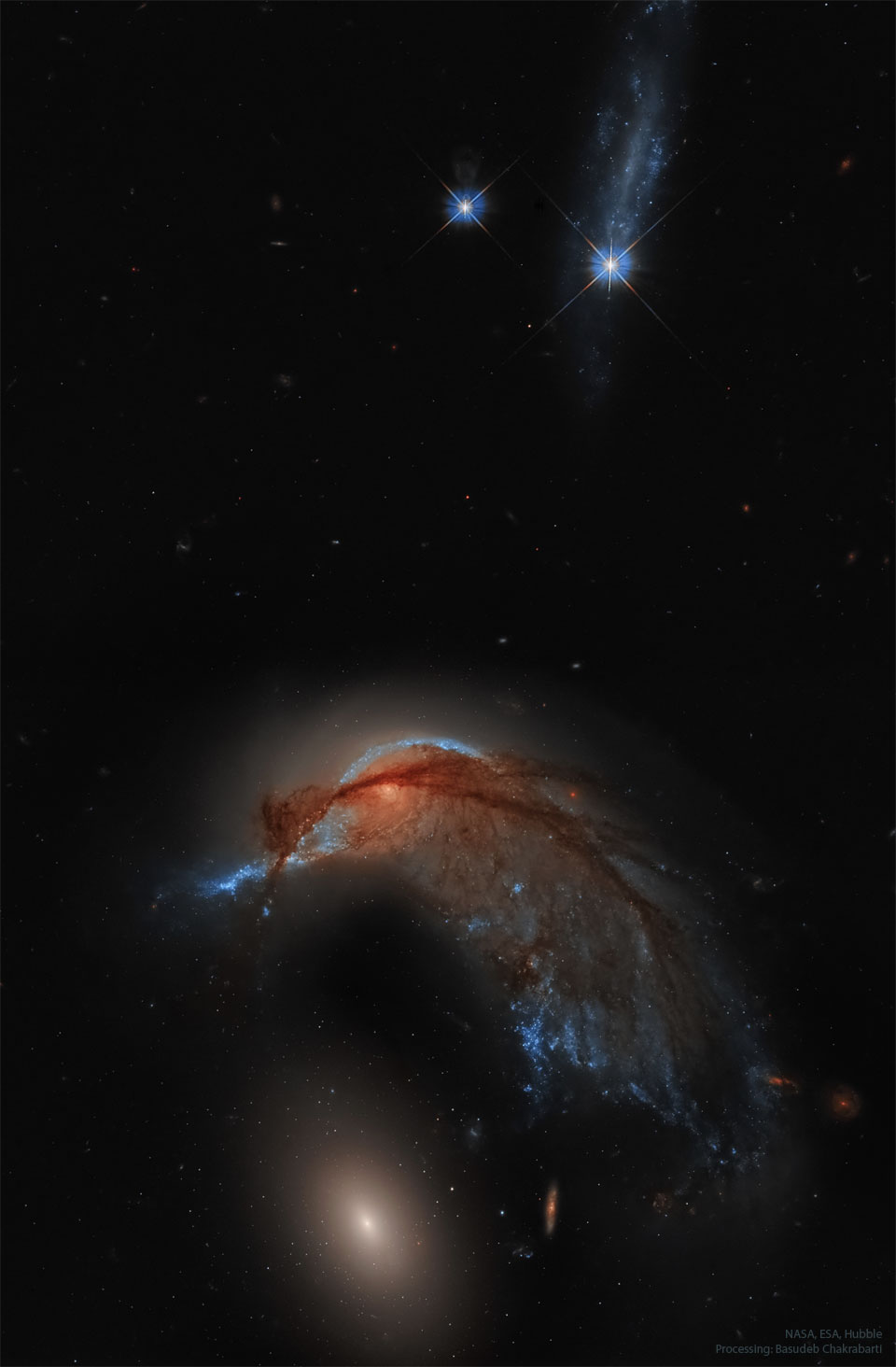
What’s happening to this spiral galaxy? Just a few hundred million years ago, NGC 2936, the upper of the two large galaxies shown at the bottom, was likely a normal spiral galaxy — spinning, creating stars — and minding its own business. But then it got too close to the massive elliptical galaxy NGC 2937, just below, and took a turn. Sometimes dubbed the Hummingbird Galaxy for its iconic shape, NGC 2936 is not only being deflected but also being distorted by the close gravitational interaction. Behind filaments of dark interstellar dust, bright blue stars form the nose of the hummingbird, while the center of the spiral appears as an eye. Alternatively, the galaxy pair, together known as Arp 142, look to some like Porpoise or a penguin protecting an egg. The featured re-processed image showing Arp 142 in great detail was taken recently by the Hubble Space Telescope. Arp 142 lies about 300 million light years away toward the constellation of the Water Snake (Hydra). In a billion years or so the two galaxies will likely merge into one larger galaxy. [via NASA] https://ift.tt/ytranjh

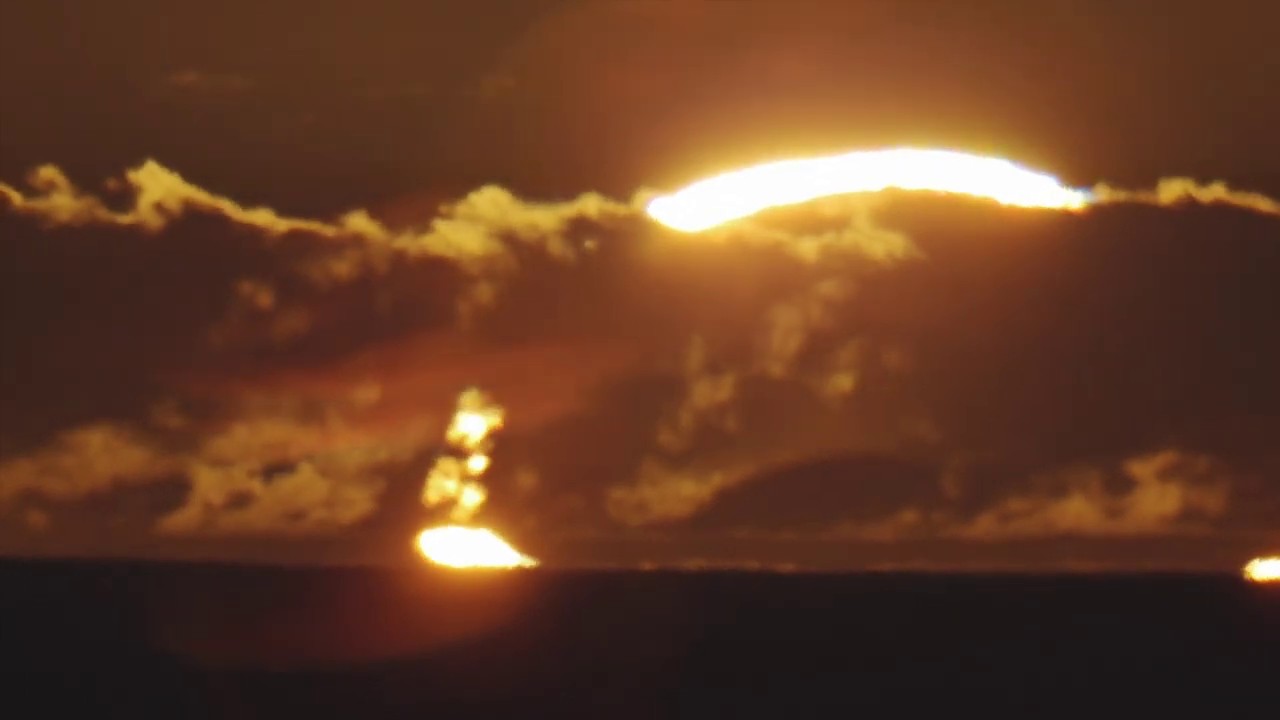
What’s rising above the horizon behind those clouds? It’s the Sun. Most sunrises don’t look like this, though, because most sunrises don’t include the Moon. In the early morning of 2013 May 10, however, from Western Australia, the Moon was between the Earth and the rising Sun. At times, it would be hard for the uninformed to understand what was happening. In an annular eclipse, the Moon is too far from the Earth to block the entire Sun, and at most leaves a ring of fire where sunlight pours out around every edge of the Moon. The featured time-lapse video also recorded the eclipse through the high refraction of the Earth’s atmosphere just above the horizon, making the unusual rising Sun and Moon appear also flattened. As the video continues, the Sun continues to rise, while the Sun and Moon begin to separate. The next annular solar eclipse will occur in less than three weeks. On Saturday, October 14, a ring of fire will be visible through clear skies from a thin swath crossing both North and South America. [via NASA] https://ift.tt/ADQZycw