Stars and Dust across Corona Australis

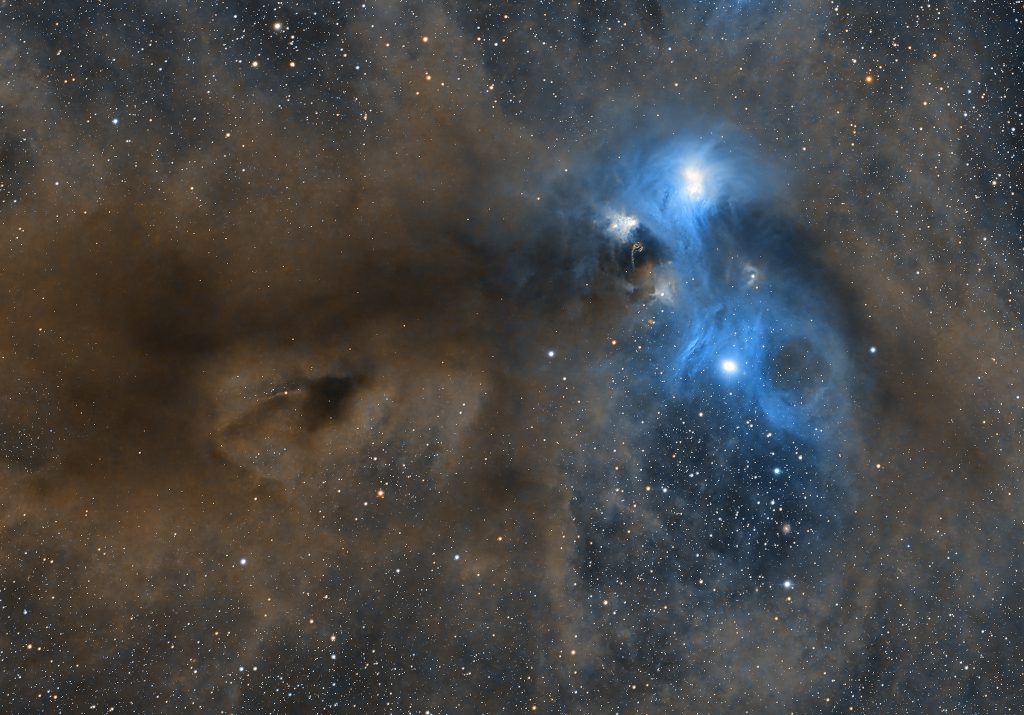
Cosmic dust clouds cross a rich field of stars in this telescopic vista near the northern boundary of Corona Australis, the Southern Crown. Part of a sprawling molecular cloud complex this star forming region is a mere 500 light-years away. That’s about one third the distance of the more famous stellar nursery known as the Orion Nebula. The 2 degree wide frame would span 15 light-years at the clouds’ estimated distance. Mixed with bright nebulosities the dust clouds effectively block light from more distant background stars in the Milky Way and obscure from view embedded stars still in the process of formation. Large dark nebula Bernes 157 is on the left. To its right are a group of pretty reflection nebulae cataloged as NGC 6726, 6727, 6729, and IC 4812. Their characteristic blue color is produced as light from hot stars is reflected by the cosmic dust. The more compact NGC 6729 surrounds young variable star R Coronae Australis. Just below it, filamentary arcs and loops are identified as Herbig Haro objects associated with energetic newborn stars. In fact, at the heart of this area lies the Coronet Cluster, one of the nearest and most active star forming regions. [via NASA] https://ift.tt/9RmjFC8
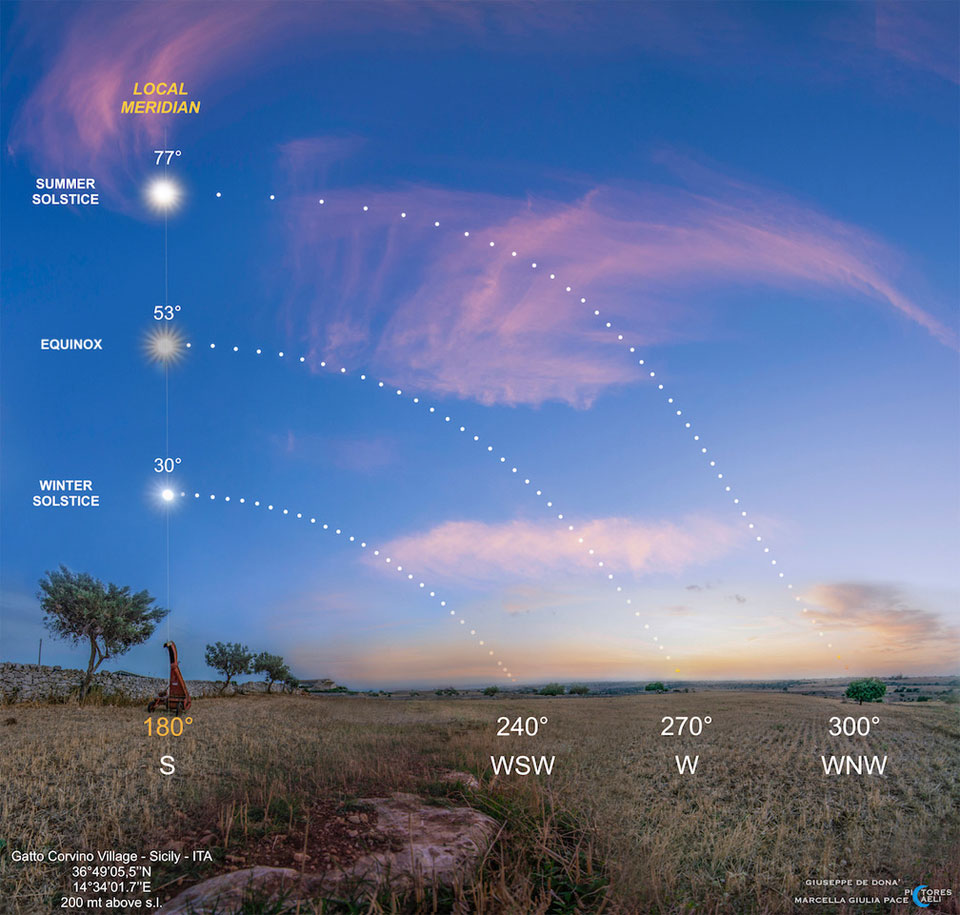
Does the Sun follow the same path every day? No. The Sun’s path changes during the year, tracing a longer route during the summer than the winter. Pictured here, the Sun’s arc was captured from noon to sunset on three days, from highest in the sky to lowest: summer solstice, equinox, and winter solstice. The images were taken near Gatto Corvino Village in Sicily, Italy in 2020 and 2021. The path and time the Sun spends in the sky is more important in determining the season than how close the Earth is to the Sun. In fact, the Earth is closest to the Sun in January, during northern winter. Today is a solstice, so today the Sun is taking its longest path of the year across the sky in Earth’s northern hemisphere, but the shortest path in the southern hemisphere. [via NASA] https://ift.tt/wIMGt34

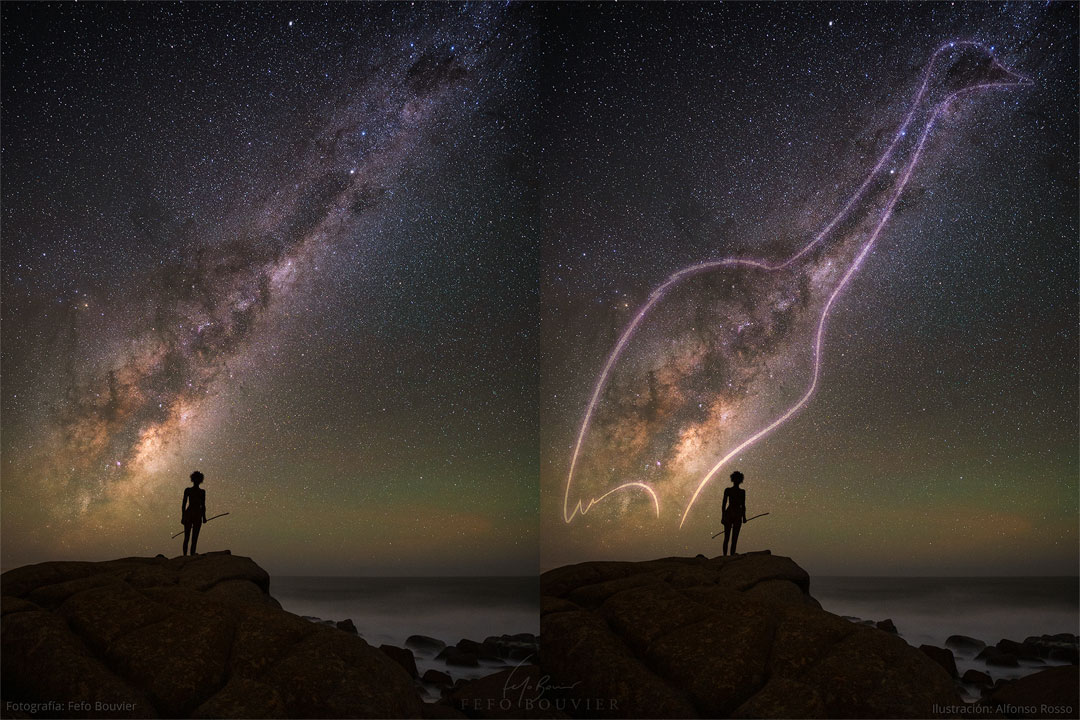
Have you seen the bird in the Milky Way? Beyond the man in the Moon, the night sky is filled with stories, and cultures throughout history have projected some of their most enduring legends onto the stars and dust above. Generations of people see these celestial icons, hear their associated stories, and pass them down. Pictured here is not only a segment of the central band of our Milky Way galaxy, but, according to folklore of several native peoples of Uruguay, the outline of a great bird called Ñandú. Furthermore, Ñandú’s footprint is associated with the Southern Cross asterism. In the foreground, in silhouette, is a statue of María Micaela Guyunusa, an indigenous woman of the Charrúa people who lived in the 1800s and endures as a symbol of colonial resistance. The composite image was taken in mid-April in Cabo Polonio, Uruguay, with the Atlantic Ocean in the background. [via NASA] https://ift.tt/VMFksBX

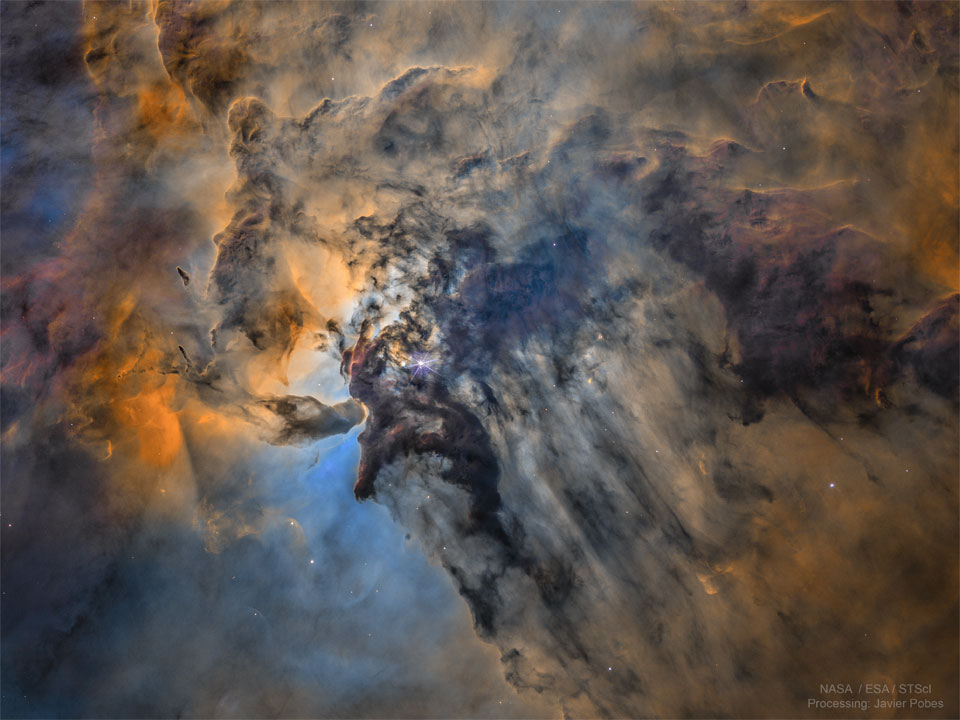
The center of the Lagoon Nebula is a whirlwind of spectacular star formation. Visible near the image center, at least two long funnel-shaped clouds, each roughly half a light-year long, have been formed by extreme stellar winds and intense energetic starlight. A tremendously bright nearby star, Herschel 36, lights the area. Vast walls of dust hide and redden other hot young stars. As energy from these stars pours into the cool dust and gas, large temperature differences in adjoining regions can be created generating shearing winds which may cause the funnels. This picture, spanning about 15 light years, combines images taken in four colors by the orbiting Hubble Space Telescope. The Lagoon Nebula, also known as M8, lies about 5000 light years distant toward the constellation of the Archer (Sagittarius). [via NASA] https://ift.tt/EhleuaX

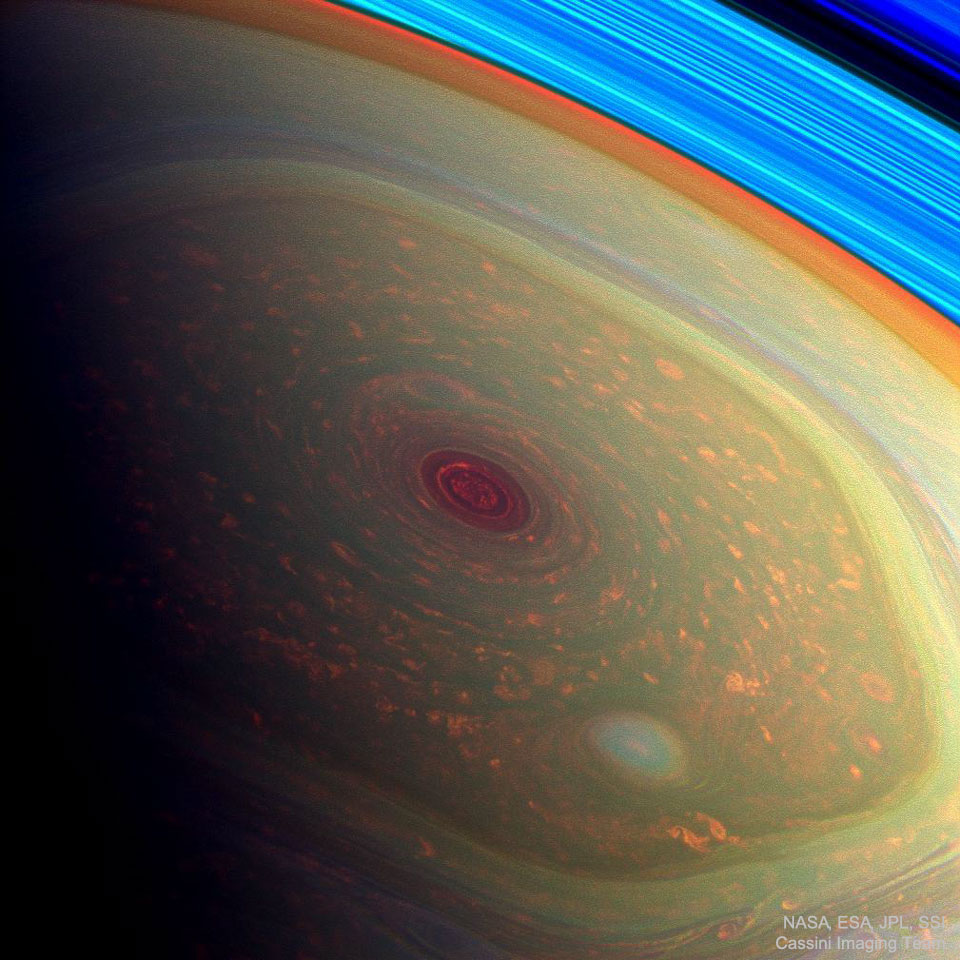
Why would clouds form a hexagon on Saturn? Nobody is sure. Originally discovered during the Voyager flybys of Saturn in the 1980s, nobody has ever seen anything like it anywhere else in the Solar System. Acquiring its first sunlit views of far northern Saturn in late 2012, the Cassini spacecraft’s wide-angle camera recorded this stunning, false-color image of the ringed planet’s north pole. The composite of near-infrared image data results in red hues for low clouds and green for high ones, giving the Saturnian cloudscape a vivid appearance. This and similar images show the stability of the hexagon even 20+ years after Voyager. Movies of Saturn’s North Pole show the cloud structure maintaining its hexagonal structure while rotating. Unlike individual clouds appearing like a hexagon on Earth, the Saturn cloud pattern appears to have six well defined sides of nearly equal length. Four Earths could fit inside the hexagon. Beyond the cloud tops at the upper right, arcs of the planet’s eye-catching rings are tinted bright blue. [via NASA] https://ift.tt/KiW9qyS

Planet Earth at Night II

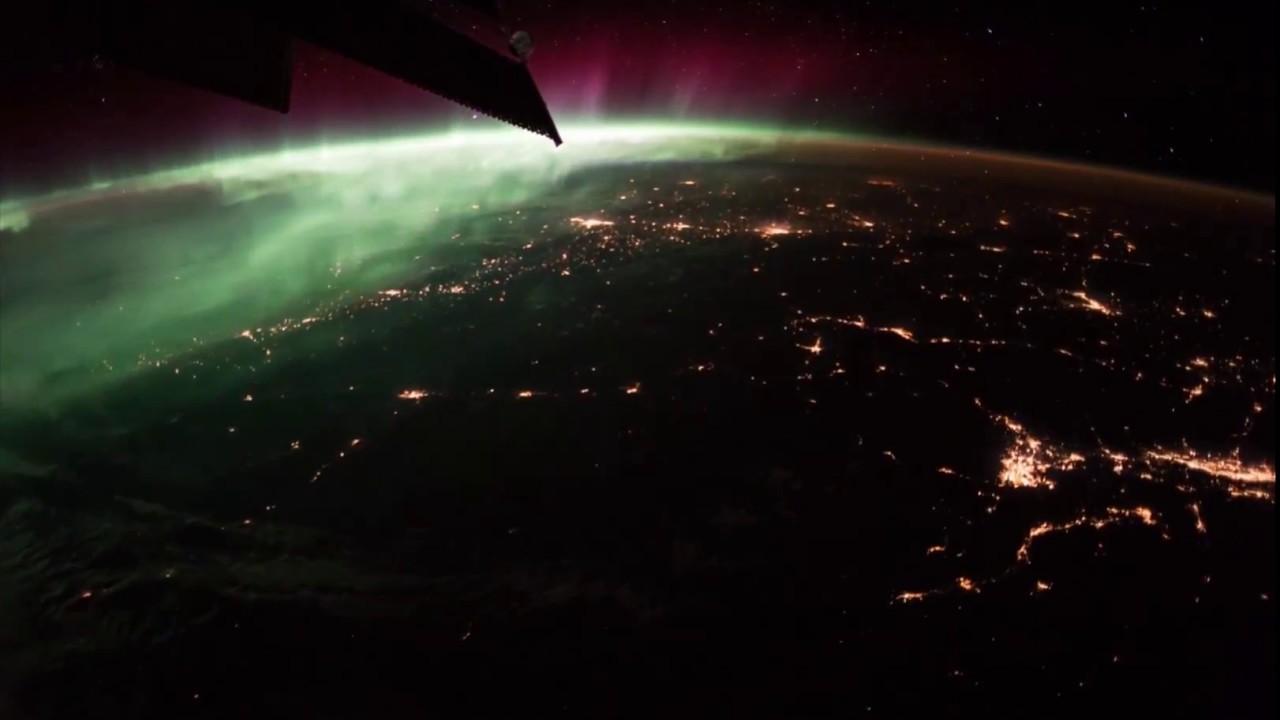
Recorded during 2017, timelapse sequences from the International Space Station are compiled in this serene video of planet Earth at Night. Fans of low Earth orbit can start by enjoying the view as green and red aurora borealis slather up the sky. The night scene tracks from northwest to southeast across North America, toward the Gulf of Mexico and the Florida coast. A second sequence follows European city lights, crosses the Mediterranean Sea, and passes over a bright Nile river in northern Africa. Seen from the orbital outpost, erratic flashes of lightning appear in thunder storms below and stars rise above the planet’s curved horizon through a faint atmospheric airglow. Of course, from home you can always check out the vital signs of Planet Earth Now. [via NASA] https://ift.tt/Kp48wIV

Sunset to Sunrise over the Baltic Sea

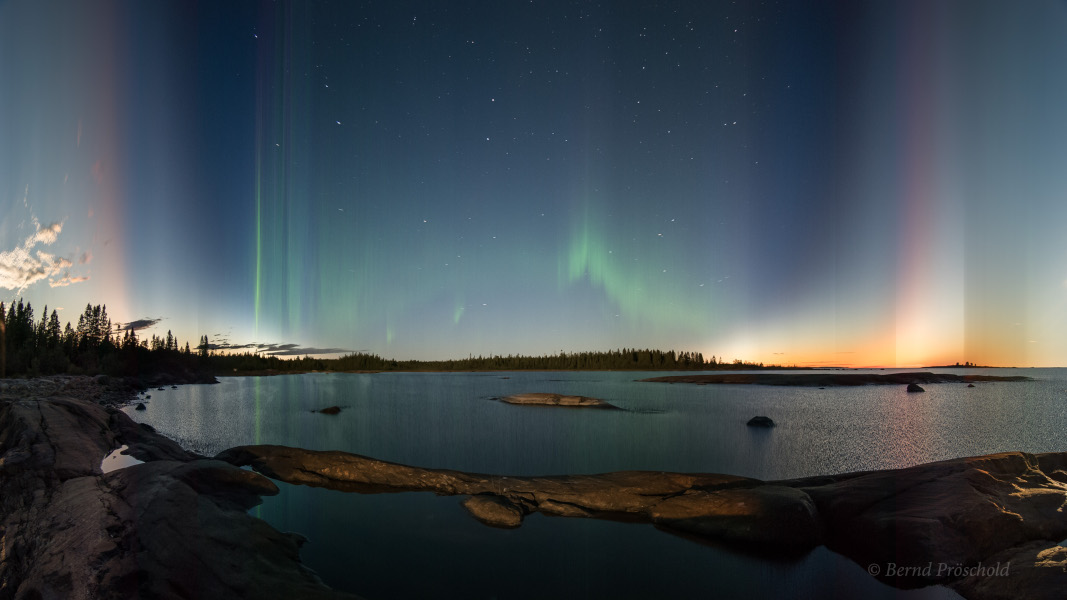
This serene view from the coast of Sweden looks across the Baltic sea and compresses time, presenting the passage of one night in a single photograph. From sunset to sunrise, moonlight illuminates the creative sea and skyscape. Fleeting clouds, fixed stars, and flowing northern lights leave their traces in planet Earth’s sky. To construct the timelapse image, 3296 video frames were recorded on the night of June’s Full Moon between 7:04pm and 6:35am local time. As time progresses from left to right, a single column of pixels was taken from the corresponding individual frame and combined in sequence into a single digital image 3296 pixels wide. [via NASA] https://ift.tt/8u3rXRW

M15: Dense Globular Star Cluster

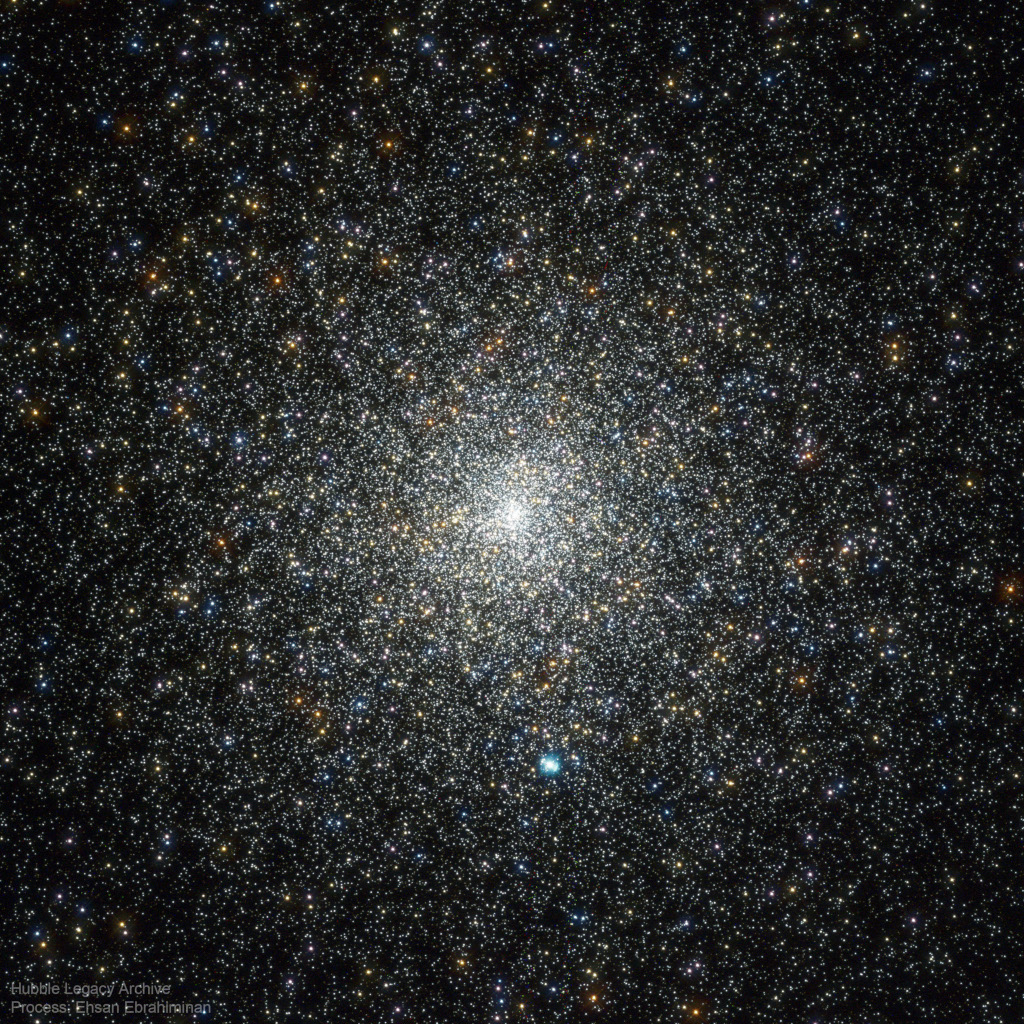
Messier 15 is an immense swarm of over 100,000 stars. A 13 billion year old relic of the early formative years of our galaxy it’s one of about 170 globular star clusters that still roam the halo of the Milky Way. Centered in this sharp reprocessed Hubble image, M15 lies some 35,000 light-years away toward the constellation Pegasus. Its diameter is about 200 light-years, but more than half its stars are packed into the central 10 light-years or so, making one of the densest concentrations of stars known. Hubble-based measurements of the increasing velocities of M15’s central stars are evidence that a massive black hole resides at the center of the dense cluster. M15 is also known to harbour a planetary nebula. Called Pease 1 (aka PN Ps 1), it can be seen in this image as a small blue blob below and just right of center. [via NASA] https://ift.tt/iZCqcU9

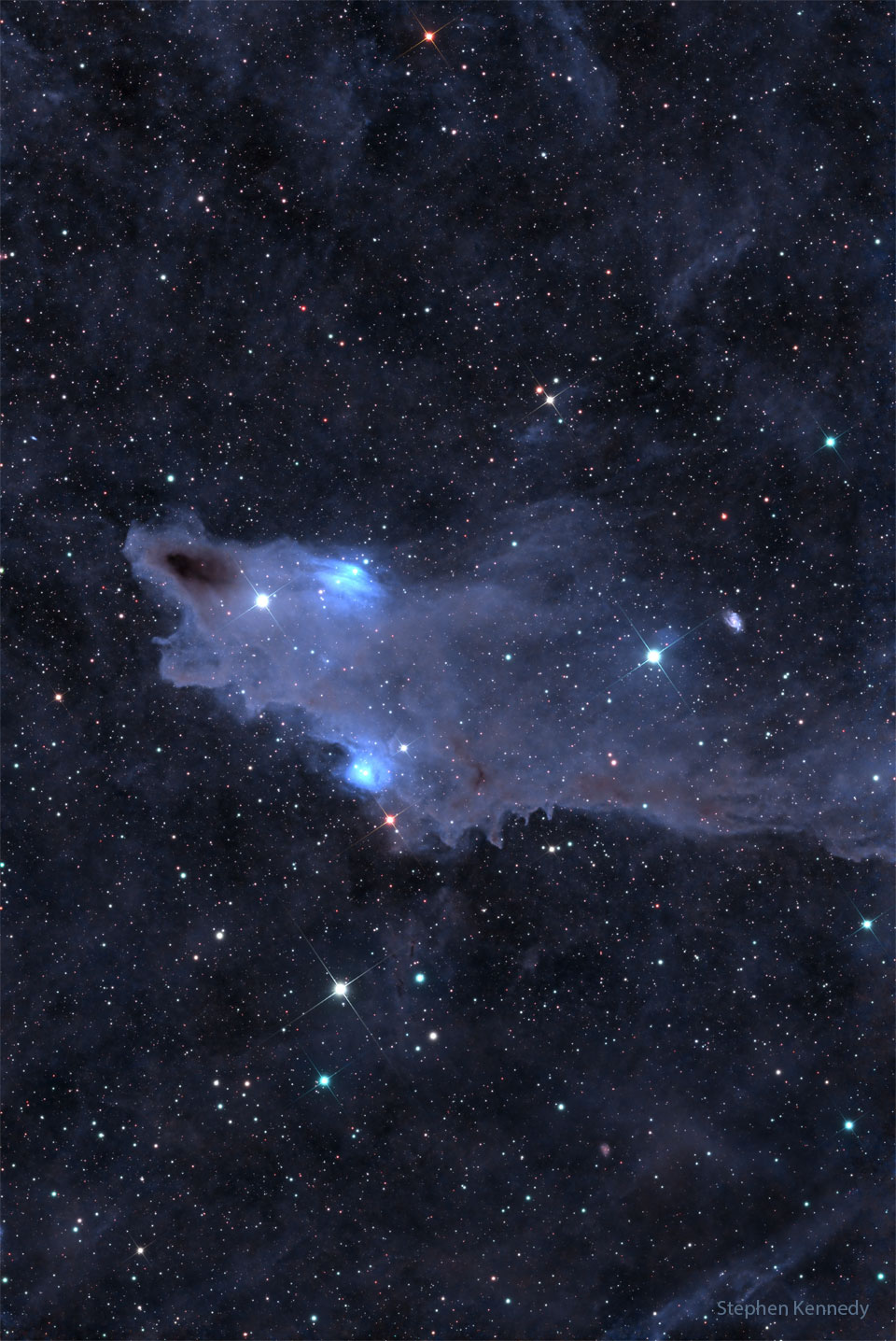
There is no sea on Earth large enough to contain the Shark nebula. This predator apparition poses us no danger as it is composed only of interstellar gas and dust. Dark dust like that featured here is somewhat like cigarette smoke and created in the cool atmospheres of giant stars. After being expelled with gas and gravitationally recondensing, massive stars may carve intricate structures into their birth cloud using their high energy light and fast stellar winds as sculpting tools. The heat they generate evaporates the murky molecular cloud as well as causing ambient hydrogen gas to disperse and glow red. During disintegration, we humans can enjoy imagining these great clouds as common icons, like we do for water clouds on Earth. Including smaller dust nebulae such as Lynds Dark Nebula 1235 and Van den Bergh 149 & 150, the Shark nebula spans about 15 light years and lies about 650 light years away toward the constellation of the King of Aethiopia (Cepheus). [via NASA] https://ift.tt/DMHt2lh

Jupiter’s moons circle Jupiter. The featured video depicts Europa and Io, two of Jupiter’s largest moons, crossing in front of the grand planet’s Great Red Spot, the largest known storm system in our Solar System. The video was composed from images taken by the robotic Cassini spacecraft as it passed Jupiter in 2000, on its way to Saturn. The two moons visible are volcanic Io, in the distance, and icy Europa. In the time-lapse video, Europa appears to overtake Io, which is odd because Io is closer to Jupiter and moves faster. The explanation is that the motion of the fast Cassini spacecraft changes the camera location significantly during imaging. Jupiter is currently being visited by NASA’s robotic Juno spacecraft, while ESA’s Jupiter Icy Moons Explorer (JUICE), launched in April, is enroute. [via NASA] https://ift.tt/eAb3aW0