Jupiter’s moons circle Jupiter. The featured video depicts Europa and Io, two of Jupiter’s largest moons, crossing in front of the grand planet’s Great Red Spot, the largest known storm system in our Solar System. The video was composed from images taken by the robotic Cassini spacecraft as it passed Jupiter in 2000, on its way to Saturn. The two moons visible are volcanic Io, in the distance, and icy Europa. In the time-lapse video, Europa appears to overtake Io, which is odd because Io is closer to Jupiter and moves faster. The explanation is that the motion of the fast Cassini spacecraft changes the camera location significantly during imaging. Jupiter is currently being visited by NASA’s robotic Juno spacecraft, while ESA’s Jupiter Icy Moons Explorer (JUICE), launched in April, is enroute. [via NASA] https://ift.tt/eAb3aW0
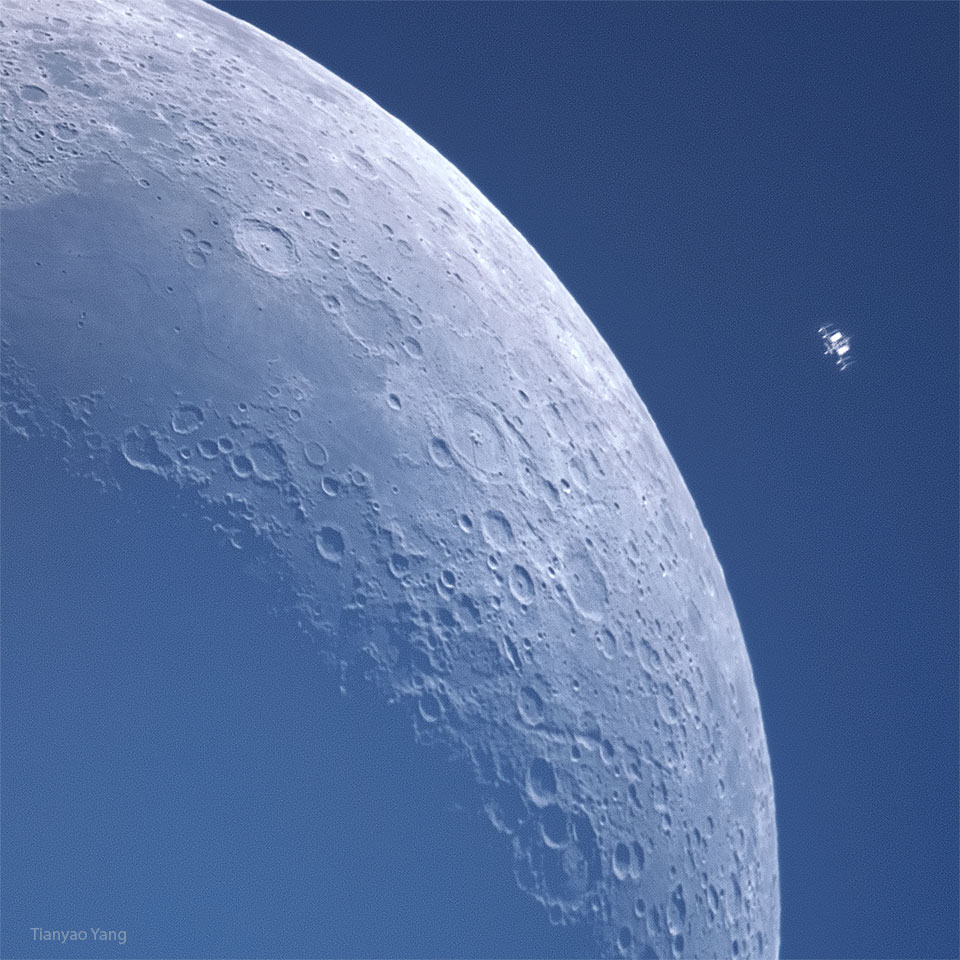
What’s that near the Moon? It’s the International Space Station (ISS). Although the ISS may appear to be physically near the Moon, it is not — it is physically near the Earth. In low Earth orbit and circulating around our big blue marble about every 90 minutes, the ISS was captured photographically as it crossed nearly in front of the Moon. The Moon, itself in a month-long orbit around the Earth, shows a crescent phase as only a curving sliver of its Sun-illuminated half is visible from the Earth. The featured image was taken in late March from Shanghai, China and shows not only details of Earth’s largest human-made satellite, but details of the cratered and barren surface of Earth’s largest natural satellite. Over the next few years, humanity is planning to send more people and machines to the Moon than ever before. [via NASA] https://ift.tt/XWy1m3t

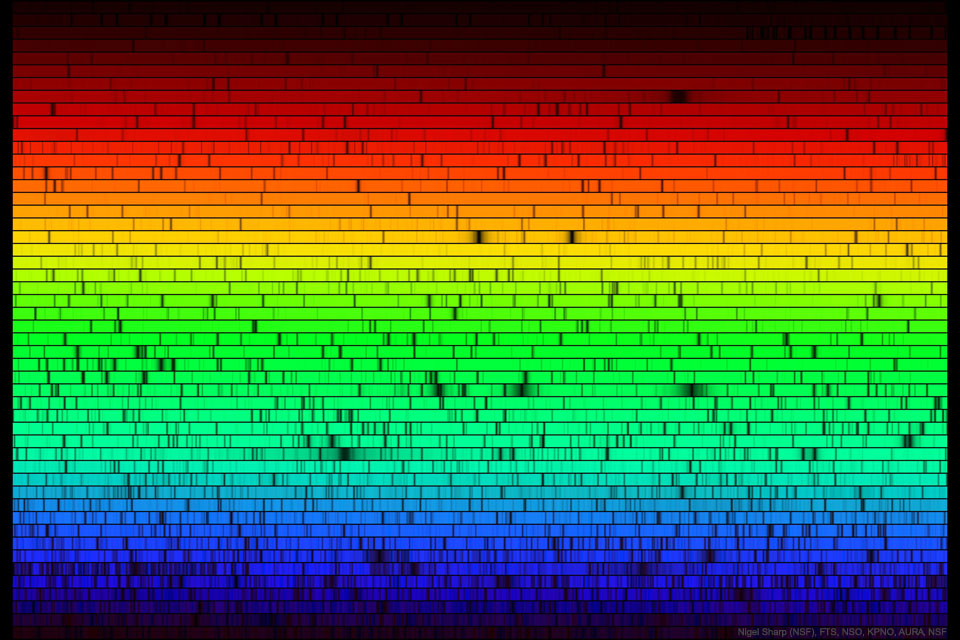
Here are all the visible colors of the Sun, produced by passing the Sun’s light through a prism-like device. The spectrum was created at the McMath-Pierce Solar Observatory and shows, first off, that although our white-appearing Sun emits light of nearly every color, it appears brightest in yellow-green light. The dark patches in the featured spectrum arise from gas at or above the Sun’s surface absorbing sunlight emitted below. Since different types of gas absorb different colors of light, it is possible to determine what gasses compose the Sun. Helium, for example, was first discovered in 1870 on a solar spectrum and only later found here on Earth. Today, the majority of spectral absorption lines have been identified – but not all. [via NASA] https://ift.tt/pIQ8mN0

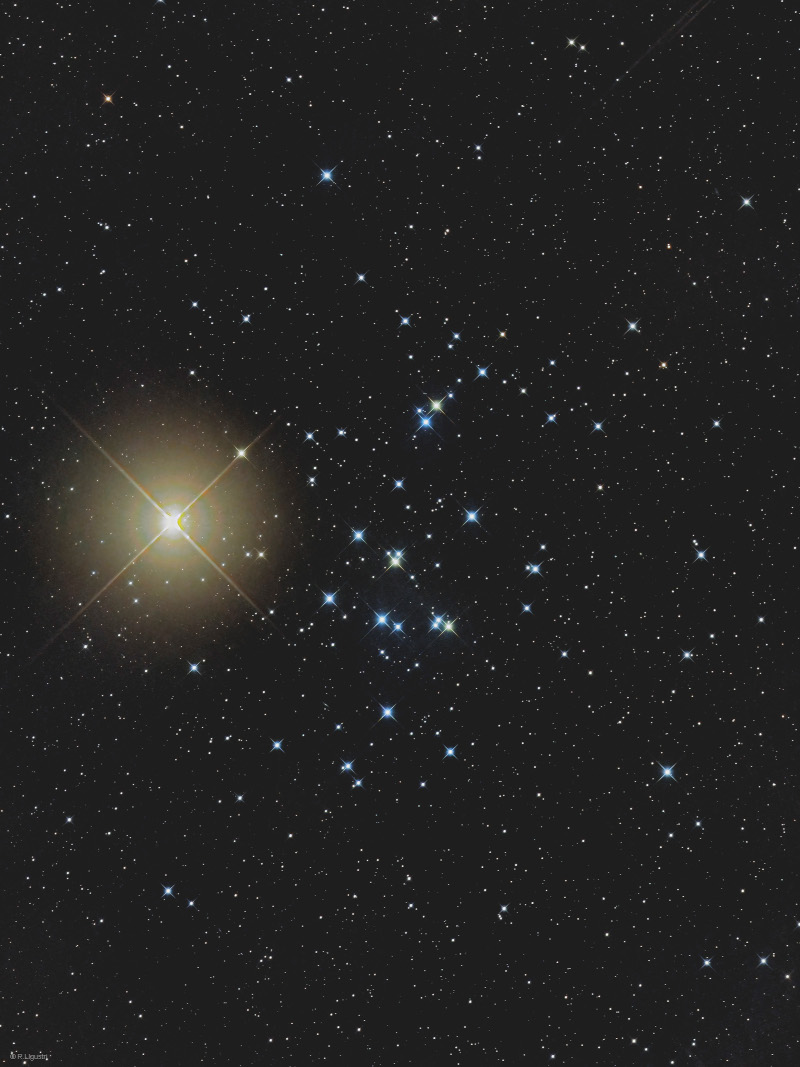
Mars and the Beehive

This month, bright Mars and brilliant Venus are the prominent celestial beacons in planet Earth’s western skies after sunset. Wandering through the constellation Cancer the Crab, the Red Planet was captured here on the evening of June 3 near the stars of open cluster Messier 44. Recognized since antiquity this nearby, naked-eye star cluster is also known as the Praesepe or the Beehive cluster. A swarm of stars all much younger than the Sun, the Beehive cluster is a mere 600 light-years distant. Seen with a yellowish hue, Mars is about 17 light-minutes away. On June 12/13 Venus will take its turn posing next to the stars of the Beehive cluster. But the dazzling light of Venus will make the Beehive stars difficult to see by eye alone. [via NASA] https://ift.tt/VGrMhZC

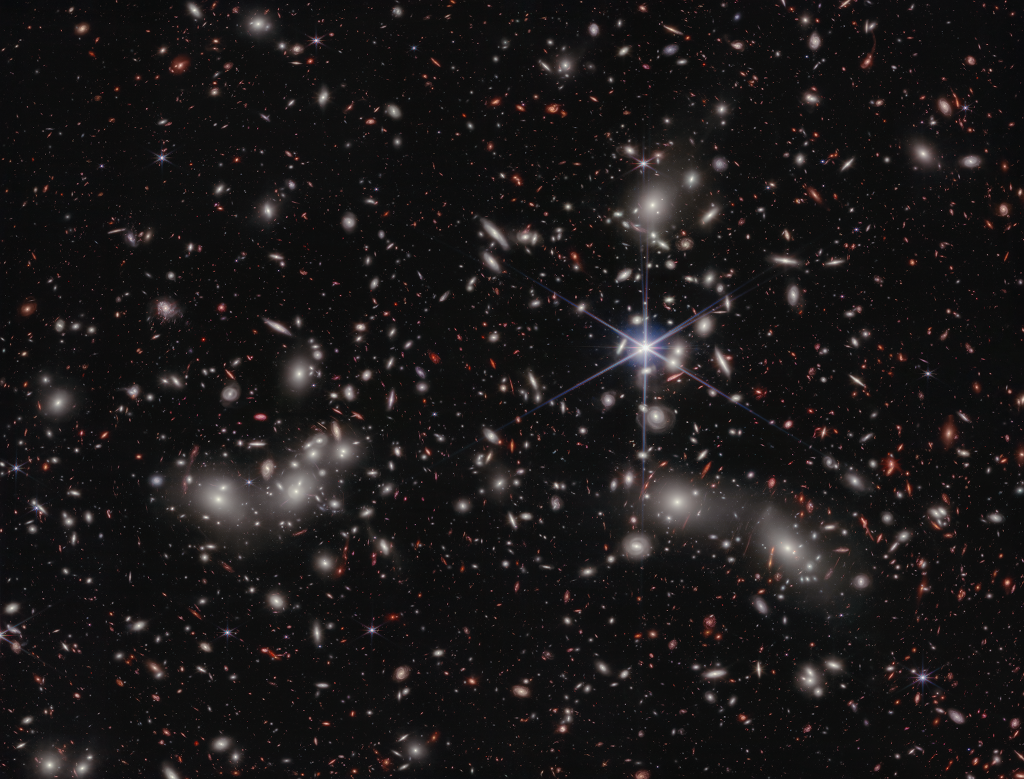
Pandora s Cluster of Galaxies

This deep field mosaicked image presents a stunning view of galaxy cluster Abell 2744 from the James Webb Space Telescope’s NIRCam. Also dubbed Pandora’s Cluster, Abell 2744 itself appears to be a ponderous merger of three different massive galaxy clusters some 3.5 billion light-years away toward the constellation Sculptor. Dominated by dark matter, the mega-cluster warps and distorts the fabric of spacetime, gravitationally lensing even more distant objects. Redder than the Pandora cluster galaxies many of the lensed sources are very distant galaxies in the early Universe, stretched and distorted into arcs. Of course distinctive diffraction spikes mark foreground Milky Way stars. At the Pandora Cluster’s estimated distance this cosmic box spans about 6 million light-years. But don’t panic. You can explore the tantalizing region in a 2 minute video tour. [via NASA] https://ift.tt/CfjJXds

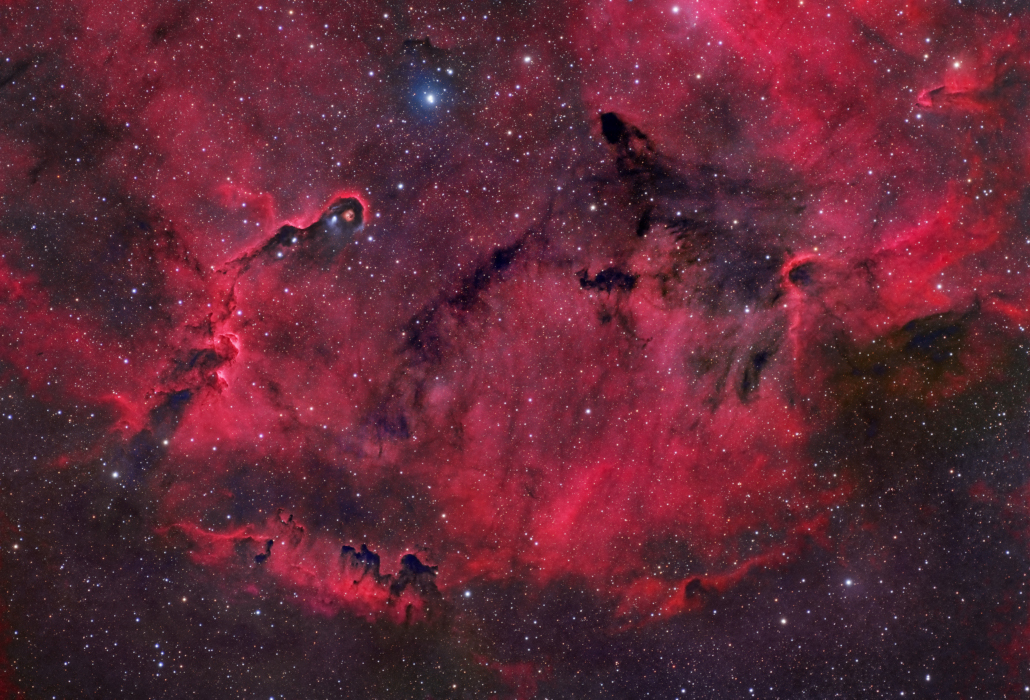
Elephant s Trunk and Caravan

Like an illustration in a galactic Just So Story, the Elephant’s Trunk Nebula winds through the emission region and young star cluster complex IC 1396, in the high and far off constellation of Cepheus. Seen on the left the cosmic elephant’s trunk, also known as vdB 142, is over 20 light-years long. This detailed telescopic view features the bright swept-back ridges and pockets of cool interstellar dust and gas that abound in the region. But the dark, tendril-shaped clouds contain the raw material for star formation and hide protostars within. Nearly 3,000 light-years distant, the relatively faint IC 1396 complex covers a large region on the sky, spanning over 5 degrees. This rendition spans a 1 degree wide field of view though, about the angular size of 2 full moons. Of course the dark shapes below and to the right of the outstretched Elephant’s Trunk, are known to some as The Caravan. [via NASA] https://ift.tt/ZKzTfSL

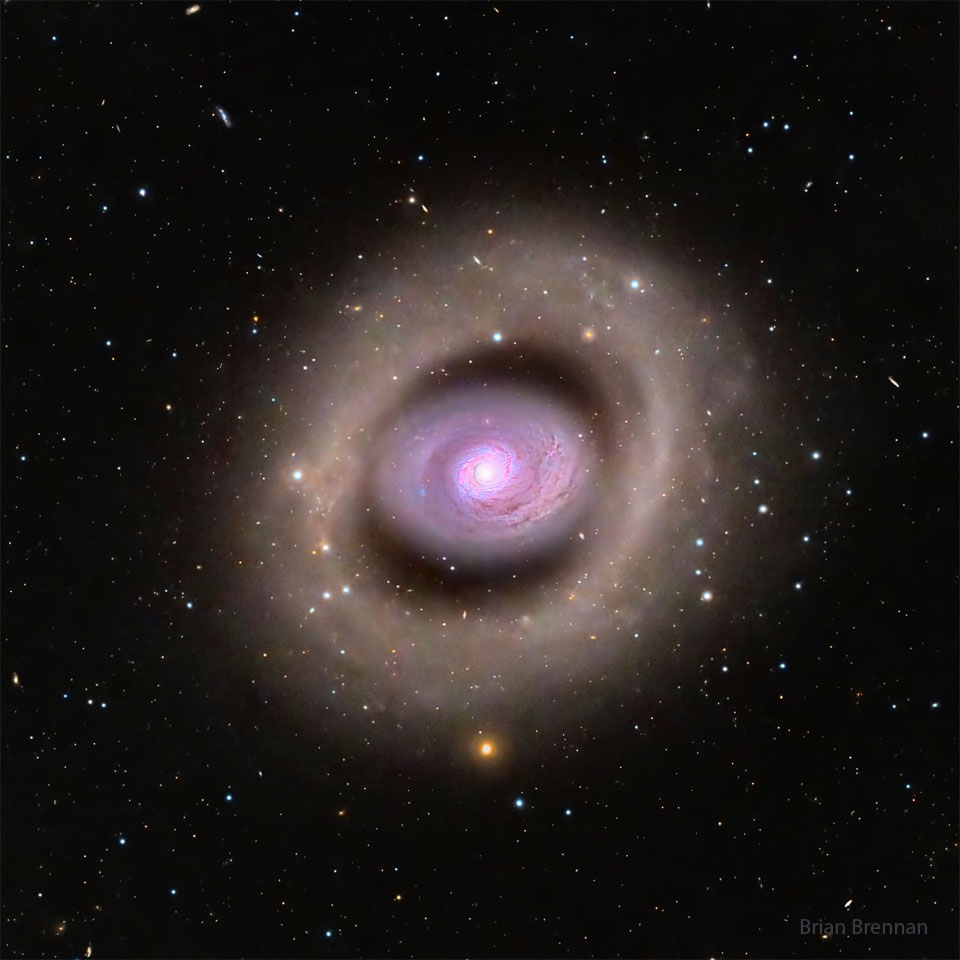
Most galaxies don’t have any rings of stars and gas — why does M94 have two? First, spiral galaxy M94 has an inner ring of newly formed stars surrounding its nucleus, giving it not only an unusual appearance but also a strong interior glow. A leading origin hypothesis holds that an elongated knot of stars known as a bar rotates in M94 and has generated a burst of star formation in this inner ring. Observations have also revealed another ring, an outer ring, one that is more faint, different in color, not closed, and relatively complex. What caused this outer ring is currently unknown. M94, pictured here, spans about 45,000 light years in total, lies about 15 million light years away, and can be seen with a small telescope toward the constellation of the Hunting Dogs (Canes Venatici). [via NASA] https://ift.tt/wr4DIqJ

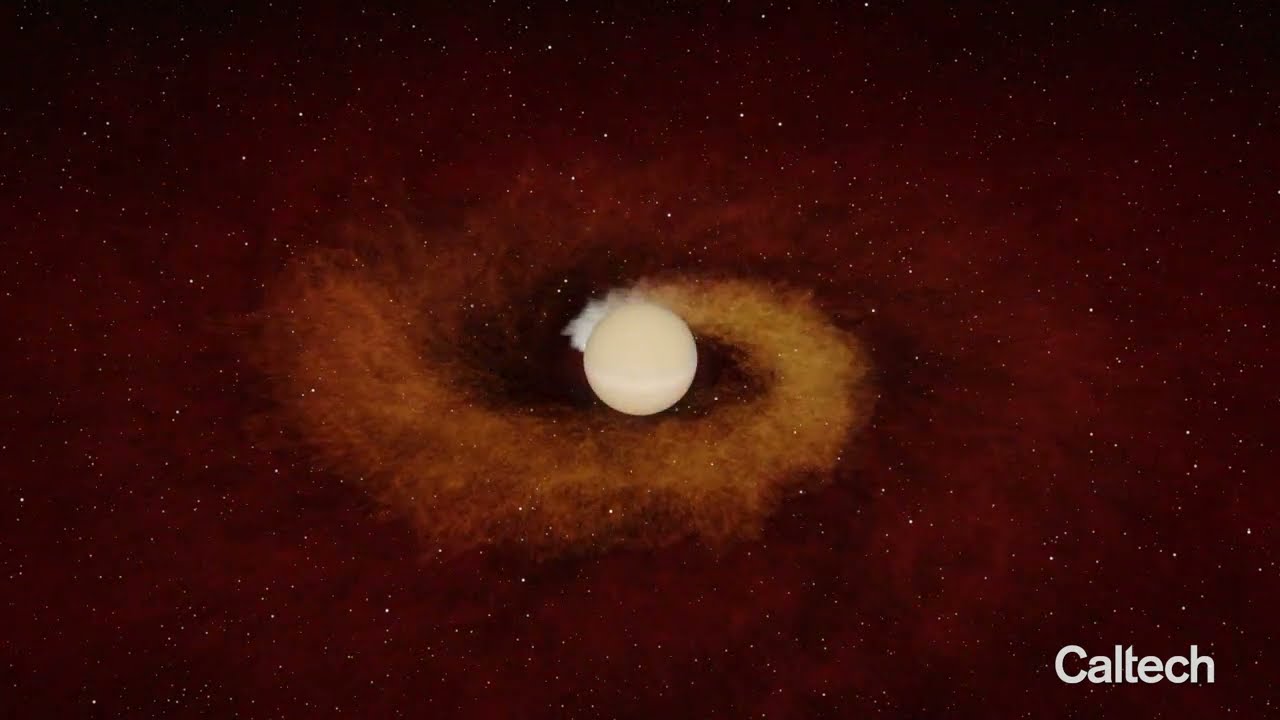
It’s the end of a world as we know it. Specifically, the Sun-like star ZTF SLRN-2020 was seen eating one of its own planets. Although many a planet eventually dies by spiraling into their central star, the 2020 event, involving a Jupiter-like planet, was the first time it was seen directly. The star ZTF SLRN-2020 lies about 12,000 light years from the Sun toward the constellation of the Eagle (Aquila). In the featured animated illustration of the incident, the gas planet’s atmosphere is first pictured being stripped away as it skims along the outskirts of the attracting star. Some of the planet’s gas is absorbed into the star’s atmosphere, while other gas is expelled into space. By the video’s end, the planet is completely engulfed and falls into the star’s center, causing the star’s outer atmosphere to briefly expand, heat up, and brighten. One day, about eight billion years from now, planet Earth may spiral into our Sun. [via NASA] https://ift.tt/AEVHGnv

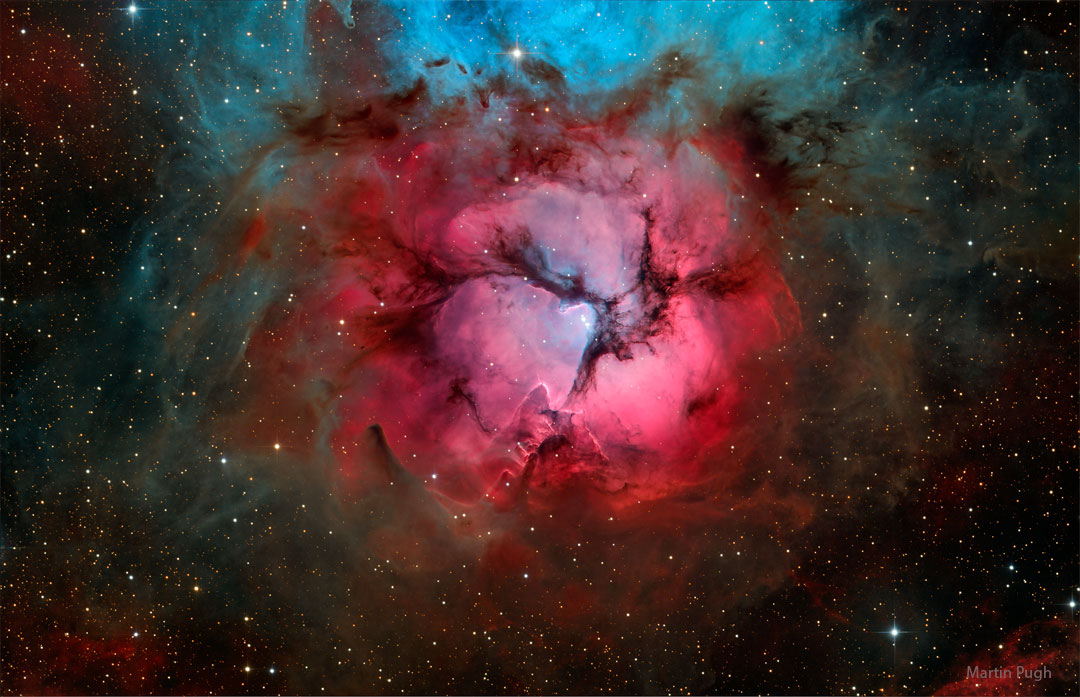
What’s happening at the center of the Trifid Nebula? Three prominent dust lanes that give the Trifid its name all come together. Mountains of opaque dust appear near the bottom, while other dark filaments of dust are visible threaded throughout the nebula. A single massive star visible near the center causes much of the Trifid’s glow. The Trifid, cataloged as M20, is only about 300,000 years old, making it among the youngest emission nebulas known. The star forming nebula lies about 9,000 light years away toward the constellation of the Archer (Sagittarius). The region pictured here spans about 20 light years. [via NASA] https://ift.tt/OrWcqCb

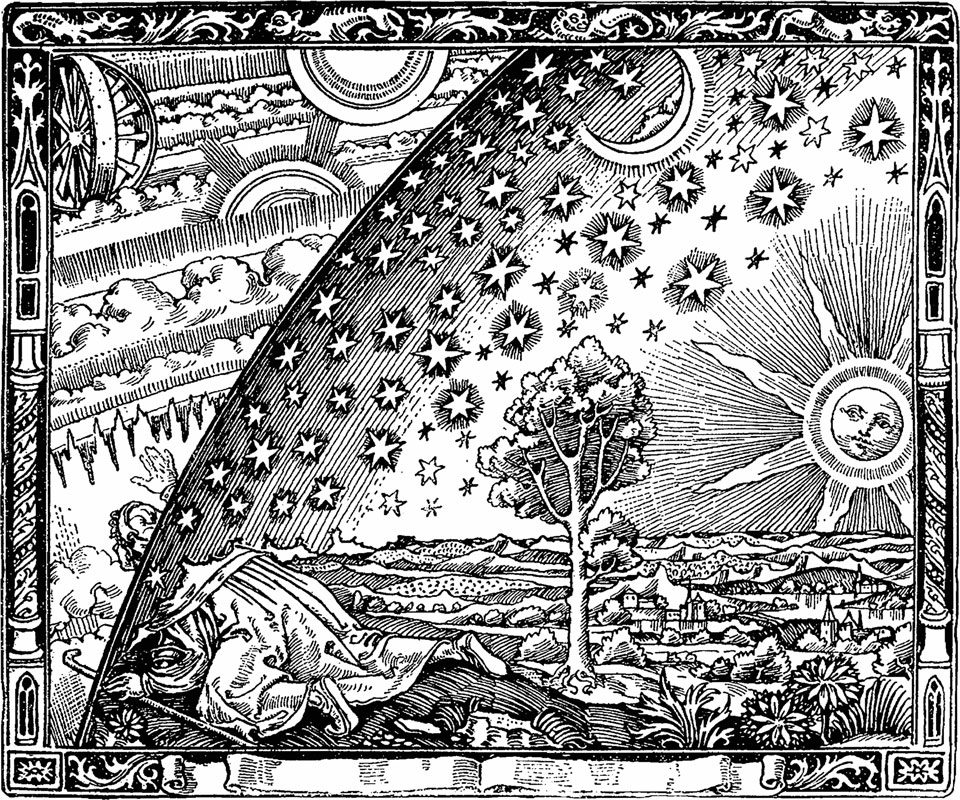
Wouldn’t it be fun to color in the universe? If you think so, please accept this famous astronomical illustration as a preliminary substitute. You, your friends, your parents or children, can print it out or even color it digitally. While coloring, you might be interested to know that even though this illustration has appeared in numerous places over the past 100 years, the actual artist remains unknown. Furthermore, the work has no accepted name — can you think of a good one? The illustration, first appearing in a book by Camille Flammarion in 1888, is frequently used to show that humanity’s present concepts are susceptible to being supplanted by greater truths. [via NASA] https://ift.tt/tQ8JIjl