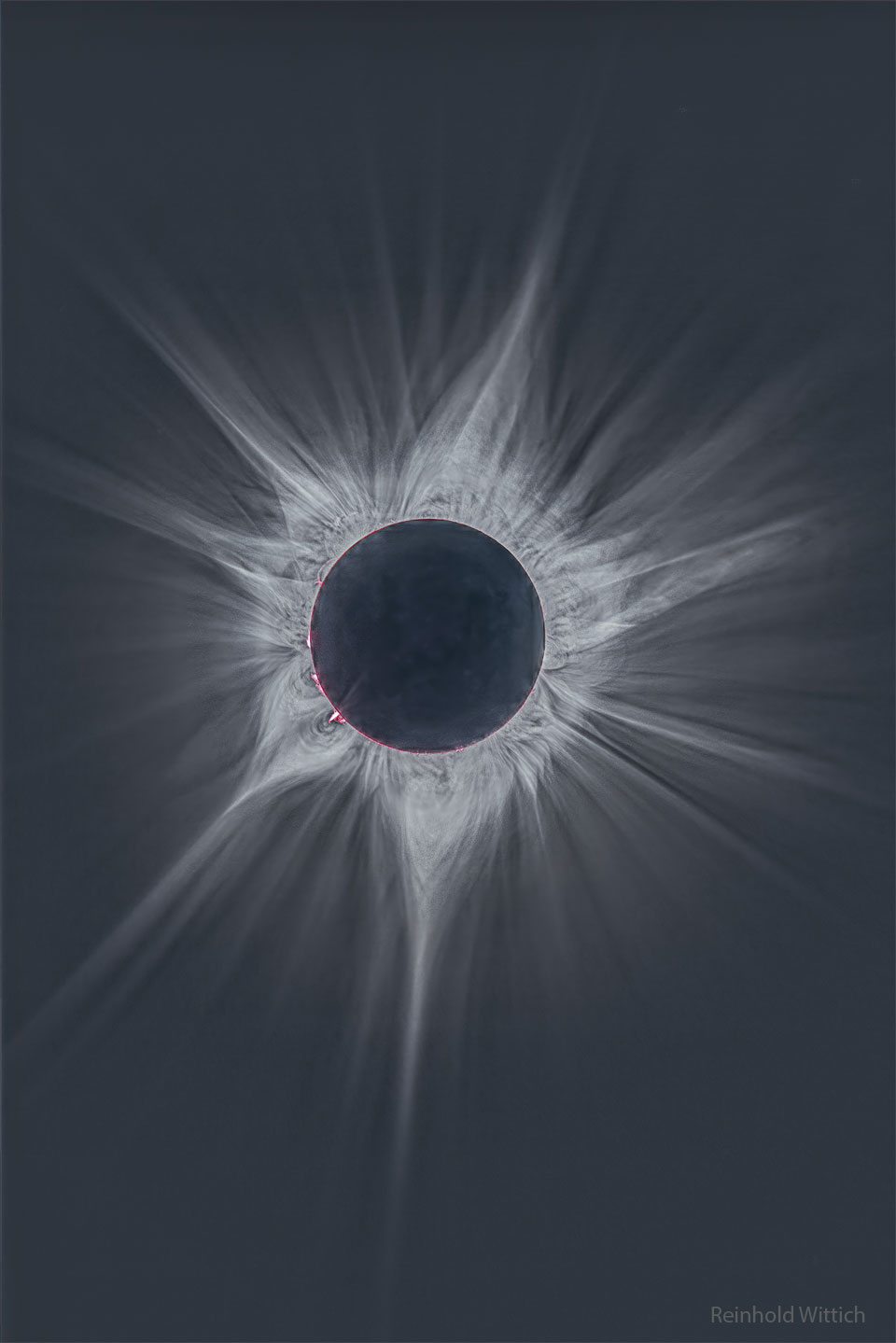
Most photographs don’t adequately portray the magnificence of the Sun’s corona. Seeing the corona first-hand during a total solar eclipse is unparalleled. The human eye can adapt to see coronal features and extent that average cameras usually cannot. Welcome, however, to the digital age. The featured image digitally combined short and long exposures taken in Exmouth, Australia that were processed to highlight faint and extended features in the corona during the total solar eclipse that occurred in April of 2023. Clearly visible are intricate layers and glowing caustics of an ever changing mixture of hot gas and magnetic fields in the Sun’s corona. Looping prominences appear bright pink just past the Sun’s edge. Images taken seconds before and after the total eclipse show glimpses of the background Sun known as Baily’s Beads and diamond ring effect. The next total solar eclipse will cross North America in April of 2024. [via NASA] https://ift.tt/oTA0tMi
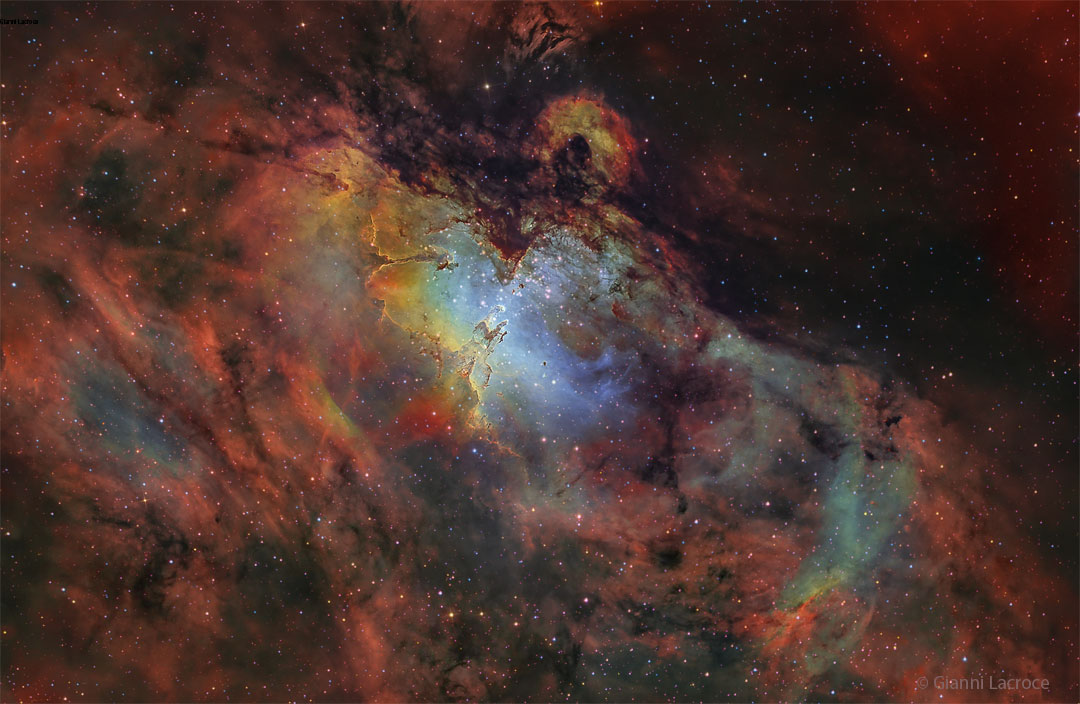
From afar, the whole thing looks like an eagle. A closer look at the Eagle Nebula, however, shows the bright region is actually a window into the center of a larger dark shell of dust. Through this window, a brightly-lit workshop appears where a whole open cluster of stars is being formed. In this cavity, tall pillars and round globules of dark dust and cold molecular gas remain where stars are still forming. Already visible are several young bright blue stars whose light and winds are burning away and pushing back the remaining filaments and walls of gas and dust. The Eagle emission nebula, tagged M16, lies about 6500 light years away, spans about 20 light-years, and is visible with binoculars toward the constellation of the Serpent (Serpens). This picture involved long and deep exposures and combined three specific emitted colors emitted by sulfur (colored as yellow), hydrogen (red), and oxygen (blue). [via NASA] https://ift.tt/RaKPHtl

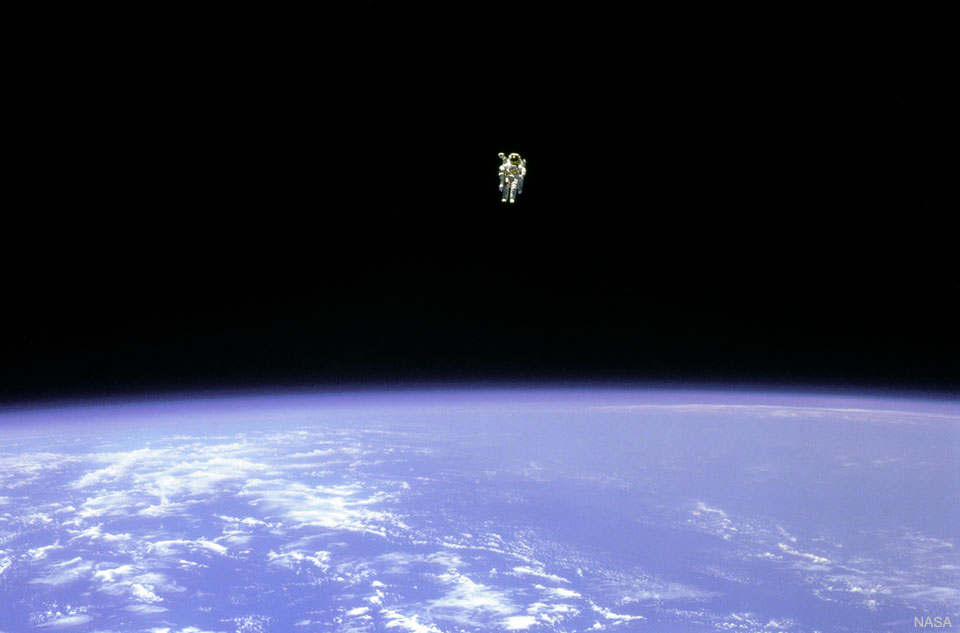
What would it be like to fly free in space? At about 100 meters from the cargo bay of the space shuttle Challenger, Bruce McCandless II was living the dream — floating farther out than anyone had ever been before. Guided by a Manned Maneuvering Unit (MMU), astronaut McCandless, pictured, was floating free in space. During Space Shuttle mission 41-B in 1984, McCandless and fellow NASA astronaut Robert Stewart were the first to experience such an «untethered space walk». The MMU worked by shooting jets of nitrogen and was used to help deploy and retrieve satellites. With a mass over 140 kilograms, an MMU is heavy on Earth, but, like everything, is weightless when drifting in orbit. The MMU was later replaced with the SAFER backpack propulsion unit. [via NASA] https://ift.tt/iwoAdrm

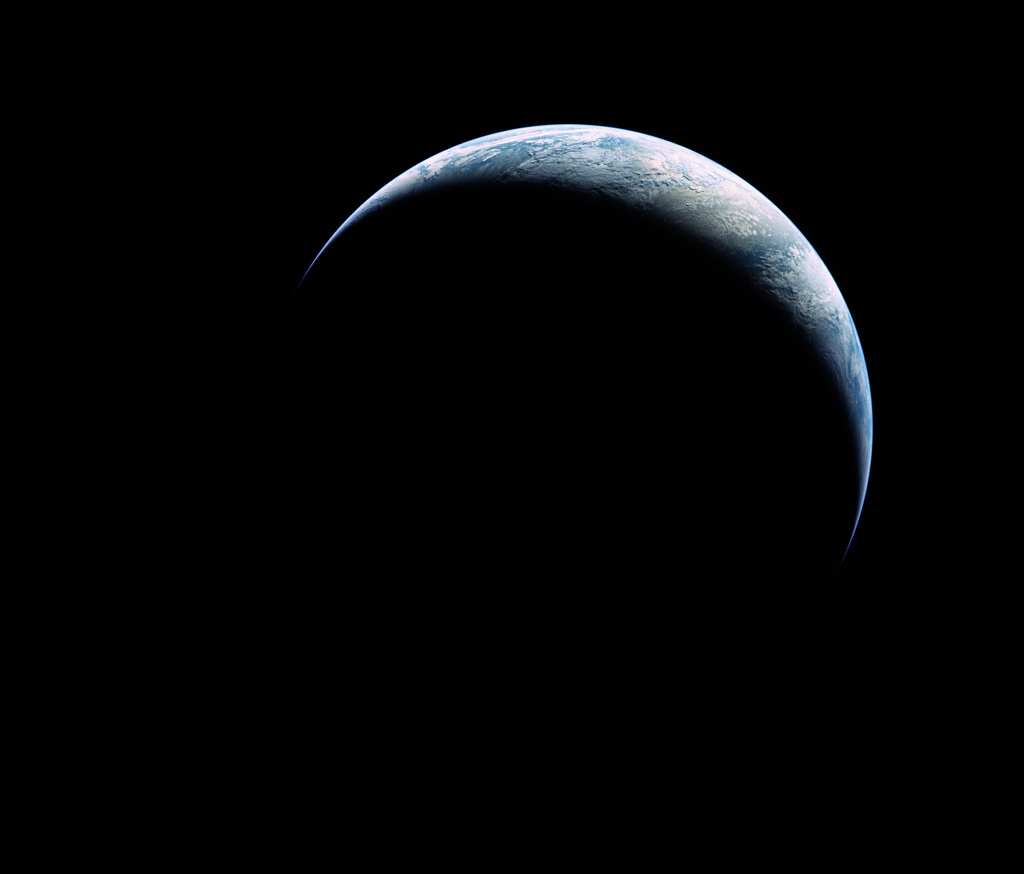
Apollo 17: The Crescent Earth

Our fair planet sports a curved, sunlit crescent against the black backdrop of space in this stunning photograph. From the unfamiliar perspective, the Earth is small and, like a telescopic image of a distant planet, the entire horizon is completely within the field of view. Enjoyed by crews on board the International Space Station, only much closer views of the planet are possible from low Earth orbit. Orbiting the planet once every 90 minutes, a spectacle of clouds, oceans, and continents scrolls beneath them with the partial arc of the planet’s edge in the distance. But this digitally restored image presents a view so far only achieved by 24 humans, Apollo astronauts who traveled to the Moon and back again between 1968 and 1972. The original photograph, AS17-152-23420, was taken by the homeward bound crew of Apollo 17, on December 17, 1972. For now it is the last picture of Earth from this planetary perspective taken by human hands. [via NASA] https://ift.tt/Zs3MbNy

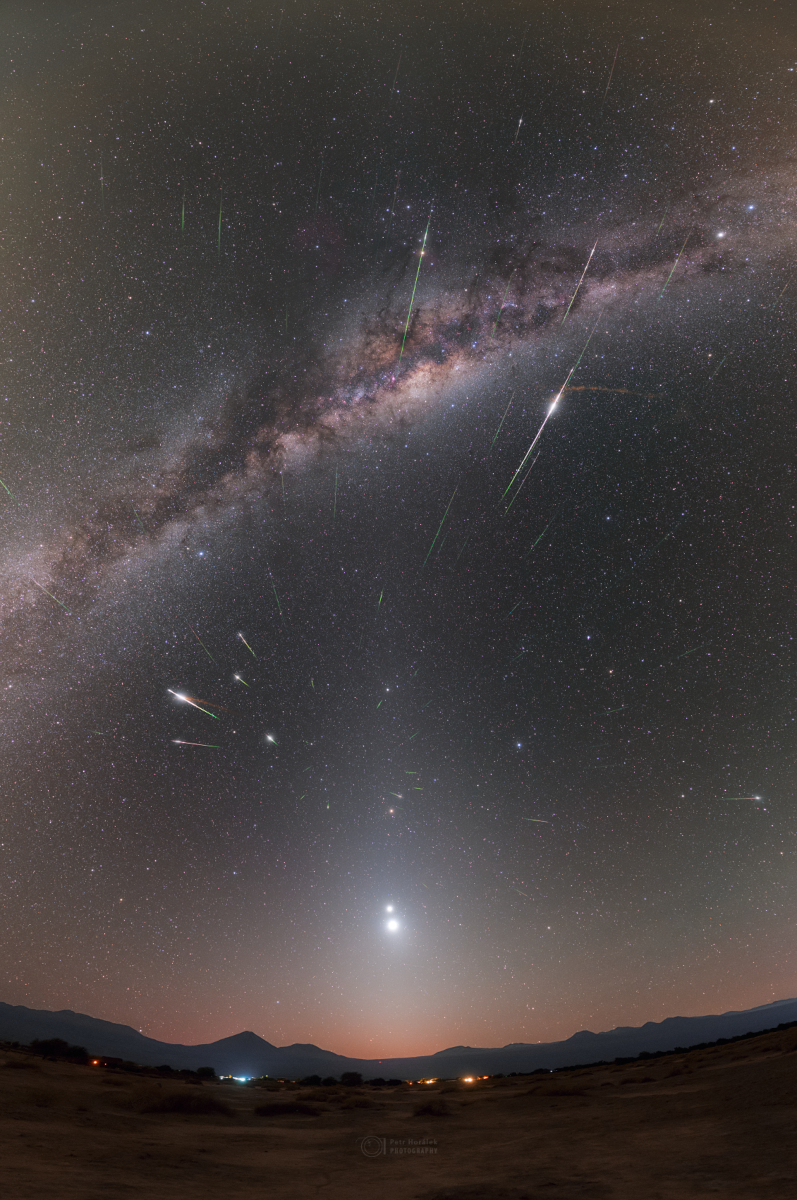
Halley Dust, Mars Dust, and Milky Way

Grains of cosmic dust streaked through night skies in early May. Swept up as planet Earth plowed through the debris streams left behind by periodic Comet Halley, the annual meteor shower is known as the Eta Aquarids. This year, the Eta Aquarids peak was visually hampered by May’s bright Full Moon, though. But early morning hours surrounding last May’s shower of Halley dust were free of moonlight interference. In exposures recorded between April 28 and May 8 in 2022, this composited image shows nearly 90 Eta Aquarid meteors streaking from the shower’s radiant in Aquarius over San Pedro de Atacama, Chile. The central Milky Way arcs above in the southern hemisphere’s predawn skies. The faint band of light rising from the horizon is Zodiacal light, caused by dust scattering sunlight near our Solar System’s ecliptic plane. Along the ecliptic and entrained in the Zodiacal glow are the bright planets Venus, Jupiter, Mars, and Saturn. Of course Mars itself has recently been found to be a likely source of the dust along the ecliptic responsible for creating Zodiacal light. [via NASA] https://ift.tt/OPFGKMV

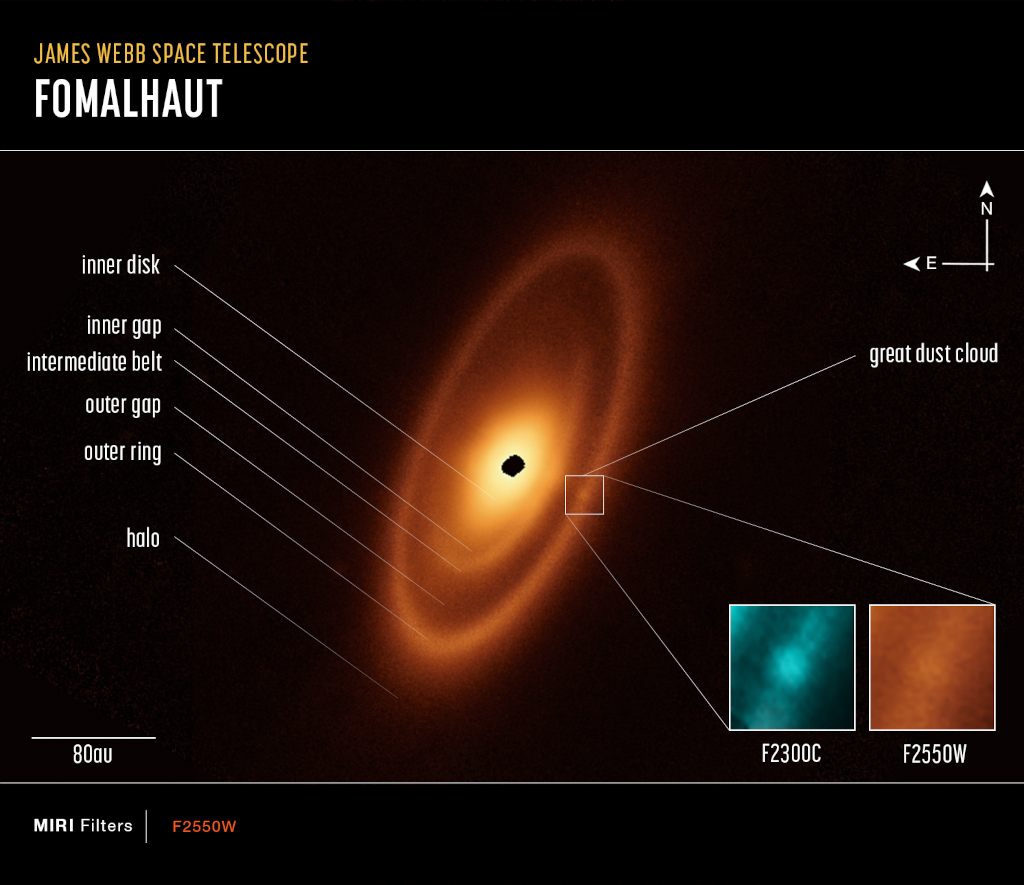
Fomalhaut is a bright star, a 25 light-year voyage from planet Earth in the direction of the constellation Piscis Austrinus. Astronomers first noticed Fomalhaut’s excess infrared emission in the 1980s. Space and ground-based telescopes have since identified the infrared emission’s source as a disk of dusty debris surrounding the hot, young star related to the ongoing formation of a planetary system. But this sharp infrared image from the James Webb Space Telescope’s MIRI camera reveals details of Fomalhaut’s debris disk never before seen, including a large dust cloud in the outer ring that is possible evidence for colliding bodies, and an inner dust disk and gap likely shaped and maintained by embedded but unseen planets. An image scale bar in au or astronomical units, the average Earth-Sun distance, appears at the lower left. Fomalhaut’s outer circumstellar dust ring lies at about twice the distance of our own Solar System’s Kuiper Belt of small icy bodies and debris beyond the orbit of Neptune. [via NASA] https://ift.tt/jQPGKNH

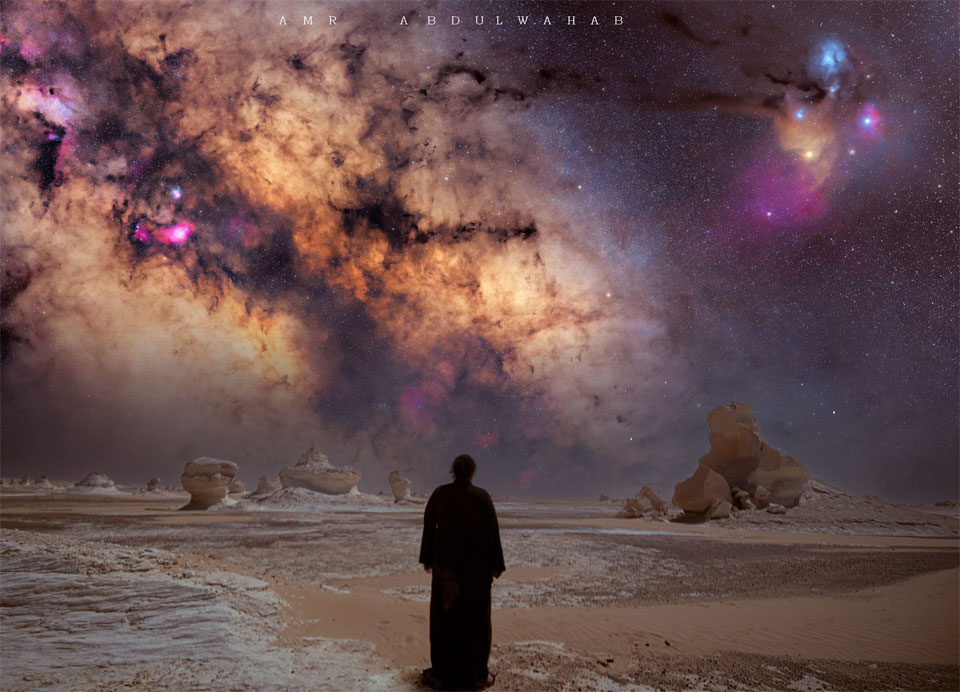
For ten years the stargazer dreamed of taking a picture like this. The dreamer knew that the White Desert National Park in Egypt’s Western Desert is a picturesque place hosting numerous chalk formations sculpted into surreal structures by a sandy wind. The dreamer knew that the sky above could be impressively dark on a clear moonless night, showing highlights such as the central band of our Milky Way Galaxy in impressive color and detail. So the dreamer invited an even more experienced astrophotographer to spend three weeks together in the desert and plan the composite images that needed to be taken and processed to create the dream image. Over three days in mid-March, the base images were taken, all with the same camera and from the same location. The impressive result is featured here, with the dreamer — proudly wearing a traditional Bedouin galabyia — pictured in the foreground. [via NASA] https://ift.tt/pOSdukt

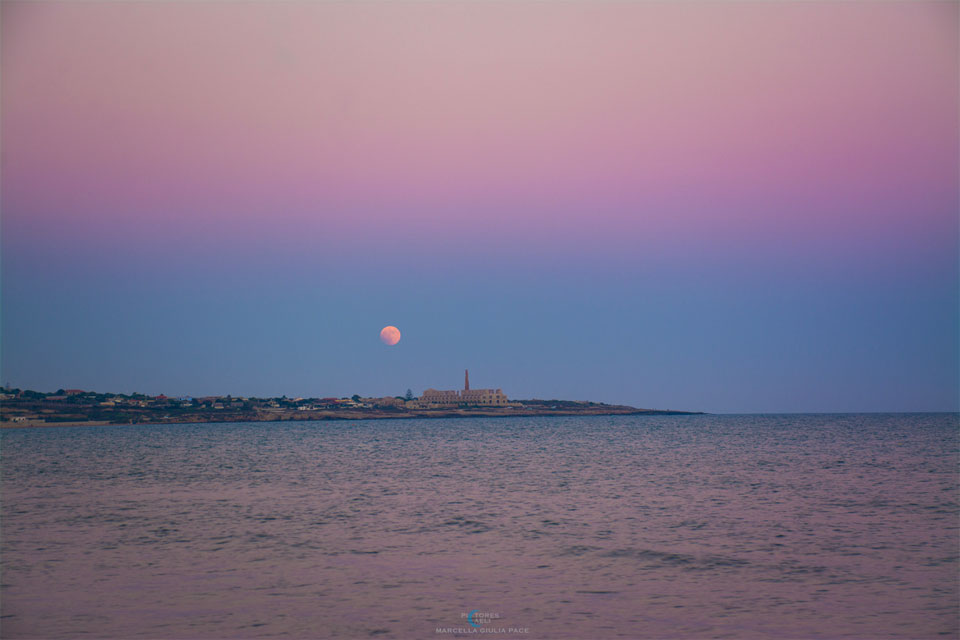
Can you find two Earth shadows in today’s image? It’s a bit tricky. To find the first shadow, observe that the top part of the atmosphere appears pink and the lower part appears blue. This is because the top half is exposed to direct sunlight, while the lower part is not. The purple area in between is known as the Belt of Venus, even though Venus can only appear on the other side of the sky, near the Sun. The blue color of the lower atmosphere is caused by the Earth blocking sunlight, creating Earth shadow number 1. Now, where is the second Earth shadow? Take a look at the Moon. Do you notice something unusual about the lower left part? That area appears unusually dark because it is in the shadow of the Earth, creating Earth shadow number 2. To be precise, the Moon was captured during a lunar eclipse. This carefully timed image was taken in Sampieri, Sicily, Italy, in July 2018. [via NASA] https://ift.tt/YhIdCPR

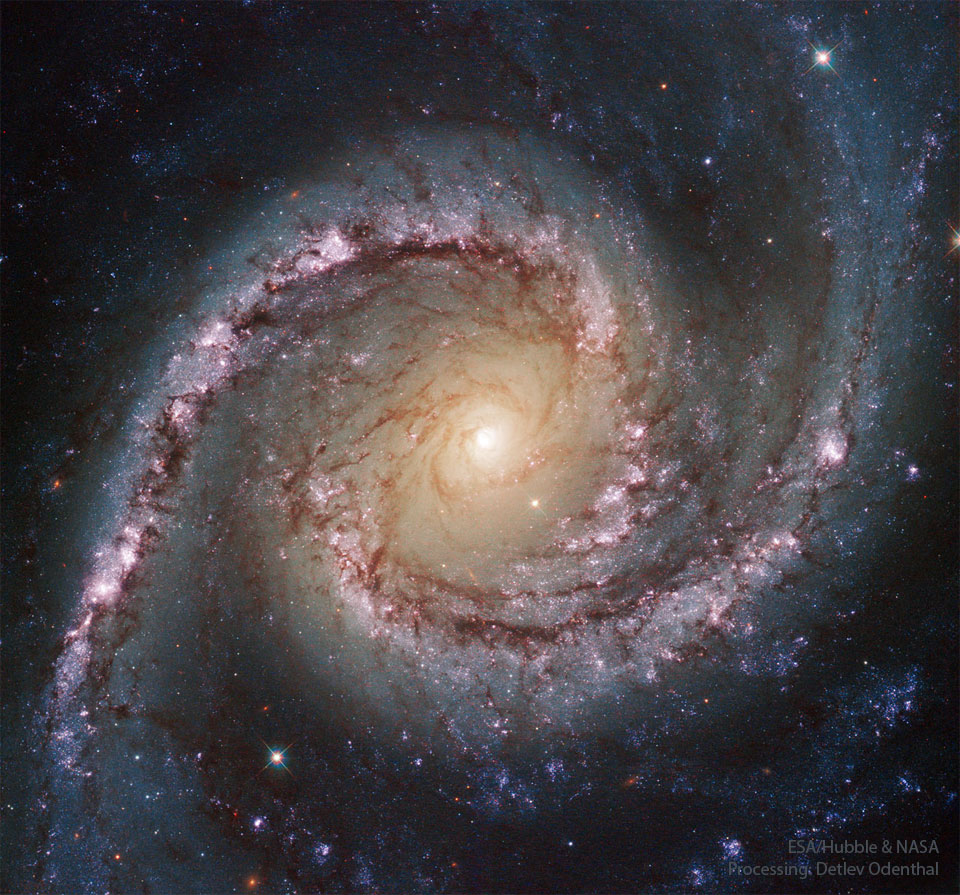
If not perfect, then this spiral galaxy is at least one of the most photogenic. An island universe containing billions of stars and situated about 40 million light-years away toward the constellation of the Dolphinfish (Dorado), NGC 1566 presents a gorgeous face-on view. Classified as a grand design spiral, NGC 1566 shows two prominent and graceful spiral arms that are traced by bright blue star clusters and dark cosmic dust lanes. Numerous Hubble Space Telescope images of NGC 1566 have been taken to study star formation, supernovas, and the spiral’s unusually active center. Some of these images, stored online in the Hubble Legacy Archive, were freely downloaded, combined, and digitally processed by an industrious amateur to create the featured image. NGC 1566’s flaring center makes the spiral one of the closest and brightest Seyfert galaxies, likely housing a central supermassive black hole wreaking havoc on surrounding stars and gas. [via NASA] https://ift.tt/o4Q2TyS

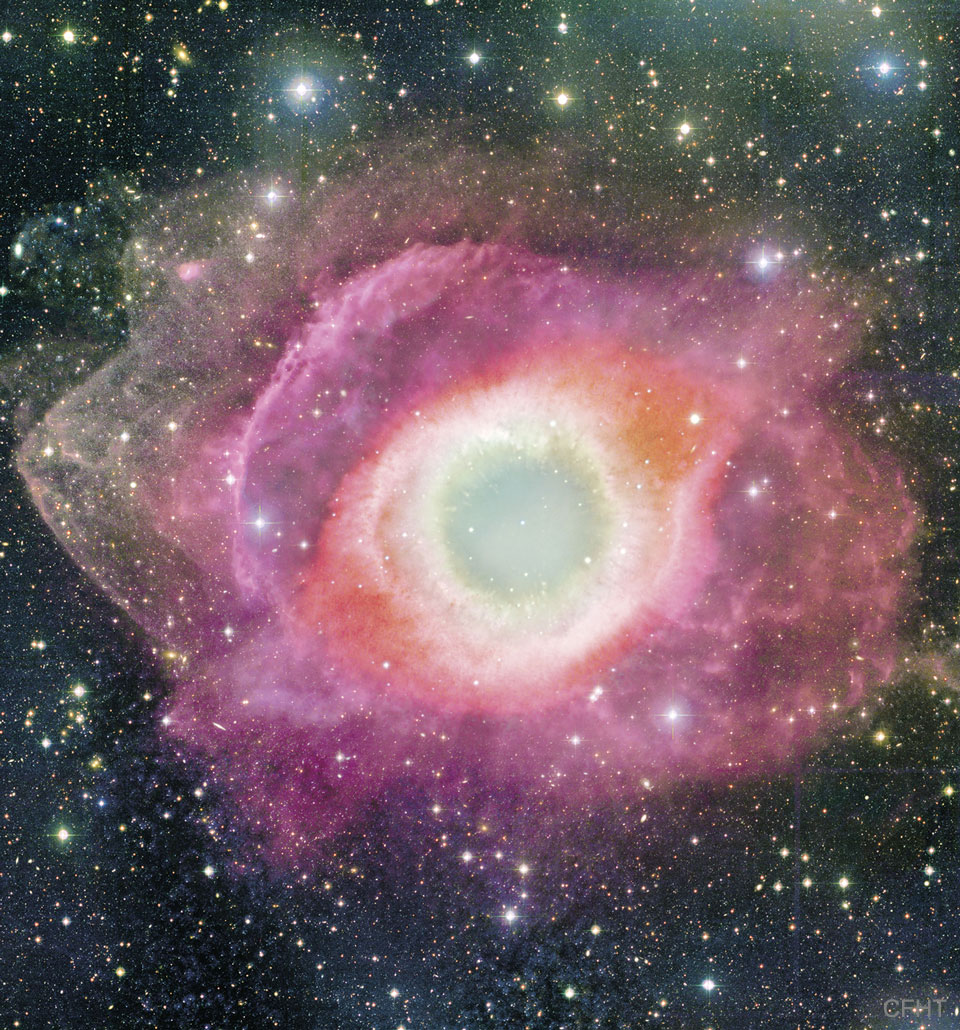
Will our Sun look like this one day? The Helix Nebula is one of brightest and closest examples of a planetary nebula, a gas cloud created at the end of the life of a Sun-like star. The outer gasses of the star expelled into space appear from our vantage point as if we are looking down a helix. The remnant central stellar core, destined to become a white dwarf star, glows in light so energetic it causes the previously expelled gas to fluoresce. The Helix Nebula, given a technical designation of NGC 7293, lies about 700 light-years away towards the constellation of the Water Bearer (Aquarius) and spans about 2.5 light-years. The featured picture was taken with the Canada-France-Hawaii Telescope (CFHT) located atop a dormant volcano in Hawaii, USA. A close-up of the inner edge of the Helix Nebula shows complex gas knots of unknown origin. [via NASA] https://ift.tt/M0SxUZu