Lyrid Meteor Streak

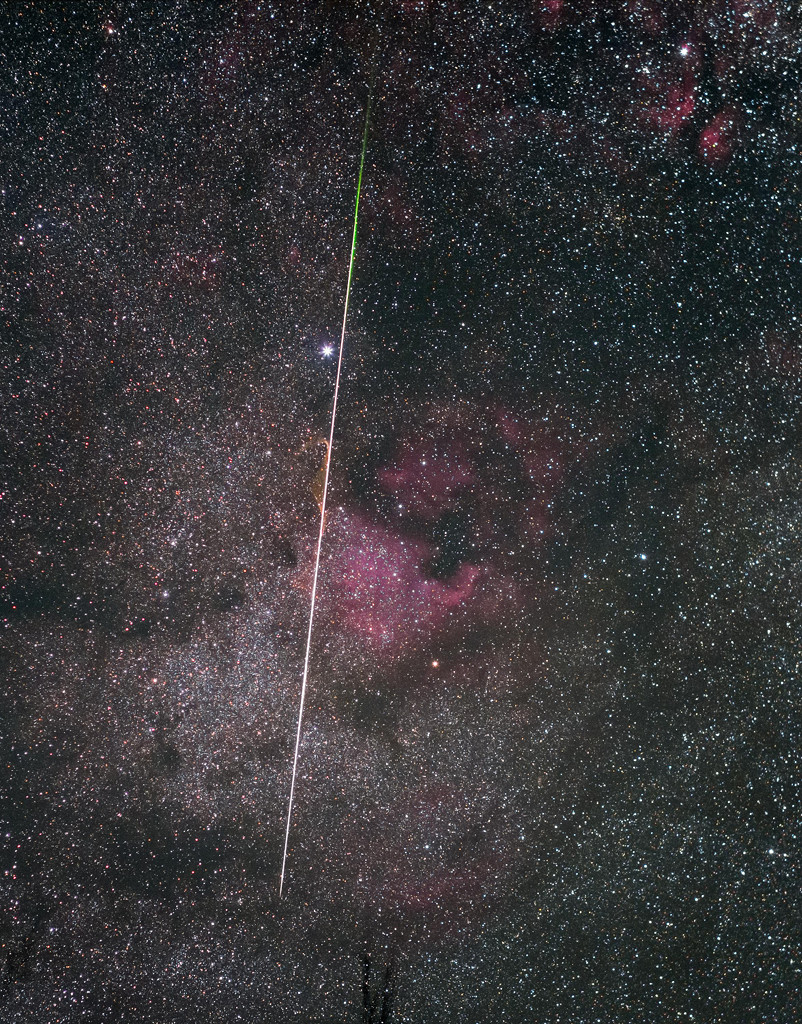
Earth’s annual Lyrid Meteor Shower peaked before dawn yesterday, as our fair planet plowed through debris from the tail of long-period comet Thatcher. In crisp, clear and moonless predawn skies over Brown County, Indiana this streak of vaporizing comet dust briefly shared a telephoto field of view with stars and nebulae along the Milky Way. Alpha star of the constellation Cygnus, Deneb lies near the bright meteor’s path along with the region’s dark interstellar clouds of dust and the recognizable glow of the North America nebula (NGC 7000). The meteor’s streak points back to the shower’s radiant, its apparent point of origin on the sky. That would be in the constellation Lyra, near bright star Vega and off the top edge of the frame. [via NASA] https://ift.tt/3bxwwTR
Planet Earth at Twilight

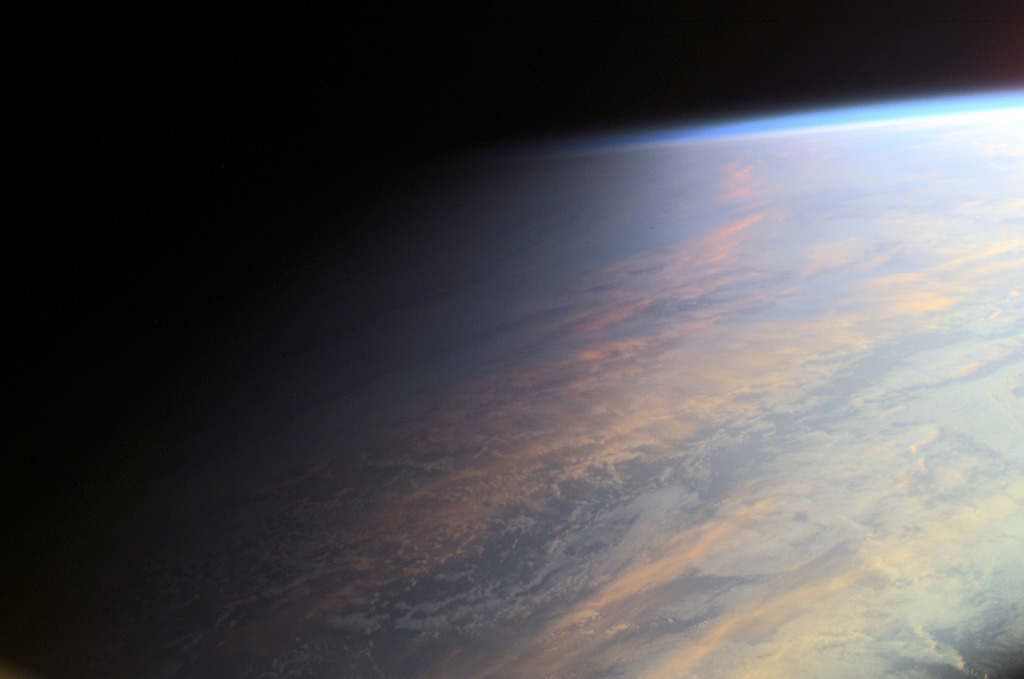
No sudden, sharp boundary marks the passage of day into night in this gorgeous view of ocean and clouds over our fair planet Earth. Instead, the shadow line or terminator is diffuse and shows the gradual transition to darkness we experience as twilight. With the Sun illuminating the scene from the right, the cloud tops reflect gently reddened sunlight filtered through the dusty troposphere, the lowest layer of the planet’s nurturing atmosphere. A clear high altitude layer, visible along the dayside’s upper edge, scatters blue sunlight and fades into the blackness of space. This picture was taken in June of 2001 from the International Space Station orbiting at an altitude of 211 nautical miles. Of course from home, you can check out the Earth Now. [via NASA] https://ift.tt/3asa6C3

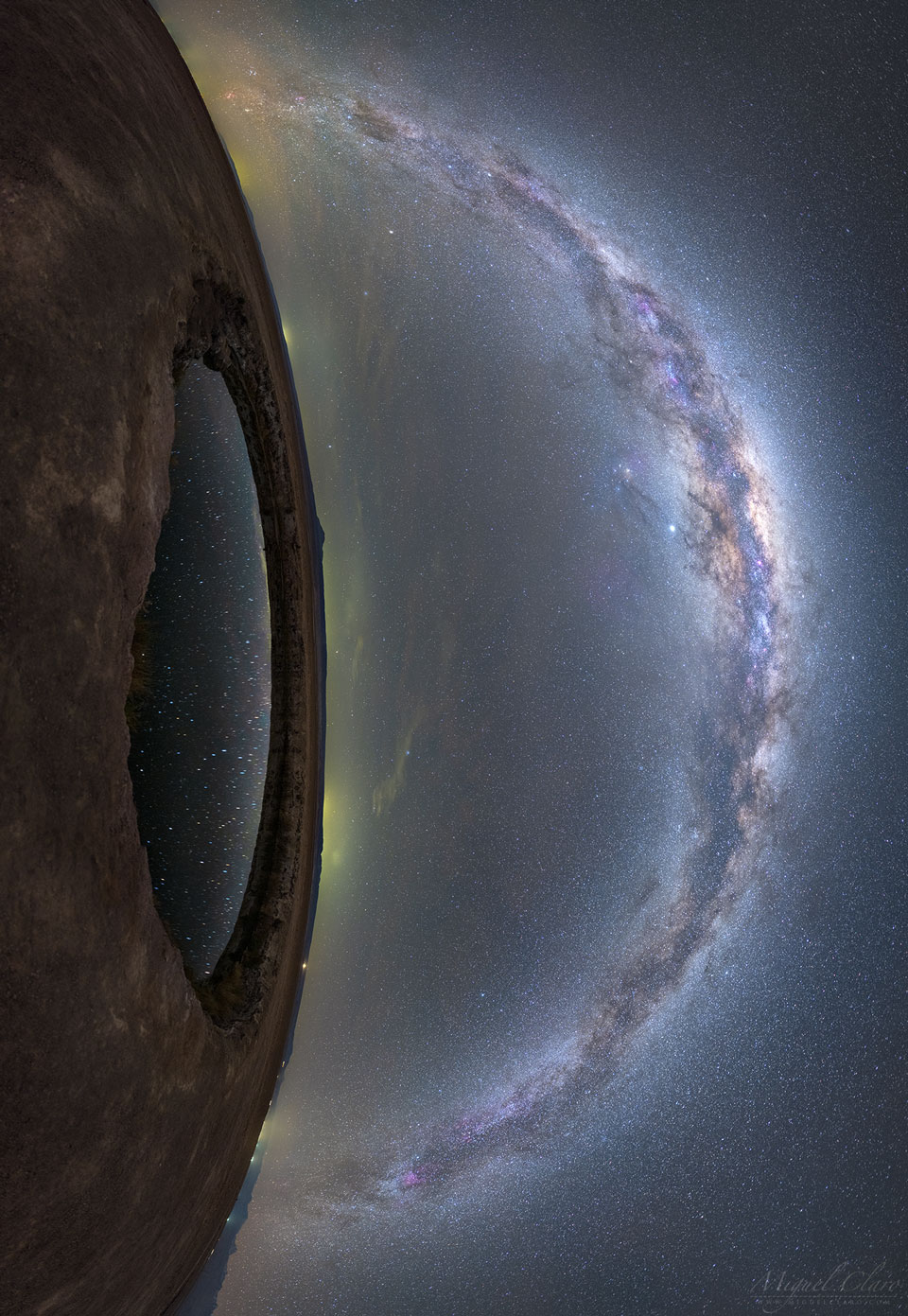
Eye on the Milky Way

Have you ever had stars in your eyes? It appears that the eye on the left does, and moreover it appears to be gazing at even more stars. The featured 27-frame mosaic was taken last July from Ojas de Salar in the Atacama Desert of Chile. The eye is actually a small lagoon captured reflecting the dark night sky as the Milky Way Galaxy arched overhead. The seemingly smooth band of the Milky Way is really composed of billions of stars, but decorated with filaments of light-absorbing dust and red-glowing nebulas. Additionally, both Jupiter (slightly left the galactic arch) and Saturn (slightly to the right) are visible. The lights of small towns dot the unusual vertical horizon. The rocky terrain around the lagoon appears to some more like the surface of Mars than our Earth. [via NASA] https://ift.tt/2RTGXcw

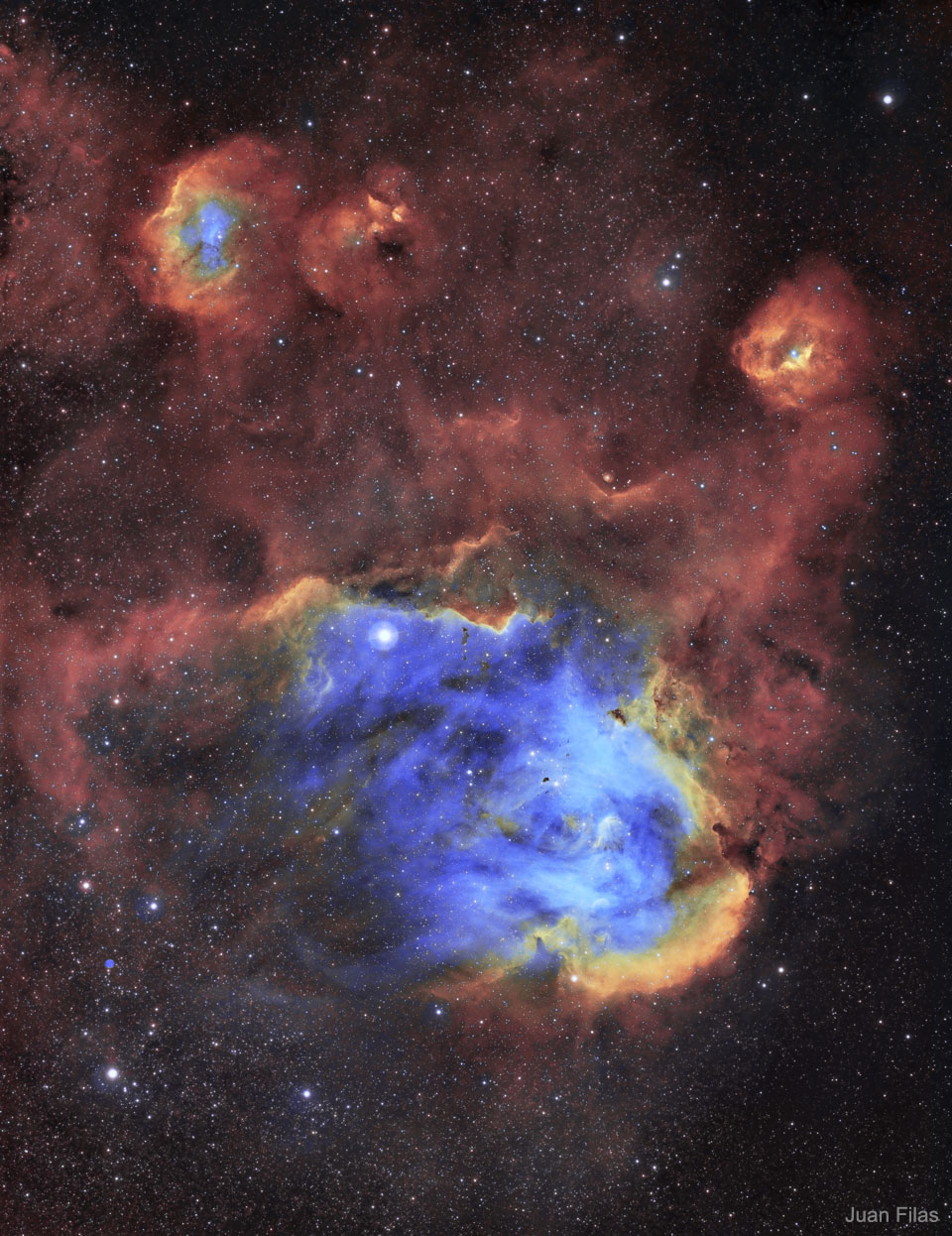
IC 2944: The Running Chicken Nebula

To some, it looks like a giant chicken running across the sky. To others, it looks like a gaseous nebula where star formation takes place. Cataloged as IC 2944, the Running Chicken Nebula spans about 100 light years and lies about 6,000 light years away toward the constellation of the Centaur (Centaurus). The featured image, shown in scientifically assigned colors, was captured recently in a 12-hour exposure. The star cluster Collinder 249 is visible embedded in the nebula’s glowing gas. Although difficult to discern here, several dark molecular clouds with distinct shapes can be found inside the nebula. [via NASA] https://ift.tt/2XNJwR3

Just Another Day on Aerosol Earth

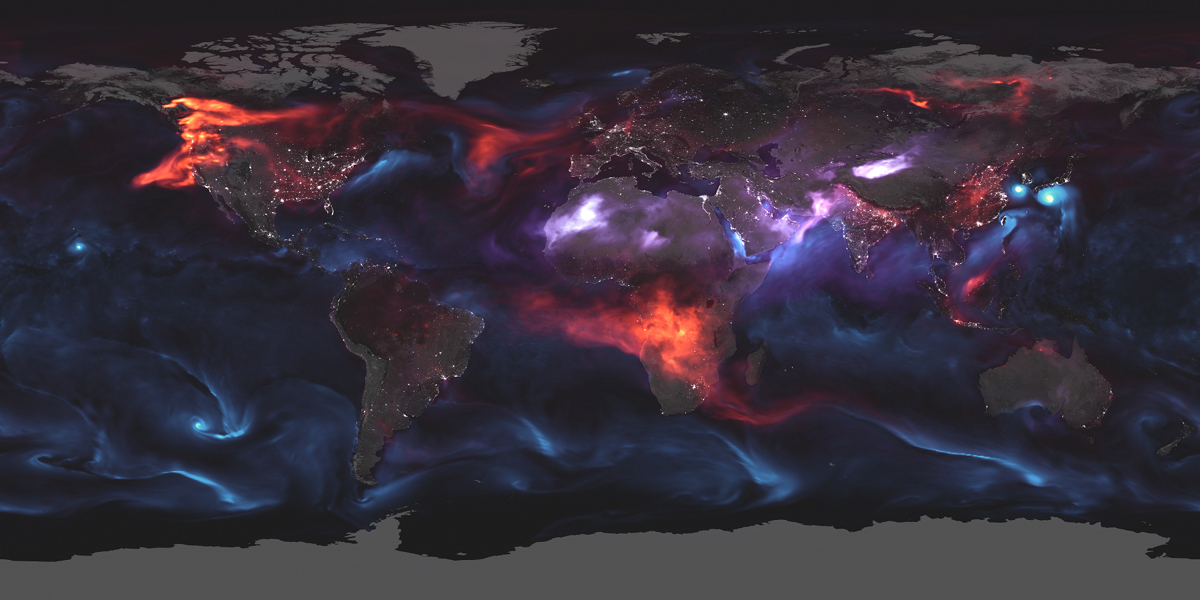
It was just another day on aerosol Earth. For August 23, 2018, the identification and distribution of aerosols in the Earth’s atmosphere is shown in this dramatic, planet-wide digital visualization. Produced in real time, the Goddard Earth Observing System Forward Processing (GEOS FP) model relies on a combination of Earth-observing satellite and ground-based data to calculate the presence of types of aerosols, tiny solid particles and liquid droplets, as they circulate above the entire planet. This August 23rd model shows black carbon particles in red from combustion processes, like smoke from the fires in the United States and Canada, spreading across large stretches of North America and Africa. Sea salt aerosols are in blue, swirling above threatening typhoons near South Korea and Japan, and the hurricane looming near Hawaii. Dust shown in purple hues is blowing over African and Asian deserts. The location of cities and towns can be found from the concentrations of lights based on satellite image data of the Earth at night. [via NASA] https://ift.tt/2xvgUl7

The Windmill and the Star Trails

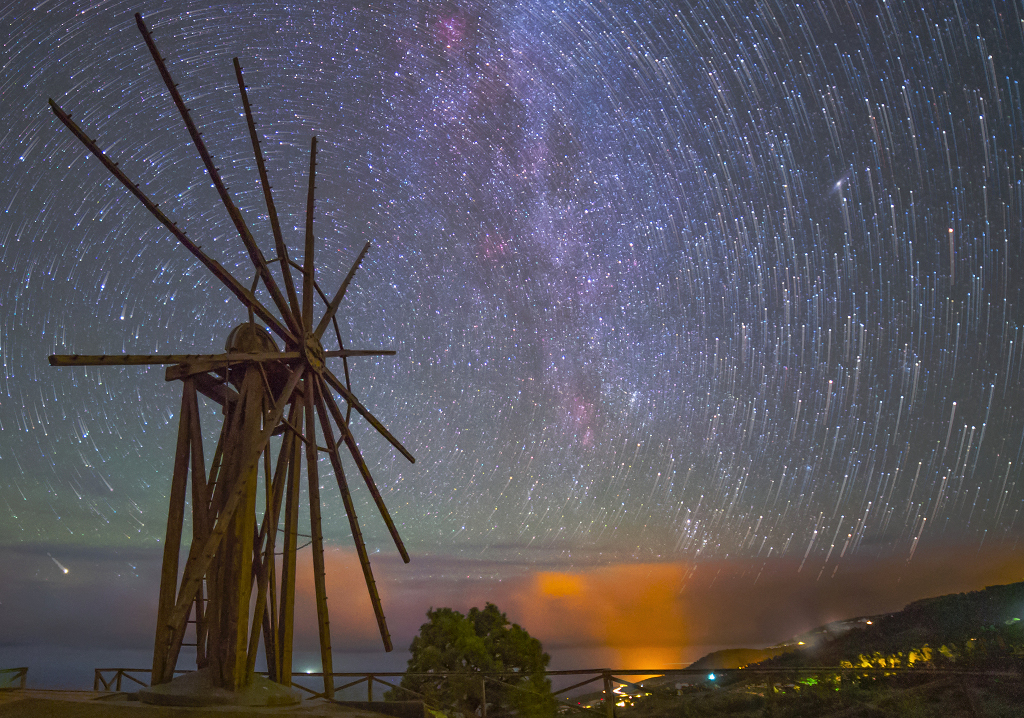
Stars can’t turn these old wooden arms, but it does look like they might in this scene from a rotating planet. The well-composed night skyscape was recorded from Garafia, a municipality on the island of La Palma, Canary Islands, planet Earth. The center of the once working windmill, retired since 1953, is lined-up with the north celestial pole, the planet’s rotation axis projected on to the northern sky. From a camera fixed to a tripod, the star trails are a reflection of the planet’s rotation traced in a digital composite of 39 sequential exposures each 25 seconds long. Brought out by highlighting the final exposure in the sequence, the stars themselves appear at the ends of their short concentric arcs. A faint band of winter’s Milky Way and even a diffuse glow from our neighboring Andromeda Galaxy also shine in the night. [via NASA] https://ift.tt/3bihukB

Comet ATLAS Breaks Up

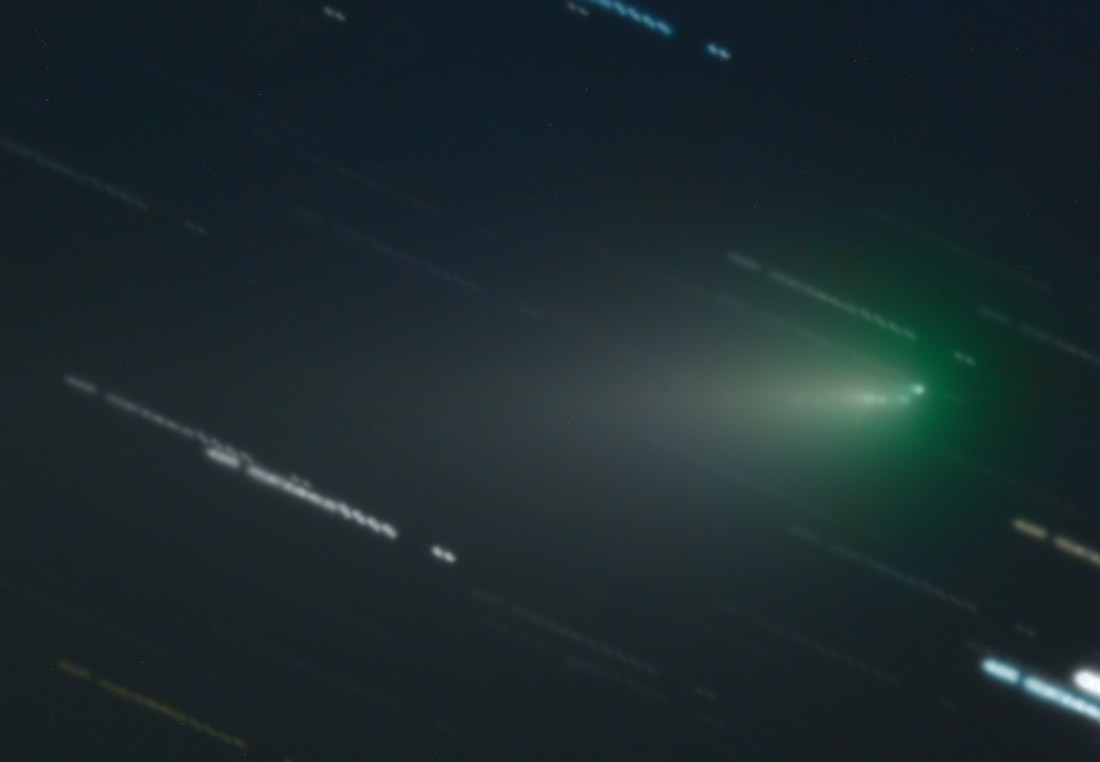
Cruising through the inner solar system, Comet ATLAS C2019/Y4 has apparently fragmented. Multiple separate condensations within its diffuse coma are visible in this telescopic close-up from April 12, composed of frames tracking the comet’s motion against trailing background stars. Discovered at the end of December 2019, this comet ATLAS showed a remarkably rapid increase in brightness in late March. Northern hemisphere comet watchers held out hope that it would become a bright nake-eye comet as it came closer to Earth in late April and May. But fragmenting ATLAS is slowly fading in northern skies. The breakup of comets is not uncommon though. This comet ATLAS is in an orbit similar to the Great Comet of 1844 (C/1844 Y1) and both may be fragments of a single larger comet. [via NASA] https://ift.tt/34Fm0af

A Cosmic Triangle

It was an astronomical triple play. Setting on the left, just after sunset near the end of last month, was our Moon — showing a bright crescent phase. Setting on the right was Venus, the brightest planet in the evening sky last month — and this month, too. With a small telescope, you could tell that Venus’ phase was half, meaning that only half of the planet, as visible from Earth, was exposed to direct sunlight and brightly lit. High above and much further in the distance was the Pleiades star cluster. Although the Moon and Venus move with respect to the background stars, the Pleiades do not — because they are background stars. In the beginning of this month, Venus appeared to move right in front of the Pleiades, a rare event that happens only once every eight years. The featured image captured this cosmic triangle with a series of exposures taken from the same camera over 70 minutes near Avonlea, Saskatchewan, Canada. The positions of the celestial objects was predicted. The only thing unpredicted was the existence of the foreground tree — and the astrophotographer is still unsure what type of tree that is. [via NASA] https://ift.tt/34NkuDn

NGC 253: The Silver Coin Galaxy

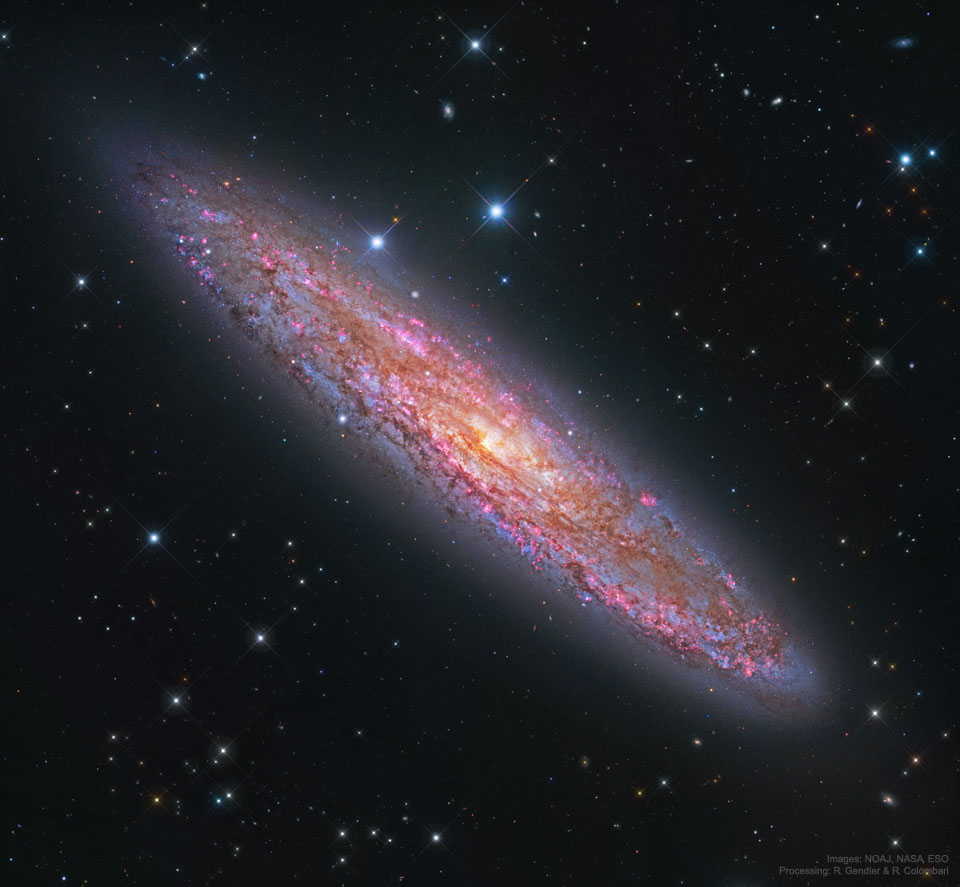
NGC 253 is one of the brightest spiral galaxies visible, but also one of the dustiest. Dubbed the Silver Coin for its appearance in smalltelescopes, it is more formally known as the Sculptor Galaxy for its location within the boundaries of the southern constellation Sculptor. Discovered in 1783 by mathematician and astronomer Caroline Herschel, the dusty island universe lies a mere 10 million light-years away. About 70 thousand light-years across, NGC 253, pictured, is the largest member of the Sculptor Group of Galaxies, the nearest to our own Local Group of galaxies. In addition to its spiral dust lanes, tendrils of dust seem to be rising from a galactic disk laced with young star clusters and star forming regions in this sharp color image. The high dust content accompanies frantic star formation, earning NGC 253 the designation of a starburst galaxy. NGC 253 is also known to be a strong source of high-energy x-rays and gamma rays, likely due to massive black holes near the galaxy’s center. Take a trip through extragalactic space in this short video flyby of NGC 253. [via NASA] https://ift.tt/2yYJ2NM

A Sailing Stone across Death Valley

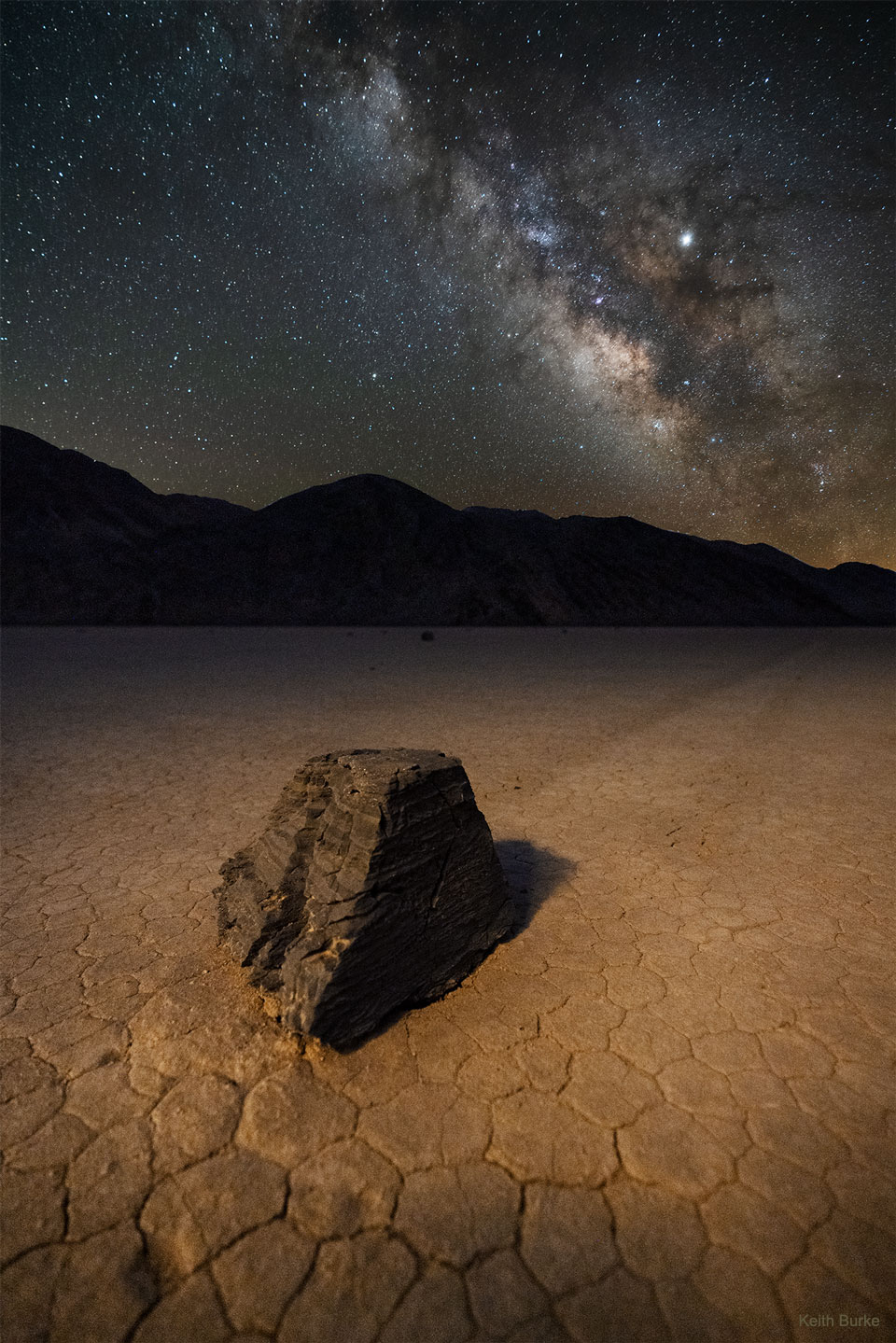
How did this big rock end up on this strange terrain? One of the more unusual places here on Earth occurs inside Death Valley, California, USA. There a dried lakebed named Racetrack Playa exists that is almost perfectly flat, with the odd exception of some very large stones, one of which is pictured here in April of 2019 beneath a dark, Milky-Way filled sky. Now the flatness and texture of large playa like Racetrack are fascinating but not scientifically puzzling — they are caused by mud flowing, drying, and cracking after a heavy rain. Only recently, however, has a viable scientific hypothesis been given to explain how heavy sailing stones end up near the middle of such a large flat surface. Unfortunately, as frequently happens in science, a seemingly surreal problem ends up having a relatively mundane solution. It turns out that in winter thin ice sheets form, and winds push ice sections laden with even heavy rocks across the temporarily slick playa when sunlight melts the ice. [via NASA] https://ift.tt/2RO01sP