Lunar Dust and Duct Tape

Why is the Moon so dusty? On Earth, rocks are weathered by wind and water, creating soil and sand. On the Moon, the history of constant micrometeorite bombardment has blasted away at the rocky surface creating a layer of powdery lunar soil or regolith. For the Apollo astronauts and their equipment, the pervasive, fine, gritty dust was definitely a problem. Fifty years ago, on the lunar surface in December 1972, Apollo 17 astronauts Harrison Schmitt and Eugene Cernan needed to repair one of their rover’s fenders in an effort to keep the rooster tails of dust away from themselves and their gear. This picture reveals the wheel and fender of their dust covered rover along with the ingenious application of spare maps, clamps, and a grey strip of «duct tape». [via NASA] https://ift.tt/VemAazn

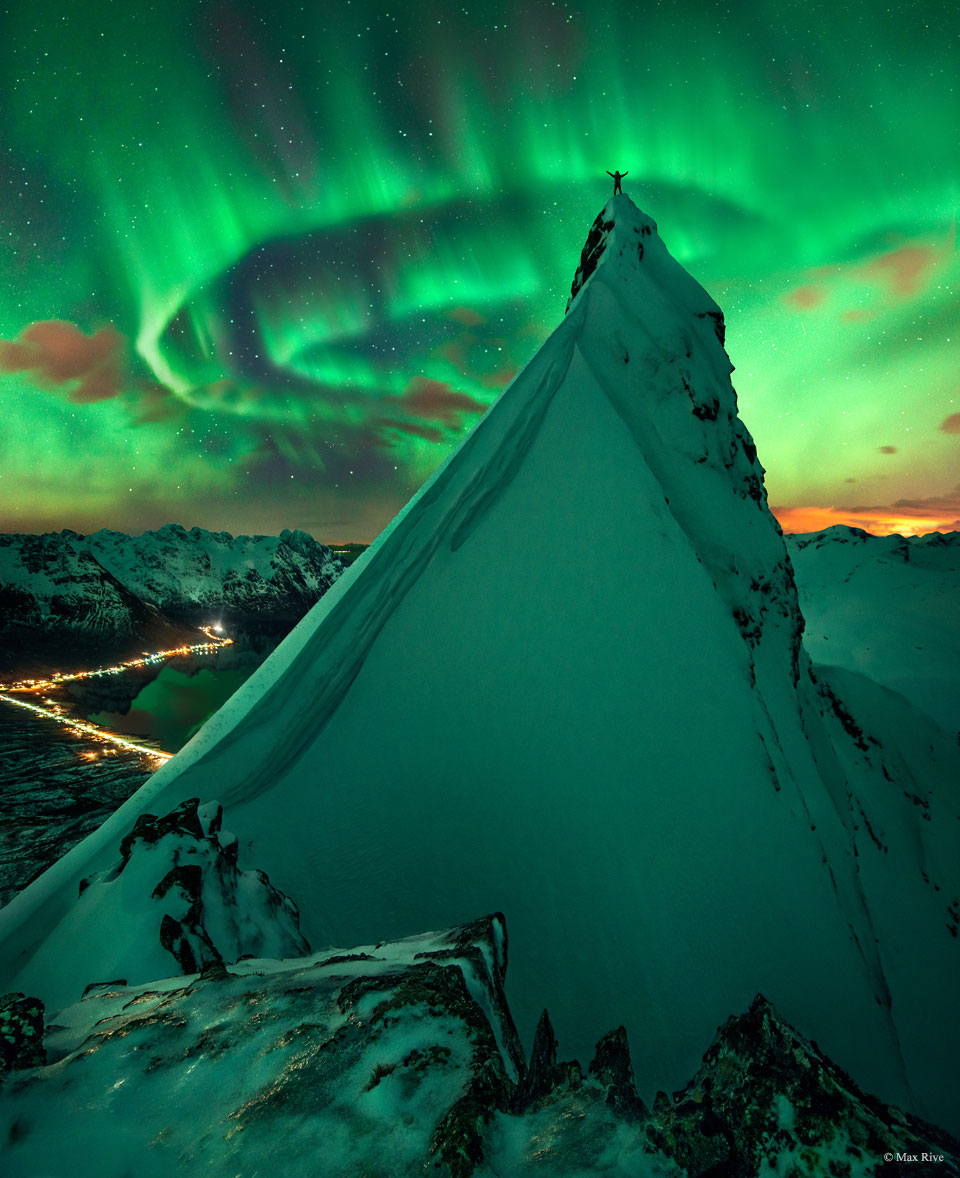
An Artful Sky over Lofoten Islands

Can the night sky be both art and science? If so, perhaps the featured image is an example. The digital panorama was composed of 10 landscape and 10 sky images all taken on the same night, from the same location, and with the same camera. Iconic features in the image have been artfully brightened, and the ground nearby was artfully illuminated. Visible in the foreground is the creative photographer anchoring an amazing view from the rugged Lofoten Islands of Norway, two months ago, by holding a lamp. Far in the distance are three prominent arches: our Milky Way Galaxy on the left, while a scientifically-unusual double-arced aurora is documented on the right. A meteor is highlighted between them. Other notable skylights include, left to right, the Andromeda Galaxy, the planet Jupiter, the star Vega, and the stars that compose the Big Dipper asterism. [via NASA] https://ift.tt/9gIhJjF

An Unusual Globule in IC 1396

Is there a monster in IC 1396? Known to some as the Elephant’s Trunk Nebula, parts of gas and dust clouds of this star formation region may appear to take on foreboding forms, some nearly human. The only real monster here, however, is a bright young star too far from Earth to hurt us. Energetic light from this star is eating away the dust of the dark cometary globule near the top of the featured image. Jets and winds of particles emitted from this star are also pushing away ambient gas and dust. Nearly 3,000 light-years distant, the relatively faint IC 1396 complex covers a much larger region on the sky than shown here, with an apparent width of more than 10 full moons. [via NASA] https://ift.tt/mfDgu2M

Io in True Color

The strangest moon in the Solar System is bright yellow. The featured picture, an attempt to show how Io would appear in the «true colors» perceptible to the average human eye, was taken in 1999 July by the Galileo spacecraft that orbited Jupiter from 1995 to 2003. Io’s colors derive from sulfur and molten silicate rock. The unusual surface of Io is kept very young by its system of active volcanoes. The intense tidal gravity of Jupiter stretches Io and damps wobbles caused by Jupiter’s other Galilean moons. The resulting friction greatly heats Io’s interior, causing molten rock to explode through the surface. Io’s volcanoes are so active that they are effectively turning the whole moon inside out. Some of Io’s volcanic lava is so hot it glows in the dark. [via NASA] https://ift.tt/8YlHrDa

America and the Sea of Serenity

Get out your red/blue glasses and check out this stereo view of another world. Fifty years ago the scene was recorded by Apollo 17 mission commander Eugene Cernan on December 11, 1972, one orbit before descending to land on the Moon. The stereo anaglyph was assembled from two photographs (AS17-147-22465, AS17-147-22466) captured from his vantage point on board the Lunar Module Challenger as he and Dr. Harrison Schmitt flew over Apollo 17’s landing site in the Taurus-Littrow Valley. The broad, sunlit face of the mountain dubbed South Massif rises near the center of the frame, above the dark floor of Taurus-Littrow to its left. Piloted by Ron Evans, the Command Module America is visible in orbit in the foreground against the South Massif’s peak. Beyond the mountains, toward the lunar limb, lies the Moon’s Mare Serenitatis. [via NASA] https://ift.tt/QvphRmI

Mars Rises above the Lunar Limb

On the night of December 7 Mars wandered near the Full Moon. In fact the Red Planet was occulted, passing behind the Moon, when viewed from locations across Europe and North America. About an hour after disappearing behind the lunar disk Mars reappears in this stack of sharp video frames captured from San Diego, planet Earth. With the Moon in the foreground Mars was a mere 82 million kilometers distant, near its own opposition. Full Moon and full Mars were bright enough provide the spectacular image with no exposure adjustments necessary. In the image Mars appears to rise just over ancient, dark-floored, lunar crater Abel very close to the southeastern edge of the Moon’s near side. Humboldt is the large impact crater to its north (left). [via NASA] https://ift.tt/apBrAfs

Orion and the Ocean of Storms

A camera on board the uncrewed Orion spacecraft captured this view on December 5 as Orion approached its return powered flyby of the Moon. Below one of Orion’s extended solar arrays lies dark, smooth, terrain along the western edge of the Oceanus Procellarum. Prominent on the lunar nearside Oceanus Procellarum, the Ocean of Storms, is the largest of the Moon’s lava-flooded maria. The lunar terminator, shadow line between lunar night and day, runs along the left of the frame. The 41 kilometer diameter crater Marius is top center, with ray crater Kepler peeking in at the edge, just right of the solar array wing. Kepler’s bright rays extend to the north and west, reaching the dark-floored Marius. Of course the Orion spacecraft is now headed toward a December 11 splashdown in planet Earth’s water-flooded Pacific Ocean. [via NASA] https://ift.tt/Aru6no2

NGC 7293: The Helix Nebula

A mere seven hundred light years from Earth, toward the constellation Aquarius, a sun-like star is dying. The dying star’s last few thousand years have produced the Helix Nebula (NGC 7293), a well studied and nearby example of a Planetary Nebula, typical of this final phase of stellar evolution. Combining narrow band image data from emission lines of hydrogen atoms in red and oxygen atoms in blue-green hues, it shows tantalizing details of the Helix, including its bright inner region about 3 light-years across. The white dot at the Helix’s center is this Planetary Nebula’s hot, central star. A simple looking nebula at first glance, the Helix is now understood to have a surprisingly complex geometry. [via NASA] https://ift.tt/3Z6O9Di

M16: A Star Forming Pillar from Webb

What’s happening inside this interstellar mountain? Stars are forming. The mountain is actually a column of gas and dust in the picturesque Eagle Nebula (M16). A pillar like this is so low in density that you could easily fly though it — it only appears solid because of its high dust content and great depth. The glowing areas are lit internally by newly formed stars. These areas shine in red and infrared light because blue light is scattered away by intervening interstellar dust. The featured image was captured recently in near-infrared light in unprecedented detail by the James Webb Space Telescope (JWST), launched late last year. Energetic light, abrasive winds, and final supernovas from these young stars will slowly destroy this stellar birth column over the next 100,000 years. [via NASA] https://ift.tt/pKTVAXe

Pleiades: The Seven Sisters Star Cluster

Have you ever seen the Pleiades star cluster? Even if you have, you probably have never seen it as large and clear as this. Perhaps the most famous star cluster on the sky, the bright stars of the Pleiades can be seen with the unaided eye even from the depths of a light-polluted city. With a long exposure from a dark location, though, the dust cloud surrounding the Pleiades star cluster becomes very evident. The featured 11-hour exposure, taken from the Siding Spring Observatory in Australia, covers a sky area several times the size of the full moon. Also known as the Seven Sisters and M45, the Pleiades lies about 400 light years away toward the constellation of the Bull (Taurus). A common legend with a modern twist is that one of the brighter stars faded since the cluster was named, leaving only six of the sister stars visible to the unaided eye. The actual number of Pleiades stars visible, however, may be more or less than seven, depending on the darkness of the surrounding sky and the clarity of the observer’s eyesight. [via NASA] https://ift.tt/RV6D9LH