September Sunrise Shadows

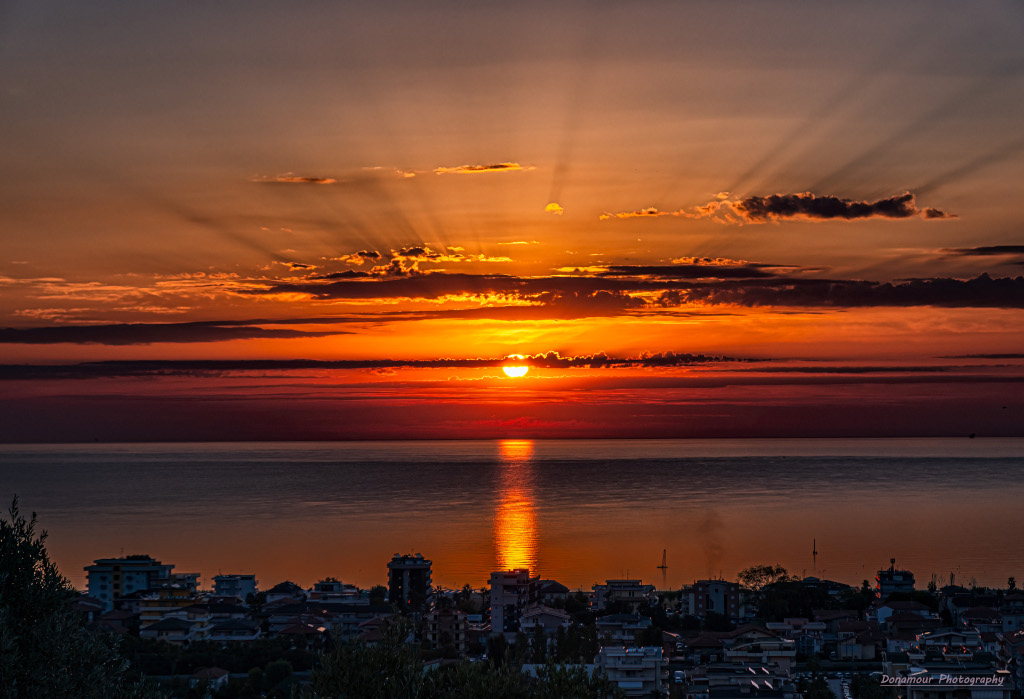
The defining astronomical moment for this September’s equinox was on Friday, September 23, 2022 at 01:03 UTC, when the Sun crossed the celestial equator moving south in its yearly journey through planet Earth’s sky. That marked the beginning of fall for our fair planet in the northern hemisphere and spring in the southern hemisphere, when day and night are nearly equal around the globe. Of course, if you celebrate the astronomical change of seasons by watching a sunrise you can also look for crepuscular rays. The shadows cast by clouds can have a dramatic appearance in the twilight sky during any sunrise or sunset. Due to perspective, the parallel shadows will seem to point back to the rising Sun and a place due east on your horizon near the equinox date. Taken on September 15, this sunrise sea and skyscape captured crepuscular rays in the sky and watery specular reflections from the Mediterranean coast near the village of Petacciato, Italy. [via NASA] https://ift.tt/YVlsvOr

Ringed Ice Giant Neptune

Ringed, ice giant Neptune lies near the center of this sharp near-infrared image from the James Webb Space Telescope. The dim and distant world is the farthest planet from the Sun, about 30 times farther away than planet Earth. But in the stunning Webb view the planet’s dark and ghostly appearance is due to atmospheric methane that absorbs infrared light. High altitude clouds that reach above most of Neptune’s absorbing methane easily stand out in the image though. Coated with frozen nitrogen, Neptune’s largest moon Triton is brighter than Neptune in reflected sunlight and is seen at upper left sporting the Webb’s characteristic diffraction spikes. Including Triton, seven of Neptune’s 14 known moons can be identified in the field of view. Neptune’s faint rings are striking in this new space-based planetary portrait. Details of the complex ring system are seen here for the first time since Neptune was visited by the Voyager 2 spacecraft in August 1989. [via NASA] https://ift.tt/86jslQm

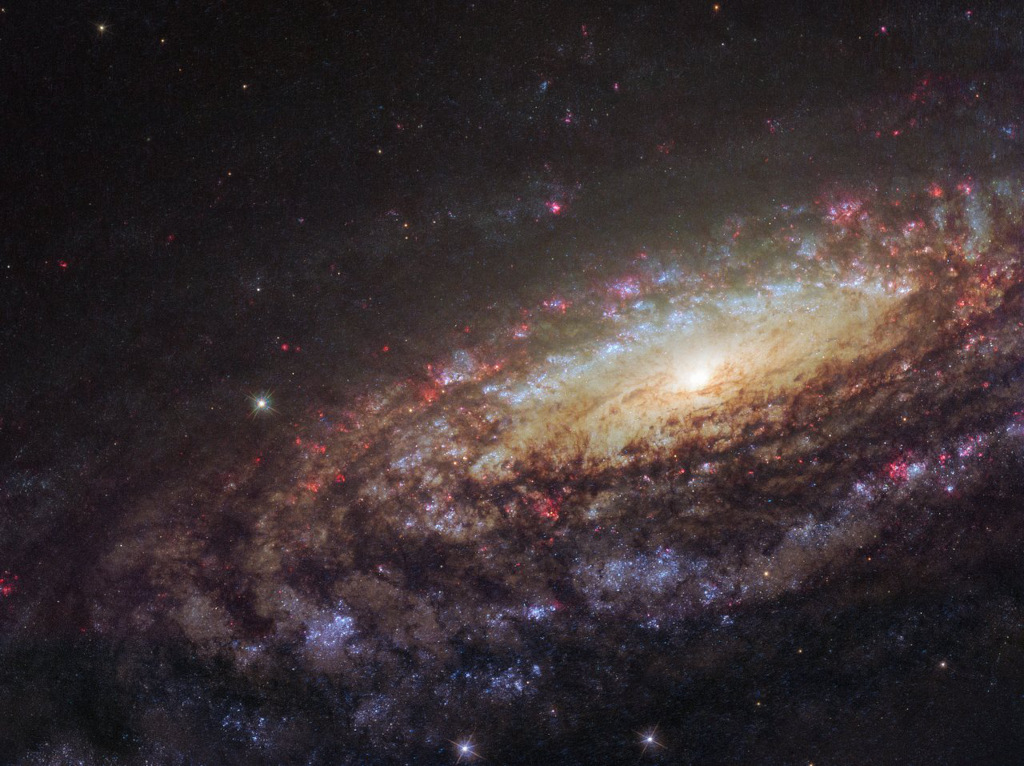
NGC 7331 Close Up

Big, beautiful spiral galaxy NGC 7331 is often touted as an analog to our own Milky Way. About 50 million light-years distant in the northern constellation Pegasus, NGC 7331 was recognized early on as a spiral nebula and is actually one of the brighter galaxies not included in Charles Messier’s famous 18th century catalog. Since the galaxy’s disk is inclined to our line-of-sight, long telescopic exposures often result in an image that evokes a strong sense of depth. This Hubble Space Telescope close-up spans some 40,000 light-years. The galaxy’s magnificent spiral arms feature dark obscuring dust lanes, bright bluish clusters of massive young stars, and the telltale reddish glow of active star forming regions. The bright yellowish central regions harbor populations of older, cooler stars. Like the Milky Way, a supermassive black hole lies at the core of spiral galaxy NGC 7331. [via NASA] https://ift.tt/3gcyYjZ

The Horsehead Nebula in Infrared from Hubble

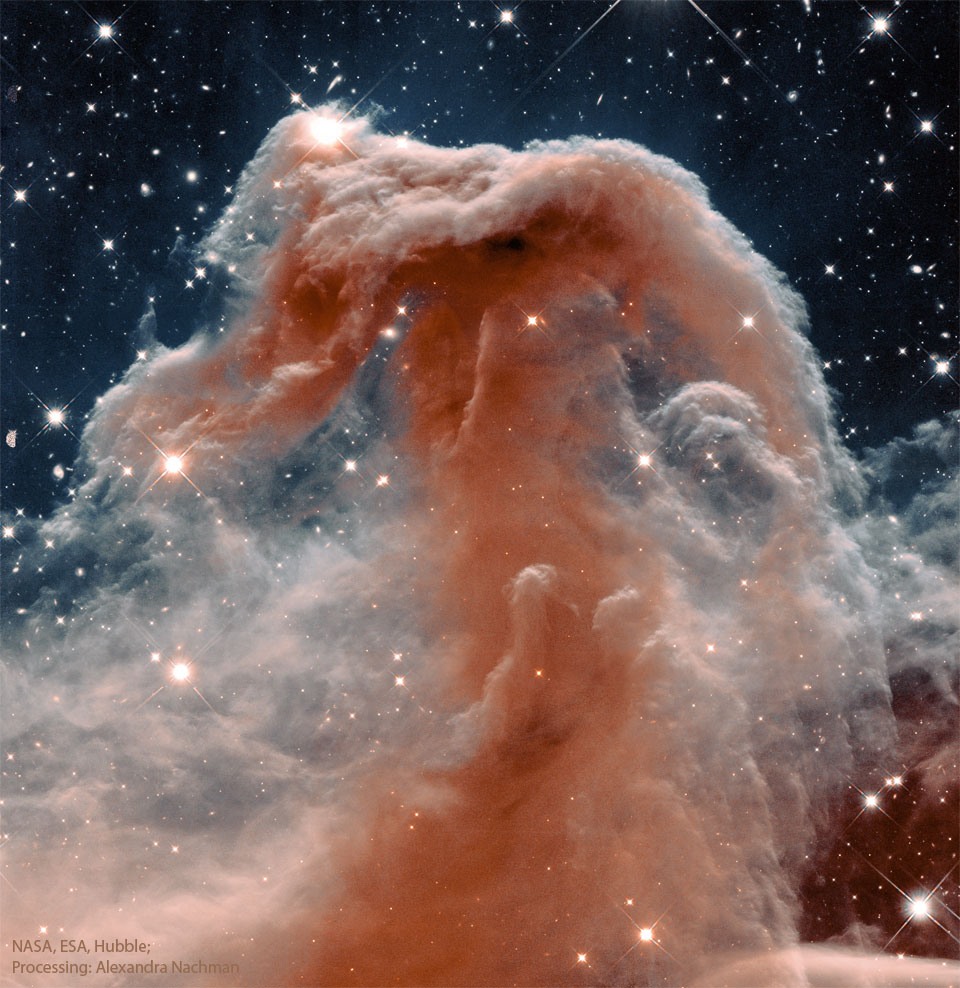
While drifting through the cosmos, a magnificent interstellar dust cloud became sculpted by stellar winds and radiation to assume a recognizable shape. Fittingly named the Horsehead Nebula, it is embedded in the vast and complex Orion Nebula (M42). A potentially rewarding but difficult object to view personally with a small telescope, the featured gorgeously detailed image was taken in infrared light by the orbiting Hubble Space Telescope. The dark molecular cloud, roughly 1,500 light years distant, is cataloged as Barnard 33 and is seen above primarily because it is backlit by the nearby massive star Sigma Orionis. The Horsehead Nebula will slowly shift its apparent shape over the next few million years and will eventually be destroyed by high energy starlight. [via NASA] https://ift.tt/gioD2c7

Star Forming Region NGC 3582 without Stars

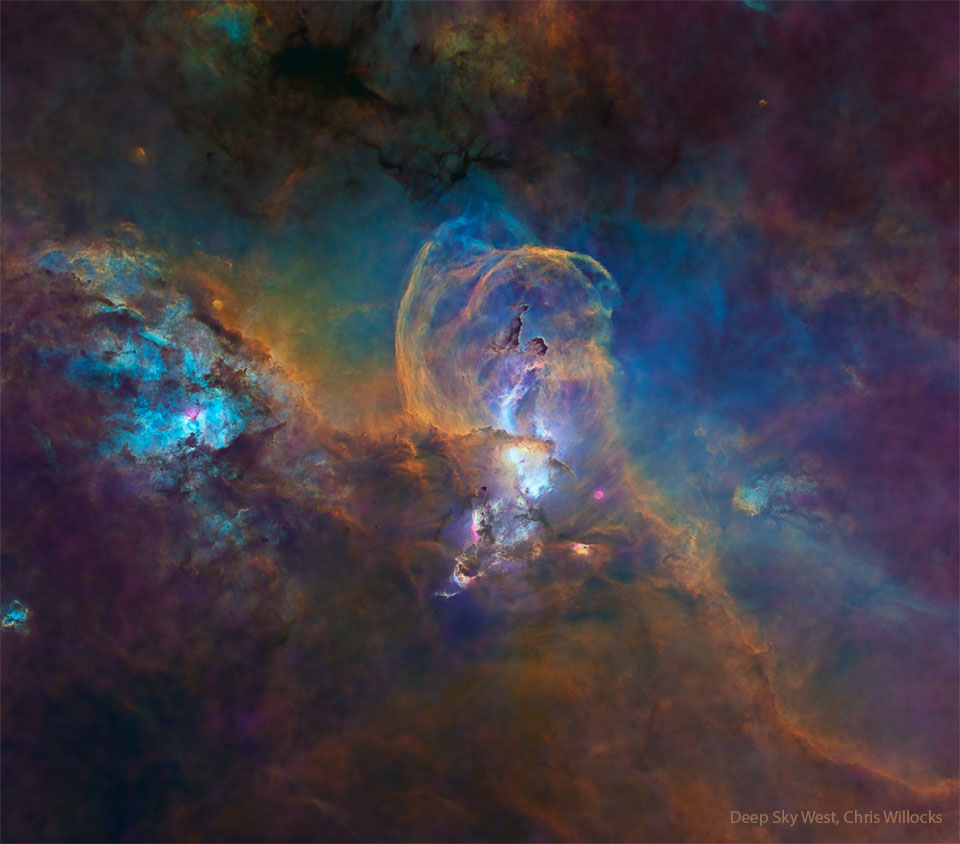
What’s happening in the Statue of Liberty nebula? Bright stars and interesting molecules are forming and being liberated. The complex nebula resides in the star forming region called RCW 57, and besides the iconic monument, to some looks like a flying superhero or a weeping angel. By digitally removing the stars, this re-assigned color image showcases dense knots of dark interstellar dust, fields of glowing hydrogen gas ionized by these stars, and great loops of gas expelled by dying stars. A detailed study of NGC 3576, also known as NGC 3582 and NGC 3584, uncovered at least 33 massive stars in the end stages of formation, and the clear presence of the complex carbon molecules known as polycyclic aromatic hydrocarbons (PAHs). PAHs are thought to be created in the cooling gas of star forming regions, and their development in the Sun’s formation nebula five billion years ago may have been an important step in the development of life on Earth. [via NASA] https://ift.tt/quKHlVU

Star Trails and Lightning over the Pyrenees

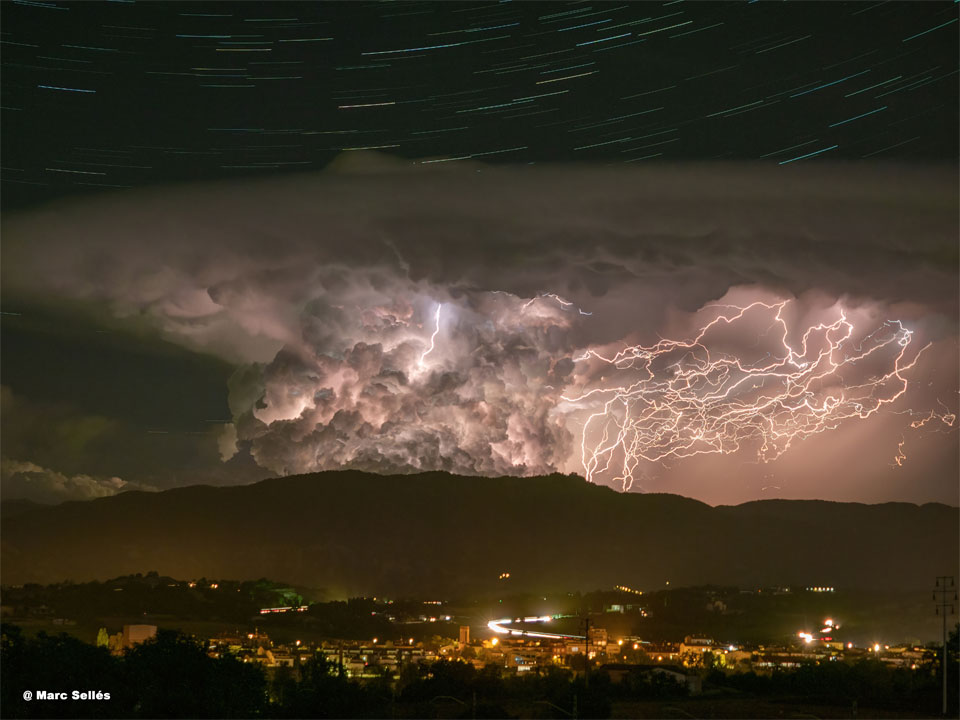
The beauty in this image comes in layers. On the bottom layer is the picturesque village of Manlleu in Barcelona, Spain. The six-minute exposure makes car lights into streaks. The next layer is a mountain — Serra de Bellmunt — of Europe’s famous Pyrenees. Next up is a tremendous lightning storm emanating from a classically-shaped anvil cloud. The long exposure allowed for the capture of many intricate lightning bolts. Finally, at the top and furthest in the distance are stars. Here, the multi-minute exposure made stars into trails. The trailing effect is caused by the rotation of the Earth, and the curvature of the trails indicates their distance from the north spin pole of the Earth above. Taken after sunset in early June, the lightning storm soon moved off. The stars, though, will continue to circle the poll for as long as the Earth spins — surely billions of years into the future. [via NASA] https://ift.tt/P9cDrS1

Analemma over the Callanish Stones

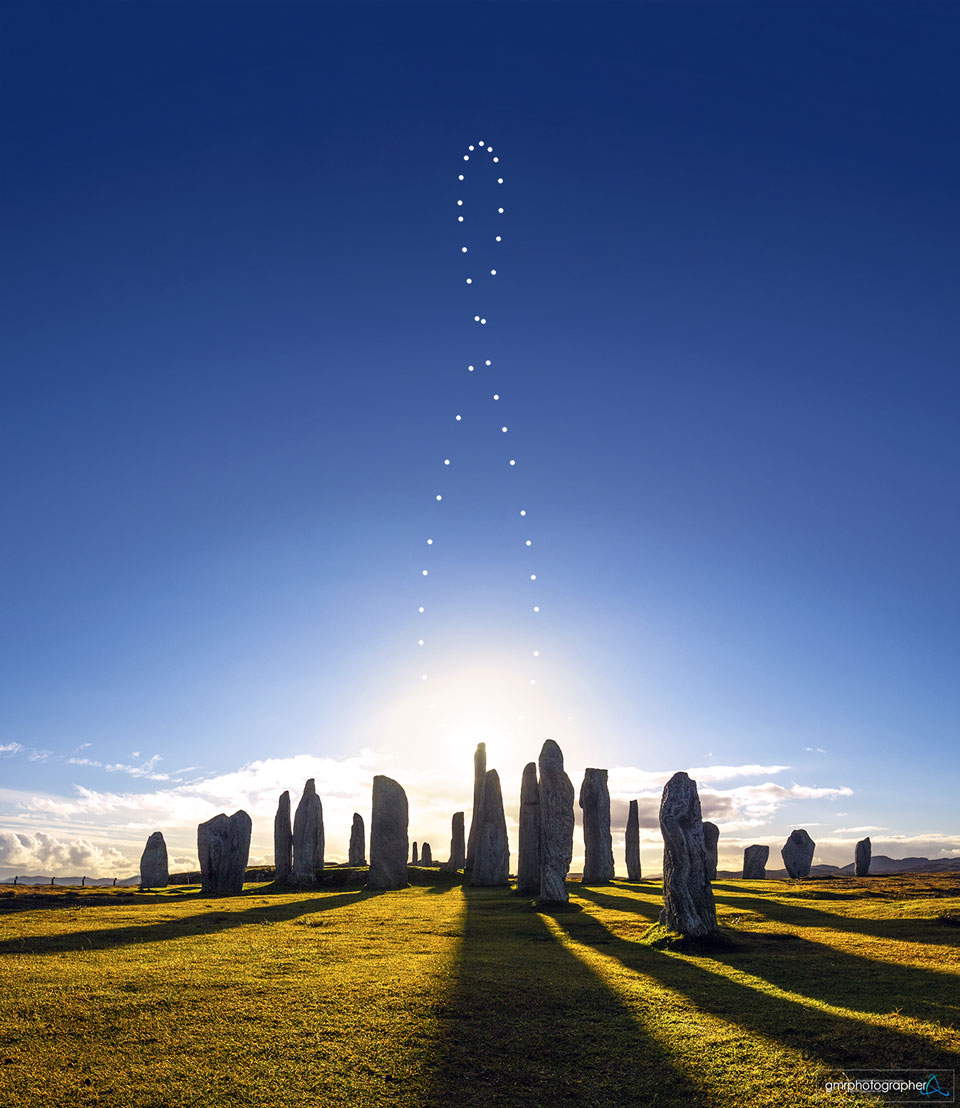
If you went outside at the same time every day and took a picture that included the Sun, how would the Sun’s position change? A more visual answer to that question is an analemma, a composite image taken from the same spot at the same time over the course of a year. The featured analemma was composed from images taken every few days at noon near the village of Callanish in the Outer Hebrides in Scotland, UK. In the foreground are the Callanish Stones, a stone circle built around 2700 BC during humanity’s Bronze Age. It is not known if the placement of the Callanish Stones has or had astronomical significance. The ultimate causes for the figure-8 shape of this and all analemmas are the tilt of the Earth axis and the ellipticity of the Earth’s orbit around the Sun. At the solstices, the Sun will appear at the top or bottom of an analemma. The featured image was taken near the December solstice and so the Sun appears near the bottom. Equinoxes, however, correspond to analemma middle points — not the intersection point. This coming Friday at 1:04 am (UT) — Thursday in the Americas — is the equinox («equal night»), when day and night are equal over all of planet Earth. Many cultures celebrate a change of season at an equinox. [via NASA] https://ift.tt/pOGYd7v

Perseverance in Jezero Crater s Delta

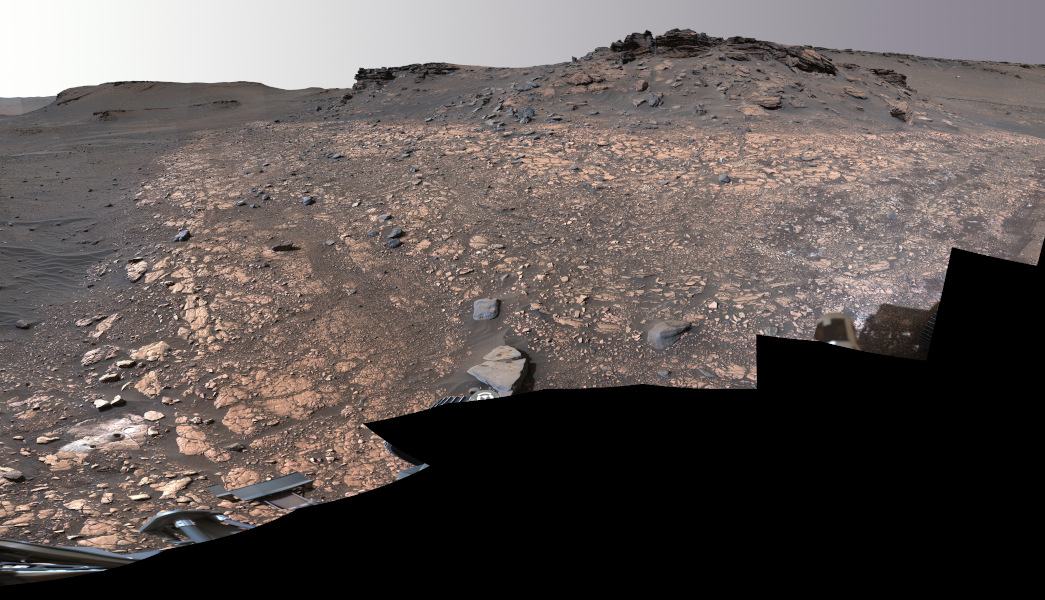
The Perseverance rover’s Mastcam-Z captured images to create this mosaic on August 4, 2022. The car-sized robot was continuing its exploration of the fan-shaped delta of a river that, billions of years ago, flowed into Jezero Crater on Mars. Sedimentary rocks preserved in Jezero’s delta are considered one of the best places on Mars to search for potential signs of ancient microbial life and sites recently sampled by the rover, dubbed Wildcat Ridge and Skinner Ridge, are at lower left and upper right in the frame. The samples taken from these areas were sealed inside ultra-clean sample tubes, ultimately intended for return to Earth by future missions. Starting with the Pathfinder Mission and Mars Global Surveyor in 1997, the last 25 years of a continuous robotic exploration of the Red Planet has included orbiters, landers, rovers, and a helicopter from planet Earth. [via NASA] https://ift.tt/5nHfmJp

The Tarantula Zone

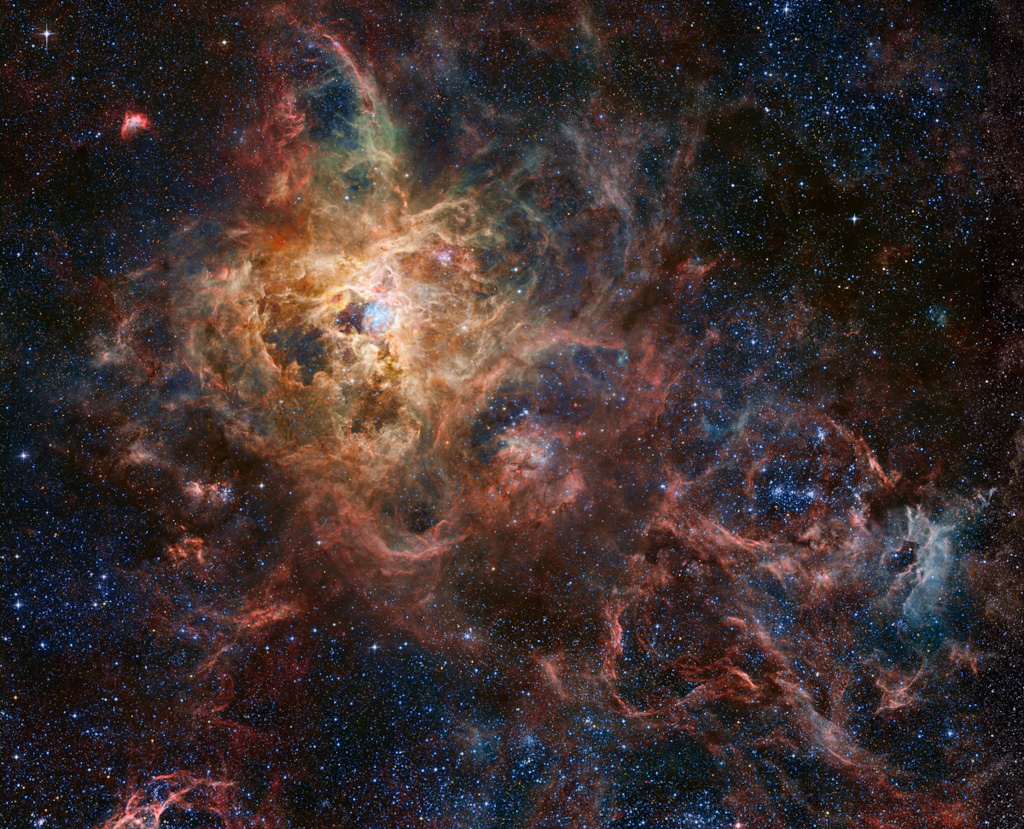
The Tarantula Nebula, also known as 30 Doradus, is more than a thousand light-years in diameter, a giant star forming region within nearby satellite galaxy the Large Magellanic Cloud. About 180 thousand light-years away, it’s the largest, most violent star forming region known in the whole Local Group of galaxies. The cosmic arachnid sprawls across this magnificent view, an assembly of image data from large space- and ground-based telescopes. Within the Tarantula (NGC 2070), intense radiation, stellar winds, and supernova shocks from the central young cluster of massive stars cataloged as R136 energize the nebular glow and shape the spidery filaments. Around the Tarantula are other star forming regions with young star clusters, filaments, and blown-out bubble-shaped clouds. In fact, the frame includes the site of the closest supernova in modern times, SN 1987A, at lower right. The rich field of view spans about 2 degrees or 4 full moons, in the southern constellation Dorado. But were the Tarantula Nebula closer, say 1,500 light-years distant like the Milky Way’s own star forming Orion Nebula, it would take up half the sky. [via NASA] https://ift.tt/HpUykOV

Harvest Moon over Sicily

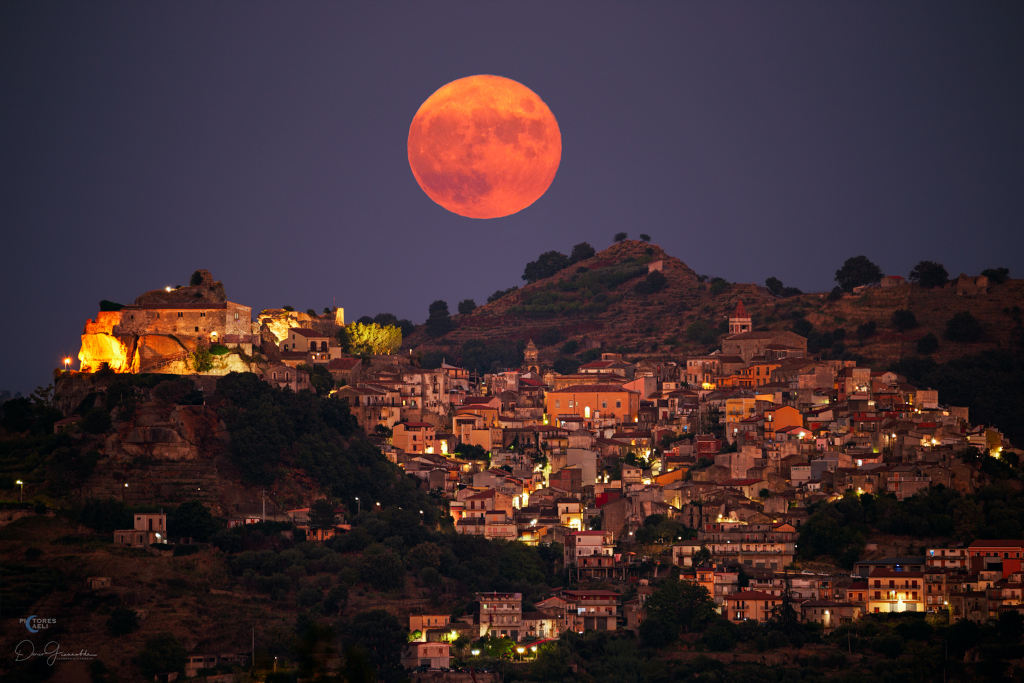
For northern hemisphere dwellers, September’s Full Moon was the Harvest Moon. Reflecting warm hues at sunset it rises over the historic town of Castiglione di Sicilia in this telephoto view from September 9. Famed in festival, story, and song Harvest Moon is just the traditional name of the full moon nearest the autumnal equinox. According to lore the name is a fitting one. Despite the diminishing daylight hours as the growing season drew to a close, farmers could harvest crops by the light of a full moon shining on from dusk to dawn. [via NASA] https://ift.tt/P1IH7xD