Sea and Sky Glows over the Oregon Coast

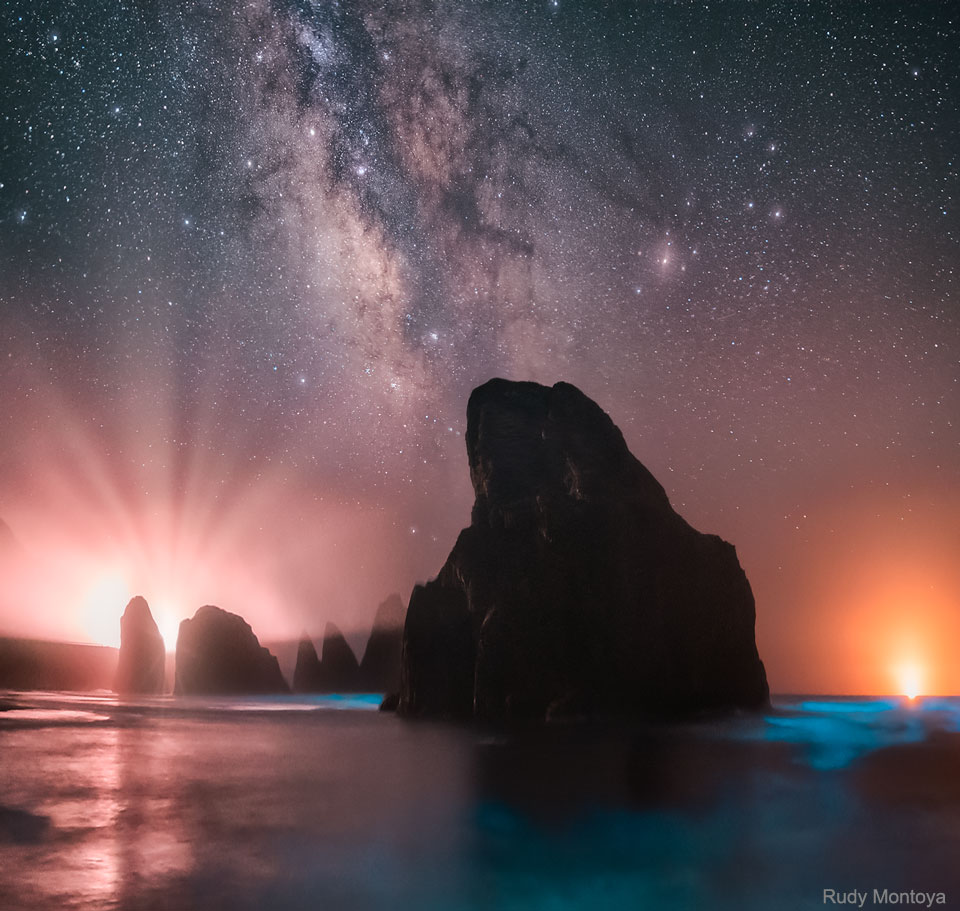
Every step caused the sand to light up blue. That glow was bioluminescence — a blue radiance that also lights the surf in this surreal scene captured in mid-2018 at Meyer’s Creek Beach in Oregon, USA. Volcanic stacks dot the foreground sea, while a thin fog layer scatters light on the horizon. The rays of light spreading from the left horizon were created by car headlights on the Oregon Coast Highway (US 101), while the orange light on the right horizon emanates from a fishing boat. Visible far in the distance is the band of our Milky Way Galaxy, appearing to rise from a dark rocky outcrop. Sixteen images were added together to bring up the background Milky Way and to reduce noise. [via NASA] https://ift.tt/kWuKwxm
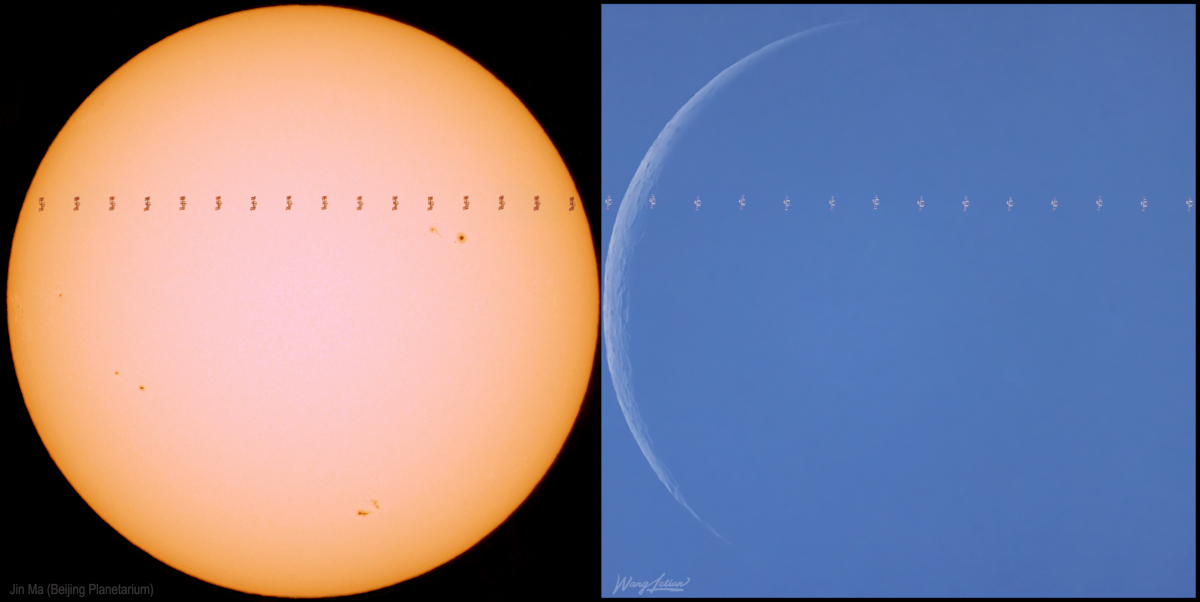
Sun and Moon and ISS

On August 25 Sun and Moon could both be seen in planet Earth’s daytime skies. And so could the International Space Station. The ISS crossed the disk of the waning crescent Moon as seen from Shunyi district, Beijing, China at about 11:02 am local time. Some 40 kilometers to the southwest, in Fengtai district, the ISS was seen to cross the Sun’s disk too. The solar transit was observed only 29 seconds later. Both transits are compared in these panels, composed of processed and stacked video frames from the two locations. The coordinated captures were made with different equipment, but adjusted to show the Sun and Moon at the same scale. The ISS was at a calculated range of 435 kilometers for the lunar transit and 491 kilometers when passing in front of the Sun. [via NASA] https://ift.tt/kfI4H82

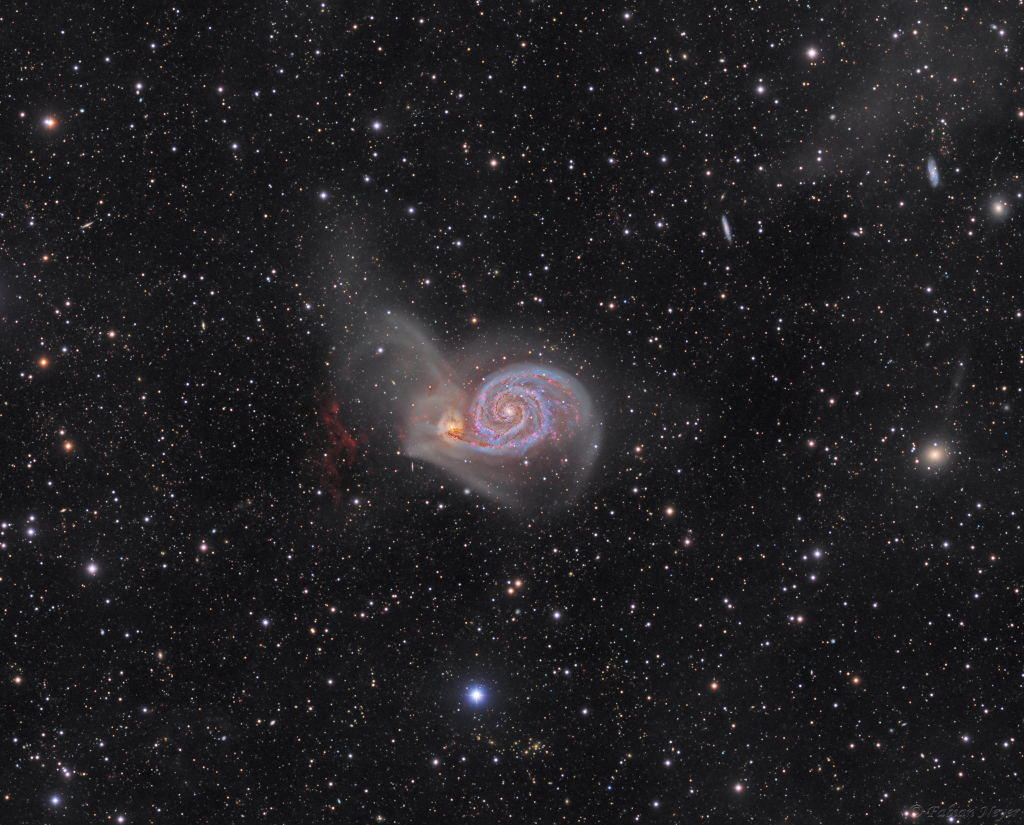
M51: The Whirlpool Galaxy

Find the Big Dipper and follow the handle away from the dipper’s bowl until you get to the last bright star. Then, just slide your telescope a little south and west and you’ll come upon this stunning pair of interacting galaxies, the 51st entry in Charles Messier’s famous catalog. Perhaps the original spiral nebula, the large galaxy with well defined spiral structure is also cataloged as NGC 5194. Its spiral arms and dust lanes clearly sweep in front of its companion galaxy (left), NGC 5195. The pair are about 31 million light-years distant and officially lie within the angular boundaries of the small constellation Canes Venatici. In direct telescopic views, M51 looks faint and fuzzy to the eye. But this remarkably deep image shows off details of the interacting galaxy’s striking colors and galactic tidal debris. The image includes nearly 90 hours of narrowband data that also reveals a vast glowing cloud of reddish ionized hydrogen gas discovered in the M51 system. [via NASA] https://ift.tt/9KVTuth

The Tulip and Cygnus X-1

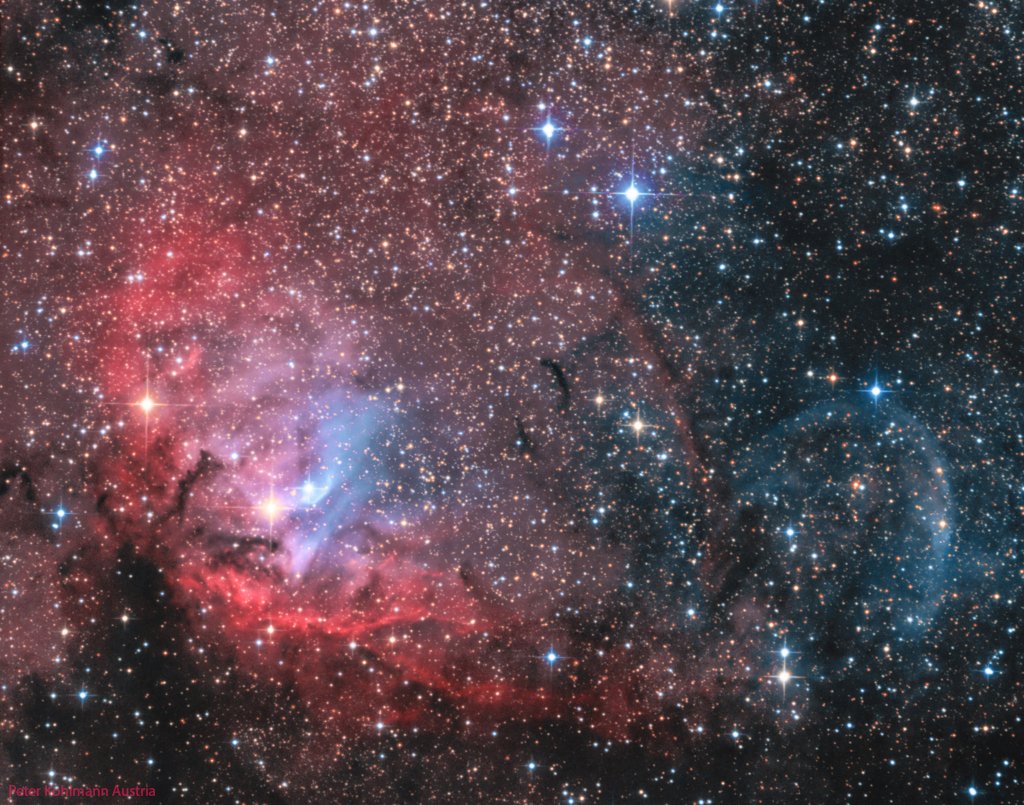
Framing a bright emission region, this telescopic view looks out along the plane of our Milky Way Galaxy toward the nebula rich constellation Cygnus the Swan. Popularly called the Tulip Nebula, the reddish glowing cloud of interstellar gas and dust is also found in the 1959 catalog by astronomer Stewart Sharpless as Sh2-101. Nearly 70 light-years across, the complex and beautiful Tulip Nebula blossoms about 8,000 light-years away. Ultraviolet radiation from young energetic stars at the edge of the Cygnus OB3 association, including O star HDE 227018, ionizes the atoms and powers the emission from the Tulip Nebula. Also in the field of view is microquasar Cygnus X-1, one of the strongest X-ray sources in planet Earth’s sky. Blasted by powerful jets from a lurking black hole its fainter bluish curved shock front is only just visible though, beyond the cosmic Tulip’s petals near the right side of the frame. [via NASA] https://ift.tt/FKrvX1M

Siccar Point on Mars

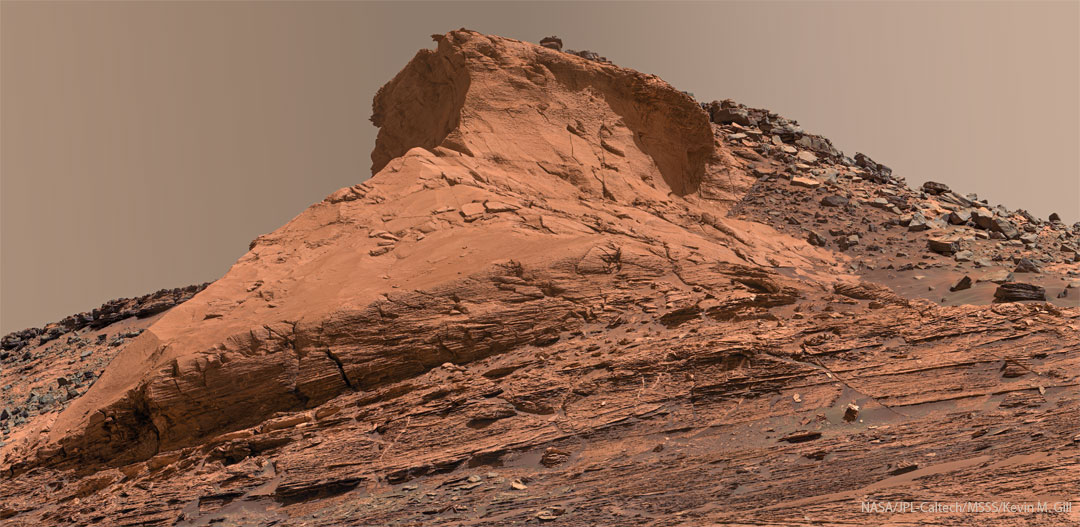
What created this unusual hill on Mars? No one is sure. A good outlook to survey the surrounding area, Siccar Point stands out from its surroundings in Gale Crater. The unusual mound was visited by the robotic Curiosity rover exploring Mars late last year. Siccar Point not only has a distinctive shape, it has dark rocks above lighter rocks. The apparent much younger age of the dark rocks indicates a time-break in the usual geological ordering of rock layers — by a process yet unknown. The Martian hill is named for Siccar Point on Earth, a place in Scotland itself distinctive as a junction between two different rock layers. Curiosity continues to explore Gale crater on Mars, looking for clues of ancient life. Simultaneously, 2300 kilometers away, its sister rover Perseverance explores Jezero crater, there assisted by the flight-capable scout Ingenuity. [via NASA] https://ift.tt/kXmE4KR

Jupiter from the Webb Space Telescope

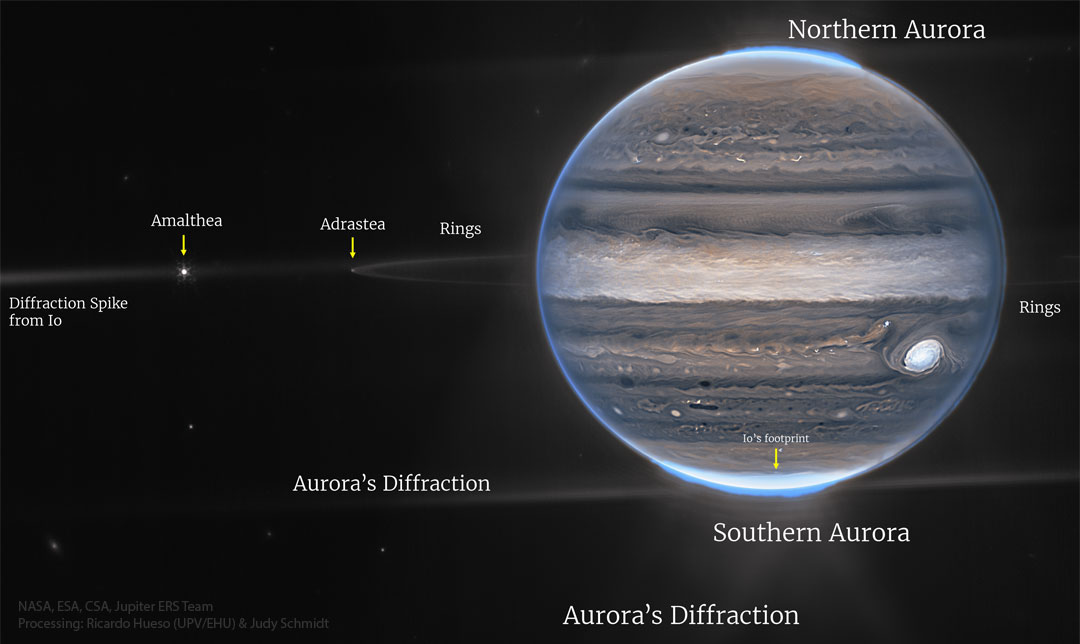
This new view of Jupiter is illuminating. High-resolution infrared images of Jupiter from the new James Webb Space Telescope (Webb) reveal, for example, previously unknown differences between high-floating bright clouds — including the Great Red Spot — and low-lying dark clouds. Also clearly visible in the featured Webb image are Jupiter’s dust ring, bright auroras at the poles, and Jupiter’s moons Amalthea and Adrastea. Large volcanic moon Io’s magnetic funneling of charged particles onto Jupiter is also visible in the southern aurora. Some objects are so bright that light noticeably diffracts around Webb’s optics creating streaks. Webb, which orbits the Sun near the Earth, has a mirror over 6 meters across making it the largest astronomical telescope ever launched — with 15 times more light-collecting area than Hubble. [via NASA] https://ift.tt/xXQMr7J

The Horsehead Nebula Region without Stars

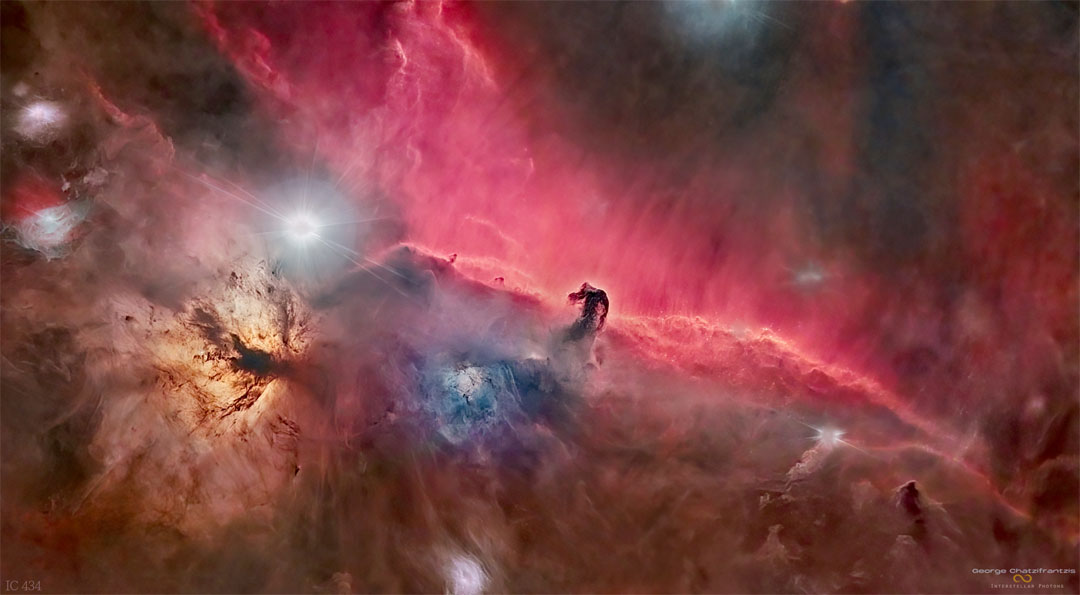
The famous Horsehead Nebula in Orion is not alone. A deep exposure shows that the dark familiar shaped indentation, visible just right of center, is part of a vast complex of absorbing dust and glowing gas. The featured spectacular picture details an intricate tapestry of gaseous wisps and dust-laden filaments that were created and sculpted over eons by stellar winds and ancient supernovas. The Flame Nebula is visible in orange just to the Horsehead’s left. To highlight the dust and gas, most of the stars have been digitally removed, although a notable exception is Alnitak, just above the Flame Nebula, which is the rightmost star in Orion’s famous belt of three aligned stars. The Horsehead Nebula lies 1,500 light years distant towards the constellation of Orion. [via NASA] https://ift.tt/ZSwPRkv

Perijove 11: Passing Jupiter

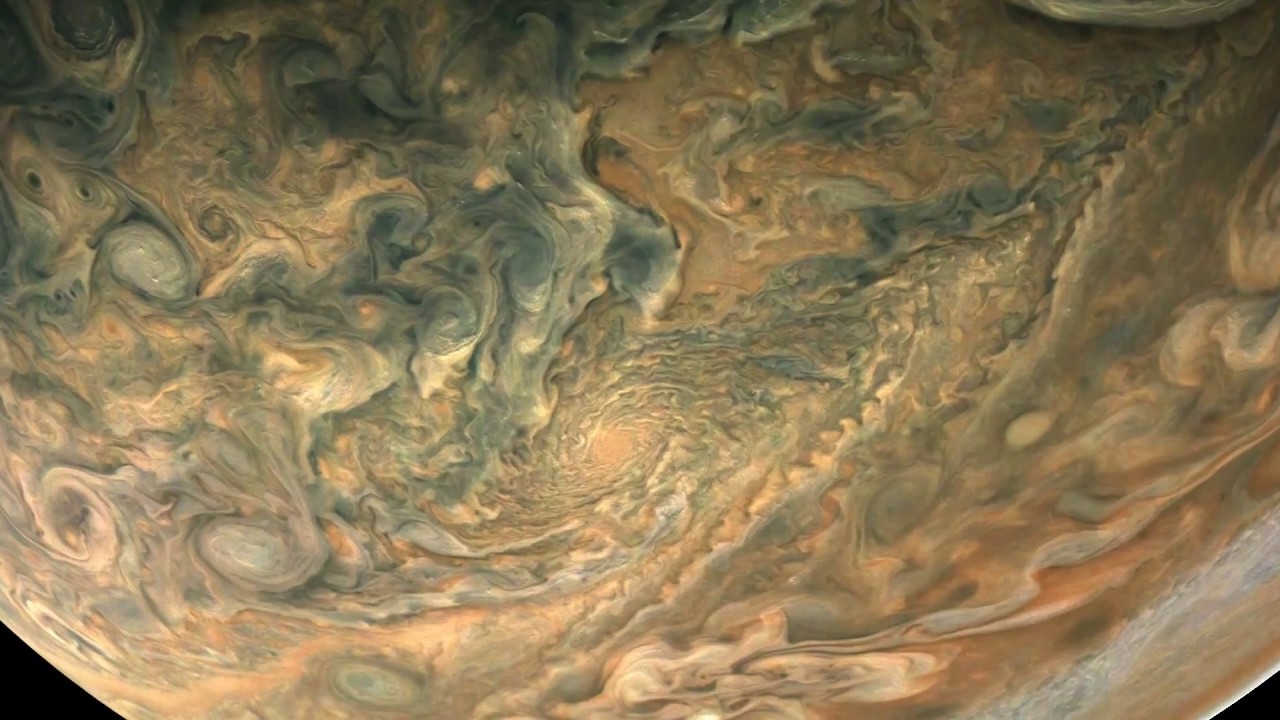
Here comes Jupiter! NASA’s robotic spacecraft Juno is continuing on its highly-elongated orbits around our Solar System’s largest planet. The featured video is from perijove 11 in early 2018, the eleventh time Juno has passed near Jupiter since it arrived in mid-2016. This time-lapse, color-enhanced movie covers about four hours and morphs between 36 JunoCam images. The video begins with Jupiter rising as Juno approaches from the north. As Juno reaches its closest view — from about 3,500 kilometers over Jupiter’s cloud tops — the spacecraft captures the great planet in tremendous detail. Juno passes light zones and dark belt of clouds that circle the planet, as well as numerous swirling circular storms, many of which are larger than hurricanes on Earth. After the perijove, Jupiter recedes into the distance, then displaying the unusual clouds that appear over Jupiter’s south. To get desired science data, Juno swoops so close to Jupiter that its instruments are exposed to very high levels of radiation. [via NASA] https://ift.tt/r51eamY

IC 5146: The Cocoon Nebula

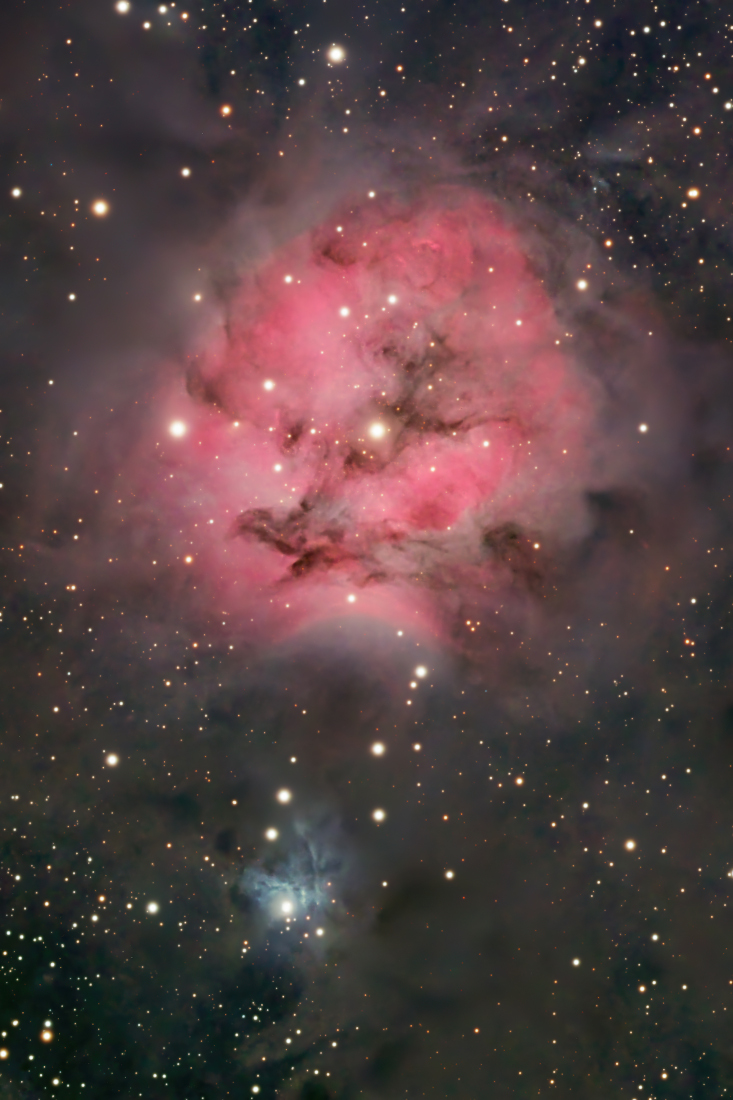
Inside the Cocoon Nebula is a newly developing cluster of stars. Cataloged as IC 5146, the beautiful nebula is nearly 15 light-years wide. Climbing high in northern summer night skies, it’s located some 4,000 light years away toward the constellation Cygnus the Swan. Like other star forming regions, it stands out in red, glowing, hydrogen gas excited by young, hot stars, and dust-reflected starlight at the edge of an otherwise invisible molecular cloud. In fact, the bright star found near the center of this nebula is likely only a few hundred thousand years old, powering the nebular glow as it clears out a cavity in the molecular cloud’s star forming dust and gas. A 29 hour long integration with a small telescope from Ayr, Ontario, Canada resulted in this exceptionally deep color view tracing tantalizing features within and surrounding the dusty stellar nursery. [via NASA] https://ift.tt/GruMO8X

Little Planet South Pole

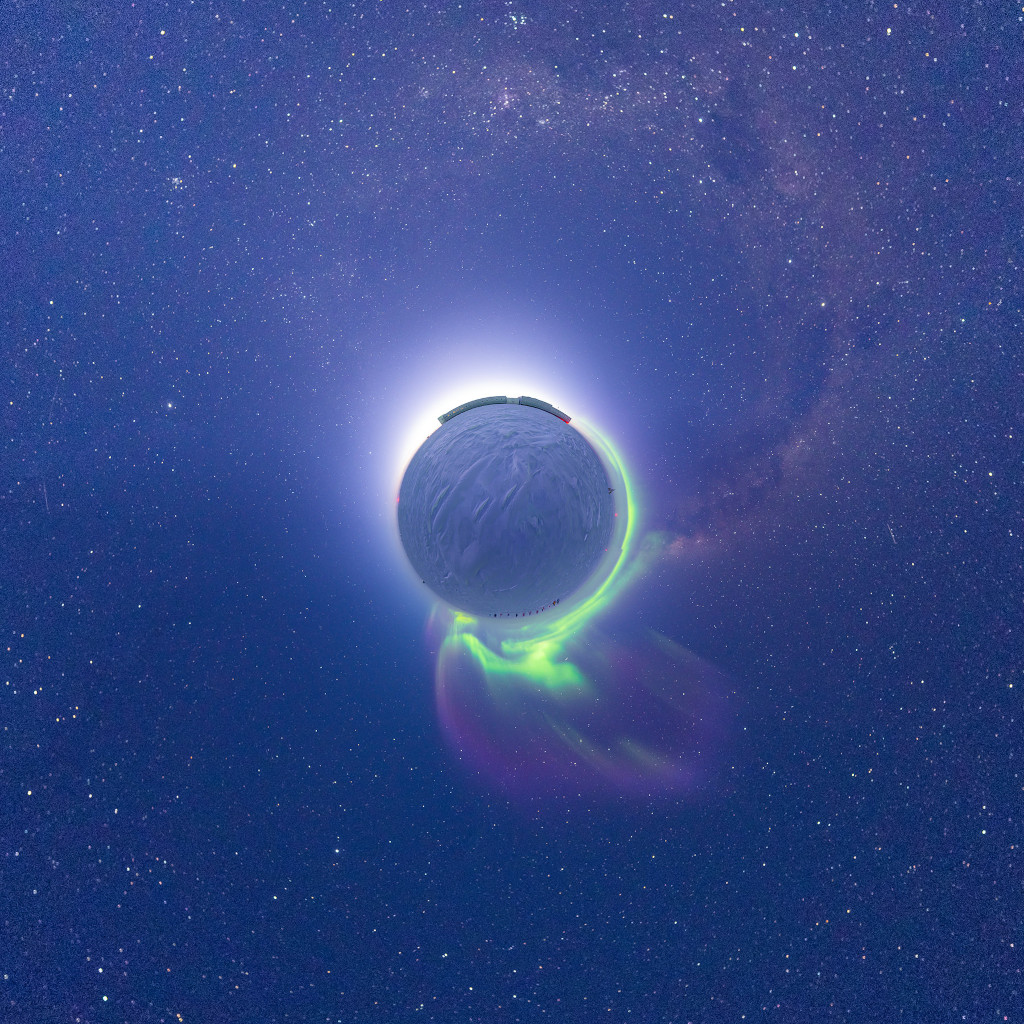
Lights play around the horizon of this snowy little planet as it drifts through a starry night sky. Of course the little planet is actually planet Earth. Recorded on August 21, the digitally warped, nadir centered panorama covers nearly 360×180 degrees outside the Amundsen-Scott South Pole Station, Antarctica. The southernmost research outpost is near the horizon at the top where the light of dawn is approaching after nearly six months of darkness. Along the bottom is the ceremonial pole marker surrounded by the 12 flags of the original signatories of the Antarctic treaty, with a wild display of the aurora australis above. [via NASA] https://ift.tt/QjEy9li