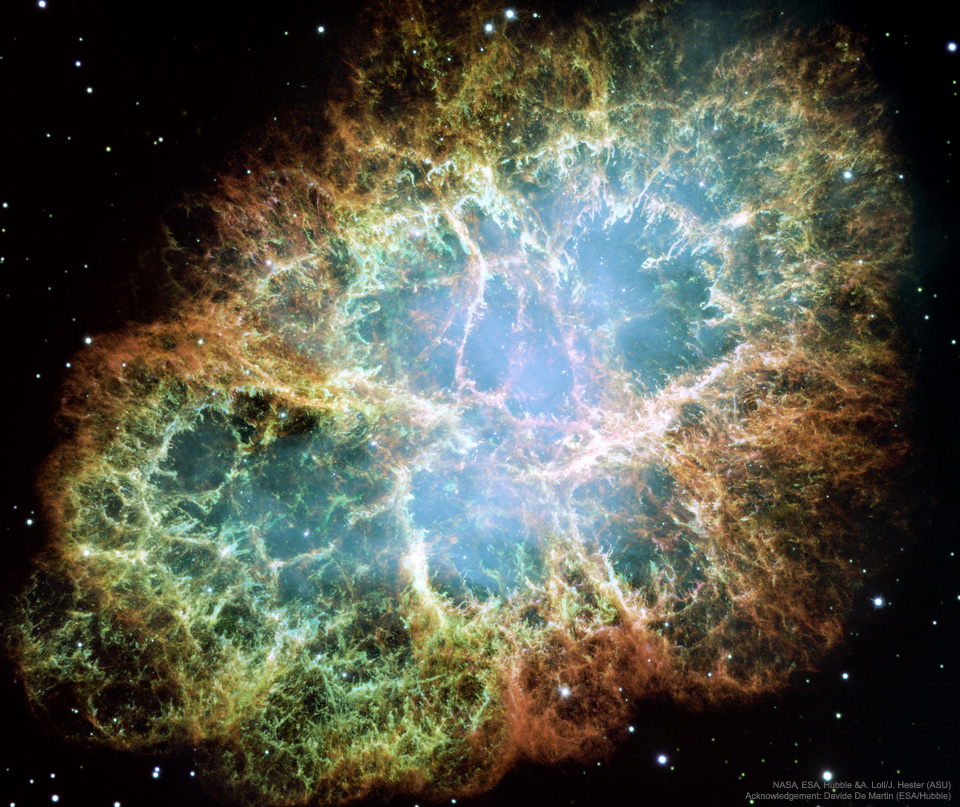
This is the mess that is left when a star explodes. The Crab Nebula, the result of a supernova seen in 1054 AD, is filled with mysterious filaments. The filaments are not only tremendously complex, but appear to have less mass than expelled in the original supernova and a higher speed than expected from a free explosion. The featured image, taken by the Hubble Space Telescope, is presented in three colors chosen for scientific interest. The Crab Nebula spans about 10 light-years. In the nebula’s very center lies a pulsar: a neutron star as massive as the Sun but with only the size of a small town. The Crab Pulsar rotates about 30 times each second. [via NASA] https://ift.tt/3DZT0mn
Perihelion Sun 2023

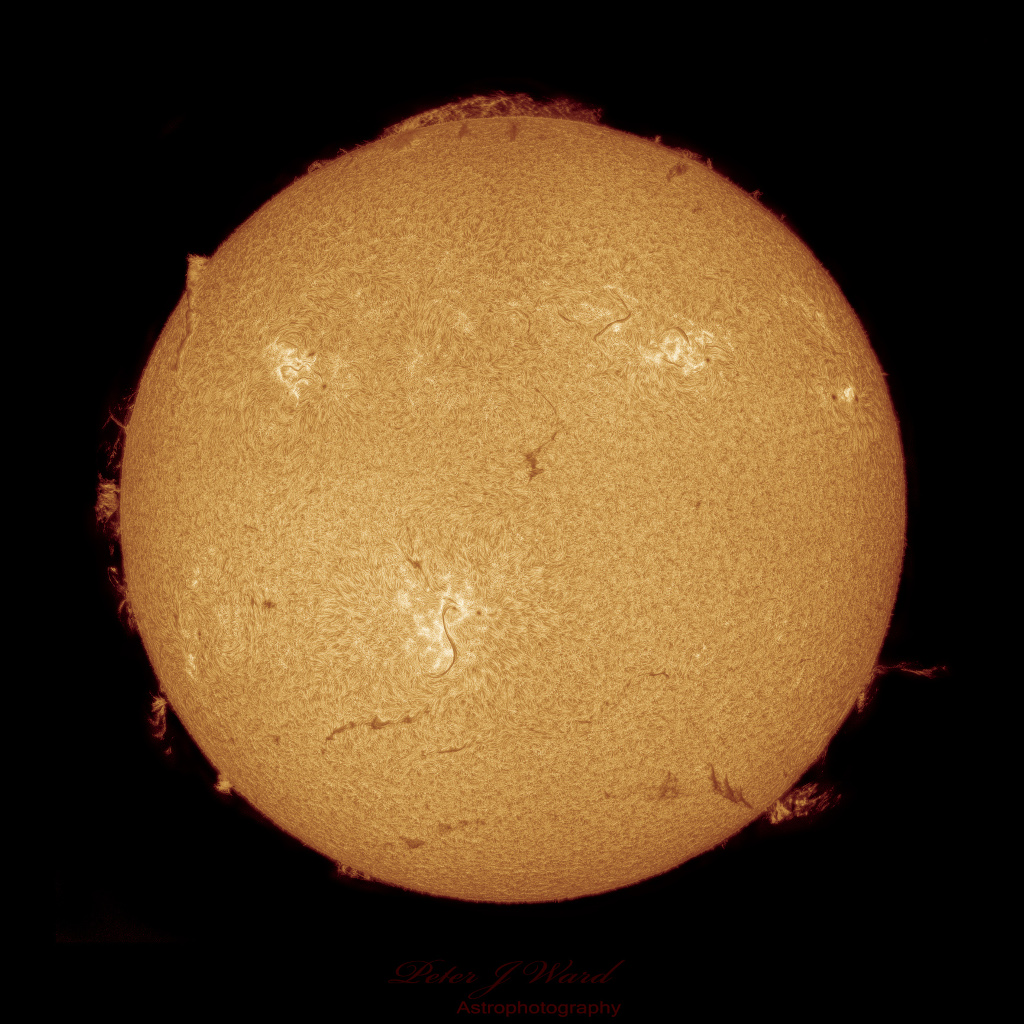
Perihelion for 2023, Earth’s closest approach to the Sun, was on January 4 at 16:17 UTC. That was less than 24 hours after this sharp image of the Sun’s disk was recorded with telescope and H-alpha filter from Sidney, Australia, planet Earth. An H-alpha filter transmits a characteristic red light from hydrogen atoms. In views of the Sun it emphasizes the Sun’s chromosphere, a region just above the solar photosphere or normally visible solar surface. In this H-alpha image of the increasingly active Sun planet-sized sunspot regions are dominated by bright splotches called plages. Dark filaments of plasma snaking across the solar disk transition to bright prominences when seen above the solar limb. [via NASA] https://ift.tt/jTHuGm4

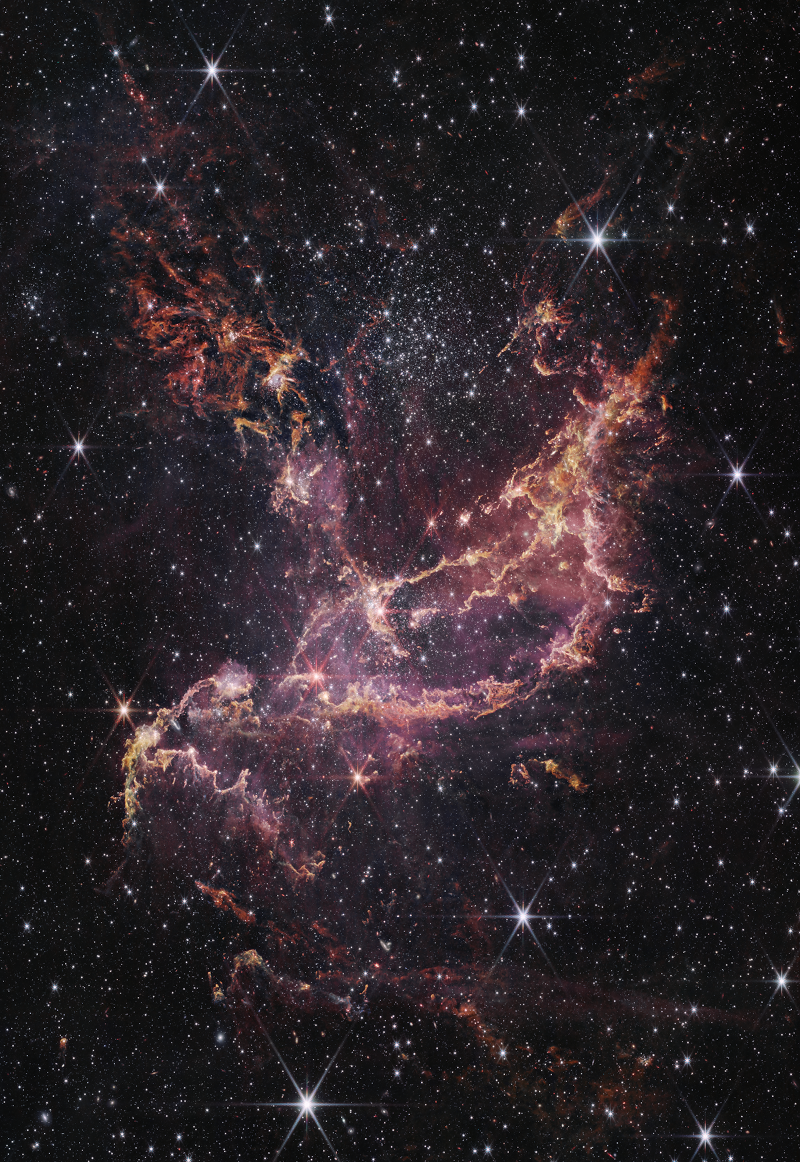
Young Star Cluster NGC 346

The most massive young star cluster in the Small Magellanic Cloud is NGC 346, embedded in our small satellite galaxy’s largest star forming region some 210,000 light-years distant. Of course the massive stars of NGC 346 are short lived, but very energetic. Their winds and radiation sculpt the edges of the region’s dusty molecular cloud triggering star-formation within. The star forming region also appears to contain a large population of infant stars. A mere 3 to 5 million years old and not yet burning hydrogen in their cores, the infant stars are strewn about the embedded star cluster. This spectacular infrared view of NGC 346 is from the James Webb Space Telescope’s NIRcam. Emission from atomic hydrogen ionized by the massive stars’ energetic radiation as well as and molecular hydrogen and dust in the star-forming molecular cloud is detailed in pink and orange hues. Webb’s sharp image of the young star-forming region spans 240 light-years at the distance of the Small Magellanic Cloud. [via NASA] https://ift.tt/VwAUbQB

Stardust in Perseus

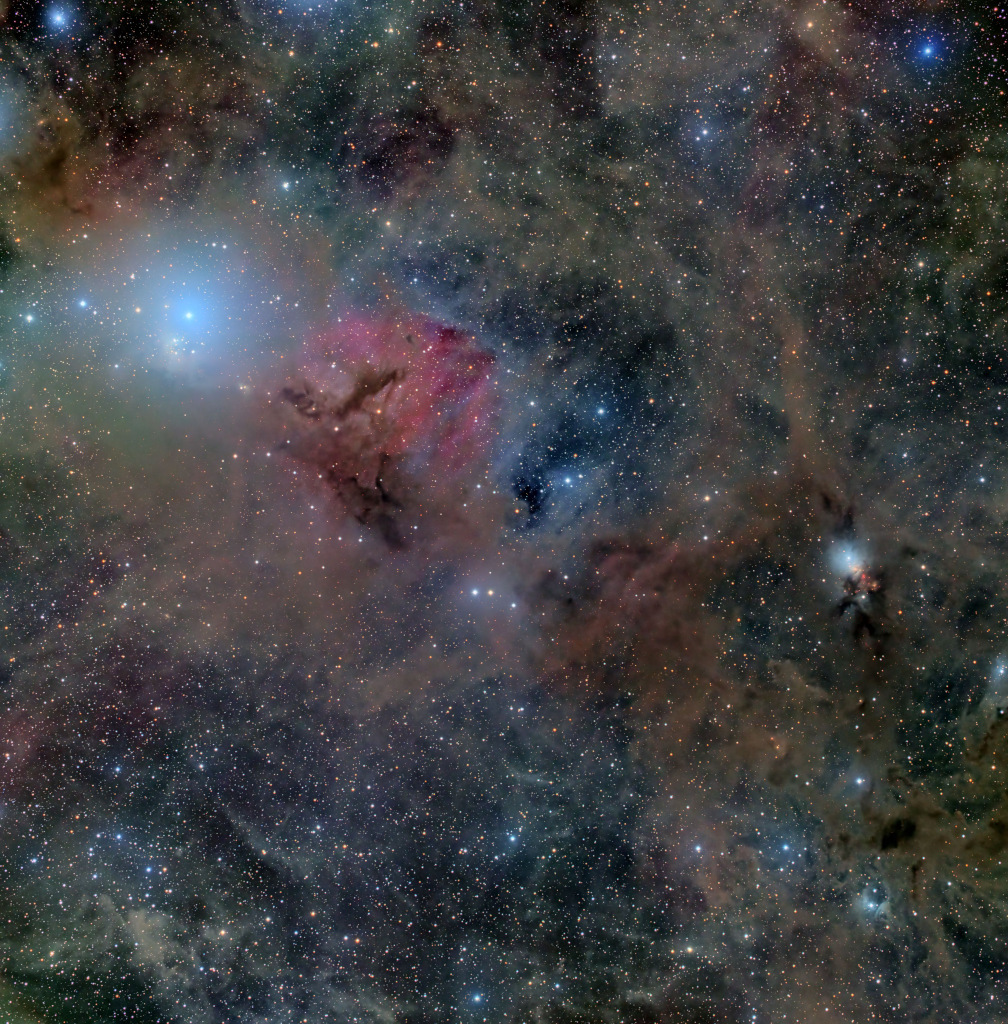
This cosmic expanse of dust, gas, and stars covers some 6 degrees on the sky in the heroic constellation Perseus. At upper left in the gorgeous skyscape is the intriguing young star cluster IC 348 and neighboring Flying Ghost Nebula with clouds of obscuring interstellar dust cataloged as Barnard 3 and 4. At right, another active star forming region NGC 1333 is connected by dark and dusty tendrils on the outskirts of the giant Perseus Molecular Cloud, about 850 light-years away. Other dusty nebulae are scattered around the field of view, along with the faint reddish glow of hydrogen gas. In fact, the cosmic dust tends to hide the newly formed stars and young stellar objects or protostars from prying optical telescopes. Collapsing due to self-gravity, the protostars form from the dense cores embedded in the molecular cloud. At the molecular cloud’s estimated distance, this field of view would span over 90 light-years. [via NASA] https://ift.tt/wezBQTG

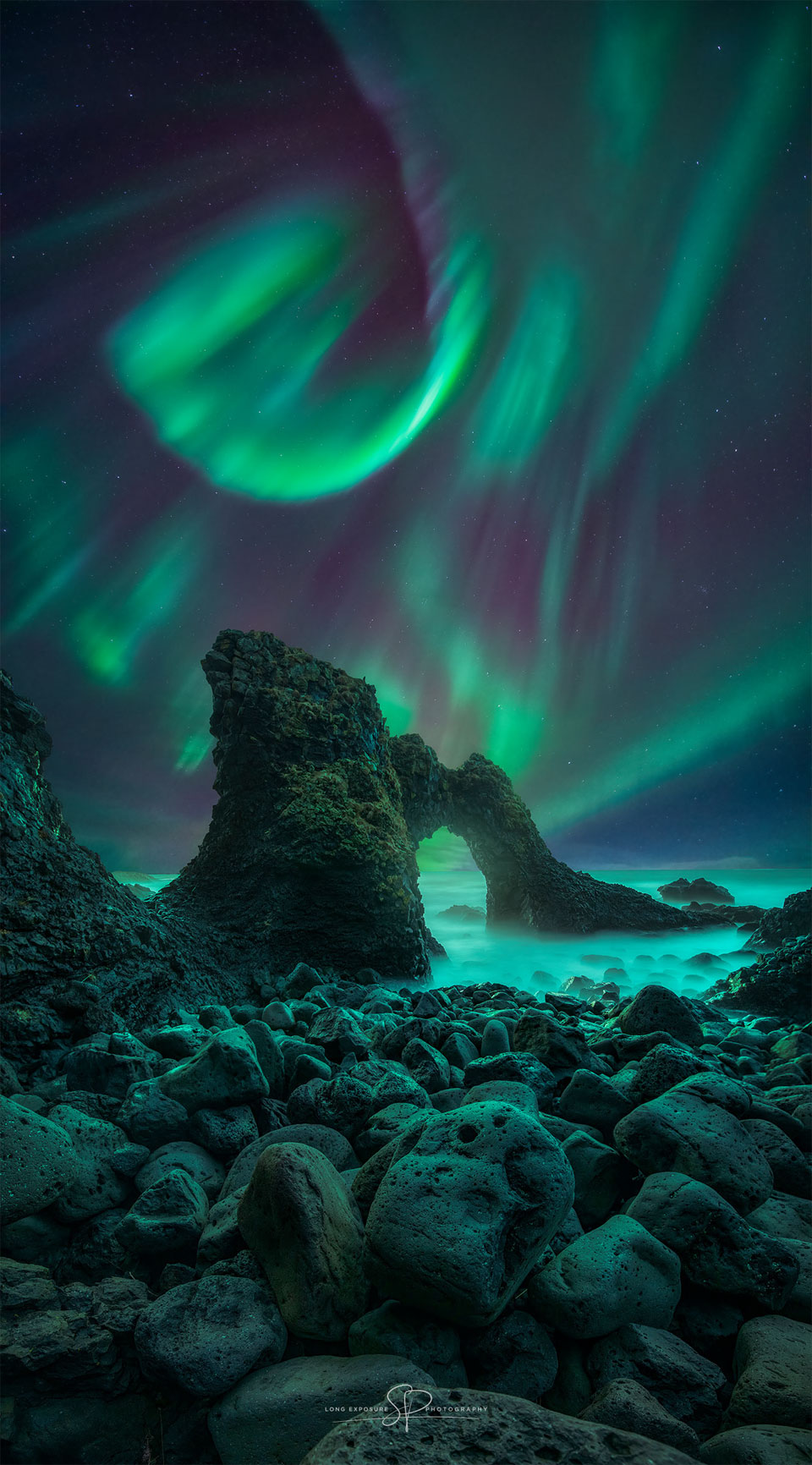
The scene may look like a fantasy, but it’s really Iceland. The rock arch is named Gatklettur and located on the island’s northwest coast. Some of the larger rocks in the foreground span a meter across. The fog over the rocks is really moving waves averaged over long exposures. The featured image is a composite of several foreground and background shots taken with the same camera and from the same location on the same night last November. The location was picked for its picturesque foreground, but the timing was planned for its colorful background: aurora. The spiral aurora, far behind the arch, was one of the brightest seen in the astrophotographer’s life. The coiled pattern was fleeting, though, as auroral patterns waved and danced for hours during the cold night. Far in the background were the unchanging stars, with Earth’s rotation causing them to appear to slowly circle the sky’s northernmost point near Polaris. [via NASA] https://ift.tt/2nRLE0c

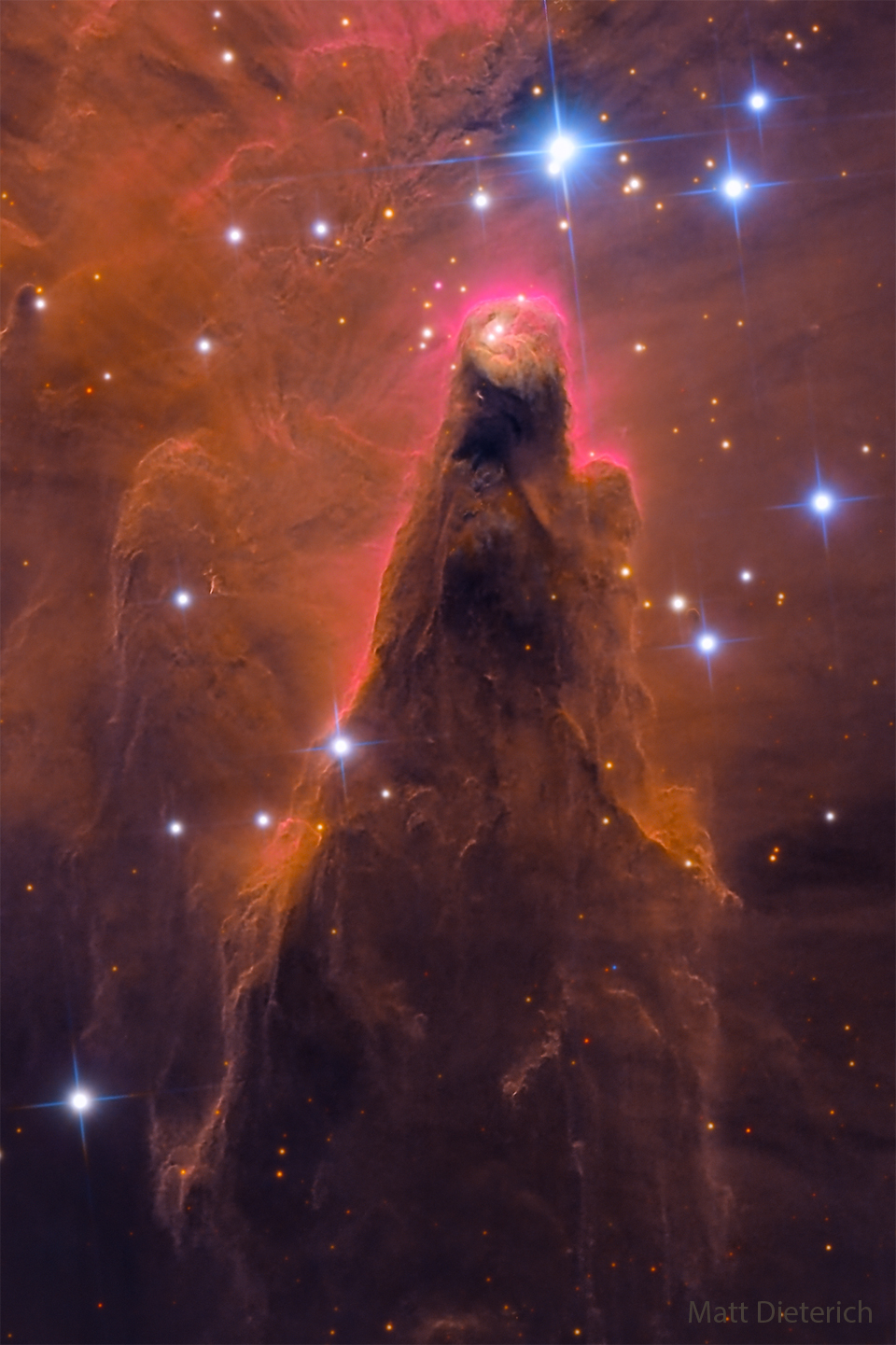
Stars are forming in the gigantic dust pillar called the Cone Nebula. Cones, pillars, and majestic flowing shapes abound in stellar nurseries where clouds of gas and dust are sculpted by energetic winds from newborn stars. The Cone Nebula, a well-known example, lies within the bright galactic star-forming region NGC 2264. The featured image of the Cone was captured recently combining 24-hours of exposure with a half-meter telescope at the El Sauce Observatory in Chile. Located about 2,500 light-years away toward the constellation of the Unicorn (Monoceros), the Cone Nebula’s conical pillar extends about 7 light-years. The massive star NGC 2264 IRS, is the likely source of the wind sculpting the Cone Nebula and lies off the top of the image. The Cone Nebula’s reddish veil is produced by glowing hydrogen gas. [via NASA] https://ift.tt/z6skJUl

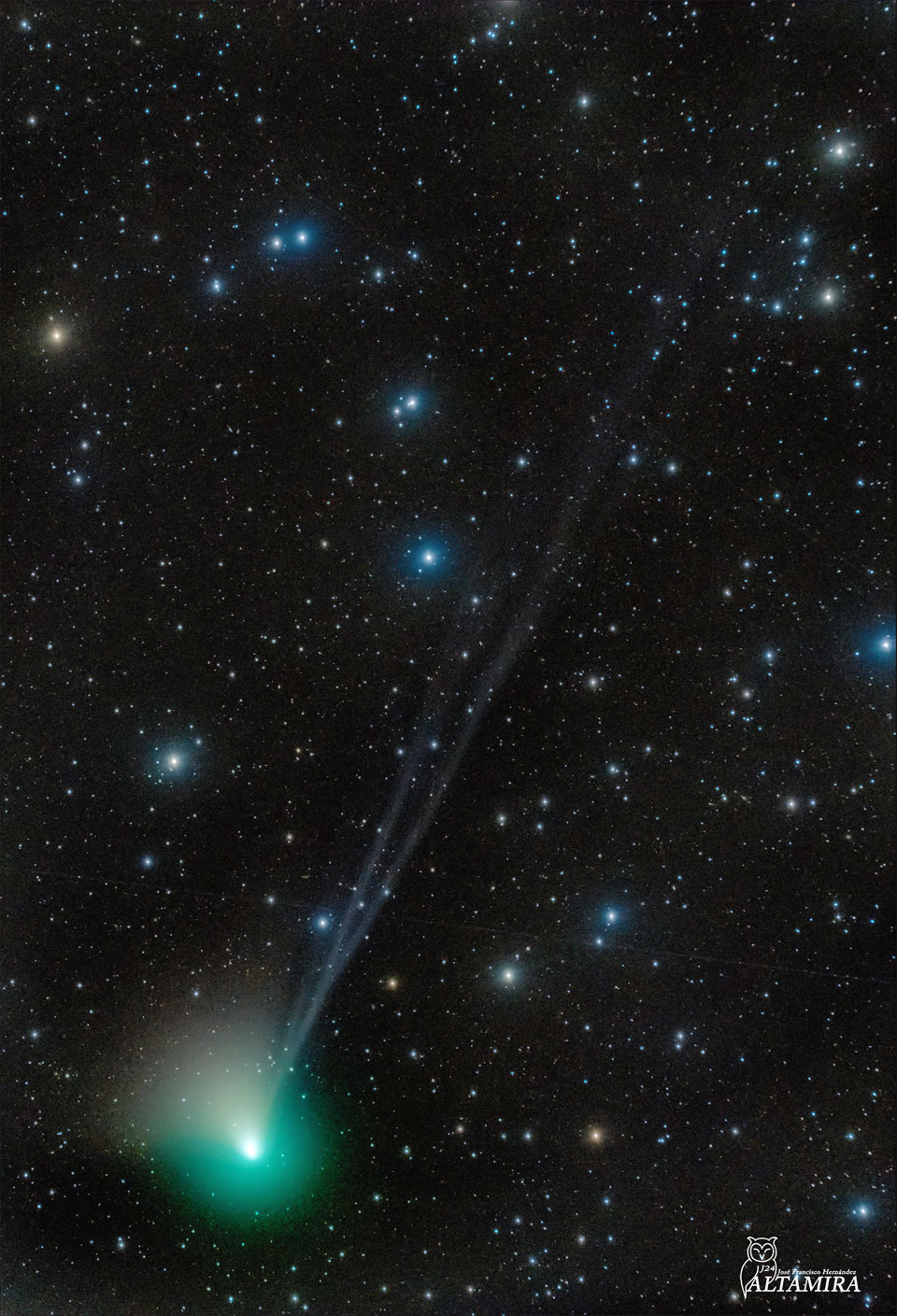
Comet ZTF may become visible to the unaided eye. Discovered early last year, this massive snowball has been brightening as it approaches the Sun and the Earth. C/2022 E3 (ZTF) will be closest to the Sun later this week, at which time it may become visible even without binoculars to northern observers with a clear and dark sky. As they near the Sun, comet brightnesses are notoriously hard to predict, though. In the featured image taken last week in front of a picturesque star field, three blue ion tails extend to the upper right, likely the result of a variable solar wind on ions ejected by the icy comet nucleus. The comet’s white dust tail is visible to the upper left and much shorter. The green glow is the comet’s coma, caused by glowing carbon gas. Comet ZTF is expected to pass nearest the Earth in early February, after which it should dim dramatically. [via NASA] https://ift.tt/j43OSiT

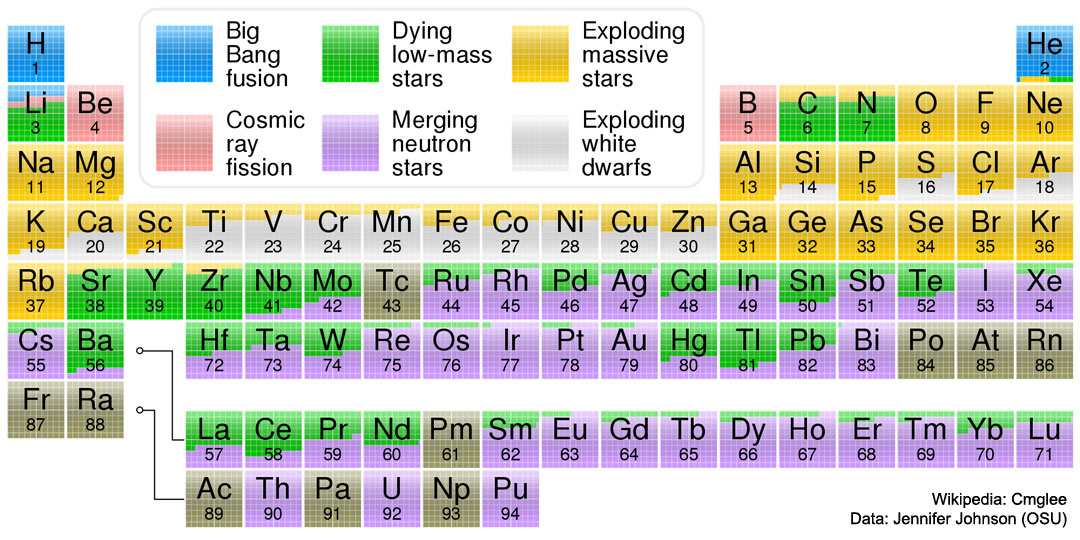
The hydrogen in your body, present in every molecule of water, came from the Big Bang. There are no other appreciable sources of hydrogen in the universe. The carbon in your body was made by nuclear fusion in the interior of stars, as was the oxygen. Much of the iron in your body was made during supernovas of stars that occurred long ago and far away. The gold in your jewelry was likely made from neutron stars during collisions that may have been visible as short-duration gamma-ray bursts or gravitational wave events. Elements like phosphorus and copper are present in our bodies in only small amounts but are essential to the functioning of all known life. The featured periodic table is color coded to indicate humanity’s best guess as to the nuclear origin of all known elements. The sites of nuclear creation of some elements, such as copper, are not really well known and are continuing topics of observational and computational research. [via NASA] https://ift.tt/iNv0q8z

Space Stations in Low Earth Orbit

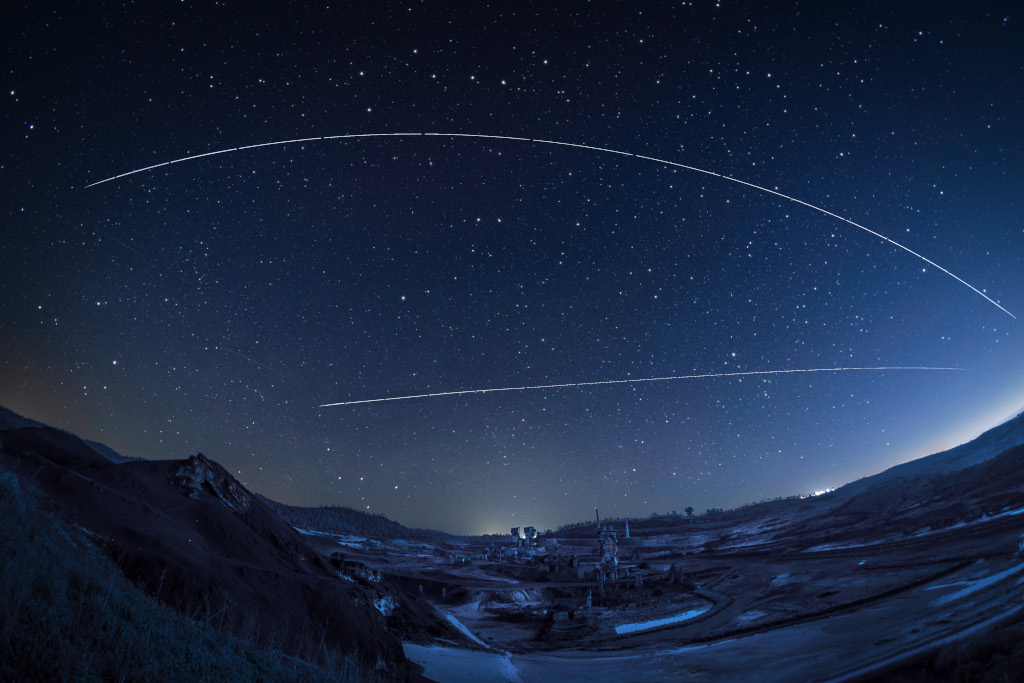
On January 3, two space stations already illuminated by sunlight in low Earth orbit crossed this dark predawn sky. Moving west to east (left to right) across the composited timelapse image China’s Tiangong Space Station traced the upper trail captured more than an hour before the local sunrise. Seen against a starry background Tiangong passes just below the inverted Big Dipper asterism of Ursa Major near the peak of its bright arc, and above north pole star Polaris. But less than five minutes before, the International Space Station had traced its own sunlit streak across the dark sky. Its trail begins just above the W-shape outlined by the bright stars of Cassiopeia near the northern horizon. The dramatic foreground spans an abandoned mine at Achada do Gamo in southeastern Portugal. [via NASA] https://ift.tt/dhOFp1y

Moon O Clock 2022

The first Full Moon of 2023 is in the sky tonight opposite the Sun at 23:08 UTC. Big and beautiful, the Moon at its brightest phase should be easy to spot. Still, for quick reference images captured near the times of all the full moons of 2022 are aranged in this dedicated astro-imaging project from Sri Lanka, planet Earth. The day, month, and a traditional popular name for 2022’s twelve full moons are given in the chart. The apparent size of each full moon depends on how close the full lunar phase is to perigee or apogee, the closest or farthest point in the Moon’s elliptical orbit. Like the 2022 Wolf Moon at the 1 o’clock position, tonight’s Full Moon occurs within a about two days of apogee. But unlike in 2022, the year 2023 will have 13 full moons that won’t all fit nicely on the twelve hour clock. [via NASA] https://ift.tt/LKw5vQi