Moonrays of August

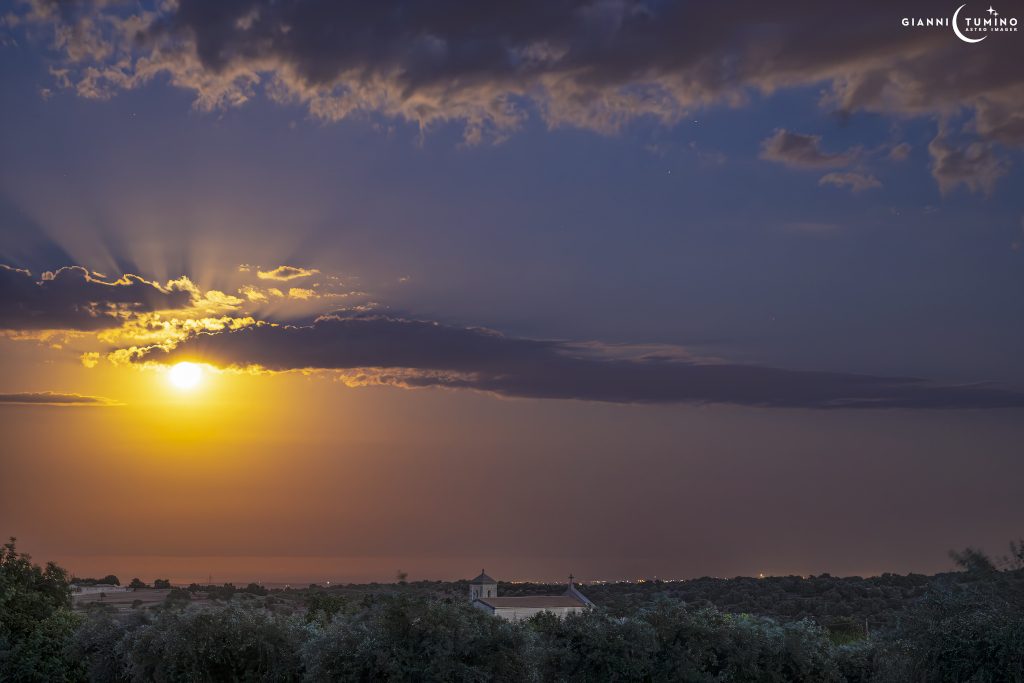
A Full Moon rose as the Sun set on August 1. Near perigee, the closest point in its almost moonthly orbit, the brighter than average lunar disk illuminated night skies around planet Earth as the second supermoon of 2023. Seen here above Ragusa, Sicily, cloud banks cast diverging shadows through the supermoonlit skies, creating dramatic lunar crepuscular rays. The next Full Moon in 2023 will also shine on an August night. Rising as the Sun sets on August 30/31, this second Full Moon in a month is known as a Blue Moon. Blue moons occur only once every 2 or 3 years because lunar phases take almost a calendar month (29.5 days) to go through a complete cycle. But August’s Blue Moon will also be near perigee, the third supermoon in 2023. [via NASA] https://ift.tt/1wJ6ysH

The Falcon and the Redstone

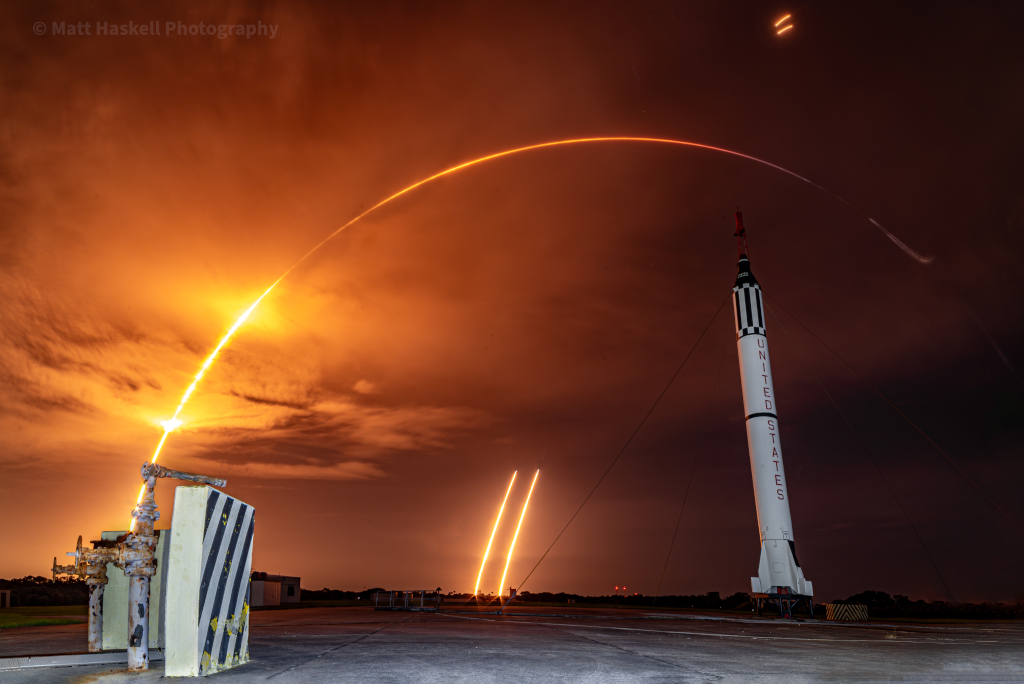
In a photo from the early hours of July 29 (UTC), a Redstone rocket and Mercury capsule are on display at Cape Canaveral Launch Complex 5. Beyond the Redstone, the 8 minute long exposure has captured the arcing launch streak of a SpaceX Falcon Heavy rocket. The Falcon’s heavy communications satellite payload, at a record setting 9 metric tons, is bound for geosynchronous orbit some 22,000 miles above planet Earth. The historic launch of a Redstone rocket carried astronaut Alan Shepard on a suborbital spaceflight in May 1961 to an altitude of about 116 miles. Near the top of the frame, this Falcon rocket’s two reusable side boosters separate and execute brief entry burns. They returned to land side by side at Canaveral’s Landing Zone 1 and 2 in the distance. [via NASA] https://ift.tt/8eR4SZW

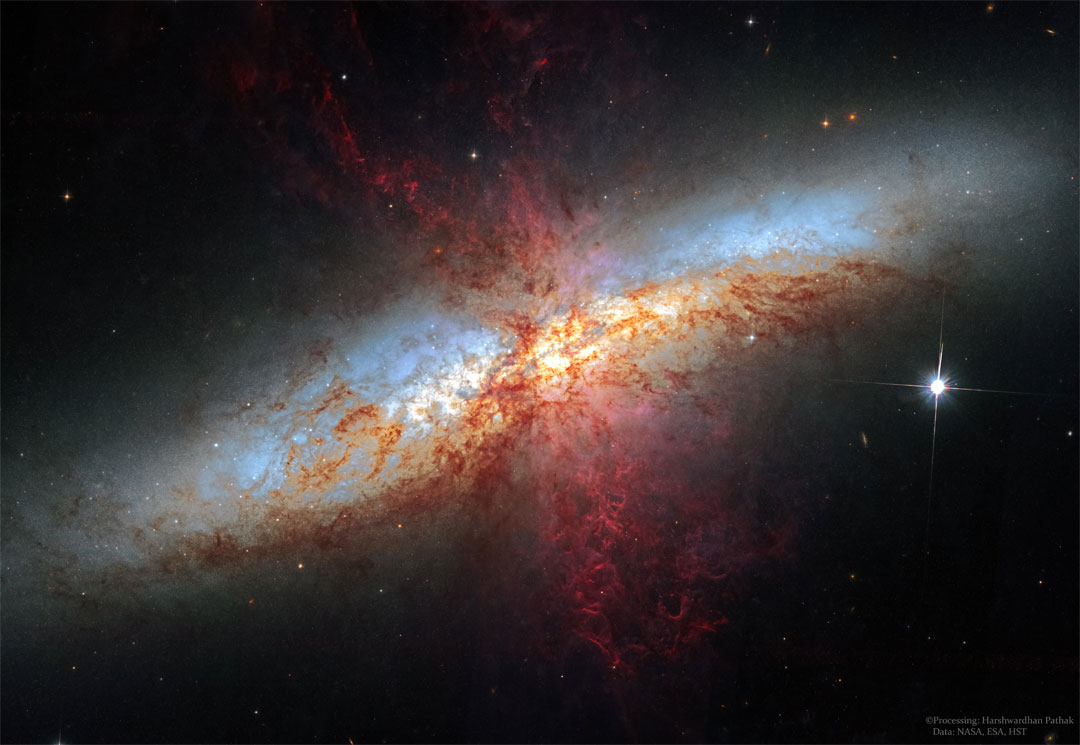
Why is the Cigar Galaxy billowing red smoke? M82, as this starburst galaxy is also known, was stirred up by a recent pass near large spiral galaxy M81. This doesn’t fully explain the source of the red-glowing outwardly expanding gas and dust, however. Evidence indicates that this gas and dust is being driven out by the combined emerging particle winds of many stars, together creating a galactic superwind. The dust particles are thought to originate in M82’s interstellar medium and are actually similar in size to particles in cigar smoke. The featured photographic mosaic highlights a specific color of red light strongly emitted by ionized hydrogen gas, showing detailed filaments of this gas and dust. The filaments extend for over 10,000 light years. The 12-million light-year distant Cigar Galaxy is the brightest galaxy in the sky in infrared light and can be seen in visible light with a small telescope towards the constellation of the Great Bear (Ursa Major). [via NASA] https://ift.tt/8Z3OCSE

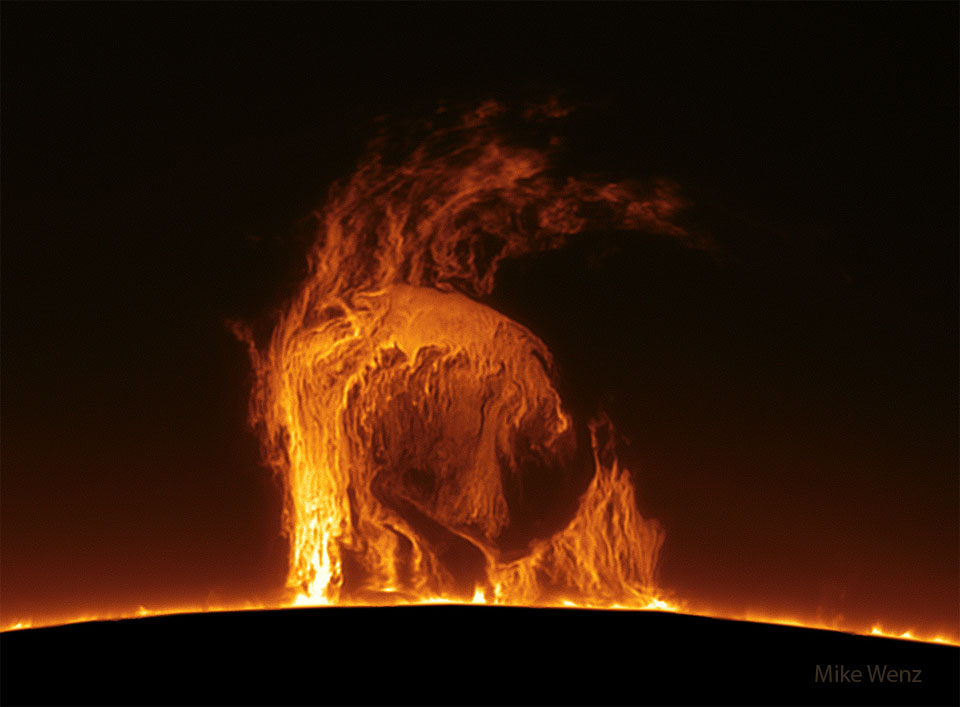
The monsters that live on the Sun are not like us. They are larger than the Earth and made of gas hotter than in any teapot. They have no eyes, but at times, many tentacles. They float. Usually, they slowly change shape and just fade back onto the Sun over about a month. Sometimes, though, they suddenly explode and unleash energetic particles into the Solar System that can attack the Earth.  Pictured is a huge solar prominence imaged almost two weeks ago in the light of hydrogen. Captured by a small telescope in Gilbert, Arizona, USA, the monsteresque plume of gas was held aloft by the ever-present but ever-changing magnetic field near the surface of the Sun. Our active Sun continues to show an unusually high number of prominences, filaments, sunspots, and large active regions as solar maximum approaches in 2025. [via NASA] https://ift.tt/PVq39Nx

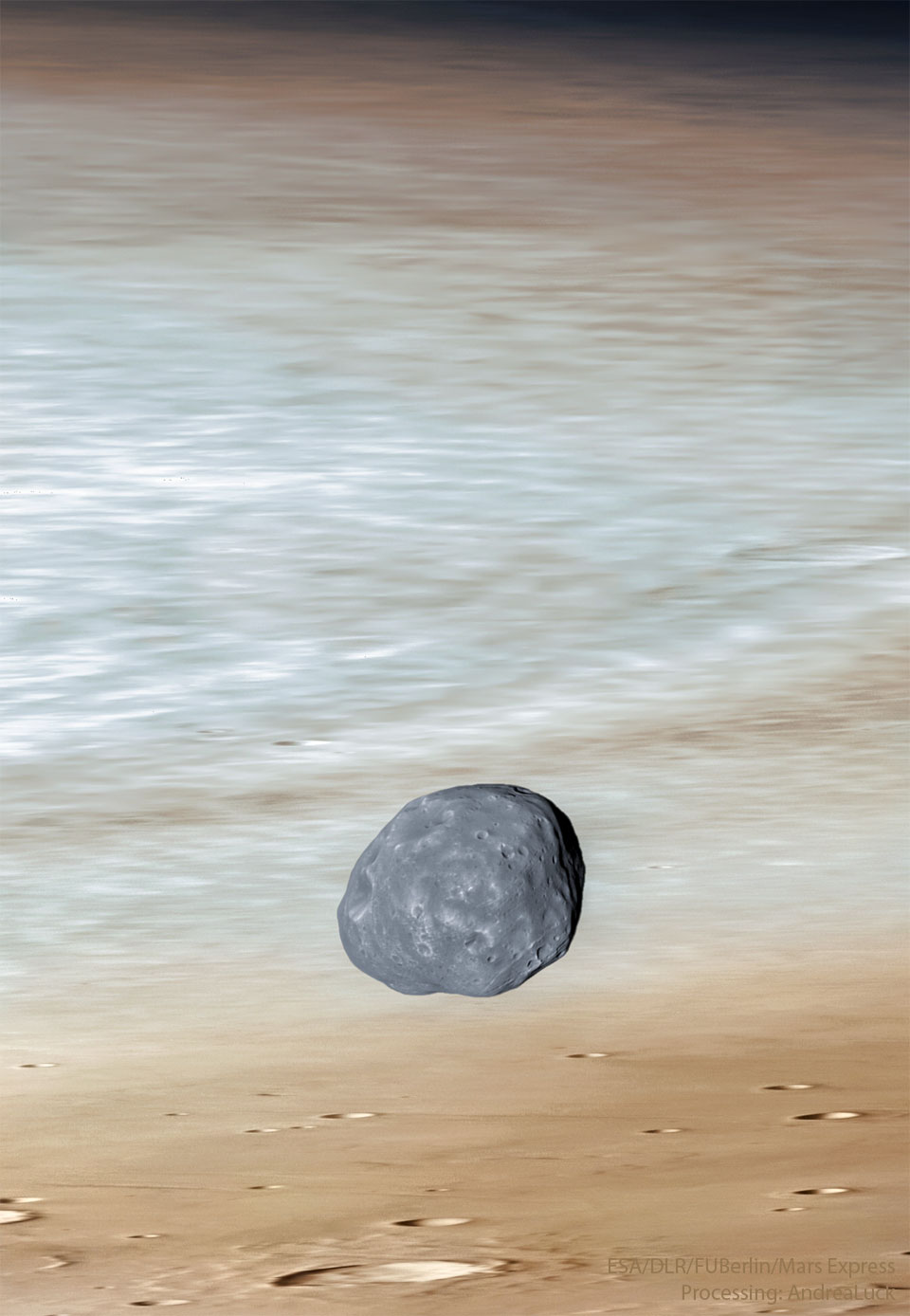
Why is Phobos so dark? Phobos, the largest and innermost of the two Martian moons, is the darkest moon in the entire Solar System. Its unusual orbit and color indicate that it may be a captured asteroid composed of a mixture of ice and dark rock. The featured assigned-color picture of Phobos near the edge of Mars was captured in late 2021 by ESA’s robot spacecraft Mars Express, currently orbiting Mars. Phobos is a heavily cratered and barren moon, with its largest crater located on the far side. From images like this, Phobos has been determined to be covered by perhaps a meter of loose dust. Phobos orbits so close to Mars that from some places it would appear to rise and set twice a day, while from other places it would not be visible at all. Phobos’ orbit around Mars is continually decaying — it will likely break up with pieces crashing to the Martian surface in about 50 million years. [via NASA] https://ift.tt/5Oka3p8

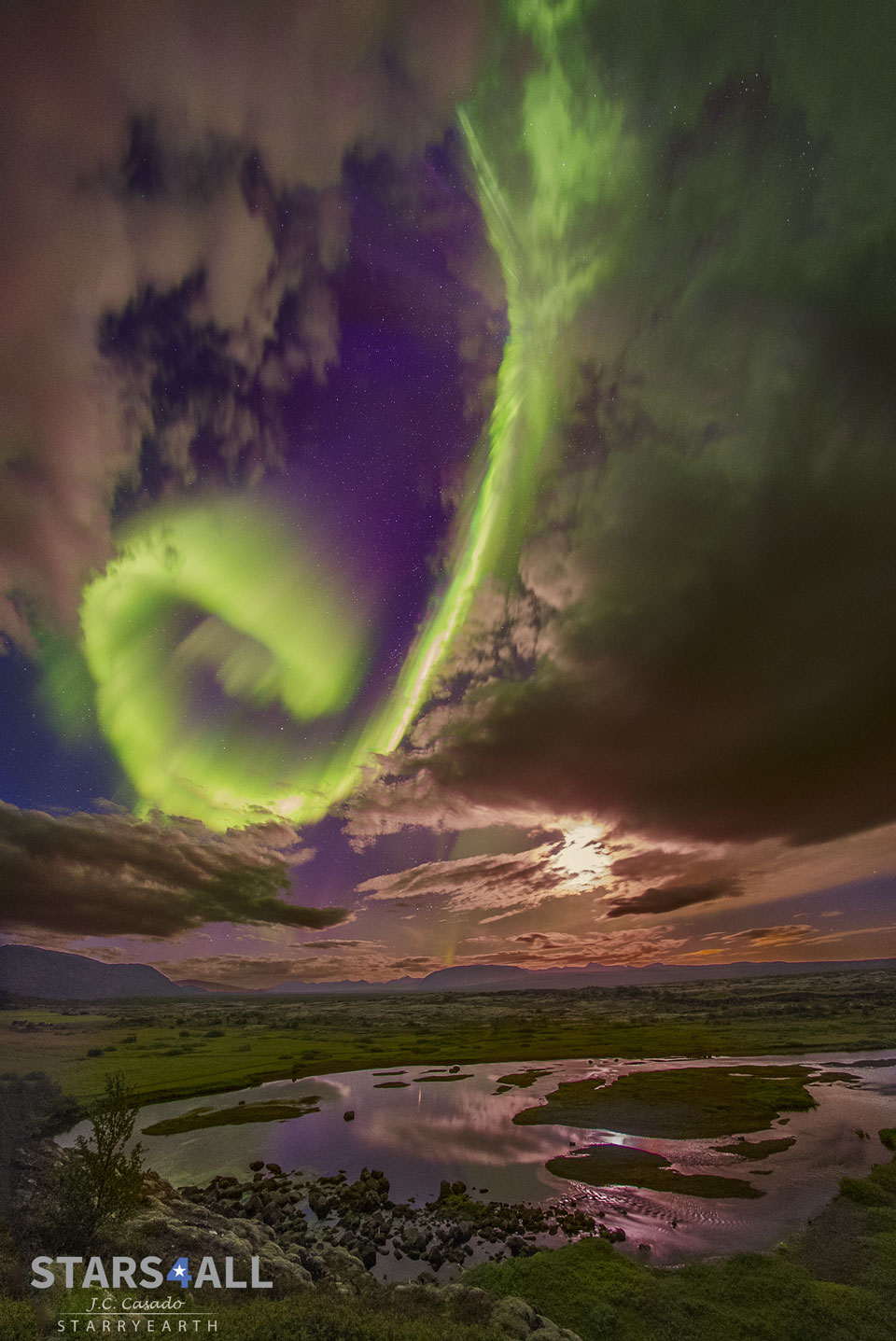
Admire the beauty but fear the beast. The beauty is the aurora overhead, here taking the form of a great green spiral, seen between picturesque clouds with the bright Moon to the side and stars in the background. The beast is the wave of charged particles that creates the aurora but might, one day, impair civilization. In 1859, following notable auroras seen all across the globe, a pulse of charged particles from a coronal mass ejection (CME) associated with a solar flare impacted Earth’s magnetosphere so forcefully that it created the Carrington Event. This assault from the Sun compressed the Earth’s magnetic field so violently that it created high currents and sparks along telegraph wires, shocking many telegraph operators. Were a Carrington-class event to impact the Earth today, speculation holds that damage might occur to global power grids and electronics on a scale never yet experienced. The featured aurora was imaged in 2016 over Thingvallavatn Lake in Iceland, a lake that partly fills a fault that divides Earth’s large Eurasian and North American tectonic plates. [via NASA] https://ift.tt/epTwPQa

Apollo 11: Catching Some Sun

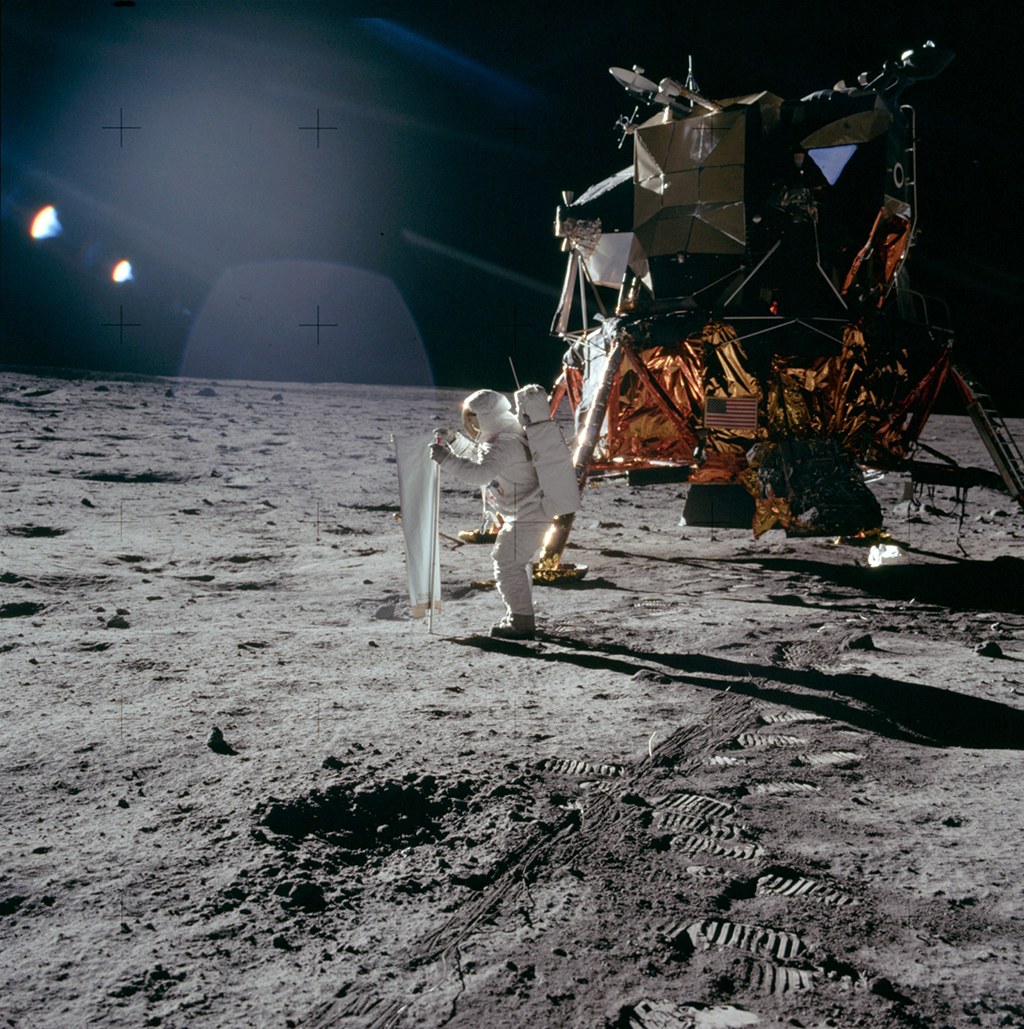
Bright sunlight glints as long dark shadows mark this image of the surface of the Moon. It was taken fifty-four years ago, July 20, 1969, by Apollo 11 astronaut Neil Armstrong, the first to walk on the lunar surface. Pictured is the mission’s lunar module, the Eagle, and spacesuited lunar module pilot Buzz Aldrin. Aldrin is unfurling a long sheet of foil also known as the Solar Wind Composition Experiment. Exposed facing the Sun, the foil trapped particles streaming outward in the solar wind, catching a sample of material from the Sun itself. Along with moon rocks and lunar soil samples, the solar wind collector was returned for analysis in earthbound laboratories. [via NASA] https://ift.tt/TJSlQ5O

Young Stars, Stellar Jets

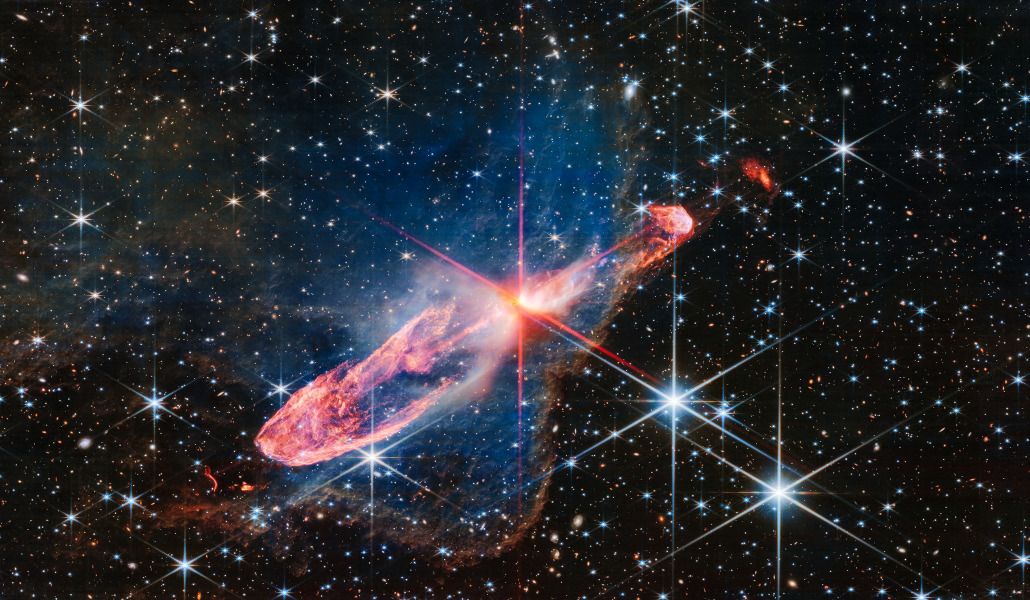
High-speed outflows of molecular gas from a pair of actively forming young stars shine in infrared light, revealing themselves in this NIRcam image from the James Webb Space Telescope. Cataloged as HH (Herbig-Haro) 46/47, the young stars are lodged within a dark nebula that is largely opaque when viewed in visible light. The pair lie at the center of the prominent reddish diffraction spikes in the NIRcam image. Their energetic stellar jets extend for nearly a light-year, burrowing into the dark interstellar material. A tantalizing object to explore with Webb’s infrared capabilities, this young star system is relatively nearby, located only some 1,140 light-years distant in the nautical constellation Vela. [via NASA] https://ift.tt/ko7wSle

Galaxies in the River

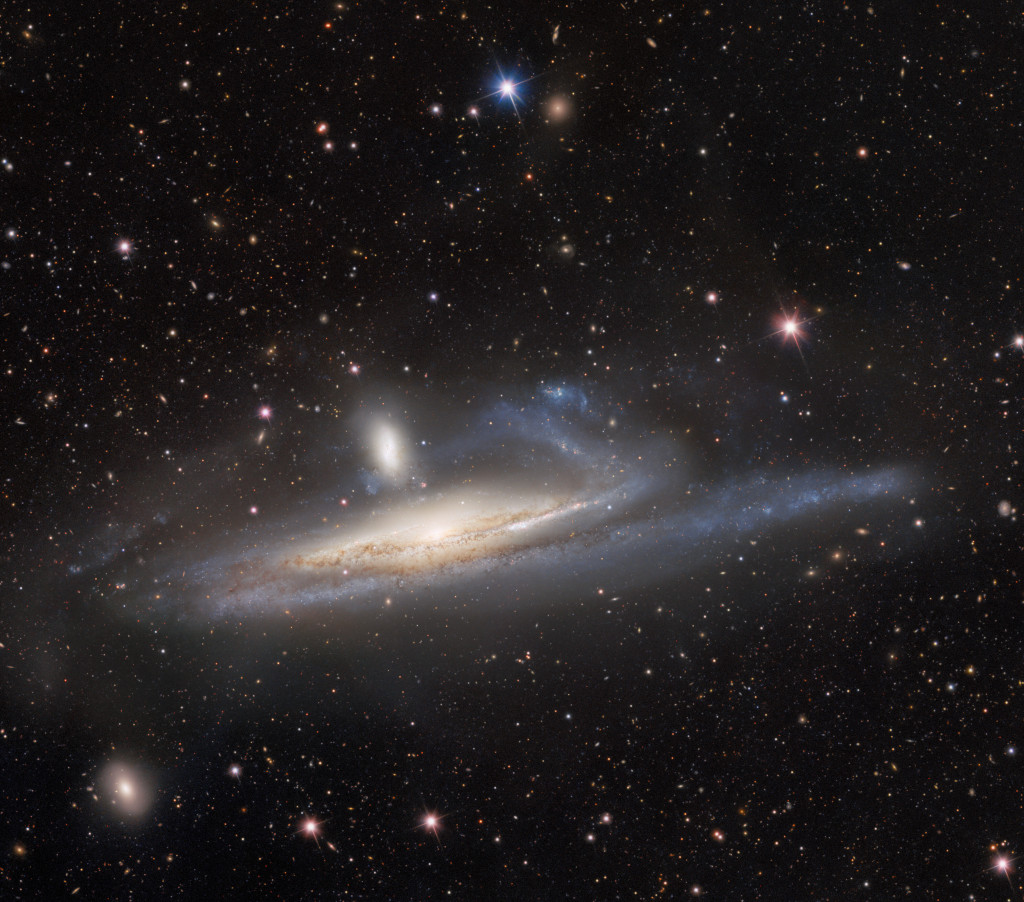
Large galaxies grow by eating small ones. Even our own galaxy engages in a sort of galactic cannibalism, absorbing small galaxies that are too close and are captured by the Milky Way’s gravity. In fact, the practice is common in the universe and illustrated by this striking pair of interacting galaxies from the banks of the southern constellation Eridanus, The River. Located over 50 million light years away, the large, distorted spiral NGC 1532 is seen locked in a gravitational struggle with dwarf galaxy NGC 1531, a struggle the smaller galaxy will eventually lose. Seen nearly edge-on, spiral NGC 1532 spans about 100,000 light-years. The merging galaxies are captured in this sharp image from the Dark Energy Camera mounted on the National Science Foundation’s Blanco 4-meter Telescope at Cerro Tololo Inter-American Observatory in Chile. The NGC 1532/1531 pair is thought to be similar to the well-studied system of face-on spiral and small companion known as M51. [via NASA] https://ift.tt/7UkRD1W

South of Antares, in the tail of the nebula-rich constellation Scorpius, lies emission nebula IC 4628. Nearby hot, massive stars, millions of years young, irradiate the nebula with invisible ultraviolet light, stripping electrons from atoms. The electrons eventually recombine with the atoms to produce the visible nebular glow, dominated by the red emission of hydrogen. At an estimated distance of 6,000 light-years, the region shown is about 250 light-years across, spanning over three full moons on the sky. The nebula is also cataloged as Gum 56 for Australian astronomer Colin Stanley Gum, but seafood-loving deep sky-enthusiasts might know this cosmic cloud as the Prawn Nebula. The graceful color image is a new astronomical composition taken over several nights in April from Rio Hurtado, Chile. [via NASA] https://ift.tt/m96SlKW