Embraced by Sunlight

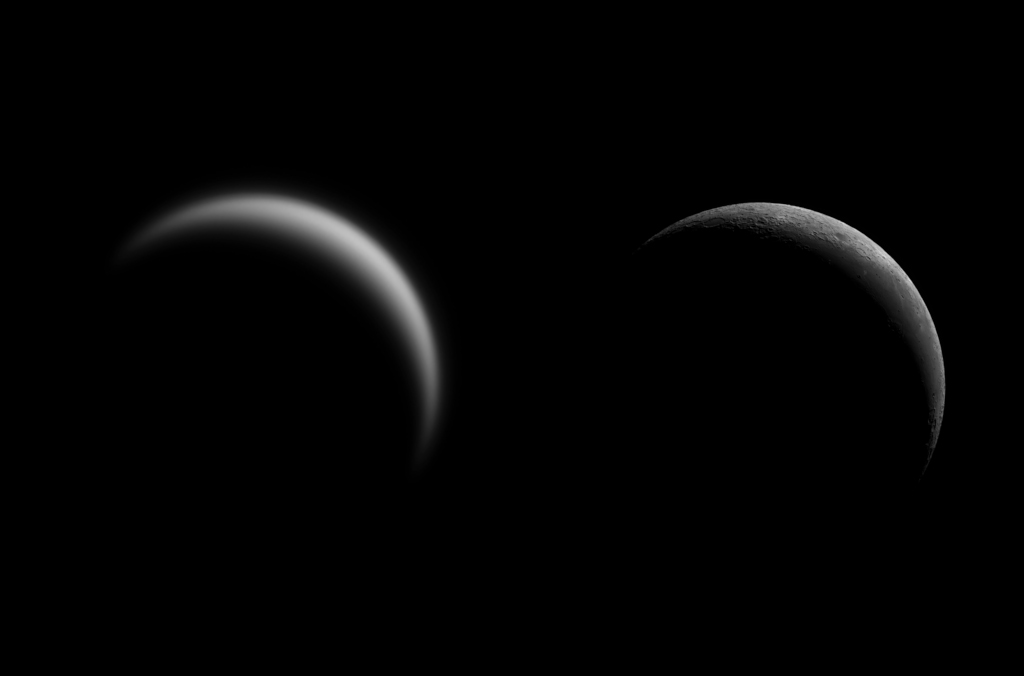
Even though Venus (left) was the brightest planet in the sky it was less than 1/30th the apparent size of the Moon on January 29. But as both rose before the Sun they shared a crescent phase. For a moment their visible disks were each about 12 percent illuminated as they stood above the southeastern horizon. The similar sunlit crescents were captured in these two separate images. Made at different magnifications, each panel is a composite of stacked video frames taken with a small telescope. Venus goes through a range of phases like the Moon as the inner planet wanders from evening sky to morning sky and back again with a period of 584 days. Of course the Moon completes its own cycle of phases, a full lunation, in about 29.5 days. [via NASA] https://ift.tt/K7BCbjoWv
The Galactic Center in Radio from MeerKAT

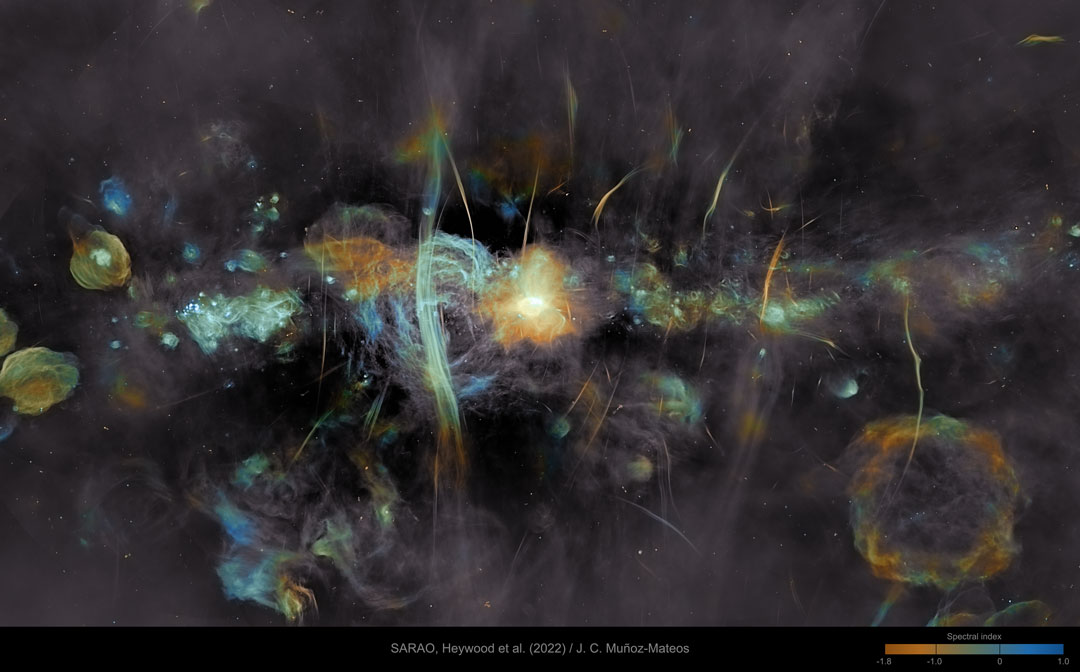
What’s happening at the center of our galaxy? It’s hard to tell with optical telescopes since visible light is blocked by intervening interstellar dust. In other bands of light, though, such as radio, the galactic center can be imaged and shows itself to be quite an interesting and active place. The featured picture shows the latest image of our Milky Way’s center by the MeerKAT array of 64 radio dishes in South Africa. Spanning four times the angular size of the Moon (2 degrees), the image is impressively vast, deep, and detailed. Many known sources are shown in clear detail, including many with a prefix of Sgr, since the galactic center is in the direction of the constellation Sagittarius. In our Galaxy’s Center lies Sgr A, found here in the image center, which houses the Milky Way’s central supermassive black hole. Other sources in the image are not as well understood, including the Arc, just to the left of Sgr A, and numerous filamentary threads. Goals for MeerKAT include searching for radio emission from neutral hydrogen emitted in a much younger universe and brief but distant radio flashes. [via NASA] https://ift.tt/6ozmPOcER

Moon Phases 2022

What will the Moon phase be on your birthday this year? It is hard to predict because the Moon’s appearance changes nightly. As the Moon orbits the Earth, the half illuminated by the Sun first becomes increasingly visible, then decreasingly visible. The featured video animates images and altitude data taken by NASA’s Moon-orbiting Lunar Reconnaissance Orbiter to show all 12 lunations that appear this year, 2022 — as seen from Earth’s northern (southern) hemisphere. A single lunation describes one full cycle of our Moon, including all of its phases. A full lunation takes about 29.5 days, just under a month (moon-th). As each lunation progresses, sunlight reflects from the Moon at different angles, and so illuminates different features differently. During all of this, of course, the Moon always keeps the same face toward the Earth. What is less apparent night-to-night is that the Moon’s apparent size changes slightly, and that a slight wobble called a libration occurs as the Moon progresses along its elliptical orbit. [via NASA] https://ift.tt/zZGrVWoEB

A Solar Prominence from SOHO

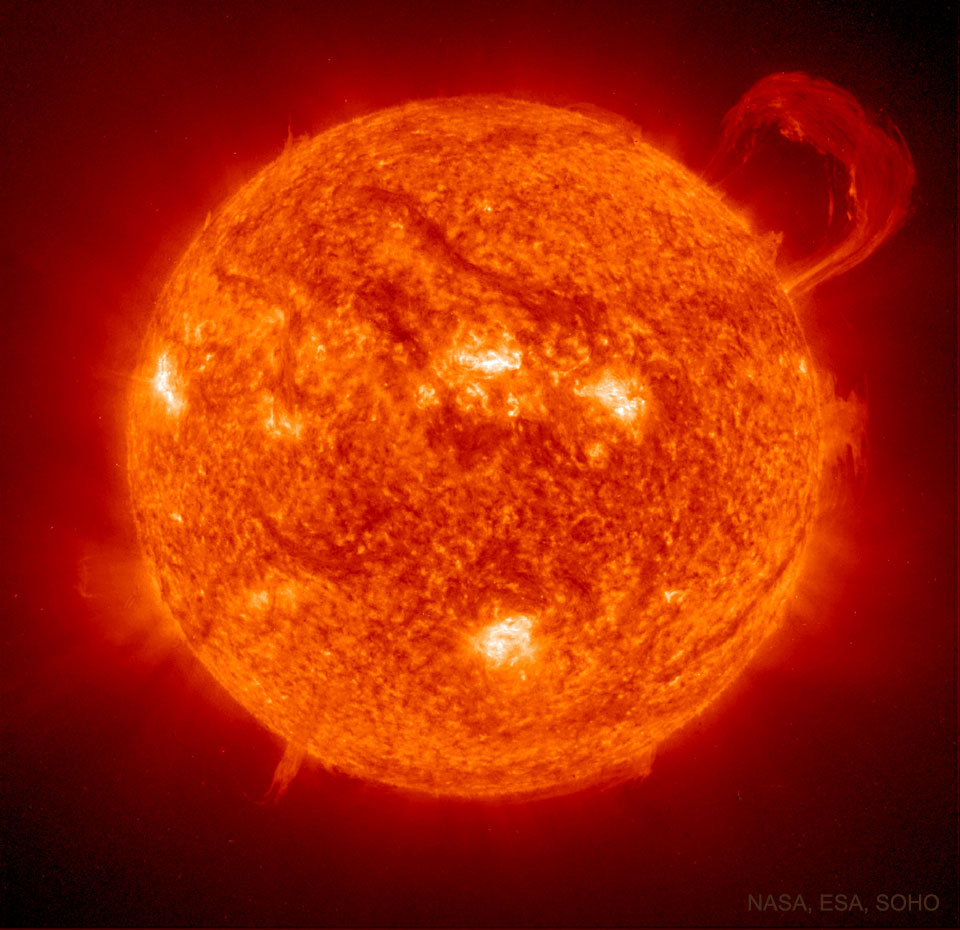
How can gas float above the Sun? Twisted magnetic fields arching from the solar surface can trap ionized gas, suspending it in huge looping structures. These majestic plasma arches are seen as prominences above the solar limb. In 1999, this dramatic and detailed image was recorded by the Extreme ultraviolet Image Telescope (EIT) on board the space-based SOHO observatory in the light emitted by ionized Helium. It shows hot plasma escaping into space as a fiery prominence breaks free from magnetic confinement a hundred thousand kilometers above the Sun. These awesome events bear watching as they can affect communications and power systems over 100 million kilometers away on planet Earth. In late 2020 our Sun passed the solar minimum of its 11-year cycle and is now showing increased surface activity. [via NASA] https://ift.tt/UOD9hFRjx

The Fornax Cluster of Galaxies

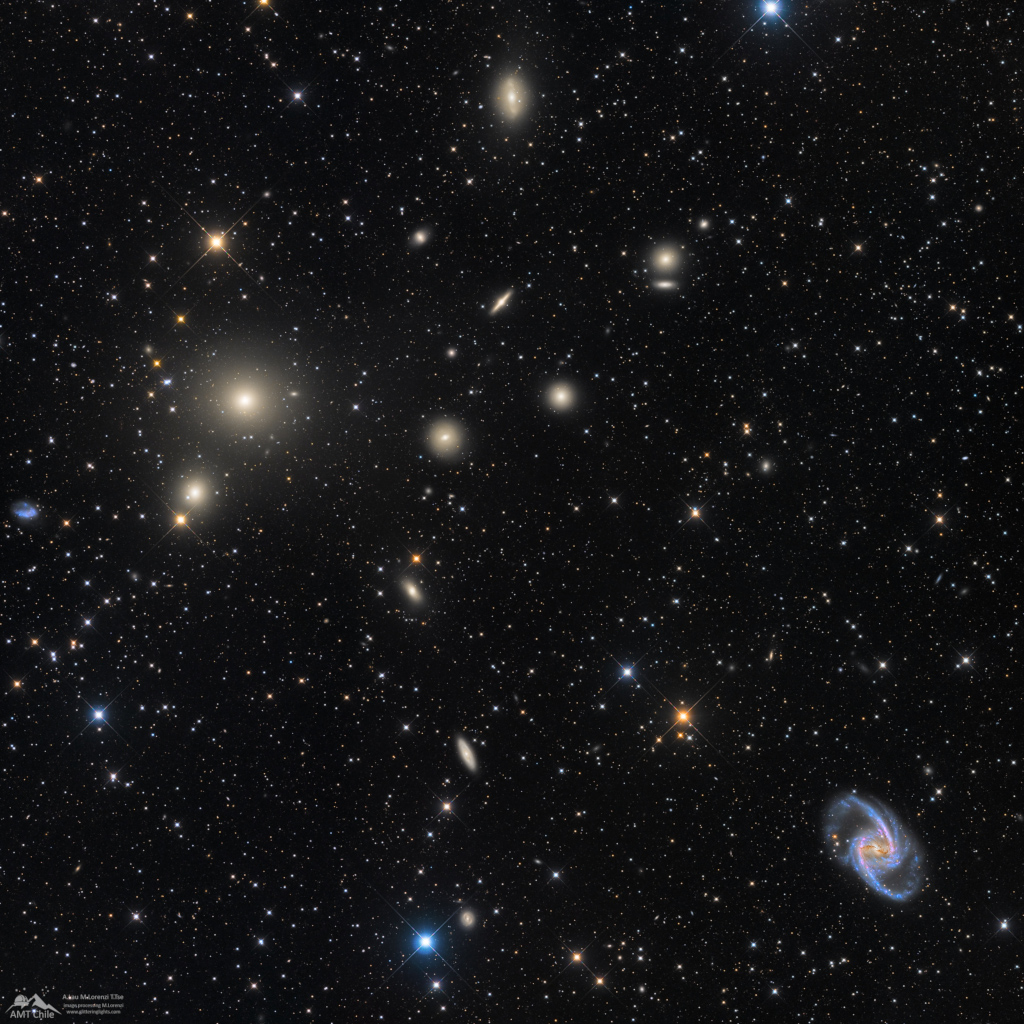
Named for the southern constellation toward which most of its galaxies can be found, the Fornax Cluster is one of the closest clusters of galaxies. About 62 million light-years away, it is almost 20 times more distant than our neighboring Andromeda Galaxy, and only about 10 percent farther than the better known and more populated Virgo Galaxy Cluster. Seen across this two degree wide field-of-view, almost every yellowish splotch on the image is an elliptical galaxy in the Fornax cluster. Elliptical galaxies NGC 1399 and NGC 1404 are the dominant, bright cluster members toward the upper left (but not the spiky foreground stars). A standout barred spiral galaxy NGC 1365 is visible on the lower right as a prominent Fornax cluster member. [via NASA] https://go.nasa.gov/3KR80ip

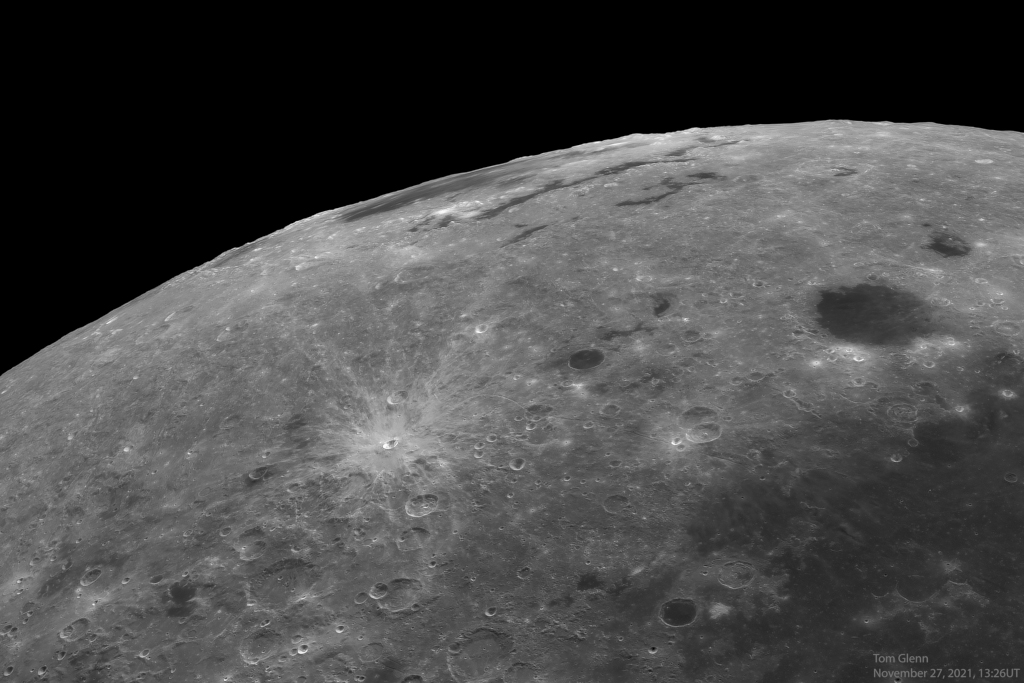
The Mare Orientale, Latin for Eastern Sea, is one of the most striking large scale lunar features. The youngest of the large lunar impact basins it’s very difficult to see from an earthbound perspective. Still, taken during a period of favorable tilt, or libration of the lunar nearside, the Eastern Sea can be found near top center in this sharp telescopic view, extremely foreshortened along the Moon’s western edge. Formed by the impact of an asteroid over 3 billion years ago and nearly 1000 kilometers across, the impact basin’s concentric circular features, ripples in the lunar crust, are a little easier to spot in spacecraft images of the Moon, though. So why is the Eastern Sea at the Moon’s western edge? The Mare Orientale lunar feature was named before 1961. That’s when the convention labeling east and west on lunar maps was reversed. [via NASA] https://ift.tt/33QOJND

South of Orion

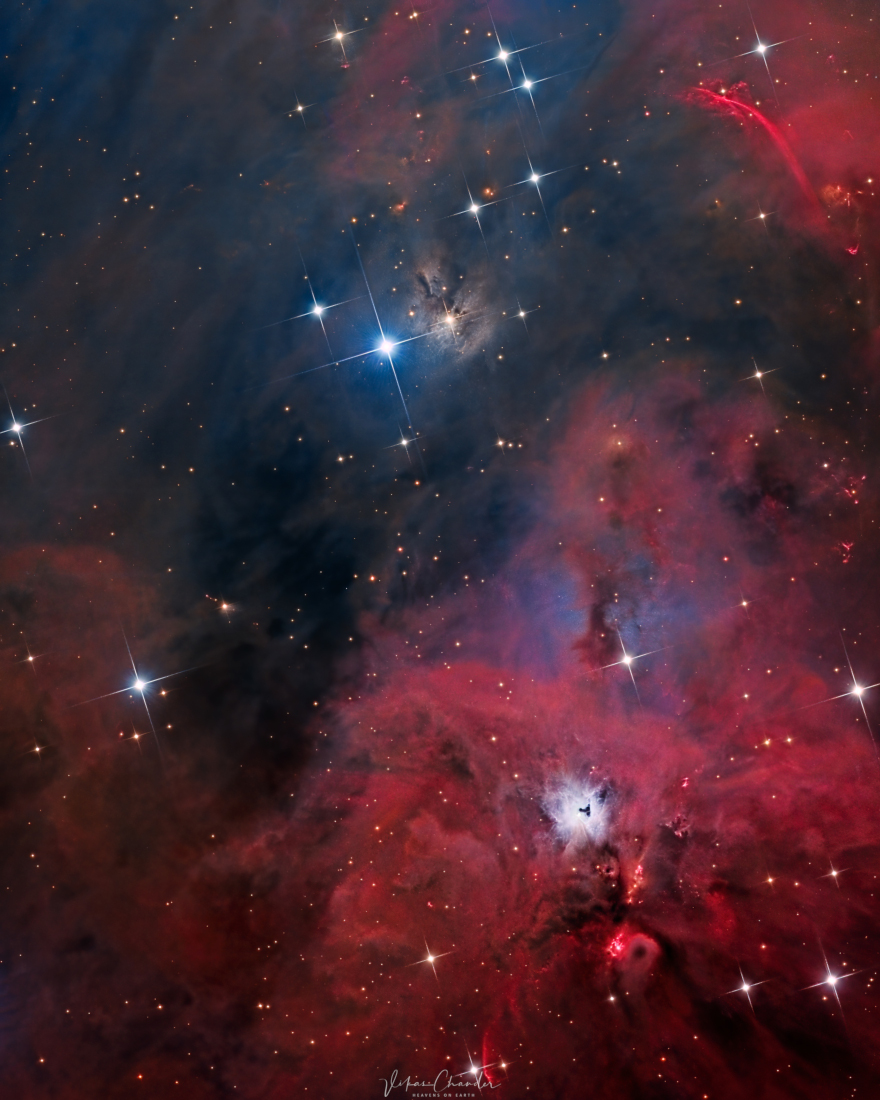
South of the large star-forming region known as the Orion Nebula, lies bright blue reflection nebula NGC 1999. At the edge of the Orion molecular cloud complex some 1,500 light-years distant, NGC 1999’s illumination is provided by the embedded variable star V380 Orionis. The nebula is marked with a dark sideways T-shape at center right in this telescopic vista that spans about two full moons on the sky. Its dark shape was once assumed to be an obscuring dust cloud seen in silhouette. But infrared data suggest the shape is likely a hole blown through the nebula itself by energetic young stars. In fact, this region abounds with energetic young stars producing jets and outflows with luminous shock waves. Cataloged as Herbig-Haro (HH) objects, named for astronomers George Herbig and Guillermo Haro, the shocks have intense reddish hues. HH1 and HH2 are just below and right of NGC 1999. HH222, also known as the Waterfall nebula, looks like a red gash near top right in the frame. To create the shocks stellar jets push through the surrounding material at speeds of hundreds of kilometers per second. [via NASA] https://ift.tt/349GtYI

Stars, Dust, and Gas Near Antares

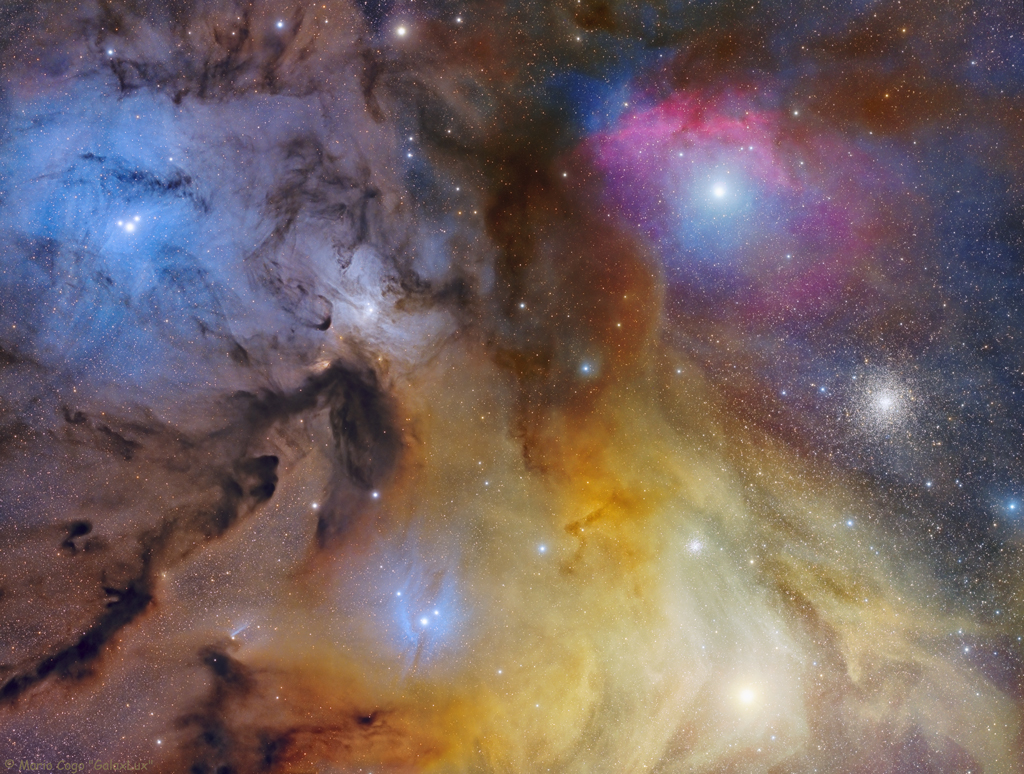
Why is the sky near Antares and Rho Ophiuchi so dusty yet colorful? The colors result from a mixture of objects and processes. Fine dust — illuminated from the front by starlight — produces blue reflection nebulae. Gaseous clouds whose atoms are excited by ultraviolet starlight produce reddish emission nebulae. Backlit dust clouds block starlight and so appear dark. Antares, a red supergiant and one of the brighter stars in the night sky, lights up the yellow-red clouds on the lower right of the featured image. The Rho Ophiuchi star system lies at the center of the blue reflection nebula on the top left. The distant globular cluster of stars M4 is visible above and to the right of Antares. These star clouds are even more colorful than humans can see, emitting light across the electromagnetic spectrum. [via NASA] https://ift.tt/3nXUCPI

Video: Comet Leonard over One Hour

Which direction is this comet heading? Judging by the tail, one might imagine that Comet Leonard is traveling towards the bottom right, but a full 3D analysis shows it traveling almost directly away from the camera. With this perspective, the dust tail is trailed towards the camera and can only be seen as a short yellow-white glow near the head of the comet. The bluish ion tail, however, is made up of escaping ions that are forced directly away from the Sun by the solar wind — but channeled along the Sun’s magnetic field lines. The Sun’s magnetic field is quite complex, however, and occasionally solar magnetic reconnection will break the ion tail into knots that are pushed away from the Sun. One such knot is visible in the featured one-hour time-lapse video captured in late December from Thailand. Comet Leonard is now fading as it heads out of our Solar System. [via NASA] https://ift.tt/345Aq7k

Rigel and the Witch Head Nebula

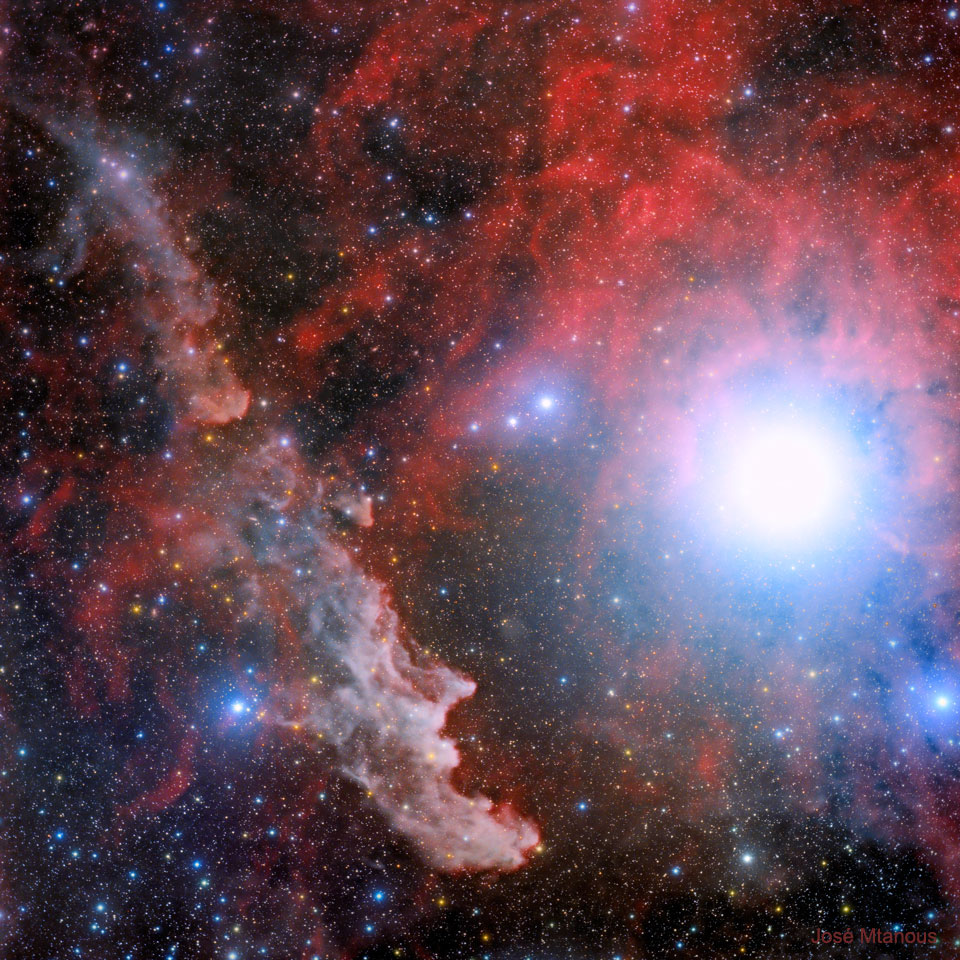
By starlight this eerie visage shines in the dark, a crooked profile evoking its popular name, the Witch Head Nebula. In fact, this entrancing telescopic portrait gives the impression that the witch has fixed her gaze on Orion’s bright supergiant star Rigel. More formally known as IC 2118, the Witch Head Nebula spans about 50 light-years and is composed of interstellar dust grains reflecting Rigel’s starlight. The blue color of the Witch Head Nebula and of the dust surrounding Rigel is caused not only by Rigel’s intense blue starlight but because the dust grains scatter blue light more efficiently than red. The same physical process causes Earth’s daytime sky to appear blue, although the scatterers in Earth’s atmosphere are molecules of nitrogen and oxygen. Rigel, the Witch Head Nebula, and gas and dust that surrounds them lie about 800 light-years away. [via NASA] https://ift.tt/3AuvO7c